
Are Technical Whitepapers Useful for Vendor Shortlisting?
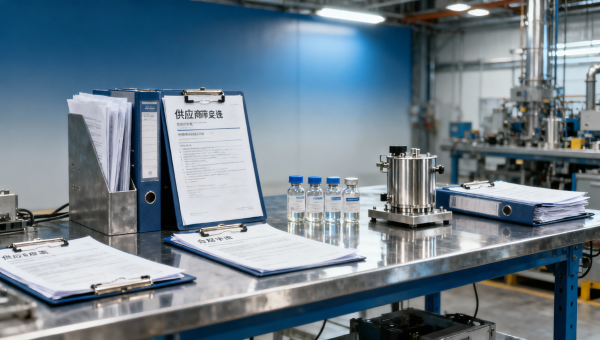
When evaluating suppliers across GMP Chemicals, Feed & Grain, biochemical equipment, Bioactive Ingredients, Pharma Raw Materials, GMP equipment, Agri Supply Chain, Biochemical Materials, and aquaculture kits, can Technical Whitepapers truly support smarter vendor shortlisting? For procurement teams, operators, and decision-makers, the answer often depends on how well these documents reveal compliance strength, engineering depth, and supply-chain transparency before formal audits begin.
Why technical whitepapers matter before audits and RFQs
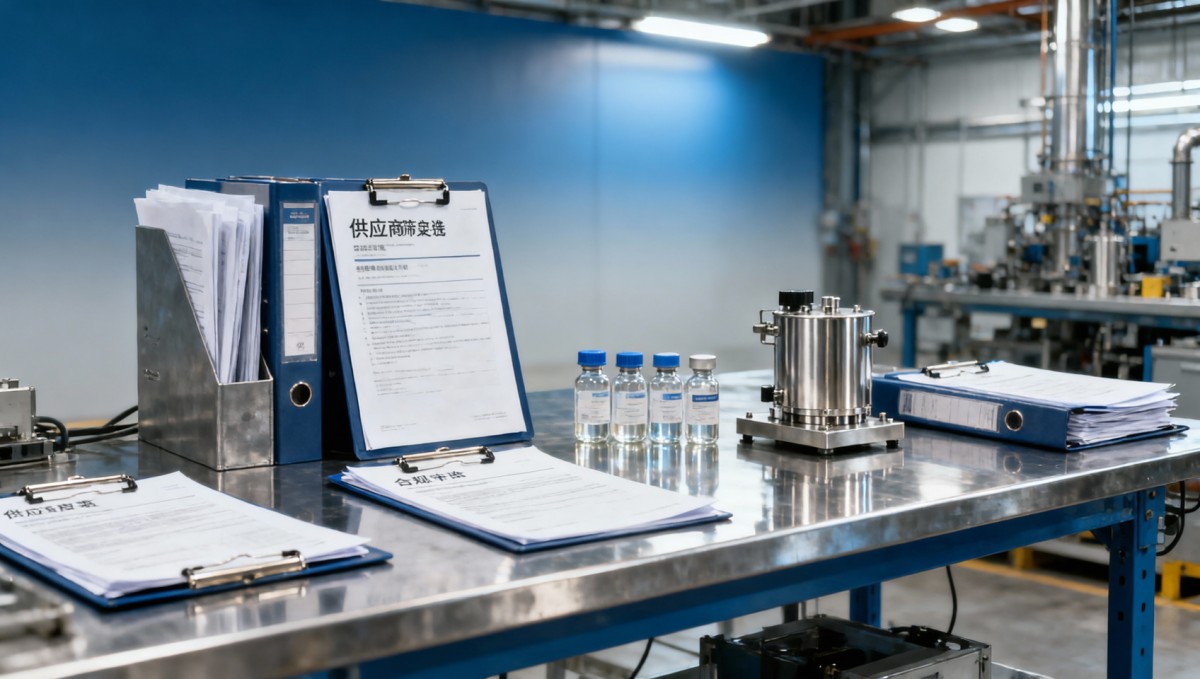
In complex B2B sourcing, technical whitepapers are not sales brochures. A useful whitepaper helps a buyer understand process capability, application fit, operating limits, regulatory posture, and quality controls before spending 2–4 weeks on supplier qualification calls or on-site reviews. This matters even more in sectors where GMP, EPA, FDA, feed safety, or environmental controls shape vendor approval.
For procurement personnel, a strong whitepaper reduces early-stage ambiguity. For operators and project managers, it clarifies whether equipment or materials can support actual production conditions such as continuous shifts, cleaning cycles, traceability records, and utility requirements. For quality and safety teams, it can reveal whether the vendor understands batch integrity, contamination risk, and documentation discipline.
In practice, shortlisting often fails when buyers compare only price sheets, basic catalogs, and generic compliance claims. Those documents rarely explain reaction control windows, material compatibility, process flow assumptions, maintenance intervals, or validation boundaries. A technical whitepaper can expose these details in the first screening phase, helping teams eliminate weak-fit suppliers before formal tenders begin.
For industries covered by AgriChem Chronicle, this is especially relevant. APIs, bio-extracts, feed processing systems, agricultural machinery, and aquaculture platforms all involve multi-variable procurement decisions. Whitepapers become useful when they convert technical complexity into a decision-ready format for commercial evaluators, plant users, and executive reviewers.
What a whitepaper should answer in the first 10 minutes
- What is the intended application scope: pilot, medium-volume, or industrial-scale continuous use?
- Which standards or frameworks are relevant: GMP, FDA-related expectations, EPA-related controls, food or feed safety requirements, or internal validation protocols?
- What are the key operating ranges, such as temperature, throughput, cleaning frequency, batch size, or expected duty cycle?
- How transparent is the supply chain, including raw material origin, subcontracting points, and document traceability?
If these points are missing, the document may still support marketing, but it is unlikely to support vendor shortlisting. Buyers need evidence-oriented summaries, not broad claims. That distinction saves time, reduces rework, and narrows the vendor pool to suppliers worth engaging further.
Which sections make a technical whitepaper useful for vendor shortlisting?
A usable technical whitepaper should help at least 3 internal groups at once: procurement, technical operations, and quality or compliance. If it only satisfies one of them, shortlisting remains incomplete. The most effective documents provide enough detail for a first-pass decision without requiring a full audit package on day one.
For example, in pharma raw materials or fine chemicals, buyers often need to understand process consistency, impurity control logic, documentation structure, and change-control discipline. In aquaculture systems or feed processing equipment, they often need utility demand, corrosion resistance, cleaning requirements, uptime assumptions, and spare-parts access over a 12–24 month operating period.
The table below shows what decision-makers should expect from a technical whitepaper if it is being used to support vendor shortlisting across regulated and technically demanding supply categories.
When these 4 sections appear with real operating context, the whitepaper becomes a practical screening document. When they are absent, the buyer usually needs extra calls, more NDA exchanges, and a longer prequalification cycle. In many sourcing programs, that can add 7–15 days before a shortlist is stable enough for RFQ release.
A quick screening checklist for buyers
Use these 5 checks before moving a vendor forward
- The whitepaper states operating assumptions clearly rather than hiding behind broad performance language.
- The document explains what evidence exists, such as test method references, validation logic, or material traceability structure.
- The content distinguishes standard configuration from custom engineering, which helps pricing and delivery comparison.
- There is clarity on lead time factors, especially for imported components, specialty materials, or controlled ingredients.
- The document is technically readable for both procurement and plant teams, not only for marketing audiences.
If a supplier passes these 5 checks, the whitepaper is already serving as a decision support tool rather than a branding asset. That is the threshold most sourcing teams should look for.
How to compare whitepapers across chemicals, equipment, and processing systems
Not every category requires the same emphasis. A technical whitepaper for APIs or biochemical materials should not be judged by the same criteria used for agricultural machinery or aquaculture kits. The core question is whether the document helps buyers compare risk, fit, and implementation effort in a consistent way.
For material suppliers, purity profile logic, storage conditions, change control, and traceable sourcing may carry more weight. For equipment vendors, utility demand, service access, cleaning design, wear-part replacement intervals, and installation constraints may matter more. For integrated systems, the buyer often needs both process and infrastructure visibility across 3 stages: specification, commissioning, and stable operation.
The following comparison table helps cross-functional teams review technical whitepapers with category-specific expectations instead of applying one generic template to every vendor.
This comparison matters because shortlisting is not only about technical feasibility. It is also about whether a vendor can support a practical launch timeline, stable operating window, and manageable total cost of ownership over 6–18 months after purchase.
What procurement teams should score
- Fit to required application and production scale.
- Clarity of standards, documentation, and quality controls.
- Implementation risk, including delivery, commissioning, training, and maintenance.
- Supply chain visibility, especially for critical components or raw materials.
A 4-part scorecard like this helps teams move from subjective impressions to defensible vendor selection. It also creates a shared language between technical reviewers and commercial evaluators.
Where buyers misread whitepapers and what to verify next
A common mistake is treating every detailed document as a sign of capability. Length does not equal usefulness. Some whitepapers are highly polished but avoid the exact issues buyers need to evaluate, such as validation scope, inspection points, raw material substitution rules, cleaning verification, or aftermarket service commitments.
Another mistake is assuming that the presence of regulatory language proves operational readiness. Terms like GMP-ready, audit support, traceable sourcing, or environmental compliance can be meaningful, but only when tied to actual procedures, document flow, or production discipline. Buyers should ask what records exist today, what can be shared in 48–72 hours, and what remains available only after NDA or audit planning.
A third issue appears in engineering-heavy categories. A whitepaper may describe process theory well but leave out practical constraints such as floor loading, utility consumption, cleaning downtime, required operator skill, or spare-part dependency. For project managers and operators, those missing details can turn an approved shortlist into a delayed installation.
This is why the whitepaper should be considered an early filter, not the final proof set. It is most valuable when used together with a structured follow-up package that may include drawings, sample COA structure, maintenance schedules, document indexes, or commissioning plans.
Follow-up questions that expose real vendor readiness
Ask for these 6 items after a promising whitepaper review
- A document list showing what technical, quality, and commercial records are available before audit.
- A typical delivery window, including long-lead components or controlled intermediates.
- A clarification on standard versus custom scope and what changes lead time by 2–6 weeks.
- A summary of maintenance or requalification needs over the first 12 months.
- A quality escalation path for deviations, batch concerns, or field issues.
- A point-by-point answer on traceability across raw materials, components, or subcontracted operations.
Suppliers who answer these questions clearly usually make shortlisting easier. Those who redirect repeatedly to sales language often create hidden qualification costs later in the process.
How AgriChem Chronicle helps buyers and vendors use whitepapers better
AgriChem Chronicle operates in sectors where procurement decisions are technical, regulated, and operationally sensitive. That makes the publication environment different from a general industrial media site. Readers include agronomy leaders, procurement directors, compliance stakeholders, and industrial operators who need to evaluate capabilities quickly and with discipline.
For buyers, ACC helps translate technical whitepapers into market-relevant intelligence. That means placing a supplier’s manufacturing capability, engineering logic, and compliance posture into a broader context that procurement teams can actually compare. In markets with fragmented suppliers and uneven documentation quality, this reduces noise during vendor discovery.
For manufacturers, chemical producers, and equipment OEMs, ACC provides an editorial framework where validated technical content can support commercial credibility. When a whitepaper is integrated into a serious industry narrative, it becomes more discoverable to institutional buyers and more useful to business evaluators who need substance rather than promotional copy.
This is particularly important for companies selling into cross-border or compliance-sensitive supply chains. Procurement teams may need to compare 3–5 candidate vendors across documentation depth, process maturity, and application relevance before any site visit is approved. A well-positioned whitepaper can accelerate that first decision layer.
Why this approach supports better shortlisting
ACC’s sector coverage across fine chemicals, APIs, machinery, aquaculture technology, bio-extracts, and feed processing allows technical content to be interpreted by the right audience. That matters because vendor shortlisting rarely depends on a single variable. It depends on the interaction between compliance, production logic, supply continuity, and lifecycle support.
When technical whitepapers are reviewed inside that wider industry context, buyers can separate three vendor types more effectively: suppliers with genuine application fit, suppliers with partial fit that may require customization, and suppliers that look strong commercially but remain weak operationally. That distinction saves qualification effort and reduces shortlist churn.
FAQ and next-step guidance for procurement teams
Technical whitepapers are useful for vendor shortlisting when they reveal enough about capability, constraints, and compliance to support a first commercial and technical decision. They are less useful when they stay abstract. The right next step is not to replace audits with whitepapers, but to use whitepapers to decide which audits are worth scheduling.
For most sourcing teams, the best process is a 3-step path: first screen the whitepaper, then request structured follow-up evidence, then move the top candidates into RFQ or qualification review. This keeps engineering, quality, and procurement aligned from the start.
Are technical whitepapers enough to approve a supplier?
No. They are rarely sufficient for final approval. They are strongest as a prequalification tool that helps narrow the field before deeper document review, sample assessment, or audit planning. In regulated categories, final approval still depends on formal quality and commercial evaluation.
What is the ideal length or depth for a vendor whitepaper?
There is no fixed page count, but buyers usually need enough detail to understand application scope, compliance logic, process assumptions, and supply support. A concise, evidence-oriented document is often more useful than a long narrative. Clarity matters more than volume.
What should project managers look for first?
Project managers should focus on implementation risk: utility requirements, installation assumptions, commissioning steps, maintenance cadence, and training needs over the first 30–90 days. These factors often determine whether a technically acceptable vendor is operationally practical.
Why choose us for technical content evaluation and industry visibility?
AgriChem Chronicle helps bridge the gap between technical documentation and commercial decision-making across primary industries and fine chemicals. If you need support comparing vendor whitepapers, clarifying parameter ranges, reviewing application fit, checking likely delivery windows, mapping certification expectations, or positioning validated technical content in front of institutional buyers, ACC provides a focused industry platform for that work.
Contact us to discuss vendor shortlisting criteria, whitepaper positioning, product selection logic, lead-time questions, documentation expectations, custom solution framing, sample-support communication, or quotation-stage content needs. For companies that want to be shortlisted more often, and for buyers who want to shortlist with fewer blind spots, that conversation is a practical place to start.
Related Intelligence
- APIs & IntermediatesBiochemical Processing Costs: Where Do Projects Overspend?Biochemical processing costs often spiral due to hidden scope and compliance gaps. Learn how Chemical Synthesizers, aquaculture accessories, aquaculture utilities, and related equipment avoid overspend.
- APIs & IntermediatesAre Technical Whitepapers Useful for Vendor Shortlisting?Technical Whitepapers help shortlist vendors across GMP Chemicals, Feed & Grain, biochemical equipment, and Pharma Raw Materials by revealing compliance, fit, and supply-chain risk.
- APIs & IntermediatesBiochemical Materials: Which Specs Matter Most First?Biochemical Materials buying starts with the right specs. Learn how GMP Chemicals, Pharma Raw Materials, Bioactive Ingredients, and biochemical equipment should be screened first for compliance, process fit, and supply stability.
The Morning Broadsheet
Daily chemical briefings, market shifts, and peer-reviewed summaries delivered to your terminal.
