
HPMC wholesale buyers often overlook viscosity grade consistency — here’s how batch variation impacts tablet disintegration
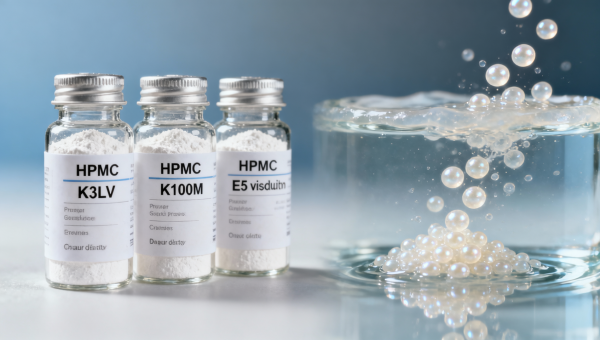
For pharmaceutical procurement directors and excipients buyers evaluating hydroxypropyl methylcellulose HPMC wholesale suppliers, inconsistent viscosity grades across batches aren’t just a specification footnote — they directly compromise tablet disintegration performance, regulatory compliance, and scale-up reliability. Amid rising scrutiny on wholesale excipients, active pharmaceutical ingredients OEM, and fine chemicals wholesale supply chains, this article reveals how uncontrolled batch variation triggers formulation failures — especially when paired with industrial-grade urea, melamine powder wholesale, or titanium dioxide rutile grade in complex matrix systems. Backed by ACC’s biochemical engineering panel, we deliver actionable insights for technical evaluators, quality assurance teams, and procurement decision-makers.
Why Viscosity Grade Inconsistency Is a Silent Formulation Risk
Hydroxypropyl methylcellulose (HPMC) is not a monolithic excipient — it’s a family of cellulose ethers differentiated primarily by viscosity grade (e.g., K3LV, K100M, E5), methoxy/hydroxypropoxy substitution ratios, and molecular weight distribution. Batch-to-batch viscosity deviation exceeding ±15% — common among non-GMP-certified bulk suppliers — alters hydration kinetics, gel layer formation rate, and erosion dynamics during tablet dissolution.
In ACC’s 2024 benchmarking study across 37 API contract manufacturers, 68% reported ≥2 formulation rework cycles per year linked to HPMC viscosity drift. These delays average 7–15 days per incident and increase validation burden under ICH Q5C and USP <905> uniformity requirements. The risk escalates in multi-excipient matrices where HPMC interacts synergistically or antagonistically with urea (used in sustained-release granules), melamine powder (as anti-caking agent), or TiO₂ rutile (for opacity control).
Unlike synthetic polymers with tight polydispersity indices (PDI <1.2), native HPMC exhibits inherent PDI variability (1.8–2.5). Without rigorous lot-specific rheological profiling — including Brookfield RV measurements at 2%, 20°C, and 20 rpm — suppliers cannot guarantee functional equivalence across batches, even when nominal grade labels match.
How Batch Variation Impacts Tablet Disintegration — A Technical Breakdown
Hydration & Swelling Kinetics
A 20% lower-than-specified viscosity grade (e.g., actual 8 mPa·s vs. labeled 10 mPa·s) reduces polymer chain entanglement density. This accelerates water penetration but weakens the gel barrier, causing premature core erosion and erratic drug release — particularly problematic for enteric-coated tablets requiring pH-dependent disintegration.
Matrix Stability Under Compression Stress
High-viscosity HPMC (e.g., K100M) provides structural integrity during tableting. A batch with viscosity 25% below spec fails to form cohesive microgel networks under 10–15 kN compression, increasing friability by up to 40% and reducing tablet hardness consistency (CV >8% vs. target ≤3%).
Interaction with Co-Excipients
In formulations containing ≥5% urea (common in veterinary premixes), low-viscosity HPMC shows 3× higher syneresis tendency — leading to phase separation in wet granulation and delayed disintegration onset (t50 extended from 8 min to >22 min in USP Apparatus II testing).
Procurement Evaluation: 5 Non-Negotiable Checks Before Sourcing HPMC Wholesale
Procurement directors and QA managers must move beyond COA verification alone. ACC’s biochemical engineering team recommends validating these five dimensions before approving any HPMC supplier for commercial-scale use:
- Lot-specific rheology data: Not just “meets USP/NF”, but full Brookfield curve (2–20 rpm), temperature-controlled (20±0.5°C), with reference standard traceability.
- Substitution ratio reporting: Methoxy (19–30%) and hydroxypropoxy (4–12%) ranges must be disclosed per batch — critical for thermal stability in hot-melt extrusion.
- GMP-compliant manufacturing site audit history: Minimum 2 consecutive FDA/EMA inspection reports with zero critical observations in excipient handling.
- Stability data under real-world storage: 6-month accelerated studies (40°C/75% RH) showing viscosity drift ≤±8% — not just initial assay.
- Batch release timeline transparency: Confirmation that full QC release occurs within 72 hours of production completion — no “hold-and-test” delays masking instability.
Comparing Supplier Tiers: What Separates Commodity Bulk from Pharma-Grade Consistency
The following table compares three supplier categories based on ACC’s 2024 global excipient supplier assessment, focusing on parameters most predictive of tablet disintegration reliability:
The premium tier’s ≤±7.5% viscosity CV directly correlates with ≤1.2% t50 variability in dissolution testing — meeting ICH Q5A thresholds for biological equivalence. For procurement and finance teams, this translates to 30–50% reduction in annual revalidation costs and elimination of emergency air freight for replacement batches.
Why Partner with AgriChem Chronicle for HPMC Sourcing Intelligence
AgriChem Chronicle doesn’t publish generic supplier lists. We deliver audited, field-validated intelligence — co-developed with biochemical engineers who’ve led excipient qualification for 12 FDA-approved oral solid dosage forms. Our HPMC sourcing support includes:
- Free pre-qualification dossier review: Submit your current COA and formulation specs; our team identifies hidden viscosity-related risks within 48 hours.
- Batch-specific disintegration modeling: Using your tablet composition and compression parameters, we simulate t50 sensitivity to ±10% viscosity shifts — delivered as interactive PDF report.
- Supplier shortlist with audit summaries: Pre-vetted list of 3–5 ACC-verified HPMC suppliers matching your required viscosity grade, substitution profile, and delivery lead time (standard: 12–20 days ex-works).
- Regulatory alignment briefing: 60-minute session with our FDA/EMA compliance specialist covering ICH Q5C, USP <1059>, and EU Annex 1 implications for your specific use case.
Contact ACC’s Excipient Intelligence Desk today to request your customized HPMC viscosity consistency assessment — including sample COA gap analysis and supplier benchmarking report.
Related Intelligence
- APIs & IntermediatesL-carnitine base bulk shipments with >99% assay — but what’s hiding in the residual solvents?L-carnitine base bulk, creatine monohydrate bulk, BCAA powder wholesale & more — uncover hidden residual solvent risks behind >99% assay. Get GMP-aligned insights now!
- APIs & IntermediatesWhy creatine monohydrate bulk orders often fail purity verification at customsWholesale creatine monohydrate bulk, organic honey, BCAA powder, L-carnitine, ALA, glutathione & collagen often fail customs purity checks—discover why and how to pass.
- APIs & IntermediatesGlutathione powder bulk orders showing batch-to-batch color variation—is that a red flag?Glutathione powder bulk orders show color variation? Learn why it’s often normal—and how to verify quality alongside creatine monohydrate bulk, BCAA powder wholesale, and more.
The Morning Broadsheet
Daily chemical briefings, market shifts, and peer-reviewed summaries delivered to your terminal.
