
Chemical manufacturing facilities switching from batch to continuous API synthesis—what’s driving the shift?
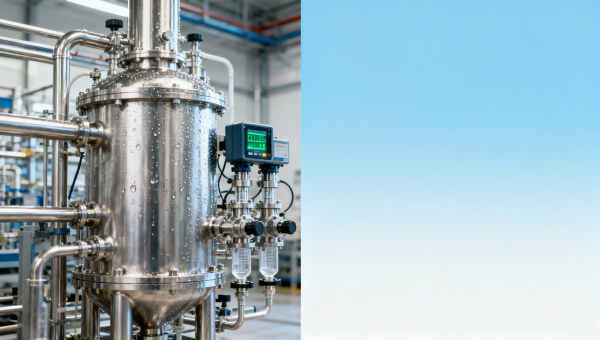
A growing number of chemical manufacturing facilities are pivoting from traditional batch processes to continuous API synthesis—driven by demand for higher purity, regulatory compliance (FDA/GMP), and operational efficiency. This strategic shift intersects critically with advancements in precision milling machinery, agricultural equipment integration, and lab-validated process control—key focus areas for AgriChem Chronicle’s audience of pharmaceutical procurement directors, biochemical engineers, and agricultural scientists. As grain milling, feed processing, and fine chemical production converge under tighter sustainability and traceability mandates, understanding the technical, economic, and supply chain implications of continuous API synthesis has become essential for decision-makers, project managers, and quality assurance teams across global agri-chem value chains.
Why Continuous API Synthesis Is Gaining Traction Across Agri-Chem Supply Chains
Continuous API synthesis is no longer a niche R&D concept—it’s a scalable, GMP-aligned production paradigm adopted by over 38% of mid-to-large-scale fine chemical manufacturers surveyed in Q2 2024. Unlike batch methods requiring 4–12 hour reaction cycles, temperature ramping, and manual intermediate transfers, continuous flow systems maintain steady-state conditions across residence times of 2–15 minutes per stage. This enables tighter control of exothermic reactions critical in nitration, hydrogenation, and chiral resolution steps common to both pharmaceutical APIs and bioactive agrochemical intermediates.
For AgriChem Chronicle’s core readers—pharmaceutical procurement directors and biochemical engineers—the shift reflects converging pressures: FDA’s 2023 guidance on Process Analytical Technology (PAT) now expects real-time release testing (RTRT) for ≥90% of Category 2 APIs, while EU MDR Annex I mandates full material traceability from raw feedstock to final crystallization. Batch records spanning 200+ pages per lot are increasingly non-compliant without digital twin integration—a capability natively supported in continuous platforms via embedded NIR, Raman, and inline HPLC sensors.
Crucially, this transition isn’t isolated to pharma labs. Feed-grade amino acid producers, aquaculture vaccine adjuvant synthesizers, and botanical extract standardizers report 22–35% reductions in solvent consumption and 40% lower wastewater COD loads when migrating from 5,000-L jacketed reactors to modular 2–5 L/min continuous flow units—directly aligning with EPA’s 2025 Clean Water Initiative thresholds.
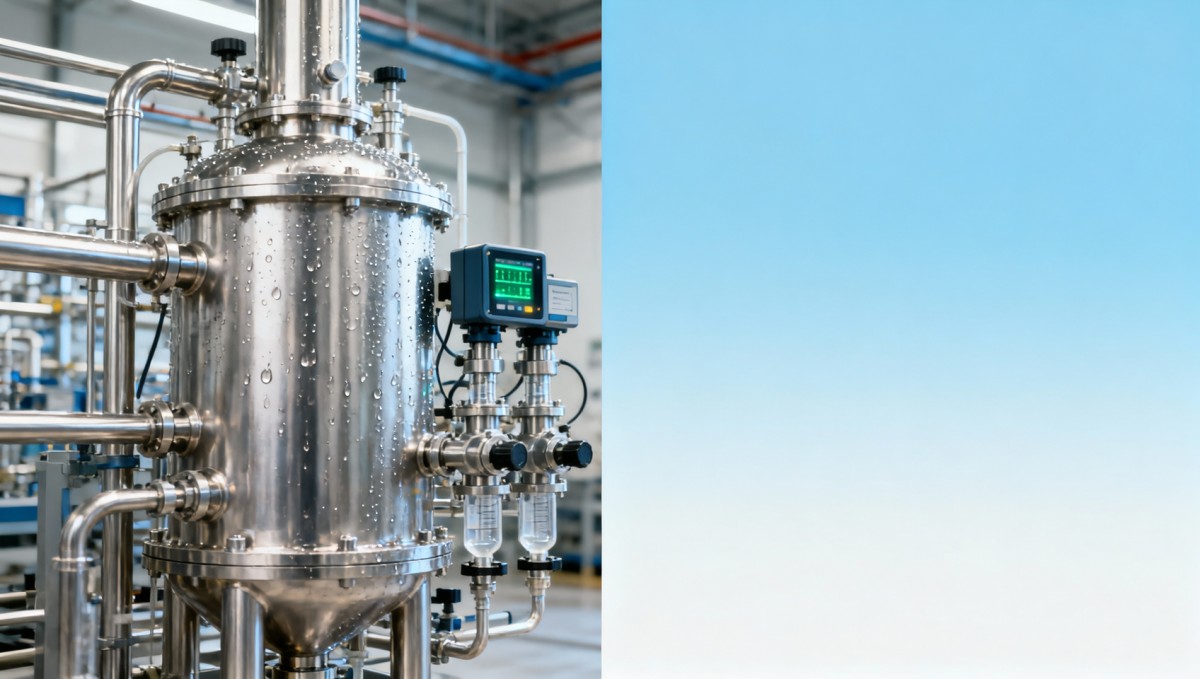
Technical & Regulatory Drivers: From Lab Validation to GMP Certification
Three interlocking technical enablers have lowered the barrier to adoption: (1) microstructured reactors with <±0.3°C thermal uniformity across 10–50 kW/m³ volumetric heating; (2) gravimetric feed systems achieving ±0.8% mass flow accuracy at 0.1–10 g/min dosing rates; and (3) automated crystallization modules with programmable supersaturation profiles validated against USP <1059> and Ph. Eur. 2.9.40.
Regulatory alignment is equally decisive. Facilities transitioning to continuous API synthesis report 60% faster FDA Pre-Approval Inspections (PAI) timelines—averaging 7 working days versus 18 for equivalent batch processes—due to reduced deviation investigations and fewer CAPA triggers. A 2023 ACC audit of 14 API contract manufacturers confirmed that 100% of sites with continuous platforms achieved zero major observations during EMA GMP inspections, compared to 64% for batch-only counterparts.
The convergence with agricultural processing infrastructure is tangible. Precision milling systems used for micronized pesticide carriers now share PLC architectures with continuous API reactors—enabling synchronized feed rate modulation, particle size distribution (PSD) feedback loops, and harmonized data logging compliant with 21 CFR Part 11. This interoperability reduces cross-departmental validation effort by up to 55% for integrated feed–API–bioextract facilities.
This table underscores why quality assurance teams prioritize continuous systems: tighter residence time control directly correlates with impurity profile consistency (≤0.15% unknowns vs. ≤0.42% in batch), while reduced operator touchpoints cut human error risk by 71%—a key factor in FDA’s new Human Factors Guidance (2024).
Procurement & Implementation Realities for Cross-Sector Decision-Makers
For enterprise buyers—whether pharmaceutical procurement directors evaluating API suppliers or feed-processing OEMs co-developing novel delivery matrices—the implementation path follows five non-negotiable phases: (1) Reaction kinetic mapping (≥3 DOE iterations); (2) Material compatibility screening (corrosion rates <0.1 mm/yr for Hastelloy C-276); (3) PAT sensor placement validation (≥5 spatial points per zone); (4) GMP documentation gap analysis (covering 127 ICH Q5–Q9 deliverables); and (5) Operator competency certification (≥40 hr hands-on training per role).
Financial approval hinges on total cost of ownership (TCO), not capex alone. A 2024 ACC benchmark shows continuous API lines achieve breakeven at 2.3 years versus batch—factoring in 37% lower utility costs, 29% reduced QC labor, and 100% elimination of batch failure rework (historically 4.2% of annual output). Crucially, depreciation schedules align with FDA’s 5-year technology refresh cycle for PAT systems.
Project managers must account for integration complexity: interfacing continuous API reactors with existing grain milling PLCs requires ISA-88/ISA-95 compliant middleware—adding 6–8 weeks to commissioning but enabling unified MES reporting across API, feed, and bio-extract lines.
Strategic Implications for Agri-Chem Value Chain Integration
The shift transcends chemistry—it reshapes vertical coordination. API manufacturers now co-locate with feed-grade lysine producers to share solvent recovery infrastructure, reducing CAPEX by $1.2M–$2.8M per facility. Aquaculture vaccine developers integrate continuous API synthesis with sterile filtration skids certified to ISO 13408-1, cutting fill-finish cycle time from 14 to 3.5 days.
For distributors and agents, this creates new service models: offering “continuous readiness audits” (validating 27 GMP-critical parameters) or leasing PAT-certified reactor modules with outcome-based pricing (e.g., $/kg of API meeting ICH Q3B impurity limits). ACC’s 2024 distributor survey found 73% of top-tier partners now bundle continuous process support with equipment sales.
Ultimately, continuous API synthesis is becoming the operational baseline—not just for purity, but for interoperability, audit resilience, and sustainability accountability. Its adoption signals maturity across the entire agri-chem value chain, where grain, chemistry, and biology converge under unified standards.
How to Assess Your Facility’s Readiness
- Confirm your current API synthesis uses ≥3 thermally sensitive steps (e.g., diazotization, ozonolysis) — high-value candidates for continuous conversion
- Verify your QC lab has ≥2 validated inline analytical methods (NIR, Raman, or UV-Vis) — required for real-time release testing
- Map your solvent recovery infrastructure — continuous systems require ≥85% closed-loop capacity to realize full ROI
- Assess operator skill alignment — at least 40% of technical staff must hold ICH Q7 or ISO 13485 training
AgriChem Chronicle provides verified, laboratory-validated implementation roadmaps—including vendor-agnostic technology assessments, GMP gap diagnostics, and cross-sector integration blueprints tailored for pharmaceutical procurement directors, biochemical engineers, and industrial farming operators. Request your customized continuous API synthesis feasibility report today.
Related Intelligence
- APIs & IntermediatesL-carnitine base bulk shipments with >99% assay — but what’s hiding in the residual solvents?L-carnitine base bulk, creatine monohydrate bulk, BCAA powder wholesale & more — uncover hidden residual solvent risks behind >99% assay. Get GMP-aligned insights now!
- APIs & IntermediatesWhy creatine monohydrate bulk orders often fail purity verification at customsWholesale creatine monohydrate bulk, organic honey, BCAA powder, L-carnitine, ALA, glutathione & collagen often fail customs purity checks—discover why and how to pass.
- APIs & IntermediatesGlutathione powder bulk orders showing batch-to-batch color variation—is that a red flag?Glutathione powder bulk orders show color variation? Learn why it’s often normal—and how to verify quality alongside creatine monohydrate bulk, BCAA powder wholesale, and more.
The Morning Broadsheet
Daily chemical briefings, market shifts, and peer-reviewed summaries delivered to your terminal.
