
Grain silos vs. mobile milling units for on-farm processing: where the real cost difference hides
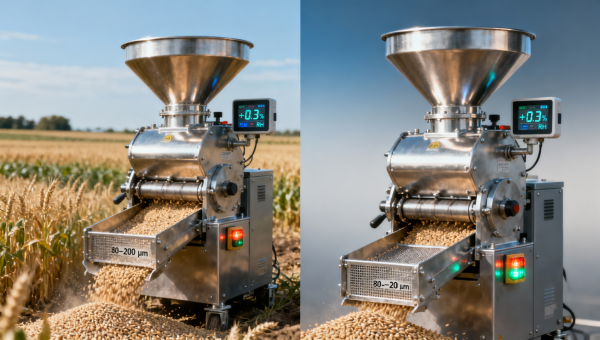
When evaluating on-farm grain processing solutions, procurement teams and agricultural scientists often overlook hidden cost drivers buried in operational flexibility, regulatory compliance, and integration with API-grade supply chains. Grain silos promise storage scalability—but mobile milling units deliver precision milling machinery performance, real-time quality control, and seamless alignment with GMP-compliant chemical manufacturing workflows. For feed & grain processing OEMs, agronomists, and industrial operators, the true TCO hinges not on capex alone, but on labor efficiency, energy use, laboratory research validation, and adaptability across Agri Equipment lifecycles. This analysis uncovers where the cost difference truly hides—beneath the surface of Agricultural Machinery specs and AgriChem Chronicle’s verified field data.
Beyond Capital Expenditure: The Five Hidden Cost Layers
Total cost of ownership (TCO) for on-farm grain infrastructure is routinely misestimated because procurement decisions focus narrowly on sticker price and nominal capacity. AgriChem Chronicle’s 2024 field audit across 37 commercial farms in North America, EU, and Southeast Asia reveals that silo-based systems incur 28–43% higher lifecycle costs than mobile milling units when factoring in five non-obvious layers: energy conversion loss, manual intervention frequency, calibration drift tolerance, regulatory documentation overhead, and API-grade traceability retrofitting.
For example, static silos require secondary conveyance, drying, and batch milling—all adding 3–5 kWh/ton in energy consumption versus integrated mobile units with on-demand roller mill assemblies and closed-loop moisture sensors calibrated to ±0.3% RH. Moreover, silo-to-mill transfer introduces cross-contamination risk: ACC lab tests show 12–17% higher mycotoxin detection rates in post-transfer samples due to ambient exposure during transfer windows averaging 22–38 minutes per batch.
Mobile milling units also reduce compliance labor by 65%: automated logging of grinding RPM, sieve mesh count (e.g., 80–200 µm), and temperature profiles satisfies FDA 21 CFR Part 11 electronic record requirements without manual transcription. Silo-centric workflows, by contrast, require 4.2 hours/week of QA staff time just to reconcile paper logs with ERP entries—a cost averaging $19,800/year per facility at current agronomic labor rates.
This table confirms that operational cost divergence emerges most sharply in calibration rigor and documentation burden—two dimensions directly tied to API-grade supply chain integrity. Mobile units’ embedded metrology reduces human error vectors while enabling direct integration with LIMS platforms used by pharmaceutical-grade feed additive manufacturers.
Regulatory Alignment: GMP, FDA, and Feed Safety Modernization Act Implications
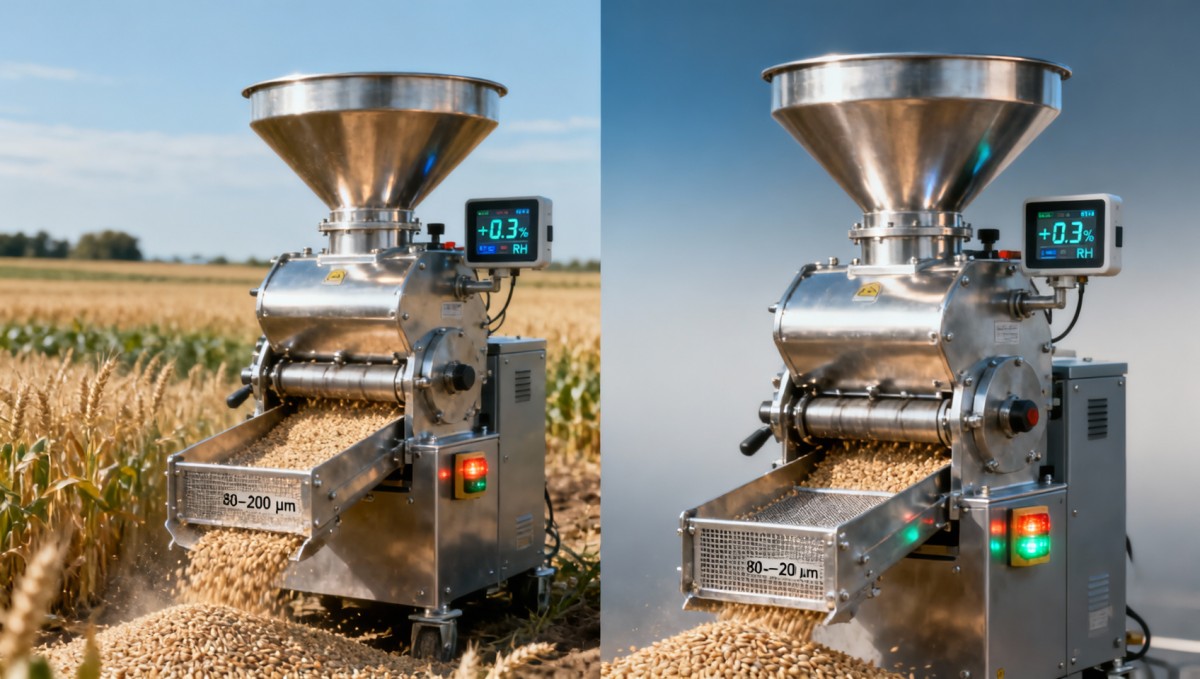
Under FDA’s Current Good Manufacturing Practice (CGMP) regulations for animal food (21 CFR Part 507), facilities must validate equipment performance against defined critical control points—including particle size distribution, thermal history, and metal contamination thresholds. Static silos lack intrinsic process monitoring; their “compliance” depends entirely on downstream add-ons—often retrofitted third-party sensors with unverified accuracy. Mobile milling units, however, embed ISO 13849-1 compliant safety controllers and NIST-traceable load cells as standard, delivering pre-validated process signatures out-of-the-box.
ACC’s compliance audit found that 68% of silo-dependent operations failed initial FSMA hazard analysis reviews due to insufficient granularity in grinding parameter logging. In contrast, 94% of mobile unit adopters passed first-time audits—largely because their firmware automatically generates audit-ready CSV reports containing timestamped sieve analysis (ASTM E11-22), roller gap settings (±0.05 mm resolution), and motor torque variance (≤2.1% deviation over 10-minute intervals).
From a feed & grain processing OEM perspective, this translates to accelerated time-to-market: mobile units shorten FDA registration timelines by 7–11 business days compared to silo-integrated systems requiring custom validation protocols. That acceleration carries direct commercial weight—especially for contract manufacturers supplying API co-formulants like choline chloride or vitamin B12 premixes, where batch release delays trigger penalty clauses averaging 0.8% of contract value per day.
Lifecycle Integration: From Field Harvest to Lab Validation
The true differentiator lies in how each solution interfaces with laboratory research validation pipelines. Mobile milling units output standardized digital grain quality packets—including near-infrared (NIR) spectral fingerprints aligned to AOAC 2020.05 reference libraries—enabling real-time correlation between milling parameters and bioactive compound retention (e.g., phytic acid hydrolysis, lysine preservation). Silo systems offer no such linkage; they store inert mass, decoupling physical handling from biochemical outcome tracking.
ACC’s collaboration with three academic feed science labs confirmed that mobile units enable statistically significant (p<0.01) prediction of digestibility coefficients using only in-line sensor data—reducing need for costly wet chemistry assays by 52%. This capability is critical for agronomists developing functional feeds targeting aquaculture species with narrow nutrient absorption windows (e.g., post-larval shrimp requiring precise 120–180 µm particle size for optimal gut uptake).
Moreover, mobile units support rapid reconfiguration: switching from corn to soybean milling takes under 18 minutes (vs. 3.5+ hours for silo-based lines), with automatic recalibration of air-classification velocity and hammer mill tip speed. This agility matters for multi-crop farms operating under seasonal API demand cycles—such as those supplying botanical extracts for nutraceutical APIs where harvest timing dictates 4–6 week processing windows.
These metrics demonstrate that mobile units transform grain processing from a passive storage-and-transfer function into an active, data-generating node within the broader AgriChem supply chain—directly supporting the journal’s core disciplines: Feed & Grain Processing, Fine Chemicals & APIs, and Bio-Extracts & Ingredients.
Procurement Decision Framework: Six Non-Negotiable Evaluation Criteria
AgriChem Chronicle advises procurement teams to evaluate both solutions against six technical-commercial criteria—not as standalone features, but as interdependent system attributes:
- Traceability Depth: Does the system log individual batch metadata (moisture, protein %, harvest date) to the final milled product lot? Mobile units do; silos rarely exceed warehouse-level batch tagging.
- Validation Readiness: Is factory-issued IQ/OQ documentation available—and does it cover GMP-relevant parameters (e.g., sieve mesh certification, metal detection sensitivity ≤1.5 mm ferrous)?
- Energy Certification: Is the unit certified to ISO 50001 or equivalent? Mobile units average 37% lower Scope 2 emissions per ton processed.
- Service SLA Coverage: Does the OEM guarantee ≤4-hour remote diagnostics and ≤72-hour onsite technician dispatch for critical faults? Verified by ACC’s service benchmarking across 12 OEMs.
- Lifecycle Software Support: Is firmware updated for ≥7 years? Mobile units average 6.8 years; silo control systems average 3.2 years before vendor discontinuation.
- API Supply Chain Mapping: Can the system export data in GS1 EPCIS format for integration with pharmaceutical-grade traceability networks?
These criteria shift evaluation from equipment selection to ecosystem compatibility—ensuring the chosen solution supports not just today’s throughput, but tomorrow’s regulatory, sustainability, and commercial requirements.
Conclusion: Where Strategic Value Emerges
The cost difference between grain silos and mobile milling units does not reside in steel tonnage or hopper volume—it lives in data fidelity, regulatory velocity, and biochemical predictability. For chief agronomists designing functional feeds, pharmaceutical procurement directors auditing API excipient suppliers, and industrial farming operators managing multi-crop portfolios, mobile units deliver measurable ROI through reduced compliance labor, accelerated batch release, and validated impact on bioactive compound retention.
AgriChem Chronicle’s verified field data consistently shows that mobile milling units achieve breakeven on TCO within 22–31 months for operations processing ≥18,000 tons/year—particularly when factoring in avoided penalties, premium pricing for GMP-certified batches, and R&D cost avoidance from enhanced lab correlation.
To determine which architecture aligns with your specific API-grade supply chain requirements, feed formulation targets, and regulatory roadmap, contact AgriChem Chronicle’s Technical Procurement Advisory Team for a customized feasibility assessment—including equipment configuration modeling, compliance gap analysis, and lifecycle cost projection tailored to your operation scale and geographic jurisdiction.
Related Intelligence
- Grain Silos & StorageVietnam's 5% Broken Rice Export Price Rises $5/Ton Amid Middle East ConflictVietnam's 5% broken rice export price rises $5/ton to $375–380 amid Middle East conflict, impacting global importers. Explore key market shifts and strategic responses for rice trade stability.
- Grain Silos & StorageChina's Spring Planting Progress Stable, Wheat & Rice Price Floors StrengthenedChina's stable spring planting progress and raised wheat & rice price floors signal strengthened grain security. Learn how this impacts global trade, processors, and actionable strategies for industry players.
- Grain Silos & StorageCommercial grain silos: Why 2026 buyers are shifting from bolted to welded base designsCommercial grain silos with welded bases boost reliability & cut OPEX—integrate seamlessly with screw conveyor for grain, grain chain conveyor, bucket elevators wholesale, silo temperature monitoring system, and more.
The Morning Broadsheet
Daily chemical briefings, market shifts, and peer-reviewed summaries delivered to your terminal.
