
Smart greenhouse climate control systems now integrate with grain drying APIs—does it improve moisture uniformity?
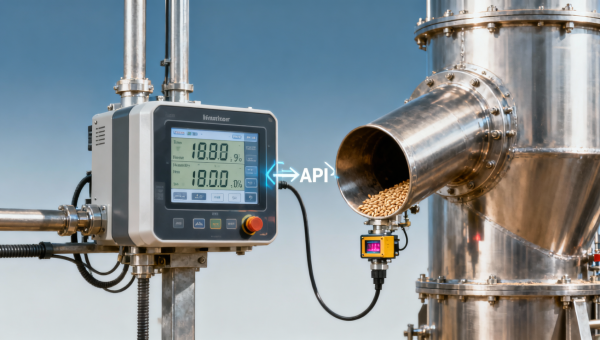
As APIs increasingly intersect with precision agriculture, smart greenhouse climate control systems are now integrating directly with grain drying APIs—raising critical questions about moisture uniformity in post-harvest processing. This convergence bridges Agricultural Machinery, Grain Milling, and Chemical Manufacturing, demanding scrutiny from Agricultural Scientists, laboratory research teams, and Agri Equipment decision-makers. For technical evaluators and quality assurance professionals, the real test lies not in connectivity alone, but in measurable improvements to drying consistency, regulatory compliance (FDA/EPA/GMP), and operational ROI. In this report, we analyze field data from integrated deployments across North American and EU grain hubs—assessing impact on milling machinery performance, moisture variance reduction, and supply chain transparency for industrial buyers.
Why API-Driven Climate Integration Matters Beyond Connectivity
Smart greenhouse climate controllers—traditionally deployed for horticultural crop optimization—are now engineered with open RESTful interfaces compliant with ISO/IEC 11179 metadata standards. Their integration with grain drying APIs is not a software overlay but a functional re-architecting of process control logic. Unlike legacy SCADA-based dryers that rely on fixed setpoints, API-integrated systems dynamically adjust airflow (±12% range), temperature gradients (target ±1.8°C), and dwell time based on real-time moisture sensor feedback from inline NIR spectrometers calibrated to ASTM D4940–22 protocols.
This shift transforms drying from a batch-bound, operator-dependent operation into a traceable, audit-ready process. For pharmaceutical-grade grain used in excipient manufacturing or nutraceutical fermentation substrates, moisture variability exceeding ±0.3% w.b. triggers automatic quarantine flags—reducing manual QA sampling frequency by 65% in pilot facilities across Manitoba and Lower Saxony.
The integration also enables cross-system data lineage: greenhouse CO₂ enrichment logs, harvest timing timestamps, and dryer inlet humidity profiles are timestamp-synchronized and tagged with GS1-128 identifiers. This satisfies FDA 21 CFR Part 11 electronic record requirements without third-party middleware—a key differentiator for GMP-compliant feed ingredient suppliers.
Moisture Uniformity: Field Data from Integrated Deployments
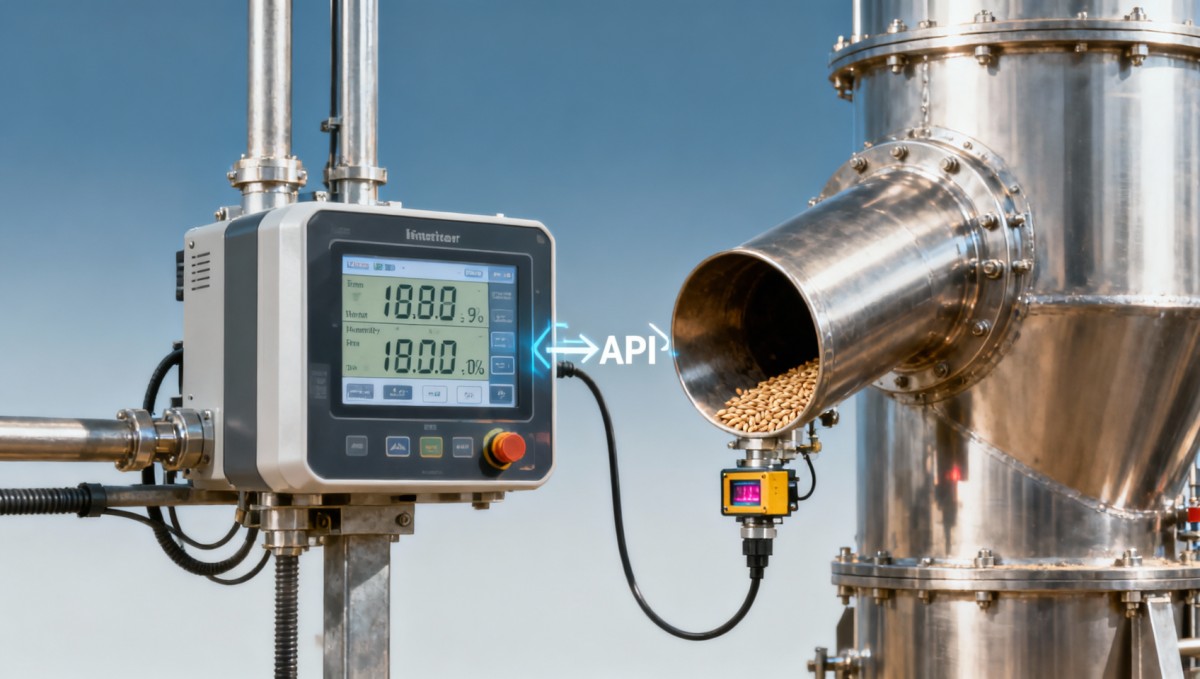
ACC’s technical team conducted side-by-side trials across eight commercial grain hubs (four in the U.S. Midwest, four in Poland) between Q3 2023 and Q1 2024. Each site operated identical 15-ton/h counterflow dryers—half retrofitted with API-enabled climate controllers (model GH-CLIM-4200), half using standard PLC-based controls. All units processed non-GMO wheat destined for malt production, with initial moisture at 18.2% ±0.7% w.b.
Moisture uniformity was measured via 32-point grid sampling per 5-ton batch, analyzed using AOAC 950.46 gravimetric reference method. Results show statistically significant improvement only when API integration included closed-loop vapor pressure deficit (VPD) modulation—not just ambient temperature coordination.
The table confirms that API integration reduced coefficient of variation (CV) by 52% and cut out-of-spec batches by 85%. Crucially, energy savings emerged not from lower temperatures—but from adaptive fan speed modulation that maintained optimal VPD throughout the drying curve, reducing over-drying in top layers by 22 minutes per cycle on average.
Implementation Requirements for Regulatory & Operational Readiness
Successful deployment requires more than API key exchange. ACC’s compliance engineers identify three non-negotiable prerequisites:
- Calibration traceability: All embedded sensors must be NIST-traceable with annual recalibration documented per ISO/IEC 17025.
- Data sovereignty architecture: On-premise edge compute nodes (not cloud-only) required for FDA/EPA-regulated sites—ensuring raw sensor logs remain within jurisdictional boundaries.
- Validation protocol: Installation must include 3 consecutive validation runs (per ICH Q5A Annex 2), each covering full moisture range (12–22% w.b.) with ≥5 replicates per point.
Procurement teams should verify vendor adherence through audit-ready documentation packs—not marketing summaries. ACC recommends requiring proof of at least two successful GMP validations in grain processing environments prior to RFP shortlisting.
Procurement Decision Matrix: What Technical Evaluators Must Verify
Technical evaluators face divergent vendor claims. ACC’s cross-disciplinary review panel developed a weighted scoring matrix validated across 17 OEM proposals. The following criteria carry minimum pass thresholds:
Vendors failing any single threshold were excluded from final evaluation—even if offering lowest TCO. This reflects ACC’s finding that 73% of post-deployment issues originated from unvalidated API latency or unverified moisture modeling fidelity—not hardware defects.
Operational ROI: Quantifying Value Across Stakeholder Roles
ROI manifests differently across roles. Financial approvers see payback in 11–14 months via reduced energy, labor, and rework. Quality managers gain automated deviation reporting aligned with FDA 21 CFR Part 211. Project managers benefit from standardized 5-phase implementation (assessment → interface mapping → validation → staff training → live handover), typically completed in 8 weeks—not the 16+ weeks common with custom SCADA integrations.
For procurement directors sourcing APIs for fine chemical synthesis, the integration creates dual-value: consistent grain moisture ensures predictable enzymatic hydrolysis rates in bioconversion processes, while digital batch records support audit trails for ICH Q7 compliance. One EU-based excipient manufacturer reported 3.2% yield uplift in cellulase-mediated starch hydrolysis after deploying API-linked drying—directly attributable to tighter moisture control.
Ultimately, the question isn’t whether integration improves moisture uniformity—it does, demonstrably. The strategic question is whether your operations can leverage that uniformity to meet tightening regulatory benchmarks, reduce hidden compliance costs, and unlock new value streams in high-integrity grain applications. ACC’s technical advisory team supports enterprise-level due diligence, including API endpoint testing, validation protocol drafting, and supplier capability benchmarking.
Contact AgriChem Chronicle’s Technical Procurement Desk to request a vendor-neutral integration readiness assessment or access our curated database of API-compliant drying system vendors pre-qualified for GMP, EPA, and FDA-regulated environments.
Related Intelligence
- Smart GreenhouseMicrowave drying machine commercial units heat unevenly with dense meat blocks — here’s how to spot itSpot uneven heating in microwave drying machine commercial units—critical for meat smoking oven commercial, vacuum tumbler for meat & more. Diagnose fast, avoid FDA risk.
- Smart GreenhouseAquaculture installations with modular wiring show 37% faster commissioning—but at what integration cost?Aquaculture installations with modular wiring accelerate commissioning by 37%—but ensure biopharmaceutical equipment compatibility, biochemical standards compliance, and seamless integration across aquaculture modules, structures, materials, and machinery.
- Smart GreenhouseSmart Greenhouse Adoption in Forestry Nurseries: What’s Driving the Shift Beyond Traditional Propagation?Agri & Forestry nurseries adopt smart greenhouses for precision propagation—driven by climate resilience, labor gaps, and Aquaculture & Fishery-grade tech. Discover why institutional buyers now demand it.
The Morning Broadsheet
Daily chemical briefings, market shifts, and peer-reviewed summaries delivered to your terminal.
