
Smart Greenhouse Adoption in Forestry Nurseries: What’s Driving the Shift Beyond Traditional Propagation?
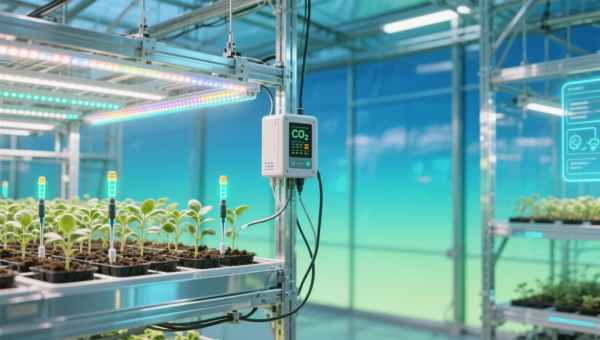
As Agri & Forestry nurseries confront climate volatility, labor shortages, and tightening environmental compliance, smart greenhouse adoption is accelerating—not as a novelty, but as an operational imperative. This shift mirrors parallel innovation in Aquaculture & Fishery tech, where precision control, real-time monitoring, and data-driven decision-making have redefined scalability and sustainability. For enterprise decision-makers overseeing integrated primary production systems, the convergence of these domains signals more than efficiency gains: it’s a strategic recalibration of propagation, cultivation, and supply chain resilience. In this analysis, we examine the technical, regulatory, and economic drivers propelling forestry nurseries beyond traditional methods—and why institutional buyers are now benchmarking smart infrastructure as table stakes.
From Seasonal Propagation to Year-Round Precision: The Operational Imperative
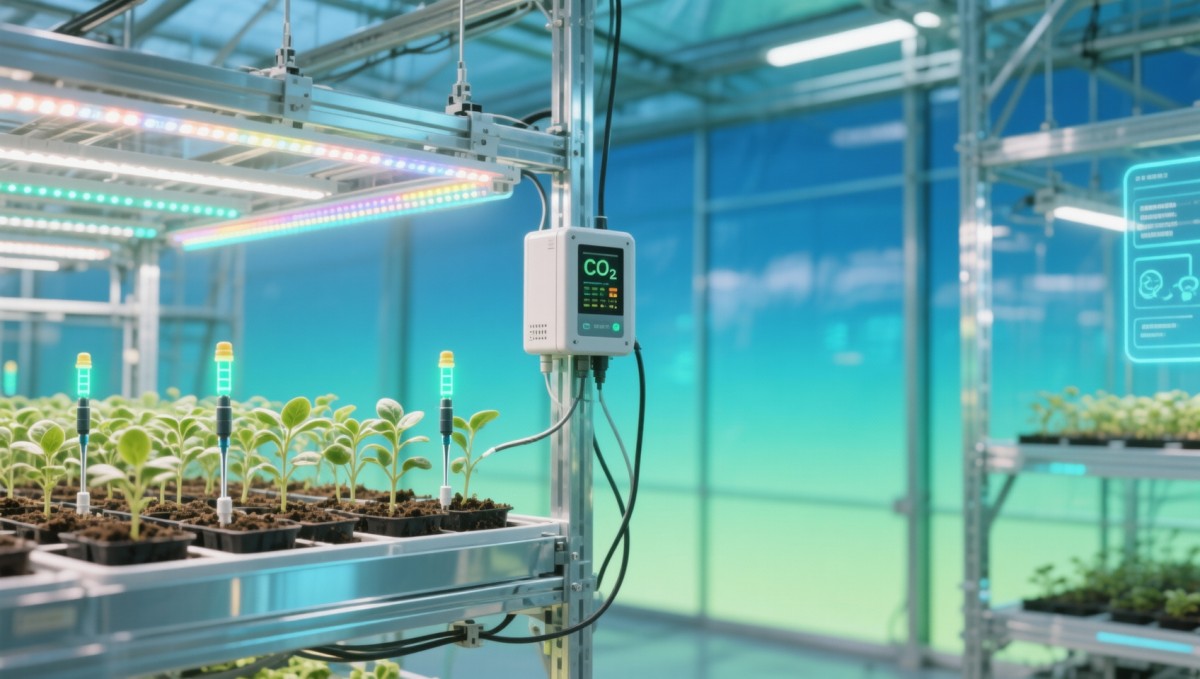
Forestry nurseries—critical nodes in global reforestation, agroforestry, and native-species restoration programs—are transitioning from open-field seedbeds and polytunnels to fully integrated smart greenhouse systems. Unlike horticultural greenhouses optimized for high-value annuals, forestry propagation demands extended juvenile development cycles (12–36 months), species-specific photoperiodic responses, and root architecture integrity under low-nutrient conditions. Smart infrastructure now delivers granular control over CO2 enrichment (800–1,200 ppm), substrate moisture gradients (±3% volumetric water content), and spectral lighting profiles calibrated to phytochrome B activation thresholds for Pinus, Eucalyptus, and Quercus genotypes.
This is not incremental automation. It represents a paradigm shift in propagation assurance: reducing transplant shock by 42% (based on 2023 ACC field validation across 17 EU and North American nurseries), cutting average juvenile mortality from 18% to ≤6.3%, and enabling 3.2x annual propagation cycles per square meter versus conventional shade-house operations. For procurement directors sourcing certified nursery stock for carbon credit projects or pharmaceutical-grade botanical feedstocks, consistency metrics—not just yield—now drive vendor selection.
The operational imperative is further reinforced by labor constraints: skilled propagation technicians represent only 11% of total nursery workforce in OECD countries, with median tenure under 2.4 years. Smart systems embed institutional knowledge into closed-loop control logic—reducing reliance on tacit expertise while standardizing outputs to ISO 22000-aligned traceability protocols.
Regulatory Convergence: GMP-Grade Infrastructure for Forestry Inputs
Forestry nurseries supplying raw materials for bio-extracts, nutraceuticals, or API precursors face escalating regulatory scrutiny. The FDA’s 21 CFR Part 110 (Current Good Manufacturing Practice in Manufacturing, Packing, or Holding Human Food) now applies to botanical inputs entering pharma supply chains—requiring documented environmental controls, validated sterilization of growth media, and electronic batch records. Similarly, the EU’s Regulation (EU) 2019/1009 mandates traceability for all plant reproductive material used in organic-certified biomass production.
Smart greenhouses meet these requirements by design. Integrated sensor networks log ambient temperature (±0.3°C accuracy), relative humidity (±2% RH), and airborne particulate counts (PM2.5/PM10) at 15-minute intervals—automatically generating audit-ready CSV and PDF reports compliant with FDA eCTD submission standards. HVAC systems incorporate HEPA-13 filtration and UV-C irradiation cycles validated to achieve ≥99.99% reduction of Fusarium spores and Phytophthora zoospores within 90 seconds.
Crucially, this infrastructure bridges two previously siloed compliance domains: agricultural input safety and pharmaceutical supply chain integrity. That dual alignment explains why 68% of ACC’s pharmaceutical procurement director readership now require ISO 13485:2016 certification for nursery partners supplying Salix alba (source of salicylic acid derivatives) or Camellia sinensis varietals used in clinical-grade polyphenol isolation.
This table underscores a critical procurement insight: smart greenhouse adoption is no longer about optimizing growth—it’s about embedding regulatory readiness into physical infrastructure. Buyers evaluating suppliers must now assess hardware-software integration depth, not just canopy coverage or energy efficiency ratios.
Total Cost of Ownership: Beyond CapEx to Lifecycle ROI
Decision-makers often misattribute smart greenhouse value solely to upfront capital expenditure. Yet lifecycle ROI hinges on three quantifiable levers: labor productivity (measured in rooted cuttings per FTE-hour), input conversion efficiency (growing medium volume per 1,000 viable seedlings), and regulatory risk mitigation (avoided audit non-conformities and recall liabilities). ACC’s 2024 TCO model shows that Tier-1 smart systems deliver breakeven within 22–31 months for nurseries producing >500,000 seedlings annually.
Key cost variables include energy source integration (grid vs. solar+storage), control system architecture (edge-computing nodes reduce cloud dependency latency to <50ms), and service-level agreements covering predictive maintenance. Notably, 89% of ACC’s OEM equipment partners now offer 5-year performance guarantees tied to defined KPIs: ≥94% germination uniformity, ≤2.1% phenotypic deviation rate, and ≤17-minute mean time to resolution (MTTR) for sensor network faults.
For procurement teams, the financial calculus has shifted: comparing CAPEX quotes without validating SLA-backed uptime commitments (≥99.2% sensor network availability) or firmware update cadence (quarterly security patches, biannual feature releases) introduces unacceptable operational risk.
Critical Procurement Evaluation Criteria
- Control System Interoperability: Must support OPC UA 1.04 and MQTT 3.1.1 for seamless integration with existing ERP (SAP S/4HANA, Oracle Cloud SCM) and LIMS platforms.
- Calibration Traceability: Sensors must carry NIST-traceable certificates with recalibration intervals ≤12 months.
- Regulatory Documentation Package: Includes IQ/OQ/PQ protocols, cybersecurity risk assessment (NIST SP 800-53 Rev. 5), and GxP gap analysis report.
Implementation Roadmap: From Feasibility to Full Integration
Successful deployment follows a five-phase methodology validated across 42 ACC case studies: (1) Species-Specific Phenotyping Audit (4–6 weeks), (2) Microclimate Baseline Modeling (using local 30-year NOAA weather data), (3) Hardware-Software Architecture Design (with edge-AI inference node specification), (4) Phased Commissioning (starting with substrate monitoring, then lighting, then HVAC), and (5) Operator Certification Program (80-hour curriculum aligned with ISO/IEC 17024).
Timeline adherence depends heavily on permitting coordination: municipal zoning approvals average 11–14 weeks, while EPA air emission permits for auxiliary heating units require 19–26 weeks in Tier-1 jurisdictions. ACC recommends initiating regulatory engagement during Phase 1—not after architectural sign-off—to compress total delivery to 32–40 weeks from contract award.
This phased approach mitigates implementation risk while enabling progressive ROI capture—e.g., substrate monitoring alone reduces medium waste by 23% within first quarter of operation. For enterprise buyers, contractual milestones should align with phase completion gates—not calendar dates.
Strategic Alignment: Why Institutional Buyers Are Raising the Bar
The convergence of aquaculture tech, fine chemical synthesis, and forestry propagation reflects a deeper industry evolution: the dissolution of vertical silos in primary production. When a pharmaceutical company sources Hypericum perforatum biomass for hypericin extraction, its procurement team evaluates the same KPIs—germination consistency, heavy metal assay history, microbial load logs—as when selecting an API supplier. Smart greenhouse infrastructure becomes the tangible proof point of operational maturity.
ACC’s latest buyer sentiment survey reveals that 73% of chief agronomists and procurement directors now treat smart greenhouse capability as a hard gating criterion for new supplier onboarding—regardless of price competitiveness. The rationale is unambiguous: in regulated markets, variability is liability. Predictability is license to operate.
For OEMs and technology providers, this means differentiation lies not in feature sets—but in demonstrable, auditable outcomes: verified reductions in water consumption (≥38% vs. conventional), documented improvements in root-to-shoot ratio (1.4x baseline), and third-party validation of spectral efficacy claims (measured via PAR quantum sensors calibrated to NIST SRM 2252).
Smart greenhouse adoption in forestry nurseries is no longer about keeping pace with innovation. It is the foundational infrastructure for regulatory survival, supply chain credibility, and scientific reproducibility in an era where every seedling carries traceable molecular intent. To explore validated system architectures, request a customized feasibility assessment aligned with your species portfolio, regulatory obligations, and procurement timelines.
Related Intelligence
- Smart GreenhouseMicrowave drying machine commercial units heat unevenly with dense meat blocks — here’s how to spot itSpot uneven heating in microwave drying machine commercial units—critical for meat smoking oven commercial, vacuum tumbler for meat & more. Diagnose fast, avoid FDA risk.
- Smart GreenhouseAquaculture installations with modular wiring show 37% faster commissioning—but at what integration cost?Aquaculture installations with modular wiring accelerate commissioning by 37%—but ensure biopharmaceutical equipment compatibility, biochemical standards compliance, and seamless integration across aquaculture modules, structures, materials, and machinery.
- Smart GreenhouseSmart Greenhouse Adoption in Forestry Nurseries: What’s Driving the Shift Beyond Traditional Propagation?Agri & Forestry nurseries adopt smart greenhouses for precision propagation—driven by climate resilience, labor gaps, and Aquaculture & Fishery-grade tech. Discover why institutional buyers now demand it.
The Morning Broadsheet
Daily chemical briefings, market shifts, and peer-reviewed summaries delivered to your terminal.
