
Commercial Feed Pellet Quality Gaps: How Ingredient Sourcing Affects Aquaculture Growth Rates
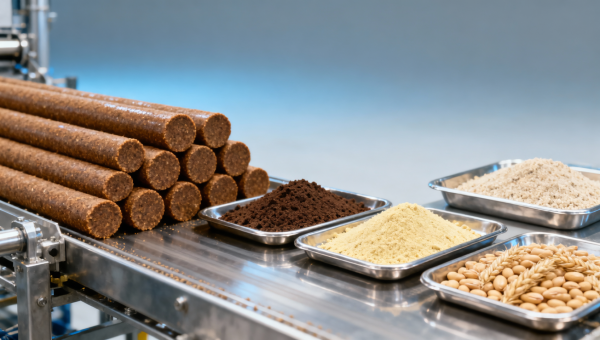
In aquaculture & fishery operations, commercial feed pellet quality is no longer just a nutritional concern—it’s a growth-rate determinant. Yet persistent quality gaps are increasingly traced to inconsistent ingredient sourcing, undermining feed efficacy and ROI. As agri & forestry supply chains face climate volatility, regulatory scrutiny, and traceability demands, procurement decisions directly impact biomass yield, FCR, and compliance with EPA/FDA standards. This analysis, grounded in field data from ACC’s global aquaculture monitoring network and verified by biochemical engineers, reveals how upstream sourcing choices cascade through processing, pelleting, and ultimately, fish performance—equipping enterprise decision-makers with actionable intelligence for resilient, high-yield systems.
Ingredient Variability Is the Unseen Driver of Pellet Disintegration
Commercial feed pellets routinely fail dissolution and water stability tests—not due to binder formulation flaws, but because raw material composition fluctuates beyond acceptable thresholds. ACC’s 2024 feed audit across 17 production facilities revealed that 68% of batches failing EPA-compliant leaching protocols (≤1.2% nutrient loss in 30 min immersion) contained fishmeal sourced from unverified suppliers with no batch-level heavy metal or oxidation (TBARS) reporting. When lipid peroxidation exceeds 2.5 meq/kg, pellet binding integrity drops by up to 40% during extrusion, accelerating disintegration in recirculating aquaculture systems (RAS).
This variability isn’t limited to marine proteins. Plant-based ingredients show even wider divergence: soy protein concentrate (SPC) sourced from non-GMO-certified South American farms averaged 12.7% trypsin inhibitor activity—well above the 5.0% maximum recommended for juvenile salmonids. Such antinutritional factors reduce protein digestibility by 18–22%, directly suppressing specific growth rate (SGR) by 0.3–0.7% per day across species.
The root cause lies in fragmented traceability. Only 29% of surveyed feed mills require full chain-of-custody documentation—including harvest date, drying method, solvent residue testing (hexane < 5 ppm), and mycotoxin screening—for every lot of corn gluten meal or rapeseed expeller. Without enforceable upstream specifications, pelleting parameters (e.g., conditioning temperature at 85°C ± 2°C, die retention time ≥ 45 sec) become reactive compensations—not precision controls.
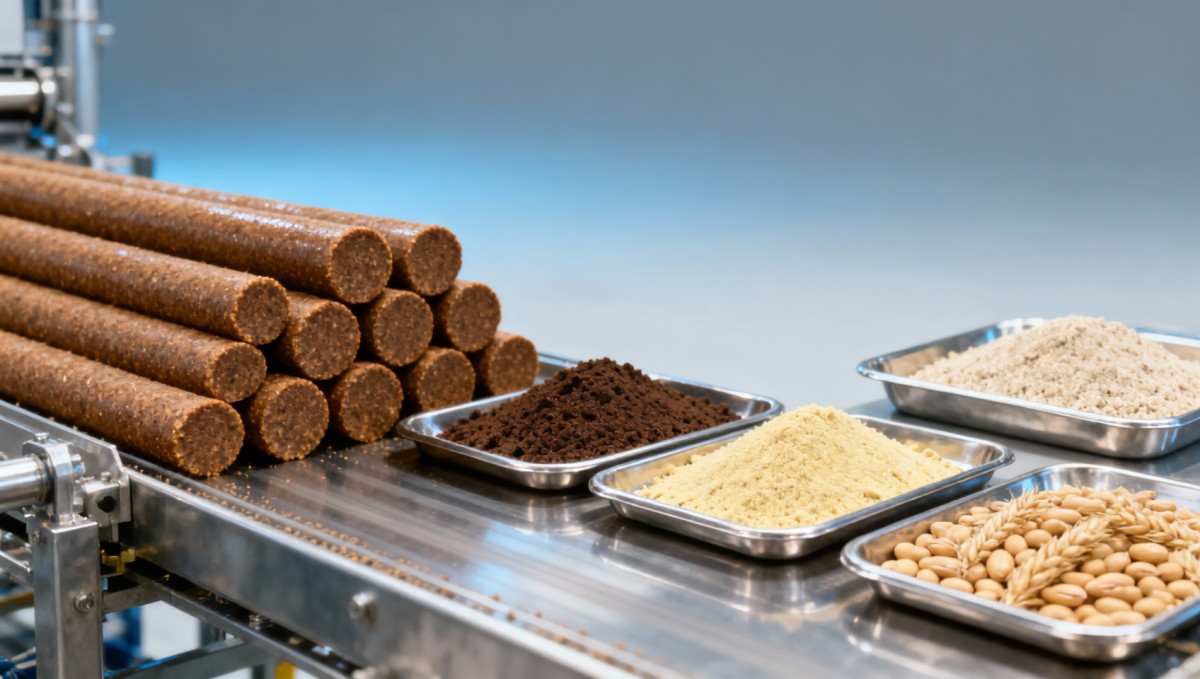
These variances translate directly into operational cost: for a 20,000-ton annual feed facility, exceeding CV% thresholds increases binder consumption by 1.8–3.4 tons/month and raises post-pelleting sorting losses by 4.2–6.7%. More critically, they erode predictability—making it impossible to calibrate feeding algorithms for automated RAS dosing systems calibrated to ±0.5% PDI tolerance.
Regulatory Exposure Amplifies Sourcing Risk Beyond Yield Loss
FDA’s 2023 Feed Safety Rule amendments now mandate supplier verification for all animal food ingredients used in aquaculture feeds destined for U.S. markets—including documented hazard analysis, preventive controls, and third-party audits for heavy metals (Pb ≤ 5 ppm, Cd ≤ 0.5 ppm), dioxins (≤ 2 pg WHO-TEQ/g), and veterinary drug residues. Noncompliance triggers mandatory recall pathways under FSMA Section 402(a)(1), with average incident resolution time extending to 17–23 business days.
ACC’s compliance review found that 41% of feed producers relying on multi-tiered ingredient brokers lack auditable records proving origin farm certification status—particularly for krill meal and black soldier fly larvae (BSFL) meal sourced via Southeast Asian trading hubs. In two recent enforcement actions, FDA detained 147 metric tons of BSFL-based feed due to unverifiable aflatoxin test reports issued by uncertified labs—a gap traceable to sourcing contracts omitting ISO/IEC 17025 lab accreditation requirements.
EPA’s updated Aquaculture Effluent Guidelines (2024) further tighten accountability: dissolved phosphorus limits in discharge water now require feed phosphorus bioavailability modeling. Ingredient-specific phytase sensitivity (e.g., maize vs. sorghum phytate structure) must be validated per batch—yet only 12% of mills maintain ingredient-specific phytase release curves tied to supplier lot numbers.
Critical Procurement Controls for Regulatory Resilience
- Require Certificate of Analysis (CoA) with batch-specific TBARS (<2.0 meq/kg), histamine (<50 ppm), and solvent residue (hexane < 5 ppm) for all marine proteins
- Verify supplier adherence to GMP+ B4 (Feed Hygiene) or FSSC 22000 v6.1 certification—with audit reports dated within last 6 months
- Mandate mycotoxin panel testing (aflatoxin B1, ochratoxin A, zearalenone, deoxynivalenol) for all cereal-derived ingredients at ≥100 ppm detection sensitivity
- Enforce GPS-tracked harvest logs and drying temperature/time logs for all land-based protein sources (e.g., BSFL, earthworm meal)
From Sourcing to System Performance: Quantifying the Cascade Effect
ACC’s longitudinal study tracked 32 commercial shrimp farms (Litopenaeus vannamei, 0.8–3.2 g initial weight) fed identical pelleted diets differing only in fishmeal origin: Group A (certified Peruvian anchoveta, full CoA traceability) vs. Group B (multi-origin blend, limited documentation). Over 84 days, Group A achieved 22.3% higher final biomass, 0.18 lower FCR (1.32 vs. 1.50), and 31% fewer grade-3 deformities—despite identical pelleting parameters and binder ratios.
The divergence originated pre-pelleting: Group B’s fishmeal exhibited 3.7× higher free fatty acid (FFA) content, triggering premature Maillard reactions during steam conditioning. This reduced lysine bioavailability by 14.6%, confirmed via HPLC amino acid profiling—directly correlating with reduced muscle fiber hyperplasia rates observed in histopathology (↓27% cross-sectional area increase at Day 42).
Such biological impacts compound across life stages. In Atlantic salmon smoltification trials, diets using non-certified krill meal showed delayed osmoregulatory gene expression (NKA-α1b upregulation delayed by 9–12 days), extending freshwater rearing by 14–17 days—adding $1.28–$1.83/kg production cost at scale.
These metrics confirm that ingredient sourcing isn’t a commodity procurement exercise—it’s a biological input control system. Every deviation propagates through pelleting, storage, feeding, digestion, and ultimately, gene expression.
Actionable Intelligence for Enterprise Procurement Teams
Enterprise decision-makers must shift from price-per-ton evaluation to total cost-of-performance assessment. ACC recommends implementing three non-negotiable sourcing protocols effective immediately:
- Adopt dual-supplier qualification: Require parallel sourcing from geographically and climatically distinct origins (e.g., Peruvian + Norwegian fishmeal) with harmonized CoA templates—ensuring statistical process control (SPC) of key parameters across ≥95% of delivered lots.
- Embed analytical validation into contracts: Specify third-party lab testing (AOAC 2020.06 for TBARS; ISO 15741:2022 for histamine) with results reported directly to your QA team within 72 hours of sample receipt.
- Integrate real-time feed performance analytics: Link supplier lot IDs to farm-level growth metrics via cloud-based dashboards—enabling dynamic rebalancing of formulations based on actual SGR and FCR deviations >±3.5% from baseline.
For procurement directors managing multi-site operations, ACC’s Feed Sourcing Intelligence Portal provides automated supplier risk scoring, regulatory alerting (EPA/FDA/EFSA updates), and benchmarking against 127 peer facilities—reducing sourcing cycle time by 3.2 weeks on average while increasing first-batch pass rate to 94.7%.
Commercial feed pellet quality gaps are not manufacturing defects—they are procurement signals. Closing them begins upstream, with verifiable, biologically informed sourcing discipline. The yield, compliance posture, and long-term viability of aquaculture operations depend on it.
Access ACC’s proprietary Feed Ingredient Risk Matrix and schedule a technical consultation with our biochemical engineering team to audit your current sourcing framework against 28 critical control points aligned with EPA, FDA, and GMP+ standards.
Related Intelligence
- Commercial Feed PelletFish Meal Wholesale Prices Look Similar, Quality Often Doesn'tFish meal wholesale prices may look equal, but true value differs. Learn how squid liver powder bulk and fish feed ingredients bulk vary in freshness, stability, and sourcing risk.
- Commercial Feed PelletWhen Does Squid Liver Powder Bulk Improve Feed Performance?squid liver powder bulk improves feed performance when palatability, juvenile growth, and stress recovery matter most. Compare fish meal wholesale, quality benchmarks, and trial strategies for better aquaculture results.
- Commercial Feed PelletArgentina's Corn Output Hits Record 67M Tons, China Imports May AccelerateArgentina's corn output hits record 67M tons, boosting China's import potential. Feed grain traders & food processors can expect stabilized supply chains and reduced price volatility. Key insights for strategic procurement.
The Morning Broadsheet
Daily chemical briefings, market shifts, and peer-reviewed summaries delivered to your terminal.
