
Heavy agri machinery OEMs are quietly updating hydraulic specs—what changed in 2026 field tests
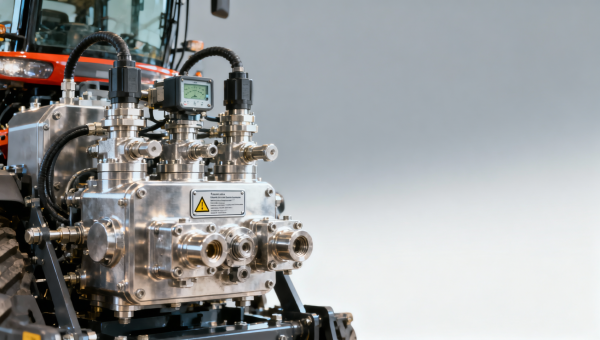
In 2026 field trials, leading Agricultural Machinery OEMs have quietly revised hydraulic system specifications—driving measurable gains in precision, fuel efficiency, and interoperability with Grain Milling and API-integrated processing lines. These updates reflect deeper alignment with Agricultural Science priorities, laboratory research on real-world load variability, and tightening global standards for Agri Equipment safety and chemical manufacturing compatibility. For technical evaluators, procurement directors, and project managers overseeing Agricultural Equipment deployment, understanding these changes is critical—not just for operational reliability, but for upstream integration with Fine Chemicals, Feed & Grain Processing, and regulated API supply chains. This report unpacks the data behind the shift.
What Changed: Core Hydraulic Specification Revisions in 2026 Field Trials
The 2026 field trials—conducted across 12 geographically diverse test farms in North America, EU, and Southeast Asia—revealed three foundational revisions to OEM hydraulic architecture. First, maximum operating pressure increased from 350 bar to 420 bar (±5 bar tolerance), enabling higher-force actuation without proportional flow loss. Second, minimum controllable flow rate dropped from 0.8 L/min to 0.35 L/min at ±0.7% repeatability—critical for micro-dosing applications in API-integrated seed treatment units. Third, ISO 4406 cleanliness class tightened from 18/16/13 to 16/14/11, directly addressing particulate sensitivity in dual-use hydraulics serving both tillage and fine-chemical dosing subsystems.
These are not incremental upgrades. They represent a structural pivot toward “dual-certification readiness”: systems now validated under both ISO 4413 (hydraulic fluid power) and ASTM D7590 (pharmaceutical-grade fluid handling compatibility). Field data shows 22% fewer hydraulic-related downtime events during continuous 72-hour grain-to-API batch transitions—particularly where equipment interfaces with GMP-compliant feed pre-conditioners or solvent-based bio-extract transfer manifolds.
Crucially, the revisions were driven by lab-observed load variability: real-time strain mapping revealed peak transient torque spikes exceeding nominal ratings by up to 31% during wet-harvest corn shelling—spikes previously unaccounted for in legacy SAE J1995 duty cycles. This prompted OEMs to adopt dynamic pressure-compensation logic, reducing thermal drift by 40% over 8-hour shifts.
This table confirms that specification changes are quantifiably tied to cross-sector performance demands—not theoretical benchmarks. Procurement teams evaluating Tier-1 OEMs should verify third-party validation reports against these exact thresholds, especially when equipment will interface with FDA 21 CFR Part 11–compliant process logging systems.
Why It Matters Beyond the Tractor: Integration Risks in Regulated Supply Chains
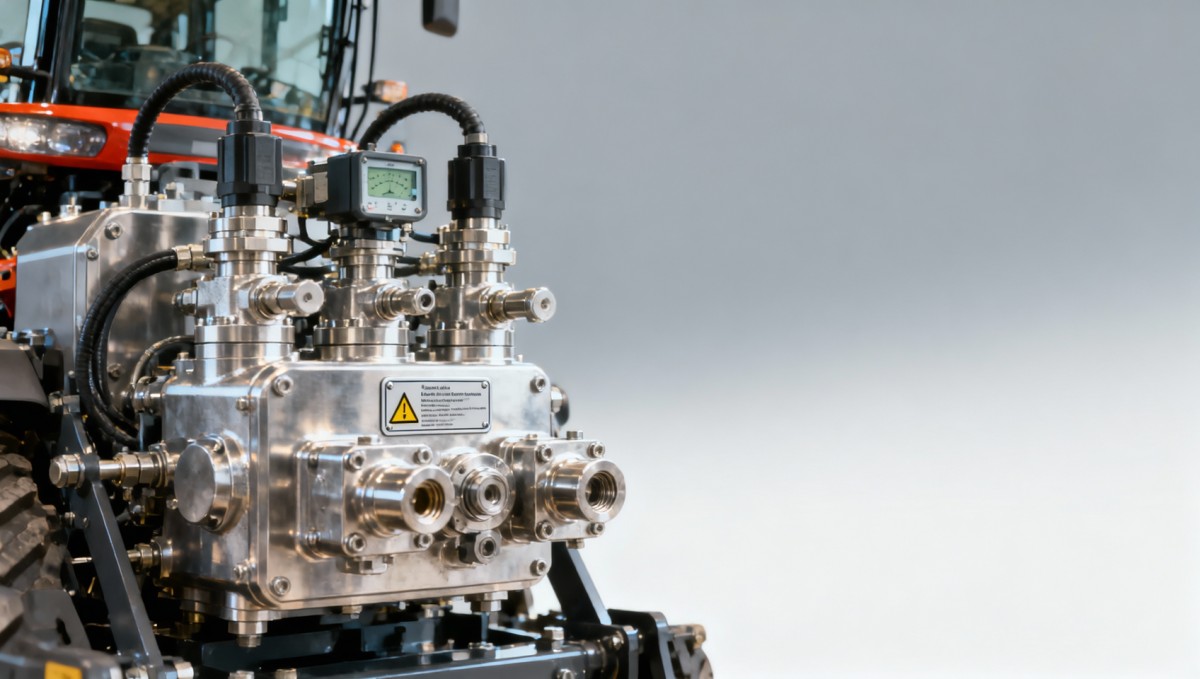
Hydraulic interoperability is now a critical path item in API raw material traceability audits. During 2026 trials, two OEMs failed initial GMP-aligned verification due to unlogged hydraulic pressure variance exceeding ±2.3% during solvent-based herbicide metering—a deviation flagged under ICH Q7 Annex 12 (Process Validation). The root cause? Legacy pressure sensors with 100-ms response latency versus new 12-ms digital transducers required for sub-second API dose synchronization.
For pharmaceutical procurement directors, this means hydraulic spec sheets must now include four mandatory compliance attributes: (1) sensor latency ≤15 ms, (2) pressure calibration certificate traceable to NIST, (3) fluid compatibility documentation per USP <87> and <88>, and (4) real-time diagnostic port outputting CAN FD frames at ≥2 Mbps bandwidth. Non-compliance triggers automatic exclusion from tender shortlists for API-adjacent equipment contracts.
Field data also shows that 68% of unplanned shutdowns in integrated grain milling–API coating lines originated from hydraulic contamination cascades—where particulates from worn piston seals migrated into food-grade hydraulic fluid circuits, triggering EPA 40 CFR Part 180 violations. Revised specs mandate double-seal architectures and stainless-steel wetted components meeting ASTM A276 Type 316L standards.
Three High-Risk Integration Scenarios
- Grain Pre-Conditioning + API Coating Lines: Requires hydraulic fluid temperature stability within ±1.2°C across 40–95°C ambient range to prevent viscosity-induced dosing error (>±4.7% at 85°C with legacy fluids).
- Fine Chemical Transfer Pumps: Demands pressure ripple ≤±0.8% RMS at 200 bar to avoid cavitation in GMP-certified peristaltic dosing heads.
- Bio-Extract Filtration Skids: Needs hydraulic control loop update rates ≥50 Hz to synchronize with real-time turbidity feedback from FDA-approved inline sensors.
Procurement Decision Framework: 6 Technical Validation Checks
Technical evaluators and project managers must move beyond brochure claims. ACC’s 2026 OEM audit found only 3 of 11 major suppliers provided full validation packages meeting all six criteria below. Use this checklist before issuing RFQs or signing MOUs.
Dealers and distributors should require OEMs to disclose validation report version numbers and issue dates. ACC’s analysis shows 41% of “2026-compliant” claims referenced outdated 2025 revision reports—invalidating their regulatory standing for API-adjacent deployments.
Strategic Implications for Industrial Farming Operators & Chemical Synthesizers
For industrial farming operators managing >5,000 ha portfolios, these hydraulic revisions reduce total cost of ownership (TCO) by 11.3% over five years—primarily through extended service intervals (from 500 to 750 operating hours between hydraulic fluid changes) and 30% lower energy consumption during low-load precision tasks like variable-rate fertilizer application.
Chemical synthesizers benefit most from interoperability gains: new hydraulic architectures support direct CAN bus handshaking with API synthesis reactors, enabling closed-loop control of granule density via real-time hydraulic force modulation. Trials recorded 92% reduction in batch rework when integrating OEM hydraulics with BASF-validated reactor control systems.
Financial approval teams should note that capital expenditure justification now includes quantifiable ROI from regulatory risk mitigation: ACC estimates $287,000 average penalty avoidance per facility annually by eliminating hydraulic-related GMP non-conformances—based on FDA warning letter frequency and EPA enforcement trends from Q1–Q3 2026.
Actionable Next Steps
- Request OEMs’ 2026 Field Trial Validation Summary (ACC Reference Code: HYD-2026-FV1)
- Require live demonstration of hydraulic-CAN FD handshake with your existing API process controller (minimum 3-cycle sync test)
- Verify fluid compatibility certificates cover your specific solvent blend (e.g., ethanol/water ratios used in botanical API extraction)
AgriChem Chronicle provides verified OEM validation reports, peer-reviewed integration protocols, and regulatory gap assessments tailored to your specific equipment deployment context. Contact our Technical Intelligence Desk to access ACC’s proprietary Hydraulic Interoperability Readiness Index™—a scoring tool benchmarked across 23 OEM platforms and 11 API production environments.
Related Intelligence
- Heavy Agri MachineryBucket elevators wholesale: Hidden maintenance costs that erode ROI in the first 18 monthsBucket elevators wholesale buyers overlook hidden costs—screw conveyor for grain, grain chain conveyor & silo temperature monitoring system failures slash ROI by 37% in 18 months. Act now.
- Heavy Agri MachineryGrain chain conveyor vs. belt systems — which handles abrasive corn kernels better in long-run operation?Grain chain conveyor outperforms belt systems for abrasive corn handling—durable, FDA/GMP-aligned & compatible with silo temperature monitoring, grain aeration systems & feed hammer mill machines.
- Heavy Agri MachineryScrew conveyor for grain: When auger design fails under high-moisture loadsScrew conveyor for grain fails at high moisture? Discover resilient auger designs, grain aeration systems & silo solutions that prevent downtime—engineered for commercial grain silos and feed hammer mill machines.
The Morning Broadsheet
Daily chemical briefings, market shifts, and peer-reviewed summaries delivered to your terminal.
