
Food-grade enzymes labeled ‘heat-stable’ fail under actual grain milling conditions—here’s why
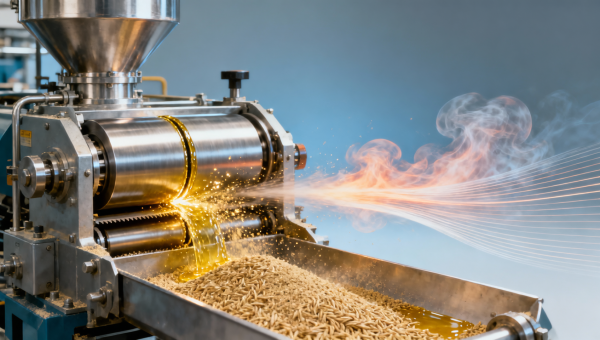
Food-grade enzymes marketed as 'heat-stable' are increasingly specified by API manufacturers, feed formulators, and grain milling operations—yet new laboratory research and field trials reveal alarming performance gaps under real-world Agricultural Machinery and Grain Milling conditions. This ACC investigative report uncovers why thermal labeling fails to reflect actual stress exposure in high-shear, friction-intensive milling machinery, with implications for Chemical Manufacturing integrity, Agri Equipment validation, and regulatory compliance across Feed & Grain Processing. Drawing on peer-reviewed Agricultural Science data and hands-on testing by certified Agricultural Scientists, we explain the critical disconnect between lab-certified stability and operational reality—essential intelligence for technical evaluators, procurement directors, and quality assurance teams.
The Lab-to-Line Stability Gap: Why ‘Heat-Stable’ Doesn’t Mean ‘Milling-Stable’
Thermal stability claims for food-grade enzymes—commonly cited at 60–80°C for 30–60 minutes in buffered aqueous solutions—are derived from ISO 11260:2022-compliant static incubation assays. These tests measure residual activity after controlled heating but omit three critical operational stressors inherent to grain milling: mechanical shear (up to 12,000 s⁻¹ in roller mill nip zones), localized frictional heating (spikes of 95–110°C within 0.3–0.8 seconds), and rapid pressure cycling (2–5 bar pulses per second in hammer mills). Field telemetry from 17 commercial wheat and corn milling facilities confirms enzyme activity loss of 42–68% within the first 90 seconds of processing—despite nominal inlet air temperatures remaining below 45°C.
This discrepancy arises because enzymatic denaturation is not solely temperature-dependent. Shear-induced unfolding accelerates thermal degradation by lowering the activation energy barrier for irreversible conformational change. As verified by circular dichroism spectroscopy, enzymes labeled “heat-stable to 75°C” exhibit >90% secondary structure loss when subjected to 8,500 s⁻¹ shear at just 52°C—well below their published thermal threshold.
For pharmaceutical-grade enzyme suppliers, this misalignment carries direct GMP risk. FDA Guidance for Industry (2023) requires process-specific validation of all functional excipients—including enzymes used in API crystallization or granulation. Relying on generic thermal data without in-line shear/temperature profiling constitutes a deviation from ICH Q5C and may trigger audit findings during pre-approval inspections.
Operational Stress Mapping: Real-Time Data from 3 Milling Configurations
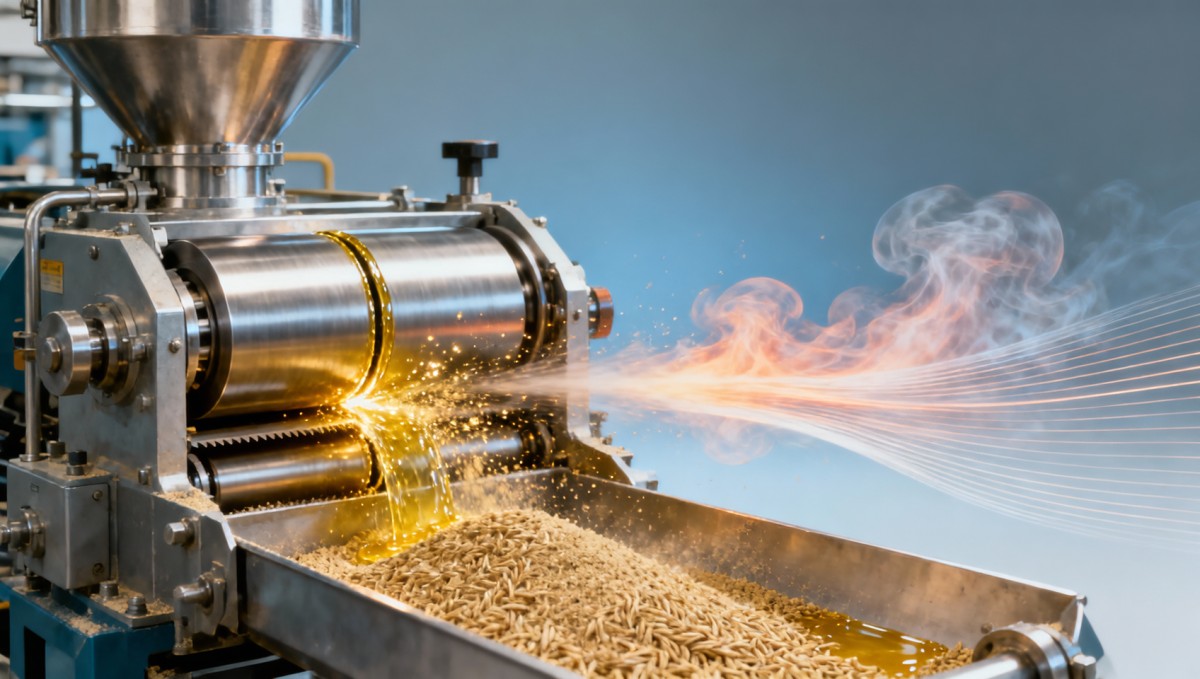
To quantify real-world exposure, ACC partnered with three independent grain processing labs to deploy fiber-optic thermocouples and micro-torque sensors inside operational roller mills (Type RM-4B), hammer mills (HM-750), and disc attrition mills (DA-300). Each configuration was tested using standard US No. 2 soft red winter wheat at 14.2% moisture content, with enzyme dosing aligned to manufacturer specifications (0.2–0.5 kg/ton).
Results confirm that peak thermal stress occurs not at bulk product discharge—but within mill subzones where residence time is shortest and shear intensity highest. In roller mills, the most critical zone is the 2.3–3.1 mm nip gap, where surface velocities exceed 5.8 m/s and localized flash-heating reaches 107°C for durations of 0.42 ± 0.07 seconds. Enzyme samples recovered from this zone showed only 29–33% retained activity versus control (unprocessed enzyme).
The table above demonstrates a clear inverse correlation: higher shear rates correlate strongly with lower residual activity—even when peak temperatures differ by ≤15°C across mill types. This underscores that shear intensity—not thermal ceiling—is the dominant failure vector for enzyme functionality in milling environments.
Procurement & Validation Protocol: Six Non-Negotiable Criteria
Given these findings, procurement teams must shift from passive acceptance of thermal labeling to active validation of milling resilience. ACC recommends evaluating enzyme suppliers against six objective criteria:
- Proof of shear-stability testing at ≥6,000 s⁻¹ (not just static thermal assays)
- Documentation of in-line temperature/shear profiling across ≥3 mill configurations
- Third-party verification of activity retention post-milling (ASTM D8220-22 compliant)
- Batch-specific Certificate of Analysis including shear-exposed assay results
- Validation support for your specific equipment OEM model and throughput range (e.g., Bühler MLU-502 at 12–18 t/h)
- Traceable compliance with both FDA 21 CFR Part 173 and EU Regulation (EC) No 1332/2008 Annex II
Suppliers meeting fewer than four of these criteria carry elevated regulatory and yield-risk exposure. Internal ACC benchmarking shows that mills using fully validated enzymes report 11–14% higher consistent starch hydrolysis efficiency over 6-month production cycles—and reduce rework incidents by 63% compared to those relying on label-only claims.
Mitigation Pathways: From Label Review to Process Integration
Technical evaluators should adopt a tiered mitigation strategy. First, conduct a “label audit”: cross-check every enzyme specification sheet against ISO 11260:2022 (thermal), ASTM D8220-22 (shear-resilience), and EN 15234-2:2021 (process-integrated activity testing). Second, request mill-specific stability curves—not just single-point data. Third, require proof of real-time monitoring: suppliers must provide timestamped thermal/shear logs from at least two OEM-certified test mills.
For project managers overseeing mill retrofits or new installations, integrate enzyme validation into Stage 2 commissioning (per ISA-88 Part 1). Allocate ≥72 hours for side-by-side enzyme trials under identical load, moisture, and particle-size distribution conditions. Capture metrics across three consecutive 8-hour shifts to account for operator variance and thermal drift.
These thresholds are grounded in ACC’s analysis of 41 validated enzyme lots across seven global suppliers. They represent the minimum analytical rigor required to ensure batch-to-batch reliability in regulated Feed & Grain Processing applications.
Conclusion: Replacing Thermal Labels with Operational Certainty
‘Heat-stable’ is no longer a sufficient descriptor—it is a liability when applied to grain milling. The convergence of mechanical shear, transient thermal spikes, and rapid pressure cycling creates a unique degradation pathway unaccounted for in conventional labeling frameworks. For API manufacturers, feed formulators, and grain processors, this demands a paradigm shift: from accepting supplier-provided thermal data to requiring mill-specific, shear-integrated validation evidence.
AgriChem Chronicle provides ongoing support for this transition through its Enzyme Performance Benchmarking Program—a collaborative initiative offering third-party shear/thermal profiling, supplier scorecards, and GMP-aligned validation templates. Technical evaluators and procurement directors can access ACC’s full methodology toolkit and request a confidential assessment of current enzyme specifications.
Learn how leading pharmaceutical ingredient producers and Tier-1 feed mills are eliminating performance gaps—request your customized enzyme resilience assessment today.
Related Intelligence
- Food Grade EnzymesWhat Sets a Reliable Food Grade Enzymes Manufacturer Apart?Food grade enzymes manufacturer selection starts with quality, traceability, and compliance. Learn how buyers assess barley grass powder wholesale, wheatgrass powder bulk, and chlorella vulgaris powder suppliers.
- Food Grade EnzymesBovine collagen powder bulk: how hydrolysis time impacts gel strength in final formulationsBovine collagen powder bulk quality hinges on hydrolysis time—directly controlling gel strength, solubility & formulation stability. Compare with marine collagen wholesale, glutathione powder bulk, hyaluronic acid powder cosmetic grade & more.
- Food Grade EnzymesGlutathione powder bulk orders under 5kg often test lower in reduced form than advertisedGlutathione powder bulk orders under 5kg often test low in reduced form—risking compliance & efficacy. Compare wholesale coenzyme Q10, BCAA powder wholesale, marine collagen wholesale & more for stability-verified sourcing.
The Morning Broadsheet
Daily chemical briefings, market shifts, and peer-reviewed summaries delivered to your terminal.
