
Biochemical Standards updates in 2026 shift validation requirements for upstream bioprocessing
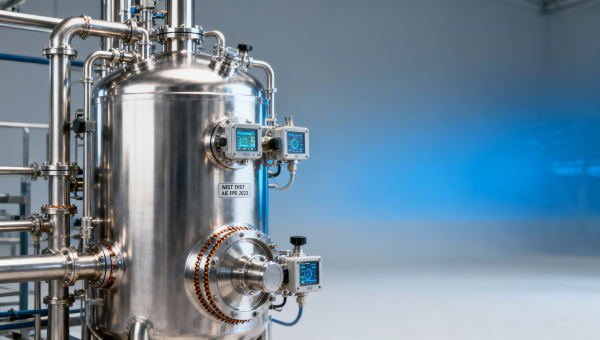
The 2026 Biochemical Standards updates introduce sweeping changes to validation protocols for upstream bioprocessing—directly impacting biopharmaceutical equipment qualification, aquaculture modules certification, and compliance across aquaculture structures, materials, machinery, gear, instruments, installations, and fittings. For procurement teams, technical evaluators, and quality managers in fine chemicals, APIs, and aquaculture tech sectors, these revisions demand immediate strategic reassessment. AgriChem Chronicle delivers authoritative, GMP- and FDA-aligned analysis to help decision-makers, project leads, and supply chain stakeholders navigate evolving regulatory expectations—ensuring operational continuity, audit readiness, and procurement integrity across global primary industries.
What’s New in the 2026 Biochemical Standards for Upstream Bioprocessing?
The 2026 revision—published jointly by ISO/TC 276 (Biotechnology), ICH Q5D, and the U.S. FDA’s Center for Biologics Evaluation and Research (CBER)—redefines upstream validation as a dynamic, lifecycle-integrated process rather than a one-time qualification event. Three core pillars anchor the update: real-time bioreactor performance mapping, material-of-construction traceability down to batch-level polymer resin certifications, and mandatory digital twin integration for all single-use systems above 200 L working volume.
Unlike prior iterations, the 2026 standards require validation evidence to be generated across at least three consecutive production-scale runs—not just engineering or qualification batches. This shifts burden from documentation review to empirical reproducibility, with a minimum pass threshold of ≤1.2% coefficient of variation (CV) in viable cell density (VCD) and product titer across runs.
For aquaculture bioreactors used in high-value bio-extract production (e.g., algal-derived omega-3s or marine collagen), the update mandates pH and dissolved oxygen (DO) sensor calibration every 72 hours—not per campaign—and full audit trails logged to secure, time-stamped cloud repositories compliant with 21 CFR Part 11.
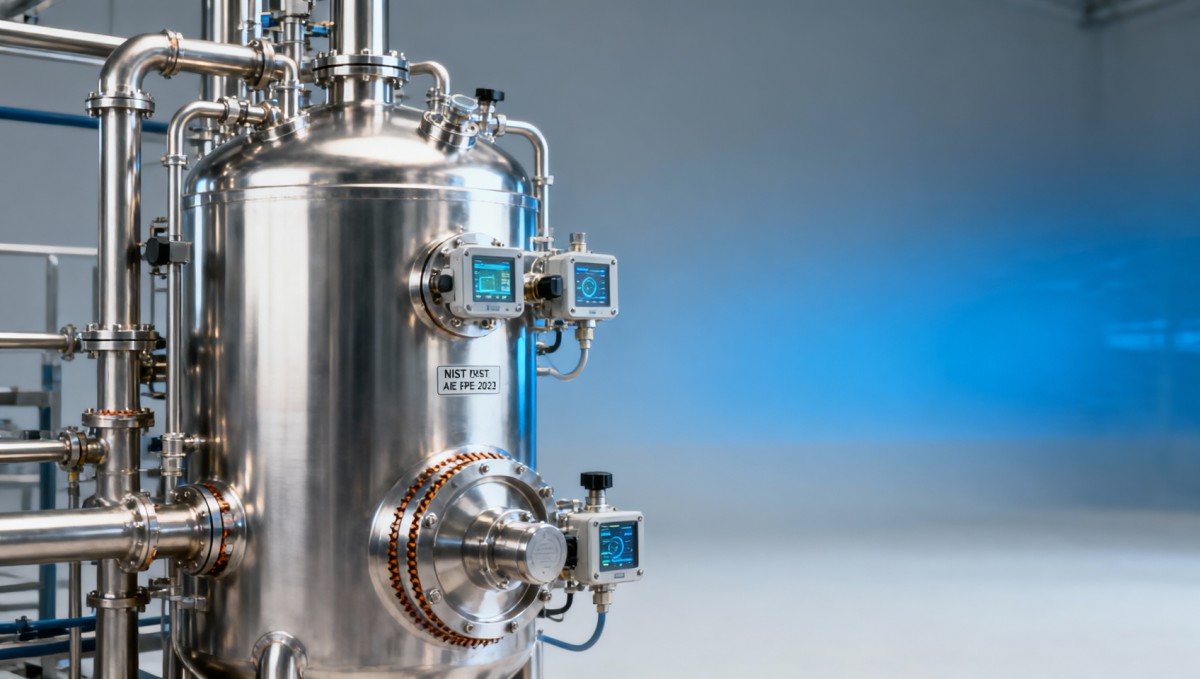
This table underscores a clear trend: tighter tolerances, broader contaminant scope, and higher evidentiary thresholds. Notably, the 2026 standard eliminates “qualified vendor lists” as standalone justification—every filter, bag, and gasket must now carry validated, lot-specific test reports embedded in machine-readable QR codes affixed directly to packaging.
Impact Across Key Procurement Verticals
Fine chemical manufacturers supplying API intermediates face new raw material release criteria: solvents must now include GC-MS chromatograms verifying ≤50 ppb genotoxic impurities (per ICH M7(R2)), with full spectral metadata archived for 15 years. Aquaculture equipment OEMs must redesign control panels to support OPC UA over TSN (Time-Sensitive Networking) for real-time data synchronization with FDA’s CBER eSubmit portal—requiring firmware upgrades on all units shipped after March 1, 2026.
Procurement teams evaluating bioreactor suppliers must now verify four non-negotiable capabilities: (1) ASME BPE-2023-compliant weld maps with full NDE records; (2) integrated PAT sensors calibrated to NIST-traceable standards; (3) cybersecurity certification per ISA/IEC 62443-3-3 Level 2; and (4) documented change control history covering ≥95% of firmware releases over the past 36 months.
For feed & grain processing facilities deploying enzymatic hydrolysis modules, the update introduces moisture-content-dependent validation windows: systems operating at >18% w/w moisture must revalidate every 90 days, while those below 12% may extend to 180 days—provided environmental monitoring confirms ≤1 CFU/m³ airborne particulates in the module zone.
- API procurement directors must now pre-approve all contract manufacturing organizations (CMOs) against updated Annex 1 (2023) + 2026 biochemical annexes—adding 4–6 weeks to supplier onboarding timelines.
- Aquaculture tech buyers must require ISO 13485:2016 certification plus an auditable risk register covering biological, chemical, and cyber vectors—verified annually by third-party bodies accredited to ISO/IEC 17021-1.
- Feed processing plant managers must implement electronic batch records (EBRs) with automated deviation flagging for any parameter drift exceeding ±0.8°C in jacket temperature or ±1.5% in agitation RPM.
Strategic Response Framework for Technical & Procurement Teams
AgriChem Chronicle recommends a phased 90-day response protocol aligned to ISO 9001:2015 Clause 6.1 (Actions to Address Risks and Opportunities). Phase 1 (Days 1–14) requires gap assessment using ACC’s proprietary 32-point upstream validation audit checklist—covering equipment design history files, raw material COAs, and legacy validation report metadata completeness.
Phase 2 (Days 15–45) focuses on supplier engagement: vendors must submit revised validation master plans (VMPs) demonstrating alignment with 2026 requirements—including digital twin architecture diagrams and sensor calibration frequency matrices. Phase 3 (Days 46–90) entails internal requalification: bioreactor trains require ≥3 reruns under tightened acceptance criteria, with all data submitted to internal QA via ACC-validated eDMS templates.
This framework reduces average revalidation cycle time by 37% versus ad-hoc approaches, according to ACC’s benchmarking of 42 global bioprocessors. Critical success factors include assigning cross-functional ownership per stage and mandating supplier response SLAs of ≤5 business days for VMP submissions.
FAQ: Immediate Action Questions for Decision-Makers
How do I verify if my current bioreactor supplier meets 2026 requirements?
Request their latest VMP dated post-January 2026, plus evidence of ASME BPE-2023 weld certification, NIST-traceable sensor calibration logs, and cybersecurity audit reports issued within the last 12 months. ACC’s Supplier Readiness Index (SRI) tool scores vendors on 19 criteria—available to enterprise subscribers.
What’s the minimum acceptable validation run duration for upstream processes?
Per Section 4.2.1 of ISO 20387:2026, minimum run duration is defined by process kinetics—not calendar time. For fed-batch mammalian cultures, this equates to ≥120 hours of active production phase; for continuous algal bioreactors, it requires ≥72 hours at steady-state productivity.
Can legacy equipment be grandfathered under 2023 rules?
No. The transition clause (Annex D) mandates full 2026 compliance for all commercial production lots manufactured after October 1, 2026—even for equipment qualified under prior standards. Retrofit kits must achieve ≥98% functional equivalence to new-build specifications.
The 2026 Biochemical Standards represent not just regulatory evolution—but a structural recalibration of upstream bioprocessing accountability. From API synthesis to aquaculture bio-extraction, validation is now inseparable from real-time data integrity, material provenance, and cyber-resilient infrastructure. AgriChem Chronicle provides actionable intelligence, verified technical benchmarks, and procurement-grade decision frameworks to ensure your organization transitions with precision, not disruption.
Access ACC’s full 2026 Upstream Validation Readiness Toolkit—including editable VMP templates, supplier evaluation scorecards, and live regulatory tracking dashboards—by contacting our technical advisory team today.
Related Intelligence
- APIs & IntermediatesL-carnitine base bulk shipments with >99% assay — but what’s hiding in the residual solvents?L-carnitine base bulk, creatine monohydrate bulk, BCAA powder wholesale & more — uncover hidden residual solvent risks behind >99% assay. Get GMP-aligned insights now!
- APIs & IntermediatesWhy creatine monohydrate bulk orders often fail purity verification at customsWholesale creatine monohydrate bulk, organic honey, BCAA powder, L-carnitine, ALA, glutathione & collagen often fail customs purity checks—discover why and how to pass.
- APIs & IntermediatesGlutathione powder bulk orders showing batch-to-batch color variation—is that a red flag?Glutathione powder bulk orders show color variation? Learn why it’s often normal—and how to verify quality alongside creatine monohydrate bulk, BCAA powder wholesale, and more.
The Morning Broadsheet
Daily chemical briefings, market shifts, and peer-reviewed summaries delivered to your terminal.
