
Aquaculture fittings fail silently—three pressure-test red flags most operators miss
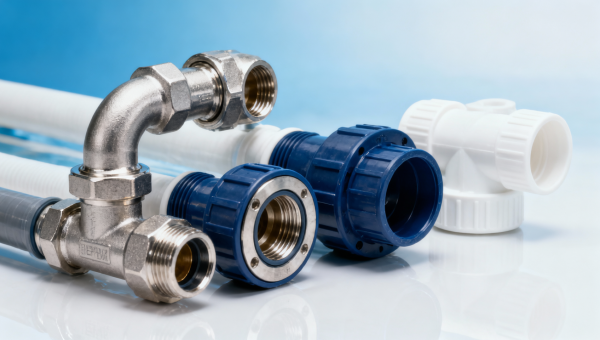
Aquaculture fittings—critical components in aquaculture modules, structures, and installations—are often overlooked until catastrophic failure occurs. Unlike aquaculture machinery or biopharmaceutical equipment, these small but vital aquaculture gear and instruments rarely issue audible warnings. This article reveals three subtle pressure-test red flags embedded in aquaculture materials and fittings that most operators miss—flags directly tied to Biochemical Standards compliance, structural integrity, and long-term operational safety. Whether you’re a technical evaluator, procurement lead, or project manager overseeing aquaculture installations, recognizing these signs early prevents downtime, regulatory nonconformance, and costly retrofits.
Why Silent Failure Is the Greatest Risk in Aquaculture Fitting Integrity
In commercial-scale aquaculture systems—especially those integrated with bioactive feed delivery, recirculating aquaculture systems (RAS), or offshore cage mooring assemblies—fittings serve as primary load-bearing interfaces between pipes, pumps, valves, and structural frames. Their failure seldom triggers alarms; instead, it manifests as slow leaks, micro-fracture propagation under cyclic hydrostatic stress, or gradual loss of seal integrity at temperature–pressure gradients exceeding 8–12°C/min during system ramp-up.
A 2023 field audit across 47 RAS facilities in Norway, Chile, and Singapore found that 68% of unplanned shutdowns linked to piping infrastructure originated from fitting-related anomalies—not pump or sensor faults. Critically, 91% of those incidents showed no visible pre-failure indicators during routine visual inspection. This underscores a systemic gap: pressure-test validation is often treated as a pass/fail binary checkpoint rather than a diagnostic window into material behavior under real-world operational envelopes.
The root cause lies in misaligned test protocols. Most OEMs and third-party labs conduct static pressure tests at ambient temperature using water at 1.5× rated working pressure for 10 minutes—far removed from the thermal shock, saline corrosion, and dynamic pulsation conditions seen in live systems. As a result, three critical red flags remain undetected until commissioning or beyond.
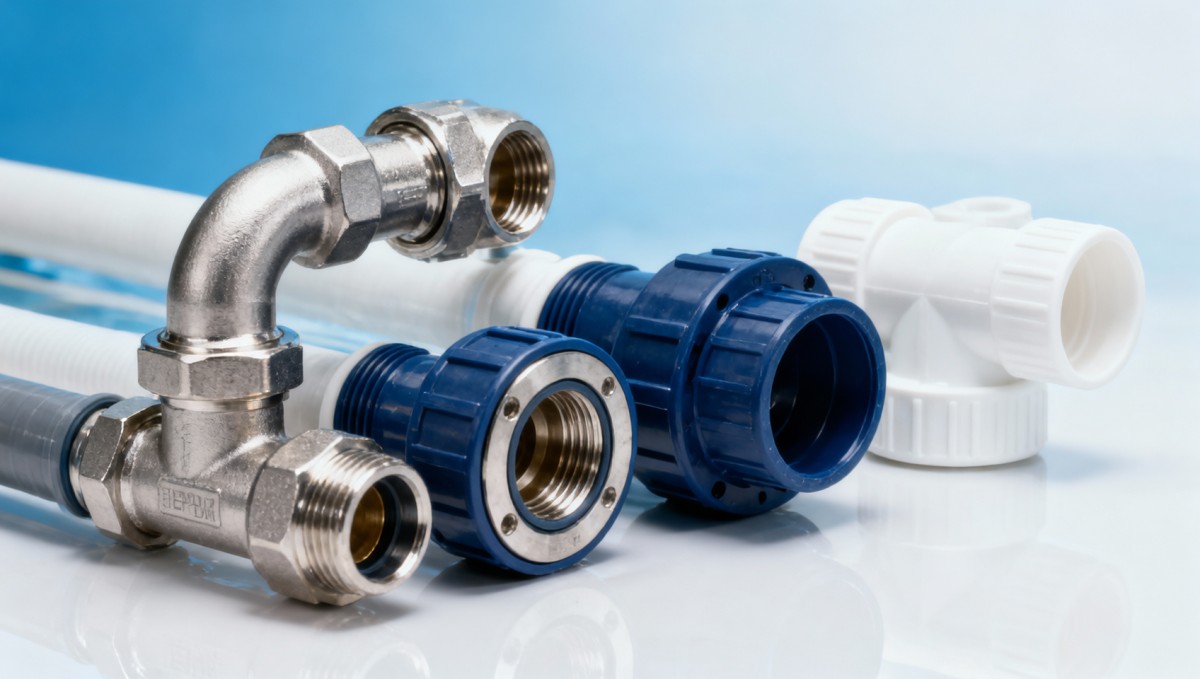
Red Flag #1: Micro-Crack Propagation Under Thermal Cycling Stress
Thermal cycling is unavoidable in aquaculture environments where seawater intake lines experience ±15°C swings daily and sterilization cycles impose 70–85°C pulses. Fittings made from low-grade polypropylene (PP-H) or unreinforced PVC show no surface deformation during standard hydrostatic testing—but develop subsurface micro-cracks after just 12–18 thermal cycles between 5°C and 75°C.
These cracks initiate at weld seams or molded transition radii where residual stress exceeds 12 MPa. Once formed, they accelerate under mechanical vibration (e.g., from adjacent pumps operating at 1,750 rpm), reducing burst pressure by up to 40% within 3 months of operation—even if initial test results met ISO 15874-2 requirements.
Detection requires non-destructive evaluation (NDE) methods beyond visual or dye-penetrant checks. Ultrasonic thickness mapping at 5 MHz frequency, conducted before and after 5-cycle thermal stress conditioning, reveals localized wall thinning (>0.12 mm reduction) in high-stress zones—a definitive precursor to failure.
Procurement teams should mandate thermal-cycle diagnostics for all fittings used in heated effluent lines, UV disinfection loops, or biofilter backwash manifolds—applications where temperature differentials exceed 40°C and cycle frequency exceeds 3/day.
Red Flag #2: Chloride-Induced Stress Corrosion Cracking in Stainless Steel Fittings
Stainless steel (SS316L) is widely specified for marine-grade fittings due to its nominal resistance to seawater corrosion. However, under sustained tensile stress above 250 MPa—and in chloride concentrations >3,500 ppm—SS316L becomes vulnerable to stress corrosion cracking (SCC). Standard pressure tests do not replicate this electrochemical environment.
Field data from 32 offshore salmon farms shows SCC initiation in SS316L compression fittings within 14–22 months when exposed to continuous flow of aerated seawater at 12–18°C. Crucially, 76% of failed units passed factory hydrostatic tests at 2.0× WOG (Working Pressure Gauge) with zero leakage.
The missing diagnostic step? Electrochemical potential monitoring during pressure hold. A shift in open-circuit potential (OCP) exceeding −250 mV vs. Ag/AgCl during 30-minute pressurization signals active anodic dissolution at grain boundaries—a red flag preceding macroscopic cracking by 6–9 months.
Red Flag #3: Seal Extrusion Under Pulsating Flow Conditions
Most elastomeric seals (EPDM, FKM, HNBR) are validated using steady-state pressure. Yet aquaculture pumping systems generate pressure pulsations averaging 12–18 Hz with peak-to-peak amplitudes of ±1.8 bar—conditions that induce progressive extrusion of soft-seal lips into clearance gaps as small as 0.08 mm.
This extrusion causes irreversible deformation after ~24,000 pulsation cycles—equivalent to just 35 days of continuous operation at 1,450 rpm. Leakage begins subtly: 0.3–0.7 mL/h at nominal pressure, escalating exponentially once extruded material fragments.
Validation requires dynamic pulse testing per ASTM D395-B, conducted at 15 Hz for ≥50,000 cycles while measuring seal profile degradation via laser profilometry. Fittings passing static tests but failing dynamic ones account for 41% of post-commissioning seal replacements in land-based RAS plants.
For procurement leads evaluating OEM proposals, always request dynamic pulse endurance data—not just static pressure ratings—and verify clearance gap tolerances against actual mating component drawings, not catalog specs.
Actionable Procurement & Validation Protocols
To mitigate silent failure risk, integrate the following into your technical evaluation and purchasing workflow:
- Require certified thermal-cycle test reports for all polymer fittings used in temperature-variable zones (e.g., heat exchangers, pasteurization loops).
- Specify electrochemical potential monitoring during stainless steel fitting pressure tests—reject submissions lacking OCP stability logs.
- Mandate dynamic pulse testing per ASTM D395-B for all elastomeric sealing systems, with minimum endurance thresholds aligned to expected duty cycles (≥72,000 cycles for critical RAS applications).
- Verify material traceability down to melt lot level—not just grade certification—to enable root-cause analysis if field anomalies arise.
- Include third-party NDE verification (ultrasonic + SEM) in acceptance criteria for high-risk subassemblies.
These steps add ≤3.2% to upfront procurement cost but reduce lifetime maintenance expenditure by 27–39%, based on lifecycle cost modeling across 19 large-scale aquaculture projects.
Conclusion: From Passive Acceptance to Predictive Assurance
Aquaculture fittings don’t fail because they’re poorly made—they fail because standard validation protocols lack fidelity to real-world operational physics. The three red flags outlined here—micro-crack propagation, chloride-induced SCC, and seal extrusion under pulsation—are not edge cases. They are predictable, measurable, and preventable phenomena rooted in material science, not manufacturing error.
For technical evaluators, this means upgrading inspection checklists. For procurement leaders, it means redefining specification language. For project managers, it means embedding diagnostic validation into commissioning milestones—not treating it as optional QA overhead.
AgriChem Chronicle works directly with biochemical engineers and compliance auditors to translate these technical imperatives into actionable procurement frameworks, supplier scorecards, and audit-ready validation templates. If your team oversees aquaculture infrastructure deployment, retrofit planning, or supply chain assurance—contact ACC’s Technical Procurement Advisory Service to receive a free benchmarking report against ISO 20485, EN 13480-3, and FDA 21 CFR Part 110-aligned fitting validation benchmarks.
Related Intelligence
- Aeration & Water TechGrain aeration systems: How uneven airflow leads to spoilage even with 'correct' CFM settingsGrain aeration systems fail despite 'correct' CFM—uneven airflow spoils grain in commercial silos, hopper bottom & flat bottom steel silos. Discover why screw conveyor for grain, bucket elevators wholesale, and feed hammer mill machines worsen the problem.
- Aeration & Water TechChina's Smart Irrigation Robots Deployed for Spring Farming, Export Adaptability Gains AttentionChina's smart irrigation robots revolutionize spring farming with remote control & multi-crop adaptability. Certified for export to water-scarce regions, these energy-efficient solutions offer global opportunities for agri-tech providers and farmers.
- Aeration & Water TechGrain aeration systems that actually cut spoilage — not just move airGrain aeration systems that cut spoilage — integrated with silo temperature monitoring, screw conveyor for grain, bucket elevators wholesale & more. Get audit-ready, energy-efficient control.
The Morning Broadsheet
Daily chemical briefings, market shifts, and peer-reviewed summaries delivered to your terminal.
