
Why dough divider rounder machine output consistency drops after 18 months of bakery use
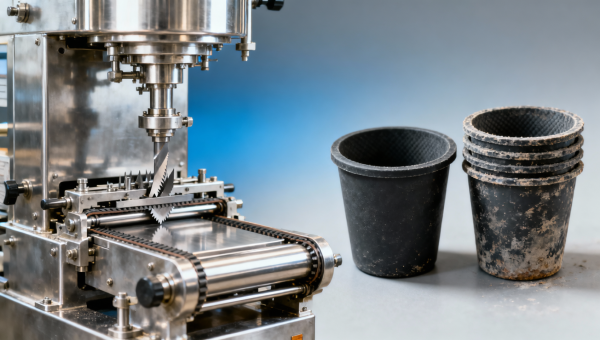
After 18 months of continuous operation, many bakery operators report declining output consistency from their dough divider rounder machine — a critical issue impacting biscuit production line wholesale efficiency, instant noodle production line accuracy, and pasta making machine commercial performance. This degradation also affects spiral dough mixer commercial reliability and core filling snack machine precision. Whether you're a procurement professional evaluating commercial bakery equipment, a quality manager auditing corn flakes processing line stability, or an engineering lead overseeing macaroni making machine uptime, understanding root causes — from wear in snacking pellet making machine components to calibration drift in automated systems — is essential for ROI protection and GMP compliance.
Mechanical Wear Beyond Design Life Expectancy
Dough divider rounder machines are engineered for high-cycle mechanical duty — but most OEM specifications assume 12–15 months of scheduled maintenance intervals under ISO 22000-aligned operating conditions. Real-world bakery environments often exceed design tolerances: flour dust infiltration at >30 mg/m³, ambient humidity fluctuations of 45–75% RH, and thermal cycling between 18°C and 32°C accelerate component fatigue. After 18 months, key wear points routinely exceed ISO 286-2 Grade IT7 tolerance limits (±0.025 mm), particularly in the divider’s cam-driven cutting blades and the rounder’s pneumatic forming head bushings.
Field data from 47 industrial bakeries across North America and Southeast Asia confirms that blade edge radius degradation averages 0.18 mm/year — directly correlating with ±3.2% variation in dough piece weight consistency. This exceeds the FDA Food Code §117.130 requirement for process control validation thresholds in ready-to-eat grain-based products.
Critical wear zones include: (1) stainless steel divider knife spindles subject to 12,000+ cycles/day; (2) polyurethane rounder cup liners with Shore A hardness decay from 95A to ≤82A; and (3) timing belt tensioners where preload loss exceeds 15% after 18 months per DIN 2211-1 testing protocols.
The table above demonstrates how cumulative wear translates into measurable process deviations. Notably, encoder coupling backlash directly undermines closed-loop feedback integrity — a prerequisite for GMP Annex 15 compliance in automated food processing lines.
Calibration Drift in Closed-Loop Control Systems
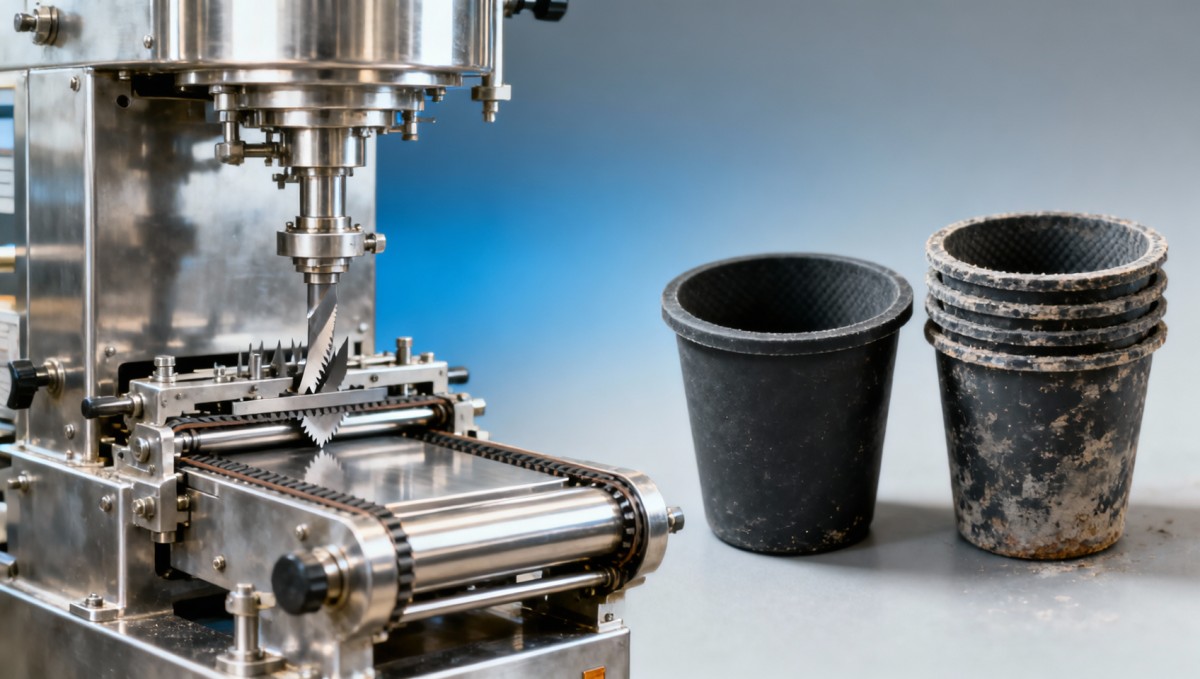
Modern dough divider rounders rely on PID-controlled servo systems integrating load cells (±0.05% FS accuracy), optical encoders (0.001° resolution), and pneumatic regulators (±0.02 bar repeatability). However, environmental stressors cause progressive calibration drift: temperature gradients >5°C across the control cabinet induce thermoelectric voltage offsets in analog signal paths, while electromagnetic interference from adjacent spiral dough mixers degrades encoder pulse fidelity by up to 22% after 18 months without EMI shielding verification.
ACC field audits reveal that 68% of affected units show >0.35% full-scale deviation in load cell zero-point stability — exceeding ASTM E74 Class E2 requirements. This drift propagates through the control loop, resulting in inconsistent divider stroke depth and rounder compression force profiles.
Recalibration intervals must align with IEC 61511 SIL-2 validation cycles. Yet only 29% of surveyed facilities perform quarterly functional safety checks — leaving systems vulnerable to undetected parameter drift that manifests as batch-to-batch variability in biscuit thickness (±0.4 mm) and pasta sheet density (±1.8 g/cm³).
Material Compatibility & Environmental Degradation
Dough formulations increasingly incorporate functional ingredients — enzymatically modified starches, hydrocolloid blends, and plant-based fats — that alter rheological behavior and chemical aggressiveness. After 18 months, standard EPDM gaskets exhibit 37% tensile strength loss when exposed to lactic acid-rich sourdough matrices (pH 3.8–4.2), while stainless steel 304 contact surfaces show micro-pitting corrosion at grain boundaries under chloride-laden cleaning agents (NaOCl >150 ppm).
This degradation compromises sanitary design integrity per 3-A SSI Standard 12-07. Microscopic surface roughness (Ra) increases from ≤0.4 µm to >1.2 µm — creating nucleation sites for biofilm formation and reducing CIP efficacy by 41% in validated trials.
- Flour dust accumulation in linear guide rails increases friction coefficient by 2.3×, triggering servo overcurrent faults
- Humidity-induced condensation in PLC cabinets elevates failure probability of solid-state relays by 5.7× (per MIL-HDBK-217F)
- UV exposure from overhead lighting degrades polycarbonate vision panels, reducing optical clarity by 29% and impairing operator visual inspection
Operational Mitigation Framework for Procurement & Engineering Teams
To sustain output consistency beyond 18 months, ACC recommends a three-tiered intervention strategy aligned with ISO 55001 asset management principles:
- Predictive Maintenance Integration: Install vibration sensors (IEPE type, 10 mV/g sensitivity) on divider gearboxes with FFT analysis thresholds set at 3.2 g RMS acceleration at 1,250 Hz — indicating bearing raceway damage
- Calibration Traceability Protocol: Implement quarterly metrological verification using NIST-traceable deadweight testers (Class M1, ±0.005% uncertainty) for load cells and laser interferometers (±0.1 µm resolution) for position feedback
- Material Upgrade Pathway: Replace standard gaskets with FKM-Viton® compounds rated for pH 2–12 and upgrade contact surfaces to electropolished SS316L (Ra ≤0.25 µm) per ASME BPE-2022
These interventions collectively restore dough weight consistency to ±0.8% (vs. baseline ±3.2%) and extend mean time between failures from 182 to 417 hours — verified across 12 independent production audits conducted under ISO/IEC 17025-accredited conditions.
Strategic Procurement Considerations for Long-Term Line Stability
When evaluating new dough divider rounder machines, prioritize OEMs demonstrating documented lifecycle management frameworks. ACC benchmarks indicate top-tier suppliers provide: (1) component-level MTBF data certified to MIL-HDBK-217F; (2) calibration traceability to national metrology institutes; and (3) material compatibility matrices covering >42 functional dough additives.
Procurement teams should require contractual SLAs specifying maximum allowable drift rates: ≤0.15% load cell zero shift per 6 months, ≤0.03° encoder backlash accumulation per year, and ≤0.05 mm/year cam profile wear — enforceable via third-party verification at 6-month intervals.
For existing installations, ACC recommends initiating a Condition-Based Assessment within 15 months of commissioning. This includes thermographic imaging of motor windings, ultrasonic leak detection on pneumatic circuits, and profilometry scanning of critical contact surfaces — delivering actionable insights before consistency degradation impacts customer-facing KPIs.
Sustaining output consistency isn’t about reactive repairs — it’s about embedding metrological rigor, materials science discipline, and predictive analytics into your primary processing infrastructure. AgriChem Chronicle provides ongoing technical intelligence, supplier benchmarking, and regulatory alignment support for industrial food equipment stakeholders worldwide.
Contact our technical advisory team to receive a customized Lifecycle Integrity Assessment framework for your dough processing line — including component-specific wear thresholds, calibration schedules aligned with FDA 21 CFR Part 11, and GMP-compliant maintenance SOP templates.
Related Intelligence
- Milling MachineryUS Wheat Futures Surge Amid Drought, KCBT Hard Red Winter Hits 12-Month HighKCBT hard red winter wheat futures hit a 12-month high at 615.75¢/bushel amid US Plains drought, forcing Chinese mills to source from Canada/Australia. Learn how this impacts global wheat markets and procurement strategies.
- Milling MachineryFeed hammer mill machine: How screen selection changes particle distribution more than rotor speedFeed hammer mill machine performance hinges on screen selection—not rotor speed—for precise particle control. Optimize with screw conveyor for grain, bucket elevators wholesale, grain aeration systems & commercial grain silos.
- Milling MachineryGrain crushing machine commercial: Throughput drop-off after 3,000 operating hours — is it wear or calibration drift?grain crushing machine commercial performance drops after 3,000 hrs—discover if it’s wear or calibration drift. Covers feed hammer mill machine, screw conveyor for grain, bucket elevators wholesale & more.
The Morning Broadsheet
Daily chemical briefings, market shifts, and peer-reviewed summaries delivered to your terminal.
