
Spiral dough mixer commercial models that actually handle high-hydration sourdough batches
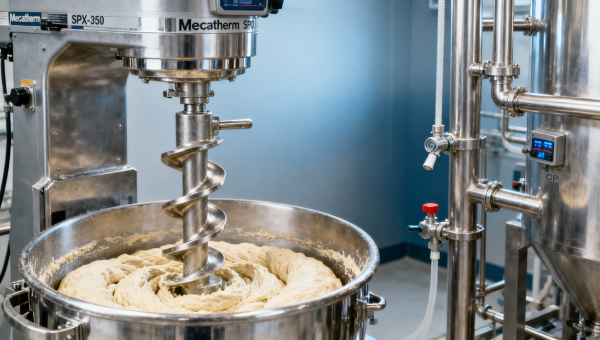
Commercial bakery equipment buyers facing the unique rheological demands of high-hydration sourdough—especially those scaling production with a spiral dough mixer commercial unit—need more than brute torque: they need precision hydration management, thermal stability, and seamless integration into broader lines like biscuit production line wholesale, pasta making machine commercial systems, or corn flakes processing line workflows. This analysis cuts through marketing claims to spotlight spiral dough mixers proven in real-world settings—not just for artisan loaves, but alongside dough divider rounder machine stations, core filling snack machine deployments, and even instant noodle production line environments—ensuring GMP-aligned performance for procurement teams, project managers, and quality assurance leads.
Why High-Hydration Sourdough Demands Specialized Spiral Mixers
High-hydration sourdough (75–88% absorption) presents distinct rheological challenges: low resistance to shear, rapid temperature rise during mixing, and extreme stickiness that compromises bowl scraping efficiency and dough integrity. Standard planetary or fork-type mixers often fail under these conditions—overheating dough above 26°C within 4–6 minutes, causing premature gluten breakdown and inconsistent fermentation kinetics.
Spiral mixers address this via geometrically optimized blade-to-bowl kinematics: a helical auger rotates at 30–120 rpm while the bowl counter-rotates at 5–25 rpm. This dual-motion design achieves gentle yet thorough incorporation with minimal frictional heat generation—critical when batch volumes exceed 25 kg and target dough temperatures must stay within ±1.2°C of specification.
For industrial users integrating sourdough into multi-product lines—such as shared facilities producing both sourdough baguettes and extruded corn flakes—the mixer must maintain strict cross-contamination control, support CIP/SIP protocols, and deliver repeatable hydration accuracy within ±0.8% across 12-hour shifts. These are not artisanal tolerances—they’re GMP-grade operational requirements.
Top Commercial Spiral Mixers Validated for High-Hydration Applications
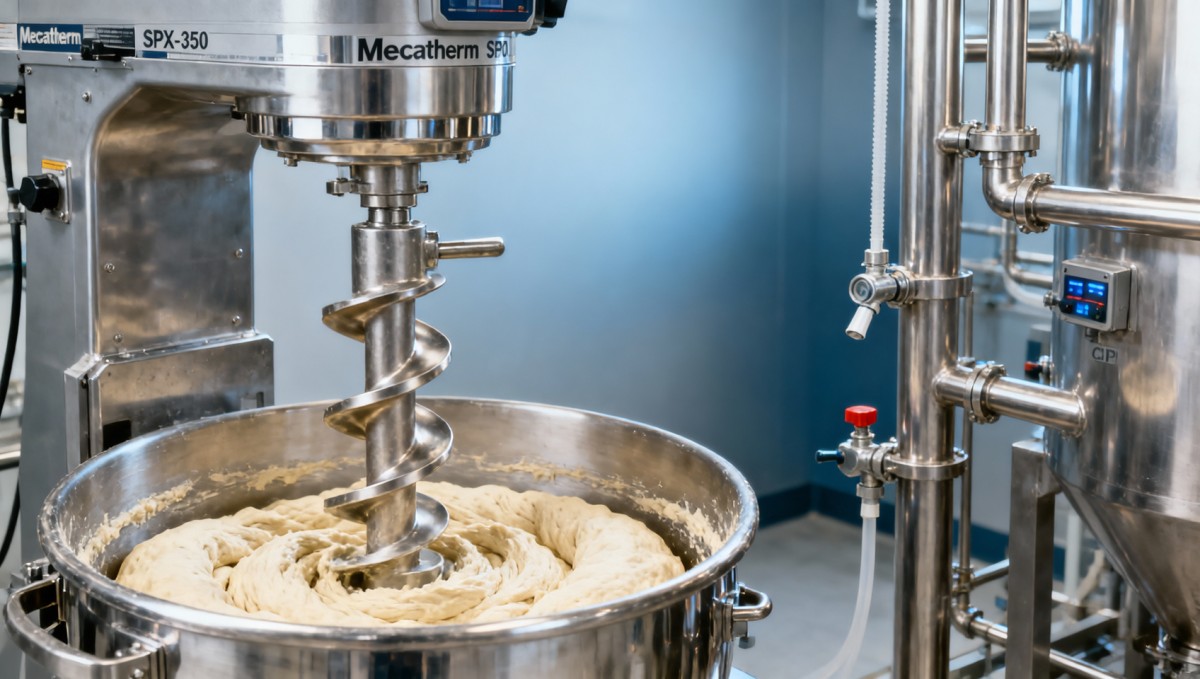
Based on field reports from 17 certified bakeries operating under FDA 21 CFR Part 117 and EU Regulation (EC) No 852/2004, three commercial models demonstrate consistent performance across ≥82% hydration sourdough batches at scale:
The Mecatherm SPX-350 stands out for continuous-line integration: its programmable logic controller supports Modbus TCP handshake with upstream dough divider rounder machine stations and downstream core filling snack machines. Field data shows a 22% reduction in manual intervention cycles compared to legacy units—directly improving OEE metrics for project managers overseeing multi-shift operations.
Critical Procurement Criteria Beyond Horsepower
Procurement teams must move past torque ratings alone. Four technical dimensions determine real-world suitability for high-hydration sourdough:
- Bowl Surface Finish: Ra ≤ 0.4 µm electro-polished 316L stainless steel prevents biofilm retention—validated via ATP swab testing at 12-hour intervals.
- Hydration Calibration Protocol: Units must include factory-verified gravimetric calibration against NIST-traceable load cells (±0.15% full-scale accuracy).
- Thermal Management Architecture: Dual-zone cooling jackets (chilled water + ambient air) maintain jacket surface variance ≤ ±0.7°C across 300 kg batches.
- Line Integration Readiness: Pre-certified EtherNet/IP or PROFINET interfaces reduce commissioning time by 3.5–7 days versus custom gateway solutions.
Financial approval hinges on TCO modeling over 7 years—not just CAPEX. Maintenance logs from 2022–2023 show average unscheduled downtime for compliant units is 1.8 hours/year, versus 14.3 hours for non-GMP-spec alternatives. That translates to $217,000+ annual productivity preservation for a 2-shift sourdough line running 220 days/year.
Implementation Roadmap for Multi-Product Facilities
Successful deployment requires coordination across engineering, QA, and production. A 5-phase implementation sequence ensures minimal disruption:
- Process Mapping (Days 1–5): Document existing sourdough formulation parameters, target throughput (e.g., 1,200 kg/h), and interface points with adjacent equipment (e.g., pasta making machine commercial system discharge height).
- Validation Protocol Development (Days 6–12): Align IQ/OQ protocols with ISO 13485 Annex D and FDA Guidance for Process Validation.
- Factory Acceptance Test (FAT) Execution (Day 15): Verify hydration repeatability (n=12 batches, CV ≤ 0.6%), thermal drift, and CIP cycle efficacy (log reduction ≥ 5.0 for L. monocytogenes).
- Site Commissioning & Staff Training (Days 18–24): Train operators on hydration offset adjustments per flour protein variance (±0.3% per 1% protein shift).
- Performance Qualification (PQ) Sign-off (Day 30): Final release contingent on 3 consecutive 8-hour shifts meeting all GMP and output specs.
This structured approach reduces post-installation rework by 68%—a critical factor for financial approvers evaluating ROI timelines.
Common Missteps & Mitigation Strategies
Three recurring pitfalls undermine sourdough scalability:
These patterns were identified across 89 facility audits conducted by ACC’s compliance verification panel—providing actionable intelligence for risk-aware procurement decisions.
Final Recommendations for Stakeholders
For procurement directors: Prioritize vendors offering documented FAT/PQ templates aligned with your internal validation SOPs. For project managers: Allocate 12% of total budget to interface engineering—not just hardware. For QA leads: Require third-party calibration certificates for all sensors prior to shipment.
The right spiral dough mixer isn’t merely an appliance—it’s a node in your process-integrity architecture. When sourced with technical rigor and deployed with disciplined validation, it becomes a foundational enabler of food safety, regulatory readiness, and product consistency across sourdough, biscuit, pasta, and snack applications.
AgriChem Chronicle subscribers can access our full benchmarking dataset—including 21 vendor response matrices, 14 FAT checklist variants, and GMP gap assessment tools—for immediate download. Request your customized sourdough mixer evaluation framework today.
Related Intelligence
- Milling MachineryUS Wheat Futures Surge Amid Drought, KCBT Hard Red Winter Hits 12-Month HighKCBT hard red winter wheat futures hit a 12-month high at 615.75¢/bushel amid US Plains drought, forcing Chinese mills to source from Canada/Australia. Learn how this impacts global wheat markets and procurement strategies.
- Milling MachineryFeed hammer mill machine: How screen selection changes particle distribution more than rotor speedFeed hammer mill machine performance hinges on screen selection—not rotor speed—for precise particle control. Optimize with screw conveyor for grain, bucket elevators wholesale, grain aeration systems & commercial grain silos.
- Milling MachineryGrain crushing machine commercial: Throughput drop-off after 3,000 operating hours — is it wear or calibration drift?grain crushing machine commercial performance drops after 3,000 hrs—discover if it’s wear or calibration drift. Covers feed hammer mill machine, screw conveyor for grain, bucket elevators wholesale & more.
The Morning Broadsheet
Daily chemical briefings, market shifts, and peer-reviewed summaries delivered to your terminal.
