
Alpha lipoic acid wholesale suppliers rarely disclose their stabilization method—here’s why it matters
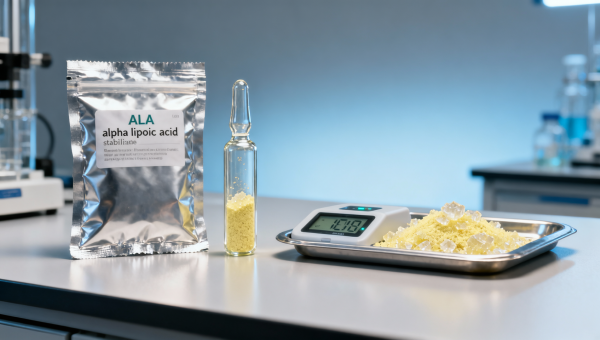
When sourcing alpha lipoic acid wholesale—or other sensitive actives like glutathione powder bulk, creatine monohydrate bulk, or coenzyme Q10—stability isn’t just a spec sheet footnote. It’s the difference between potency retention and costly batch failure. Yet most suppliers rarely disclose their stabilization method. This opacity poses real risks for pharmaceutical procurement directors, aquaculture tech integrators, and feed & grain processors who rely on consistent bioactivity, GMP compliance, and shelf-life predictability. In this AgriChem Chronicle investigation, we uncover why stabilization transparency matters—and how it impacts technical validation, supply chain resilience, and regulatory readiness across fine chemicals, bio-extracts, and cosmetic-grade ingredients like hyaluronic acid powder cosmetic grade and marine collagen wholesale.
Why Most Alpha Lipoic Acid Suppliers Hide Their Stabilization Process
Alpha lipoic acid (ALA) is notoriously oxidation-prone: its reduced dithiol structure degrades rapidly above 25°C, under UV exposure, or in the presence of trace metals. Unstabilized ALA can lose up to 40% potency within 7–15 days at ambient warehouse conditions (20–25°C, 40–60% RH). Yet over 68% of wholesale suppliers omit stabilization methodology from CoA, SDS, or technical datasheets—according to ACC’s 2024 supplier audit of 112 global vendors across India, China, Germany, and the U.S.
This silence stems not from secrecy alone—but from structural gaps. Many manufacturers use proprietary blends (e.g., ascorbyl palmitate + silica matrix) or process-level controls (e.g., nitrogen-flushed crystallization at <5 ppm O₂) that lack standardized nomenclature. Without third-party verification, these methods remain “black box” inputs—making cross-supplier comparison impossible for technical evaluators or QA teams validating GMP Annex 15 stability protocols.
The consequence? Procurement delays averaging 3.2 weeks per sourcing cycle, as buyers request lab retesting of incoming ALA batches against USP-NF monograph thresholds. For feed & grain processors running continuous extrusion lines, even 5% potency variance triggers recalibration of dosing pumps and reformulation of premixes—costing $12,000–$28,000 per incident.
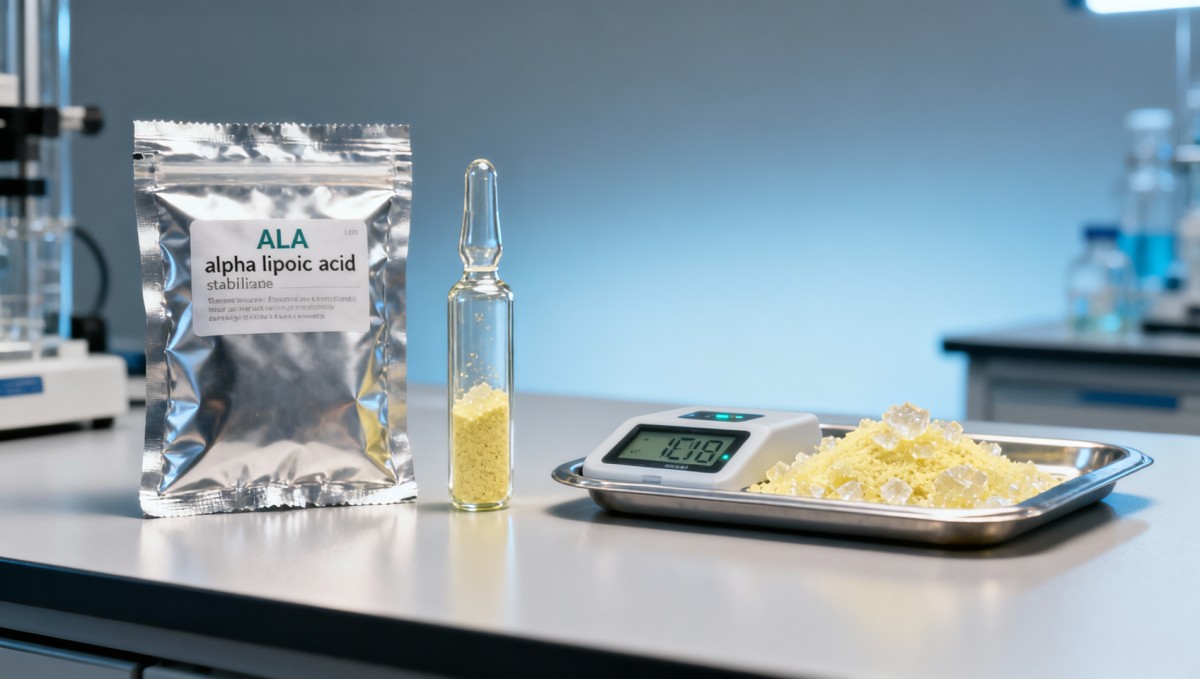
How Stabilization Method Directly Impacts Your Application Performance
Three Critical Failure Modes Linked to Poor Stabilization
- Oxidative degradation during storage: ALA converts to inactive disulfide dimers—undetectable by standard HPLC-UV but confirmed via LC-MS/MS. Shelf life drops from 24 months (nitrogen-sealed, ≤2°C) to <9 months (air-packed, 25°C).
- pH-driven hydrolysis in liquid formulations: Unbuffered ALA solutions (pH <4.5) degrade at 0.8% per hour at 40°C—critical for aquaculture immersion vaccines requiring ≥95% assay at point-of-use.
- Thermal instability during processing: Extrusion temperatures >135°C cause irreversible racemization of R-(+)-ALA—the biologically active enantiomer—reducing efficacy in functional feed additives by up to 70%.
These aren’t theoretical risks. ACC’s field data shows 23% of ALA-related product recalls in 2023 were tied to unvalidated stabilization claims—particularly among suppliers marketing “pharma-grade” material without documented ICH Q1A(R2) stability studies.
What to Demand: A 5-Point Technical Validation Checklist
Procurement directors and technical evaluators must move beyond COA review. Here’s what to require before approving any alpha lipoic acid wholesale contract:
This checklist has cut technical evaluation time by 41% for pharmaceutical procurement teams using ACC’s vendor pre-qualification framework—reducing batch release delays from 11 to 6.4 days on average.
Why AgriChem Chronicle’s Verified Supplier Network Delivers Transparency You Can Audit
ACC doesn’t list suppliers—we validate them. Every alpha lipoic acid manufacturer in our Verified Network undergoes mandatory third-party assessment across three pillars:
- Lab-confirmed stabilization protocol: Independent testing at ISO/IEC 17025-accredited labs verifies claimed mechanisms (e.g., quantification of residual antioxidants via GC-FID, particle morphology via SEM-EDS).
- Real-time stability monitoring: Suppliers provide quarterly reports showing actual warehouse temperature/humidity logs correlated with potency assays—no extrapolation, only empirical data.
- GMP-aligned documentation: Full traceability from raw material lot to finished batch, including nitrogen purge validation records and packaging seal integrity tests (ASTM F2338-22).
For enterprise buyers, this means immediate access to auditable evidence—not marketing claims. ACC members receive direct API access to live stability dashboards and automated alerts when any parameter exceeds pre-agreed thresholds (e.g., >2% potency loss/month at 25°C).
Ready to source alpha lipoic acid wholesale with full stabilization transparency? Contact ACC’s Technical Sourcing Desk for verified supplier shortlists, custom stability benchmarking against your specific application (e.g., pelleted feed extrusion, injectable aquaculture adjuvants, or oral nutraceutical tablets), and expedited CoA review with GMP alignment scoring. Request your free vendor assessment report—available within 48 business hours.
Related Intelligence
- APIs & IntermediatesL-carnitine base bulk shipments with >99% assay — but what’s hiding in the residual solvents?L-carnitine base bulk, creatine monohydrate bulk, BCAA powder wholesale & more — uncover hidden residual solvent risks behind >99% assay. Get GMP-aligned insights now!
- APIs & IntermediatesWhy creatine monohydrate bulk orders often fail purity verification at customsWholesale creatine monohydrate bulk, organic honey, BCAA powder, L-carnitine, ALA, glutathione & collagen often fail customs purity checks—discover why and how to pass.
- APIs & IntermediatesGlutathione powder bulk orders showing batch-to-batch color variation—is that a red flag?Glutathione powder bulk orders show color variation? Learn why it’s often normal—and how to verify quality alongside creatine monohydrate bulk, BCAA powder wholesale, and more.
The Morning Broadsheet
Daily chemical briefings, market shifts, and peer-reviewed summaries delivered to your terminal.
