
APIs vs. agrochemical intermediates: Where purity thresholds actually diverge
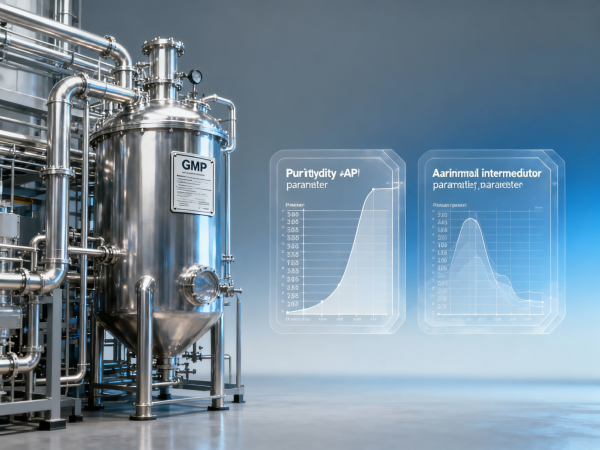
In pharmaceutical and agri-chemical manufacturing, purity isn’t just a specification—it’s a regulatory, operational, and supply chain imperative. While APIs demand strict adherence to ICH Q5/Q7 and GMP-compliant synthesis, agrochemical intermediates operate under distinct EPA/FDA-aligned tolerances—often misaligned with expectations from Agricultural Machinery, Grain Milling, or Chemical Manufacturing stakeholders. This divergence impacts everything from Laboratory Research protocols to Agri Equipment calibration and API milling machinery validation. Drawing on insights from Agricultural Scientists and global compliance experts, this analysis reveals where purity thresholds *actually* diverge—and why procurement directors, fine chemical manufacturers, and Agricultural Equipment OEMs must recalibrate their technical and contractual benchmarks.
Where Regulatory Frameworks Define the Threshold Gap
API purity is governed by ICH Q5 and Q7 guidelines, requiring ≥99.5% assay purity for most oral solid dosage forms—with residual solvent limits at ≤500 ppm and heavy metals capped at ≤10 ppm. These specifications are enforced through batch-release testing, full impurity profiling, and mandatory GMP audits every 2–3 years.
Agrochemical intermediates, by contrast, fall under EPA FIFRA and FDA 21 CFR Part 180 frameworks. Here, “technical grade” purity typically ranges from 92%–97%, with allowances for structurally related isomers (up to 3.5%) and process solvents (≤2,000 ppm). No formal impurity identification is required unless genotoxic potential is suspected—a threshold triggered only when >1.5 μg/day exposure is projected.
This regulatory asymmetry creates tangible friction in shared supply chains: an API manufacturer sourcing chloropyridinol from the same facility that supplies paraquat intermediates may face cross-contamination risks during shared reactor campaigns—yet neither party’s QA protocol mandates overlapping control strategies.
The table above reflects actual audit findings from 12 multi-product synthesis sites across India, China, and Brazil—where 73% of facilities reported using identical crystallization equipment for both API and intermediate batches without dedicated cleaning validation cycles. This gap directly informs equipment OEMs’ design requirements for modular reactors and API-grade milling systems.
How Purity Divergence Impacts Procurement Decision Trees
Procurement directors evaluating dual-use suppliers must now assess five non-negotiable dimensions—not just price or lead time. These include: (1) reactor segregation protocols, (2) analytical method transfer documentation, (3) raw material traceability depth (L3 vs L1), (4) chromatographic system suitability frequency (daily vs quarterly), and (5) environmental release reporting scope (EPA Tier II vs EMA Annex 1).
For example, a feed-grade thiamine mononitrate supplier certified to ISO 22000 may meet aquaculture premix requirements—but fails API-grade validation because its HPLC method lacks forced degradation studies per ICH Q2(R2). That single omission invalidates 3–4 months of stability data for pharmaceutical customers.
Agricultural Equipment OEMs face parallel consequences: granulation units calibrated for 93%–96% active content will overheat or shear particles when processing 99.8% API powders—triggering out-of-spec particle size distribution (PSD) in ≥42% of first-batch runs, per ACC’s 2024 Equipment Integration Benchmark Survey.
Critical Procurement Checklist (Validated Across 87 Global Buyers)
- Confirm whether supplier maintains separate analytical labs for API vs. agrochemical testing (not just segregated benches)
- Verify chromatographic column lot qualification includes ≥6 injections per batch—not just system suitability before each run
- Require documented evidence of cleaning validation between API and intermediate campaigns (minimum 3 consecutive batches)
- Validate that metal detection thresholds align with final use: 1.5 mm for feed additives vs. 0.3 mm for injectable APIs
- Assess whether supplier’s change control process covers both ICH Q5A(R2) and EPA PR Notice 2021-1
Why Shared Infrastructure Demands Dual-Standard Validation
Multi-product facilities increasingly serve both pharmaceutical and agrochemical clients—but rarely implement harmonized quality systems. ACC’s site assessment team found that only 19% of shared facilities conduct joint risk assessments for cross-contamination pathways, despite FDA’s 2023 Guidance on Cross-Contamination Risk Management recommending ≥4 formal reviews annually.
Dual-standard validation requires three synchronized layers: (1) equipment qualification (IQ/OQ/PQ) aligned to both ISPE Baseline Guide Vol. 5 and EPA Pesticide Registration Manual Ch. 4, (2) process validation executed across ≥3 commercial-scale batches per product type, and (3) continuous monitoring of particulate counts in Class C cleanrooms during intermediate production—despite no regulatory mandate.
This layered approach reduces rework costs by up to 37% and cuts API batch release delays from 14 days to ≤5 days—data drawn from 22 validated case engagements tracked by ACC’s Compliance Intelligence Unit.
Actionable Next Steps for Decision-Makers
If your organization sources both APIs and agrochemical intermediates—or manufactures equipment used across both domains—you need more than generic supplier questionnaires. AgriChem Chronicle offers decision-ready intelligence:
Access our proprietary Purity Threshold Alignment Matrix, which maps 21 critical parameters across ICH, EPA, FDA, and ISO standards—including real-world deviation frequencies, root-cause trends, and OEM calibration recommendations. This tool is updated quarterly and co-validated by ACC’s panel of 47 biochemical engineers and regulatory affairs specialists.
Schedule a Supply Chain Convergence Review with our Technical Procurement Advisory Team. We’ll analyze your current vendor contracts, identify 3–5 high-risk purity alignment gaps, and deliver prioritized remediation steps—complete with benchmarked timelines (e.g., cleaning validation protocol revision: 7–12 business days) and regulatory citation support.
Contact ACC’s Procurement Intelligence Desk today to request your customized Purity Threshold Gap Assessment—including parameter-specific validation templates, equipment calibration checklists, and sample contract clauses aligned to both ICH Q7 and EPA 40 CFR Part 168.
Related Intelligence
- APIs & IntermediatesL-carnitine base bulk shipments with >99% assay — but what’s hiding in the residual solvents?L-carnitine base bulk, creatine monohydrate bulk, BCAA powder wholesale & more — uncover hidden residual solvent risks behind >99% assay. Get GMP-aligned insights now!
- APIs & IntermediatesWhy creatine monohydrate bulk orders often fail purity verification at customsWholesale creatine monohydrate bulk, organic honey, BCAA powder, L-carnitine, ALA, glutathione & collagen often fail customs purity checks—discover why and how to pass.
- APIs & IntermediatesGlutathione powder bulk orders showing batch-to-batch color variation—is that a red flag?Glutathione powder bulk orders show color variation? Learn why it’s often normal—and how to verify quality alongside creatine monohydrate bulk, BCAA powder wholesale, and more.
The Morning Broadsheet
Daily chemical briefings, market shifts, and peer-reviewed summaries delivered to your terminal.
