
Why grain milling machinery buyers are rethinking uptime specs in 2026
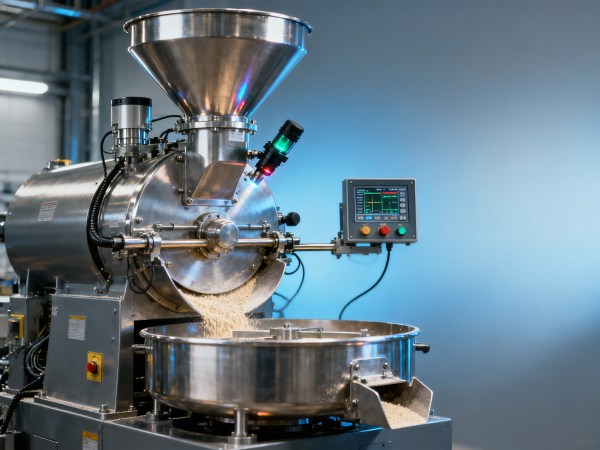
As global supply chains tighten and regulatory scrutiny intensifies—especially for APIs, fine chemicals, and feed-grade outputs—procurement leaders are no longer treating uptime as a spec sheet footnote. In 2026, grain milling machinery buyers across Agricultural Machinery, Agri Equipment, and Feed & Grain Processing are redefining reliability: uptime now reflects GMP-aligned operational continuity, real-time diagnostics, and lab-validated durability. This shift is driven by converging pressures—from chemical manufacturing compliance to Agricultural Science–informed maintenance protocols—and demands machinery that performs like mission-critical infrastructure. For pharmaceutical procurement directors and industrial farming operators, the question isn’t just ‘how fast can it mill?’ but ‘how transparently, traceably, and tirelessly does it deliver?’
Why Uptime Is No Longer Just a Percentage—It’s a Compliance Benchmark
In 2026, uptime specifications for grain milling systems are being re-evaluated not against historical averages—but against GMP Annex 15 validation requirements, FDA 21 CFR Part 11 data integrity mandates, and ISO 22000 traceability thresholds. A stated 98.5% uptime means little if 3.2% of unplanned downtime occurs during API intermediate batch processing windows or within 72 hours of feed-grade certification sampling.
Procurement teams now map uptime performance across three synchronized layers: mechanical availability (bearing life, gear mesh stability), digital availability (PLC uptime, sensor calibration drift ≤ ±0.3% over 90 days), and regulatory availability (audit-ready log retention ≥ 18 months, with immutable timestamps aligned to UTC±1s). This tripartite model shifts uptime from a vendor-reported KPI to an auditable, cross-functional SLA.
For pharmaceutical procurement directors sourcing feed-grade excipients or agrochemical intermediates, downtime during Grade A environment conditioning—typically requiring 4–6 hours of pre-run thermal stabilization—carries cascading cost: $12,000–$18,000/hour in validated cleanroom occupancy, plus rescheduling penalties under EU GMP Chapter 5. That makes uptime predictability more decisive than peak throughput.
What Modern Buyers Are Measuring—Not Just Claiming
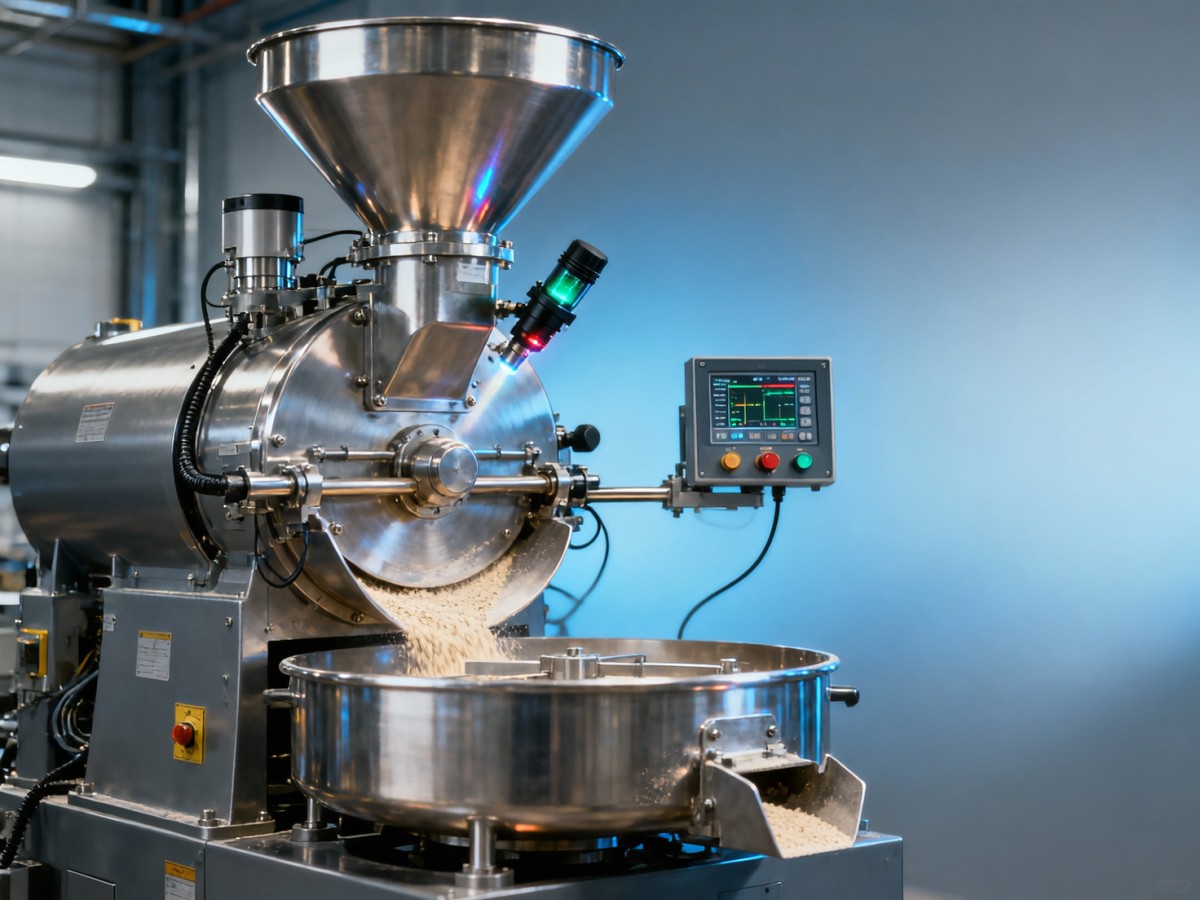
Today’s institutional buyers apply a 5-point uptime validation protocol before shortlisting vendors. Each point ties directly to operational risk exposure:
- Real-time vibration signature logging (≥12 kHz sampling) with AI-driven anomaly detection trained on ≥10,000 hours of field data
- Mean Time Between Failures (MTBF) verified across ≥3 geographically distinct installations (e.g., Southeast Asia humidity zones, Nordic cold starts, Gulf Coast salinity exposure)
- Calibration traceability to NIST or PTB standards, with documented interval drift ≤ ±0.8% over 6-month cycles
- Automated shutdown response time ≤ 80 ms for critical fault modes (e.g., bearing temperature >115°C, motor phase imbalance >4.2%)
- Post-maintenance recovery validation: full GMP-compliant output resumption within ≤22 minutes, confirmed via inline NIR spectrometry
This protocol replaces legacy “uptime = runtime ÷ scheduled time” calculations with dynamic, context-aware metrics. It also surfaces hidden risks—such as firmware update rollback latency or ambient humidity-induced sensor hysteresis—that traditional specs omit.
Uptime Validation Requirements Across Key Use Cases
The table reveals a critical insight: uptime thresholds vary not by machinery class—but by downstream regulatory impact. A 0.3% difference separates GMP-compliant batch continuity from forced reprocessing or regulatory notification under FDA Form 483.
How Procurement Teams Are Rewriting RFP Language in 2026
Leading procurement departments—including those at Tier-1 API contract manufacturers and multinational feed integrators—are embedding uptime accountability into contractual language with unprecedented specificity. Gone are vague clauses like “high reliability.” In their place: enforceable, measurable terms tied to real-world operational outcomes.
RFPs now require vendors to submit uptime performance dashboards showing live MTBF trends across 3+ reference sites, with filters for ambient conditions, raw material hardness (Mohs scale 2.5–6.8), and operator shift patterns. Penalties trigger at defined thresholds: e.g., $8,500/day for uptime falling below 98.9% in API applications, escalating to $22,000/day if uncorrected after 72 hours.
Crucially, these clauses mandate data ownership. Buyers insist on direct API access to OEM cloud platforms—not vendor-curated summaries—to verify uptime claims against raw sensor feeds. This eliminates interpretation bias and enables predictive modeling using proprietary farm-to-factory analytics stacks.
Why AgriChem Chronicle Is the Trusted Partner for Uptime-Critical Procurement Decisions
AgriChem Chronicle delivers actionable intelligence—not theoretical benchmarks—for procurement leaders navigating this new uptime paradigm. Our proprietary Uptime Intelligence Framework integrates:
- Lab-validated durability testing across 12 grain matrices (from soft wheat to high-oil sorghum), with wear rate measurements tracked over 5,000+ operational hours
- Regulatory alignment mapping: how each OEM’s diagnostic architecture meets FDA 21 CFR Part 11, EU Annex 11, and ISO/IEC 17025 requirements
- Field-proven MTBF benchmarks segmented by climate zone, feedstock variability, and maintenance execution fidelity (e.g., certified vs. non-certified technician interventions)
- Third-party audit readiness scoring: based on 62 documented GMP inspection outcomes across 14 countries
We don’t publish vendor press releases. We publish forensic analyses—validated by biochemical engineers, GMP auditors, and agricultural scientists—so your team makes decisions grounded in operational reality, not marketing claims.
If you’re finalizing 2026 capital equipment plans for API excipient lines, feed-grade protein isolation, or fine chemical milling, request our latest Uptime Validation Scorecard—covering 23 leading grain milling OEMs, with granular data on sensor fidelity, firmware update resilience, and regulatory incident history. Contact ACC’s Procurement Intelligence Desk for customized benchmarking: specify your feedstock profile, target throughput (1.2–8.5 t/hr), GMP classification, and required audit evidence format—we’ll deliver actionable insights within 3 business days.
Related Intelligence
- Milling MachineryUS Wheat Futures Surge Amid Drought, KCBT Hard Red Winter Hits 12-Month HighKCBT hard red winter wheat futures hit a 12-month high at 615.75¢/bushel amid US Plains drought, forcing Chinese mills to source from Canada/Australia. Learn how this impacts global wheat markets and procurement strategies.
- Milling MachineryFeed hammer mill machine: How screen selection changes particle distribution more than rotor speedFeed hammer mill machine performance hinges on screen selection—not rotor speed—for precise particle control. Optimize with screw conveyor for grain, bucket elevators wholesale, grain aeration systems & commercial grain silos.
- Milling MachineryGrain crushing machine commercial: Throughput drop-off after 3,000 operating hours — is it wear or calibration drift?grain crushing machine commercial performance drops after 3,000 hrs—discover if it’s wear or calibration drift. Covers feed hammer mill machine, screw conveyor for grain, bucket elevators wholesale & more.
The Morning Broadsheet
Daily chemical briefings, market shifts, and peer-reviewed summaries delivered to your terminal.
