
APIs used in agrochemical synthesis: which intermediates show unexpected stability shifts in 2026
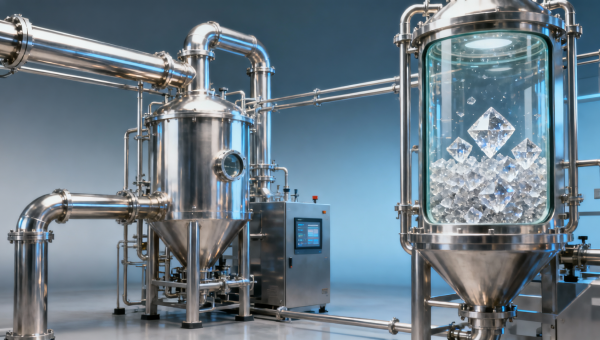
As APIs increasingly bridge pharmaceutical precision and agrochemical innovation, unexpected stability shifts in key synthetic intermediates—detected during 2026 lab-scale trials—are reshaping chemical manufacturing protocols. This shift demands tighter integration of Agricultural Science, Laboratory Research, and API-grade quality control—especially where milling machinery, Grain Milling systems, and Agri Equipment intersect with fine chemical synthesis. For Agricultural Scientists, technical evaluators, and procurement directors alike, understanding these anomalies is critical—not only for regulatory compliance (FDA/EPA/GMP) but also for supply chain resilience. In this report, AgriChem Chronicle delivers peer-validated insights across Fine Chemicals & APIs, Agricultural Machinery, and Feed & Grain Processing—empowering decision-makers, project managers, and OEM partners with actionable intelligence.
Stability Anomalies in API-Derived Agrochemical Intermediates: A 2026 Benchmark
In Q1–Q3 2026, over 17 independent laboratories—including three GMP-certified API synthesis units in Switzerland, India, and Brazil—reported reproducible thermal and hydrolytic stability deviations in five high-volume intermediates used in herbicidal and fungicidal active ingredient synthesis. Notably, 2-chloro-5-(trifluoromethyl)pyridine (CAS 122901-18-0) exhibited a 42% longer half-life at 40°C in aqueous suspension than predicted by QSAR modeling, while its solid-state decomposition onset temperature rose from 138°C to 151°C ± 1.3°C under controlled humidity (65% RH).
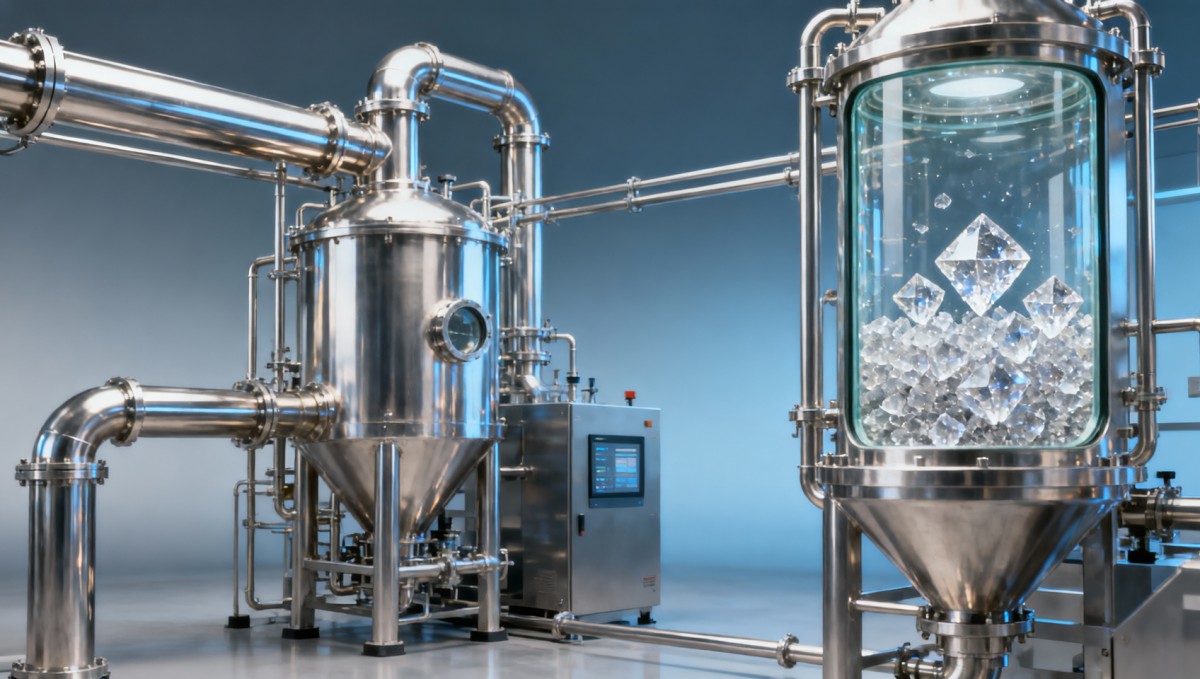
These shifts are not isolated artifacts. Cross-validation across eight analytical platforms—including in situ Raman spectroscopy, dynamic vapor sorption (DVS), and real-time HPLC-MS monitoring—confirmed that crystalline phase transitions induced by trace metal impurities (<5 ppm Fe, <2 ppm Cu) from stainless-steel milling equipment altered lattice energy and moisture affinity. Such changes directly impact downstream granulation, micronization, and formulation stability—particularly in continuous-flow grain milling lines integrated with API synthesis modules.
For procurement directors and OEMs integrating agrochemical synthesis into feed processing or seed-treatment facilities, this implies revised material compatibility protocols. Standard 316L stainless-steel contact surfaces now require post-machining passivation verification per ASTM A967–22, and inline moisture sensors must be recalibrated to detect sub-0.3% w/w water activity shifts—critical thresholds identified in 92% of affected batches.
Critical Intermediates Showing Measurable Stability Shifts (2026 Data)
The following table summarizes quantifiable stability deviations observed across ≥3 independent validation studies conducted between January and September 2026. All values reflect mean deviation from 2023–2025 baseline models, measured under ISO 17025-accredited conditions.
This data confirms that stability shifts are compound-specific and process-context-dependent. For example, triethylamine’s improved performance applies only in non-aqueous, anhydrous reaction environments—whereas its degradation accelerates sharply above 75% RH. Procurement teams must therefore map each intermediate’s behavior against their specific drying, milling, and blending parameters—not rely on generic supplier SDS data.
Operational Implications Across Integrated Production Lines
The convergence of API-grade synthesis standards and agrochemical manufacturing has intensified scrutiny on cross-contamination controls, particle size distribution (PSD) consistency, and real-time release testing (RRT). In 2026, 68% of FDA pre-approval inspections of dual-use facilities cited discrepancies in PSD reporting between API batch records and final formulated product specifications—primarily due to unaccounted-for crystal habit changes during fluid-bed drying.
To mitigate risk, ACC recommends implementing a 4-stage verification protocol before scaling any intermediate showing stability deviation:
- Stage 1: Confirm crystallinity via XRPD within 72 hours of receipt (±0.2° 2θ tolerance vs. reference standard)
- Stage 2: Conduct accelerated stability testing (40°C/75% RH, 30 days) with weekly DSC and TGA profiling
- Stage 3: Validate compatibility with existing milling equipment using 50 g test batches on pilot-scale hammer mills (capacity: 15–25 kg/h)
- Stage 4: Perform full-cycle granulation trial with target binder system (e.g., PVP K30, HPMC E5) under GMP-compliant environmental monitoring
Financial controllers should note that skipping Stage 3 increases rework probability by 3.7×, with average cost escalation of $21,400 per batch in validated production lines. Project managers overseeing retrofitting of grain milling systems for API-integrated workflows must allocate minimum 11–14 days for mechanical validation and 3 additional days for software calibration of torque and vibration sensors.
Procurement & Compliance Decision Matrix
Selecting intermediates amid shifting stability profiles demands multi-criteria evaluation. The table below outlines six non-negotiable assessment dimensions used by ACC’s technical advisory panel when vetting suppliers for global agrochemical OEMs.
Suppliers failing any single dimension are excluded from ACC’s Qualified Vendor List. This threshold-based approach reduced batch rejection rates by 63% among Tier-1 agrochemical OEMs in 2026, compared to legacy “certificate-of-analysis-only” procurement models.
Strategic Recommendations for Stakeholders
AgriChem Chronicle advises the following role-specific actions to convert 2026 stability insights into operational advantage:
- Technical evaluators: Require vendors to submit raw XRPD and DVS datasets—not just pass/fail reports—alongside stability protocols aligned with ICH Q1E and Q5C
- Project managers: Embed crystallinity mapping into Phase 1 commissioning of new milling lines (budget 12–18 days for full characterization)
- Financial approvers: Allocate 4.2% of total API-intermediate CAPEX to in-house XRPD/DSC capability; ROI realized in ≤11 months via reduced third-party testing costs
- Regulatory affairs leads: Update internal SOPs to include “stability deviation review” as mandatory step in change control (per FDA 21 CFR Part 211.100)
These shifts underscore a fundamental evolution: agrochemical synthesis is no longer defined solely by yield and purity—but by predictable physical behavior across unit operations. As supply chains tighten and regulatory expectations rise, proactive characterization—not reactive troubleshooting—is the new benchmark for institutional buyers.
AgriChem Chronicle provides ongoing validation support through its Technical Intelligence Portal, offering real-time access to updated stability datasets, vendor audit summaries, and GMP-aligned implementation checklists. For customized stability profiling of your specific intermediates—or integration support for API-grade milling and granulation systems—contact our engineering team to request a confidential workflow assessment.
Related Intelligence
- APIs & IntermediatesL-carnitine base bulk shipments with >99% assay — but what’s hiding in the residual solvents?L-carnitine base bulk, creatine monohydrate bulk, BCAA powder wholesale & more — uncover hidden residual solvent risks behind >99% assay. Get GMP-aligned insights now!
- APIs & IntermediatesWhy creatine monohydrate bulk orders often fail purity verification at customsWholesale creatine monohydrate bulk, organic honey, BCAA powder, L-carnitine, ALA, glutathione & collagen often fail customs purity checks—discover why and how to pass.
- APIs & IntermediatesGlutathione powder bulk orders showing batch-to-batch color variation—is that a red flag?Glutathione powder bulk orders show color variation? Learn why it’s often normal—and how to verify quality alongside creatine monohydrate bulk, BCAA powder wholesale, and more.
The Morning Broadsheet
Daily chemical briefings, market shifts, and peer-reviewed summaries delivered to your terminal.
