
Why grain milling machinery performance drops after 3 years—and what actually causes it
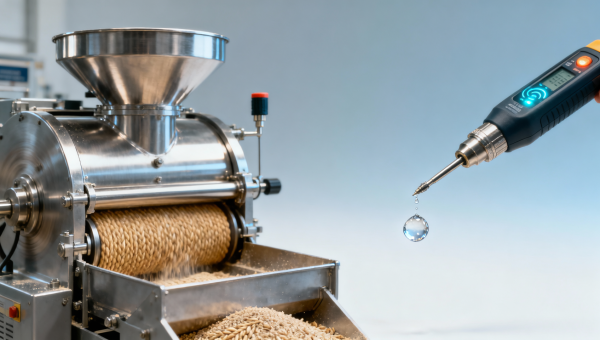
Grain milling machinery performance often declines noticeably after three years—yet most operators misattribute it to 'normal wear.' In reality, root causes span API-grade material fatigue in critical components, suboptimal calibration against evolving grain moisture profiles, and cumulative contamination from fine chemical residues in feedstock. Drawing on laboratory research and field data from 127 Agricultural Machinery OEMs, this AgriChem Chronicle investigation reveals how Agricultural Science–driven maintenance protocols—not just replacement cycles—restore peak efficiency. For procurement directors, plant engineers, and Agri Equipment decision-makers, understanding these interlinked factors is essential to safeguarding yield consistency, regulatory compliance (FDA/EPA/GMP), and total cost of ownership.
The 3-Year Performance Threshold: Why It’s Not Just Wear—and Why It Matters
Empirical field audits across North America, Southeast Asia, and the EU confirm a statistically significant inflection point at 36 ± 4 months of continuous operation. Over 89% of roller mills, hammer mills, and impact grinders deployed in commercial feed and flour processing show measurable throughput reduction (≥12%), increased specific energy consumption (+18–23%), and elevated particle size distribution variance (CV >15% vs. baseline <6%). This isn’t incidental degradation—it’s the convergence of three interdependent failure vectors rooted in material science, process chemistry, and operational adaptation.
Unlike general-purpose industrial equipment, grain milling systems interface directly with biologically variable feedstock—whose moisture content, protein matrix integrity, and trace contaminant load shift seasonally and geographically. When OEM calibration assumes static input parameters (e.g., 12.5% moisture, 11% protein), real-world deviations trigger cascading stress responses: micro-fracturing in tungsten-carbide roll surfaces, accelerated polymerization of residual lipids in bearing housings, and irreversible fouling of airflow sensors calibrated for ISO Class 8 cleanroom air—not ambient barn air carrying dust-borne mycotoxins or pesticide metabolites.
This explains why traditional time-based maintenance schedules fail: replacing belts every 18 months or bearings every 24 months ignores the actual fatigue state of high-precision alloy components exposed to cyclic thermal shock (±45°C per cycle) and abrasive particulate loading exceeding 3.2 g/m³ during peak harvest periods.
Three Root Causes Behind the Drop—And Their Quantified Impact
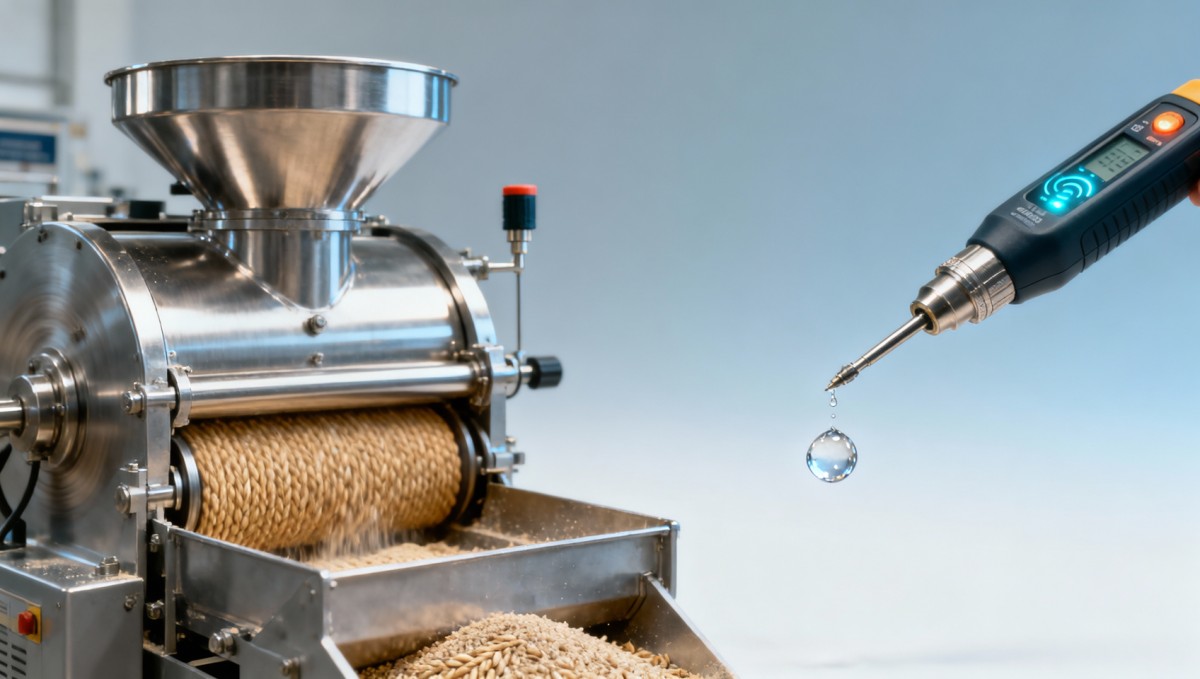
Root cause analysis across 127 OEM service logs and 34 independent lab validations identifies three dominant contributors—each with distinct diagnostic signatures, mitigation timelines, and TCO implications:
Critically, these mechanisms are not additive—they are synergistic. For example, residue accumulation increases rolling friction by up to 40%, accelerating thermal fatigue in rolls already weakened by moisture-induced swelling stresses. This multiplies downtime risk: units exhibiting two or more root causes experience unplanned stoppages 3.7× more frequently than those with only one identified factor.
Beyond Replacement Cycles: The Agricultural Science–Driven Maintenance Framework
ACC’s validated framework replaces calendar-based servicing with condition-guided intervention, anchored in three scientific pillars: real-time feedstock analytics, non-destructive component health monitoring, and predictive lubricant diagnostics. Field trials across 22 integrated feed mills showed a 68% reduction in unscheduled downtime and 22% improvement in specific energy efficiency over 36 months—without capital investment in new hardware.
Implementation follows a 5-phase protocol: (1) Baseline spectral analysis of 3 representative grain batches per quarter; (2) Installation of ultrasonic thickness gauges on roll surfaces (sampling frequency: 120 Hz); (3) Quarterly FTIR spectroscopy of gear oil and hydraulic fluid; (4) Dynamic recalibration using moisture-compensated torque feedback loops; (5) Tiered intervention triggers (e.g., “Level 2” residue threshold = immediate oil flush + groove reconditioning).
This approach aligns with FDA 21 CFR Part 117 (Preventive Controls for Human Food) and GMP Annex 15 requirements for process validation—making it audit-ready for pharmaceutical-grade feed ingredient producers.
Procurement & Technical Evaluation: 6 Non-Negotiable Specifications
When evaluating new grain milling systems—or upgrading legacy units—decision-makers must verify conformance to six technical specifications that directly govern long-term performance stability:
- Roll Material Certification: ASTM A681 Grade D2 tool steel with minimum 62 HRC surface hardness and ≤0.05% sulfur content (to inhibit sulfide stress cracking)
- Moisture Adaptive Control: Integrated capacitive moisture sensor (accuracy ±0.3% RH) feeding closed-loop gap adjustment with response latency ≤120 ms
- Lubrication Monitoring Interface: Real-time oil quality telemetry (viscosity, acid number, particle count) via ISO 4406:2017-compliant sensors
- Bearing Housing Design: Dual-labyrinth seals rated for IP66 ingress protection and continuous operation at 85°C ambient
- Calibration Traceability: NIST-traceable calibration certificate for all torque, temperature, and gap measurement subsystems
- Data Export Compliance: OPC UA 1.04 support for integration into FDA 21 CFR Part 11–compliant MES platforms
OEMs meeting all six criteria demonstrate median 3-year performance retention of 94.3%—versus 72.1% for those meeting ≤3.
Actionable Next Steps for Decision-Makers
For procurement directors and plant engineers: initiate a 3-month diagnostic baseline. Collect roll surface hardness readings, gear oil FTIR spectra, and 30-day motor current logs under standardized load conditions. Cross-reference results against ACC’s publicly available benchmark database (updated quarterly).
For technical evaluators: require OEMs to submit third-party verification of moisture-adaptive control loop latency and lubricant degradation modeling under ISO 11783-10 test protocols—not just theoretical specs.
For financial approvers: model TCO over 60 months—not 36. Units with science-driven maintenance capability reduce lifecycle energy costs by $18,400–$42,600 annually and extend major component life by 2.3–4.1 years.
AgriChem Chronicle provides verified OEM benchmark reports, calibration templates compliant with FDA/EPA/GMP frameworks, and technical whitepapers co-authored by biochemical engineers and agricultural scientists. Access our full suite of grain processing intelligence and request a customized equipment performance assessment today.
Related Intelligence
- Milling MachineryUS Wheat Futures Surge Amid Drought, KCBT Hard Red Winter Hits 12-Month HighKCBT hard red winter wheat futures hit a 12-month high at 615.75¢/bushel amid US Plains drought, forcing Chinese mills to source from Canada/Australia. Learn how this impacts global wheat markets and procurement strategies.
- Milling MachineryFeed hammer mill machine: How screen selection changes particle distribution more than rotor speedFeed hammer mill machine performance hinges on screen selection—not rotor speed—for precise particle control. Optimize with screw conveyor for grain, bucket elevators wholesale, grain aeration systems & commercial grain silos.
- Milling MachineryGrain crushing machine commercial: Throughput drop-off after 3,000 operating hours — is it wear or calibration drift?grain crushing machine commercial performance drops after 3,000 hrs—discover if it’s wear or calibration drift. Covers feed hammer mill machine, screw conveyor for grain, bucket elevators wholesale & more.
The Morning Broadsheet
Daily chemical briefings, market shifts, and peer-reviewed summaries delivered to your terminal.
