

The Authority in Global Agricultural Chemistry & Bio-Resources
IMO Updates Bulk Grain Transport Rules: New Wind Overturning Coefficient for Silos
On 4 May 2026, the International Maritime Organization (IMO) brought into force resolution MSC.492(103), revising the International Code for the Safe Carriage of Grain in Bulk. The update mandates new structural wind overturning requirements for grain silos and storage facilities used in maritime export — a development directly relevant to grain handling equipment manufacturers, port infrastructure designers, and exporters of bulk agricultural commodities.
Event Overview
Effective 4 May 2026, IMO resolution MSC.492(103) amends the International Code for the Safe Carriage of Grain in Bulk. It requires that all grain silos and storage structures intended for use in seaborne export must demonstrate compliance with a minimum wind overturning coefficient of K ≥ 1.45. Compliance verification must be conducted by an IMO-recognized classification society, which shall issue a formal structural suitability statement. Chinese manufacturers are required to complete retrospective review of existing design drawings and obtain corrective certification by 31 October 2026.
Industries Affected
Grain Silo & Storage Equipment Manufacturers
Manufacturers supplying silos or modular storage units for export-oriented grain terminals face direct design and certification obligations. Non-compliant legacy designs may no longer be approved for new export projects, and retrofitting or revalidation may be required for pending orders.
Port Terminal Operators & Grain Exporters
Operators relying on fixed or mobile silos for loading bulk grain onto vessels must verify whether their installed or planned storage infrastructure meets the revised K-value requirement. Structural declarations from classification societies will become mandatory documentation for vessel loading approval under the updated Code.
Engineering & Design Firms Specializing in Bulk Handling Infrastructure
Firms engaged in structural design, load calculation, or permitting support for grain storage facilities must update their wind-load modeling protocols and validation workflows to reflect the K ≥ 1.45 threshold. This affects both new project submissions and technical due diligence for ongoing developments.
What Stakeholders Should Monitor and Do Now
Confirm classification society engagement pathways
Manufacturers and terminal operators should identify which IMO-recognized classification societies currently offer K-value verification services for grain storage structures — and confirm lead times for review and statement issuance ahead of the October 2026 deadline.
Review active and pending design documentation
Chinese manufacturers must prioritize audit of all grain silo design packages released since 2020, especially those intended for international ports or integrated with ship-loading systems. Focus should be on wind-load assumptions, foundation anchorage details, and stability margin reporting.
Distinguish between regulatory applicability and project timelines
The rule applies to structures used in maritime export, not domestic storage. Stakeholders should assess whether specific installations fall under IMO jurisdiction — e.g., silos at inland elevators feeding export terminals may require alignment if they feed directly into vessel-loading chains.
Prepare for potential supply chain coordination delays
Certification backlogs are possible as demand surges ahead of the October 2026 deadline. Early engagement with classification societies and pre-submission technical consultations can help avoid project schedule slippage.
Editorial Observation / Industry Perspective
Observably, this revision signals a tightening of structural accountability in the grain logistics chain — shifting part of safety assurance upstream from vessel operations to land-based infrastructure. Analysis shows the K ≥ 1.45 threshold represents a measurable increase over prior industry practice in many regions, particularly where wind-load standards were historically aligned with general civil codes rather than IMO-specific maritime risk models. From an industry perspective, the requirement is less a sudden operational disruption and more a formalized extension of long-emerging expectations around export-grade infrastructure resilience. Current attention should focus on verification readiness — not just compliance, but demonstrable traceability of structural assumptions through third-party endorsement.
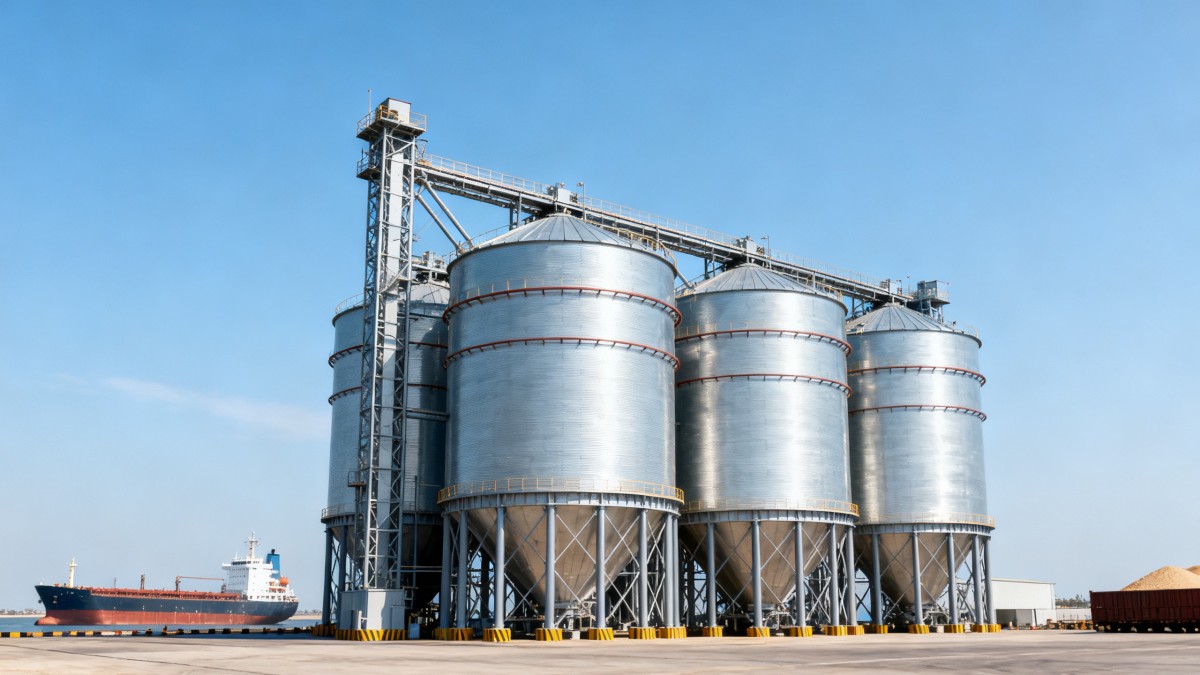
Conclusion: This IMO update does not introduce new transport procedures, but it elevates the evidentiary standard for structural integrity in grain export infrastructure. It is best understood not as an isolated regulatory change, but as a calibration point confirming that offshore risk governance now explicitly encompasses onshore storage assets involved in the maritime grain supply chain.
Source: IMO Resolution MSC.492(103), adopted 17 December 2025; entered into force 4 May 2026. Implementation timeline for Chinese manufacturers specified in official notification issued by China Classification Society (CCS) on 10 March 2026. Ongoing verification status of non-Chinese classification societies’ K-value assessment frameworks remains subject to observation.
Related Intelligence
- Grain Silos & StorageIMO Updates Bulk Grain Transport Rules: New Wind Overturning Coefficient for SilosIMO updates bulk grain transport rules: new wind overturning coefficient (K ≥ 1.45) for silos — critical for manufacturers, ports & exporters. Act before Oct 2026!
- Grain Silos & StorageIMO Updates Grain Silo Wind Stability Rules Effective May 2026IMO grain silo wind stability rules update effective May 2026: New ANSYS Fluent v24.2 wind load reports required for typhoon-prone ports like Manila, Mumbai & Gulf of Mexico.
- Grain Silos & StorageFAO 2026 Grain Silos Global Qualified List ReleasedFAO 2026 Grain Silos Global Qualified List released — 8 Chinese grain silo manufacturers now pre-qualified for FAO-funded projects in Africa & Latin America.
The Morning Broadsheet
Daily chemical briefings, market shifts, and peer-reviewed summaries delivered to your terminal.
