

The Authority in Global Agricultural Chemistry & Bio-Resources
FAO 2026 Grain Silos Global Qualified List Released
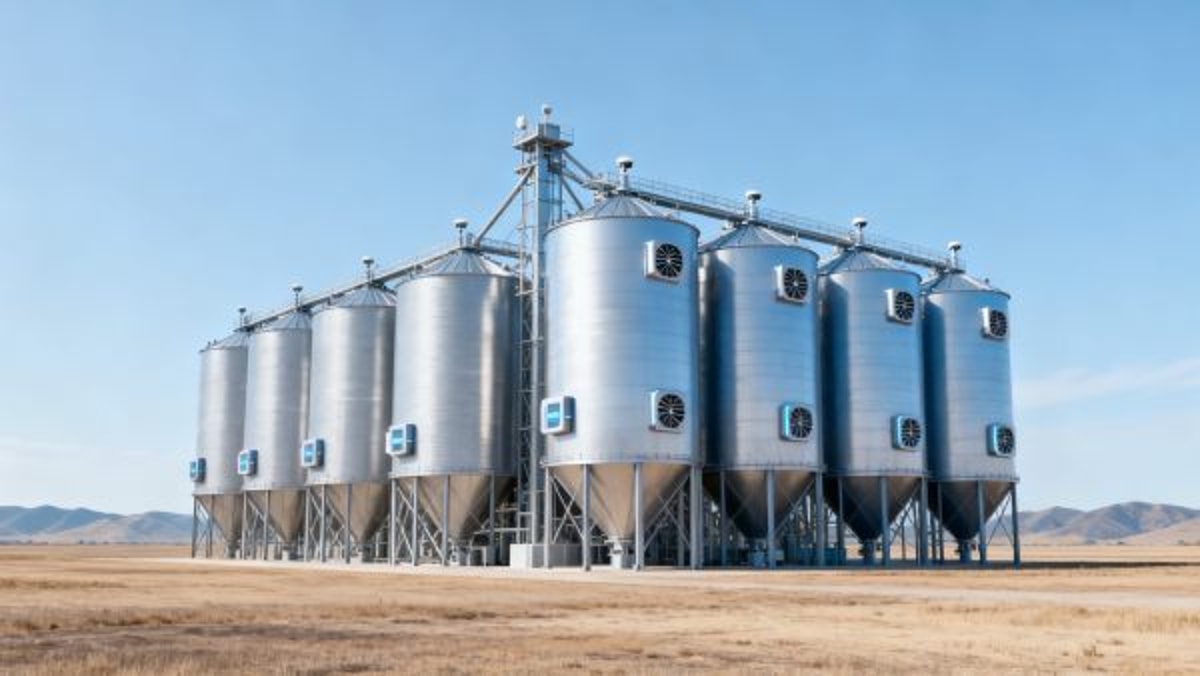
On May 3, 2026, the Food and Agriculture Organization of the United Nations (FAO) published its updated Global Grain Storage Infrastructure Qualification List 2026 Q2, adding eight Chinese manufacturers of grain silos and storage systems to its global whitelist. This development is relevant to grain infrastructure exporters, agricultural equipment suppliers, international procurement service providers, and project implementation firms active in food security infrastructure — particularly those engaged with FAO-funded initiatives in Africa and Latin America.
Event Overview
On May 3, 2026, the FAO released the Global Grain Storage Infrastructure Qualification List 2026 Q2. The list newly includes eight manufacturers based in China, all qualified to supply prefabricated steel grain silos, intelligent ventilation systems, and grain condition monitoring modules. These companies are now eligible for priority participation in FAO-funded grain storage infrastructure projects in Africa and Latin America, and may access the United Nations procurement fast-track channel.
Industries Affected
Grain Infrastructure Exporters
Exporters of grain storage solutions face heightened competitive differentiation: inclusion on the FAO list signals third-party validation of technical compliance and project readiness. Impact manifests in tender eligibility — especially for multilateral-funded tenders requiring pre-qualified suppliers — and in reduced administrative friction during bid submission.
Agricultural Equipment Manufacturers (Non-Listed)
Manufacturers not included may experience relative market positioning pressure when bidding alongside listed peers for FAO-aligned projects. The list does not restrict non-listed firms from participating, but creates a de facto benchmark for technical documentation, quality assurance protocols, and interoperability standards referenced in future FAO tender specifications.
International Procurement & Project Implementation Firms
Firms managing FAO-funded grain storage deployments in low- and middle-income countries may adjust vendor shortlisting criteria to align with the updated qualification list. Impact includes accelerated due diligence for listed suppliers and potential re-evaluation of existing supplier contracts against new FAO-referenced technical requirements.
Supply Chain Service Providers (Logistics, Certification, Testing)
Service providers supporting grain storage equipment exports may see increased demand for FAO-aligned conformity assessments — including structural certification for steel silos, environmental testing for ventilation units, and data protocol verification for monitoring modules. This reflects growing emphasis on standardized compliance evidence in UN procurement workflows.
What Relevant Enterprises or Practitioners Should Monitor and Do
Track official FAO procurement notices and tender templates
Monitor FAO’s procurement portal for updates to tender evaluation criteria, especially clauses referencing the 2026 Q2 Qualification List. Changes may specify mandatory submission of qualification list reference numbers or require alignment with FAO’s updated grain storage technical guidelines (e.g., ventilation airflow thresholds or sensor calibration standards).
Verify product scope alignment with listed categories
Confirm whether your specific product variants — e.g., silo diameter ranges, ventilation control firmware versions, or monitoring module communication protocols — fall within the exact scope certified under the FAO listing. FAO qualification applies only to verified configurations; unlisted variants remain ineligible for fast-track procurement.
Distinguish between policy signal and operational eligibility
Understand that inclusion on the list confers eligibility — not automatic award. Bidders must still meet all technical, financial, and contractual requirements in individual tenders. The list streamlines prequalification; it does not replace full bid compliance.
Prepare documentation for cross-border project support
Assemble FAO-ready documentation packages — including ISO certifications, third-party test reports, bilingual technical manuals, and installation/maintenance SOPs — even if not currently bidding. These materials are routinely requested during fast-track procurement reviews and reduce response time for urgent tenders.
Editorial Perspective / Industry Observation
Observably, this update functions primarily as a procedural signal rather than an immediate market shift. It reflects FAO’s ongoing effort to standardize technical baselines for grain storage infrastructure in food-insecure regions — not a sudden expansion of procurement volume. Analysis shows the list’s real influence lies in its role as a reference framework: future regional grain storage policies (e.g., national silo standards in Ethiopia or Colombia) may increasingly cite FAO qualification criteria as benchmarks. From an industry perspective, the 2026 Q2 update is better understood as institutional consolidation — reinforcing existing technical expectations — rather than introducing novel requirements.
Current attention should focus less on the number of newly listed firms and more on how consistently FAO integrates this list into actual tender language and evaluation scoring. That linkage — not the list itself — determines its operational weight.
Conclusion
This FAO qualification list update signifies formal recognition of technical capacity among selected Chinese grain storage equipment suppliers, but it does not alter core market dynamics or procurement rules. Its primary value lies in reducing administrative barriers for pre-vetted vendors in specific geographies and project types. For the broader industry, it serves as a calibrated indicator of evolving multilateral expectations — not a standalone market opportunity. It is more appropriately interpreted as a procedural milestone than a strategic inflection point.
Information Sources
Main source: FAO Global Grain Storage Infrastructure Qualification List 2026 Q2, published May 3, 2026. No additional background documents, country-specific implementation plans, or future list revision timelines were publicly disclosed at time of release. Ongoing observation is warranted for subsequent FAO procurement notices referencing this list.
Related Intelligence
- Grain Silos & StorageFAO 2026 Grain Silos Global Qualified List ReleasedFAO 2026 Grain Silos Global Qualified List released — 8 Chinese grain silo manufacturers now pre-qualified for FAO-funded projects in Africa & Latin America.
- Grain Silos & StorageFAO Updates Global Grain Silos Prequalified List: 6 Chinese Firms AddedFAO updates global grain silos prequalified list—6 Chinese firms added. Key for agri-infrastructure buyers, exporters & integrators targeting FAO/WFP tenders in tropical regions.
- Grain Silos & StorageFAO Adds 6 Chinese Grain Silo Makers to Global White ListFAO Adds 6 Chinese Grain Silo Makers to Global White List — Boosting export opportunities for steel silos & smart ventilation systems in Africa and Latin America.
The Morning Broadsheet
Daily chemical briefings, market shifts, and peer-reviewed summaries delivered to your terminal.
