

The Authority in Global Agricultural Chemistry & Bio-Resources
FAO Adds 6 Chinese Grain Silo Makers to Global White List
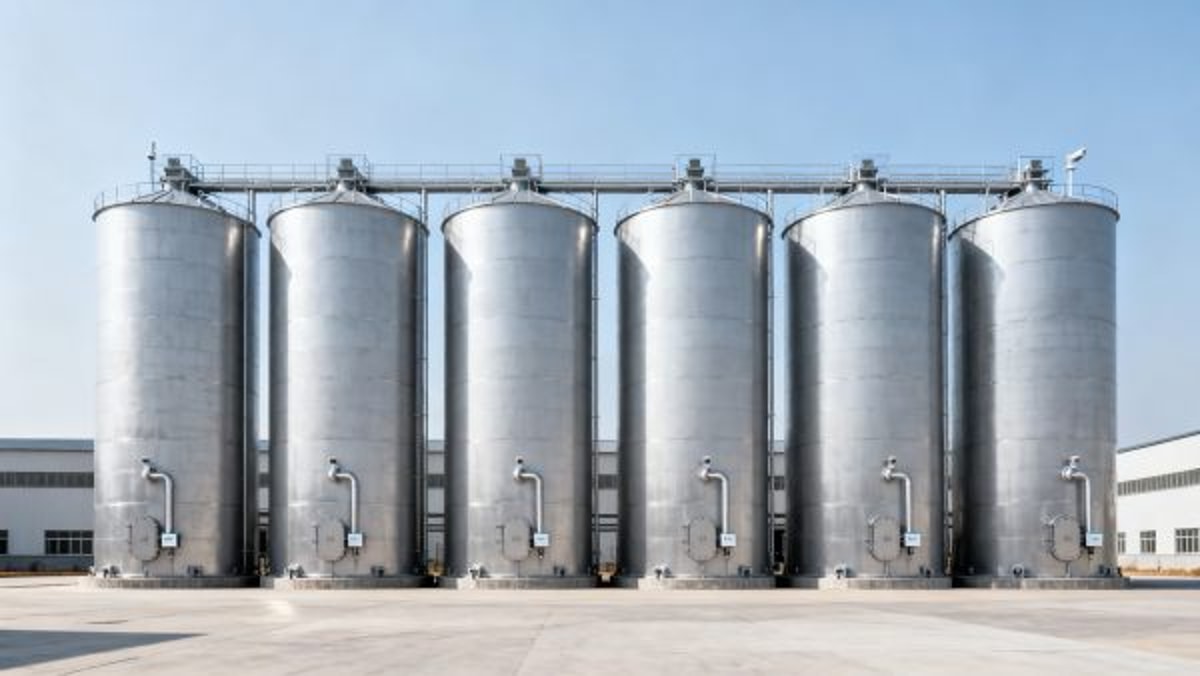
On May 1, 2026, the Food and Agriculture Organization of the United Nations (FAO) updated its Global Register of Approved Grain Storage Systems, adding six Chinese manufacturers of steel grain silos and intelligent ventilation systems—including COFCO Grain Equipment, Jiangsu Muyang Group, and Henan Tianguan Group. This update directly impacts stakeholders in grain infrastructure, international development procurement, and agricultural equipment export sectors, as certified firms gain streamlined access to FAO-funded food security projects in Africa and Latin America.
Event Overview
On May 1, 2026, the FAO published the latest edition of its Global Register of Approved Grain Storage Systems. Six Chinese companies specializing in steel grain silos and smart ventilation systems were newly included. The certification confirms compliance with both ISO 20136:2024 (structural safety for grain storage structures) and ASAE EP477 (moisture control performance). Certified enterprises are now eligible to supply directly to FAO-supported grain security initiatives in Africa and Latin America without undergoing additional local certification.
Industries Affected
Direct Exporters & International Project Suppliers
These firms now face reduced regulatory barriers when bidding on FAO-funded infrastructure tenders in low- and middle-income countries. The removal of mandatory local re-certification shortens procurement timelines and lowers compliance costs—particularly for turnkey storage system deployments.
Grain Storage System Integrators
Integrators sourcing core components (e.g., structural shells, aeration controllers, monitoring modules) from Chinese suppliers may see improved documentation traceability and faster validation cycles for end-to-end system approvals under FAO frameworks.
Agricultural Equipment Distributors in Target Regions
Distributors operating in Africa and Latin America may observe increased availability of FAO-prequalified silo solutions from Chinese OEMs. This could shift competitive dynamics in local tendering, especially where price-performance ratios and post-installation support capacity are key evaluation criteria.
Third-Party Certification & Compliance Service Providers
Service providers offering conformity assessment for grain storage systems may need to align their audit protocols more closely with ISO 20136:2024 and ASAE EP477—especially if supporting non-Chinese manufacturers seeking parallel FAO registration.
What Relevant Enterprises or Practitioners Should Monitor and Do Now
Track official FAO implementation guidance
The FAO has not yet published detailed procedural notes on how registered manufacturers will be matched to specific country-level projects or how procurement units will verify ongoing compliance. Stakeholders should monitor FAO’s Emergency and Resilience Division updates and project tender portals for operational signals.
Confirm scope alignment between certification and target projects
FAO registration covers structural safety and humidity control—but does not extend to pest management integration, fire suppression, or digital platform interoperability. Exporters and integrators must verify whether individual project specifications require supplementary validations beyond the white-listed standards.
Distinguish policy signal from immediate commercial traction
Inclusion in the register is a formal eligibility prerequisite—not a procurement guarantee. Actual contract awards depend on country-level budget cycles, local procurement rules, and technical evaluations. Companies should avoid overestimating near-term revenue impact without confirmed tender participation.
Prepare documentation for downstream verification
Certified manufacturers should ensure that product-specific test reports, material certifications, and installation manuals explicitly reference ISO 20136:2024 and ASAE EP477 clauses. Procurement officers in recipient countries may request these documents during bid evaluation or pre-commissioning audits.
Editorial Perspective / Industry Observation
Observably, this update functions primarily as a formal recognition mechanism—not an automatic market access tool. It reflects FAO’s increasing reliance on internationally harmonized technical standards to reduce duplication in safety and performance validation across geographies. Analysis shows that the inclusion of six Chinese firms signals growing institutional acceptance of domestic engineering capacity in critical post-harvest infrastructure, but it does not indicate a broad policy shift toward preferential sourcing. From an industry perspective, the move is best understood as a calibration step: streamlining entry for technically compliant suppliers while maintaining rigorous, standard-based gatekeeping. Continued relevance depends on how consistently FAO and implementing partners apply the register in actual procurement decisions—and whether regional governments adopt aligned national standards.
Conclusion
This FAO update marks a procedural refinement in global grain storage procurement—not a sudden market opening. Its significance lies in lowering one layer of technical entry friction for qualified Chinese manufacturers, particularly in multilateral food security programming. For industry participants, the event is better interpreted as a signal of evolving standardization priorities than as an immediate demand catalyst. Current understanding should emphasize documentation readiness, specification alignment, and measured expectation-setting around project-level uptake.
Information Sources
Main source: FAO Global Register of Approved Grain Storage Systems, Version effective May 1, 2026.
Note: Ongoing observation is required regarding FAO’s operational rollout—including tender linkage mechanisms, renewal requirements, and regional adoption rates by implementing partners.
Related Intelligence
- Grain Silos & StorageFAO Adds 6 Chinese Grain Silo Makers to Global White ListFAO Adds 6 Chinese Grain Silo Makers to Global White List — Boosting export opportunities for steel silos & smart ventilation systems in Africa and Latin America.
- Grain Silos & StorageFAO Adds 6 Chinese Grain Silo Makers to Global White ListFAO Adds 6 Chinese Grain Silo Makers to Global White List — Boost your international tenders with FAO-recognized, climate-tested grain storage solutions.
- Grain Silos & StorageFeed and grain expansion plans often ignore storage pinch pointsFeed & Grain expansion plans often miss storage pinch points that cut throughput and raise costs. Learn how smarter storage planning protects ROI, speeds startup, and avoids hidden bottlenecks.
The Morning Broadsheet
Daily chemical briefings, market shifts, and peer-reviewed summaries delivered to your terminal.
