

The Authority in Global Agricultural Chemistry & Bio-Resources
THE Alliance & ONE Raise Aeration & Water Tech Container Surcharges on Asia–Middle East Route
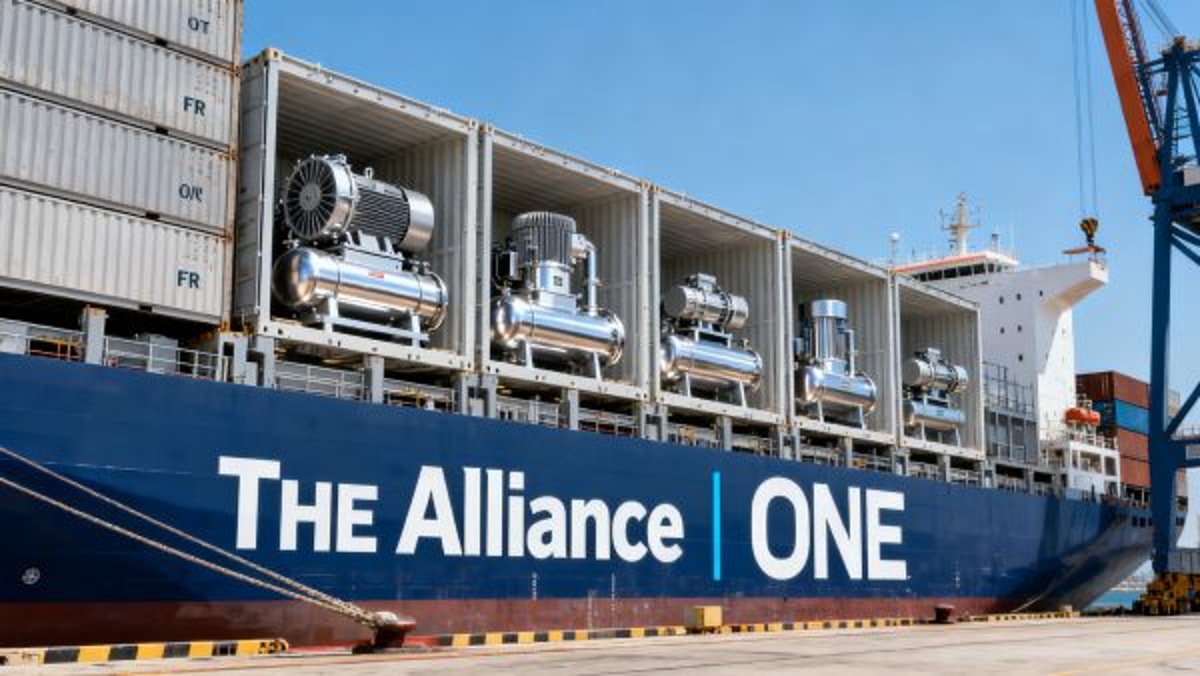
Effective May 1, 2026, THE Alliance and Ocean Network Express (ONE) have jointly imposed a temporary surcharge on 40-foot Open Top (OT) and Flat Rack (FR) containers carrying Aeration & Water Tech equipment—including roots blowers, fine bubble diffusers, and submersible mixers—on the Asia–Middle East shipping route. The surcharge amounts to $420 per TEU and remains in effect through July 31, 2026. This development directly affects water infrastructure, municipal wastewater treatment, industrial process engineering, and environmental technology suppliers operating across these regions.
Event Overview
Starting May 1, 2026, THE Alliance and Ocean Network Express (ONE) announced a temporary surcharge of $420 per TEU for 40-foot OT/FR containers transporting Aeration & Water Tech equipment on the Asia–Middle East trade lane. The surcharge applies specifically to cargo such as roots blowers, fine bubble diffusers, and submersible propeller mixers. Its validity period is confirmed as May 1 to July 31, 2026. The carriers cite two primary operational drivers: reduced vessel turnaround due to Red Sea rerouting, and sharply increased demurrage and storage fees for specialized containers at Middle Eastern ports.
Industries Affected by Segment
Direct Exporters & Importers of Aeration & Water Tech Equipment
These enterprises face immediate cost pressure, as the $420/TEU surcharge directly increases landed costs for air-blown and water-mixing systems shipped from Asia-based manufacturers to Middle Eastern project sites. Since OT/FR containers are often mandatory for oversized or non-stackable units (e.g., large-diameter diffuser trays), alternative container types are rarely viable—making the surcharge effectively non-avoidable for compliant shipments.
Wastewater Treatment Plant EPC Contractors
Engineering, procurement, and construction (EPC) firms executing municipal or industrial wastewater projects in the Middle East rely on timely delivery of core aeration components. Delays or cost overruns linked to container availability, port congestion, or unplanned surcharges may trigger contractual penalties or renegotiation pressure—especially where fixed-price bids were submitted prior to this announcement.
Regional Distributors & Aftermarket Service Providers
Distributors maintaining local inventory or fulfilling urgent spare-part orders in Gulf Cooperation Council (GCC) countries may experience tighter margins or delayed replenishment cycles. With limited regional manufacturing capacity for high-precision aeration hardware, most spares originate from East Asian production hubs—making them fully exposed to this surcharge and associated transit time volatility.
Freight Forwarders & NVOCCs Specializing in Industrial Equipment
These service providers must now reprice quotes for Aeration & Water Tech shipments, revise surcharge pass-through clauses in client contracts, and verify container eligibility (OT/FR only) with carriers ahead of booking. Failure to confirm equipment classification or container type may result in rejected bookings or unexpected detention charges at origin or destination terminals.
What Enterprises Should Monitor and Do Now
Track official carrier bulletins and tariff updates
THE Alliance and ONE publish surcharge notices via their respective tariff portals and customer advisories. Enterprises should subscribe to these channels—and cross-check surcharge applicability against actual equipment dimensions, weight distribution, and lashing requirements—not just product category labels.
Verify whether specific equipment qualifies under the defined scope
The surcharge explicitly covers “Aeration & Water Tech” devices including roots blowers, fine bubble diffusers, and submersible mixers. It does not apply to generic pumps, valves, or control panels unless shipped together *and* declared as part of an integrated aeration system requiring OT/FR handling. Confirm classification with freight documentation teams before tendering cargo.
Assess lead-time implications beyond cost alone
Red Sea rerouting has extended average voyage duration by 7–10 days on this corridor. Combined with higher stack fees for OT/FR units at congested ports like Jebel Ali and Dammam, shipment planning windows have narrowed. Review order timing, buffer stock levels, and milestone-dependent installation schedules—particularly for projects tied to government tenders or regulatory deadlines.
Prepare contingency documentation for cost recovery or claims
Where contracts allow surcharge recovery (e.g., FCA or DAP terms with explicit pass-through language), retain all carrier-generated surcharge invoices, booking confirmations, and container release records. For fixed-price contracts, document the timing of this announcement relative to bid submission and contract signing—this may support future change-order discussions.
Editorial Perspective / Industry Observation
Observably, this surcharge reflects a structural shift—not a one-off adjustment. The Red Sea disruption has persisted beyond initial expectations, and Middle Eastern port authorities have begun enforcing stricter storage policies for non-standard containers to manage yard capacity constraints. Analysis shows that while $420/TEU appears modest versus total freight costs, its impact compounds when applied to low-volume, high-value shipments typical of aeration hardware—where profit margins often sit below 15%. From an industry perspective, this move signals growing pressure on specialty-container logistics corridors; it is less a short-term anomaly and more an early indicator of sustained cost volatility for engineered environmental equipment moving across geopolitically sensitive routes.
Current monitoring suggests that similar surcharges could be introduced on other routes serving infrastructure-critical markets (e.g., Asia–Africa or Asia–Latin America) if vessel utilization and port congestion trends continue. However, no such measures have been announced outside the Asia–Middle East lane as of publication.
Conclusion
This surcharge is not merely a line-item cost increase—it is a marker of tightening logistics conditions for mission-critical environmental equipment. Its significance lies not in scale but in selectivity: it targets a narrow set of high-functionality, low-substitutability goods moving along a strategically constrained corridor. Enterprises should treat it as both a near-term cost factor and a leading indicator of broader supply chain fragility in water infrastructure sectors. It is better understood as an operational signal than a finalized market condition—warranting active tracking, not passive acceptance.
Information Sources
Main source: Official joint advisory issued by THE Alliance and Ocean Network Express (ONE), effective May 1, 2026. No third-party data or external reports were used. The surcharge’s end date (July 31, 2026) and scope definition remain subject to potential extension or revision; this remains an area for ongoing observation.
Related Intelligence
- Aeration & Water TechTHE Alliance & ONE Raise Aeration & Water Tech Container Surcharges on Asia–Middle East RouteAeration & Water Tech shippers: THE Alliance & ONE impose $420/TEU surcharge on Asia–Middle East OT/FR containers from May 1–Jul 31, 2026—act now to mitigate cost and delay risks.
- Aeration & Water TechAsia-Pacific to Middle East Reefer/Flat Rack Freight Hike Effective May 15, 2026Reefer/Flat Rack freight rates to Middle East surge 18–22% from May 15, 2026 — critical for aeration, water tech & RAS exporters. Act now.
- Aeration & Water TechAsia-Pacific to Middle East Aeration & Water Tech Container Rates Up 18%Aeration & Water Tech container rates surge 18% Asia-Pacific to Middle East—critical for RAS, smart greenhouse & precision water-tech exporters. Act now.
The Morning Broadsheet
Daily chemical briefings, market shifts, and peer-reviewed summaries delivered to your terminal.
