

The Authority in Global Agricultural Chemistry & Bio-Resources
Asia-Pacific to Middle East Reefer/Flat Rack Freight Hike Effective May 15, 2026
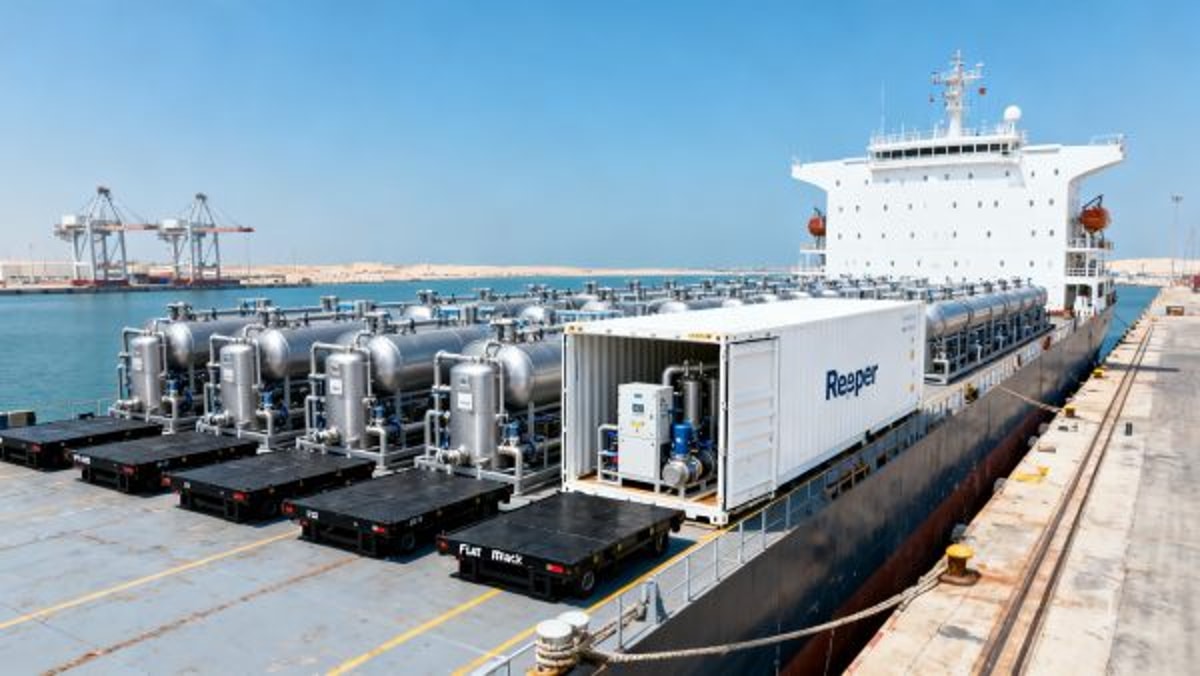
Major global shipping alliances — THE Alliance and Ocean Alliance — have jointly announced a 18%–22% freight rate increase for refrigerated, flat rack, and open-top (Reefer/Flat Rack/OT) containers on Asia-Pacific to Middle East routes, effective May 15, 2026. The adjustment specifically targets high-value equipment in the aeration and water technology sector — including aerators, water treatment modules, and RAS recirculating pump systems — and compounds existing Red Sea bypass surcharges. This development is especially relevant for manufacturers, exporters, and project integrators supplying equipment to Saudi Arabia, the UAE, and Egypt, where logistics cost inflation is projected to reach ~27%, directly compressing margins on mid- and small-scale project-based orders.
Event Overview
On April 30, 2026, THE Alliance and Ocean Alliance issued a joint notice confirming that, effective May 15, 2026, freight rates for Reefer, Flat Rack, and Open Top (OT) containers on Asia-Pacific to Middle East routes will rise by 18%–22%. The increase applies specifically to specialized cargo in the aeration and water technology segment — such as aerators, water treatment modules, and RAS (Recirculating Aquaculture Systems) pump assemblies. The adjustment is implemented alongside ongoing Red Sea bypass surcharges.
Industries Affected by Segment
Direct Exporters of Aeration & Water Tech Equipment
These enterprises ship finished units directly to end markets in the Middle East. They face immediate cost pressure, as the combined effect of the container rate hike and Red Sea surcharges raises total ocean freight costs by approximately 27%. For project-based sales — particularly those with fixed-price contracts or tight bid margins — this may erode profitability unless pricing or terms are renegotiated pre-shipment.
Manufacturers Integrating RAS and Water Treatment Systems
Companies assembling turnkey aquaculture or municipal water infrastructure solutions often source core components (e.g., pumps, control cabinets, aeration units) from Asia-Pacific suppliers. Higher inbound container costs for these components — especially when shipped via Flat Rack or OT containers due to size or sensitivity — may delay production schedules or trigger internal cost-revision cycles ahead of tender submissions.
Project-Based Engineering Contractors Operating in GCC Markets
Contractors executing wastewater, aquaculture, or desalination-adjacent projects in Saudi Arabia, UAE, and Egypt rely on timely delivery of specialized equipment. The freight increase heightens both landed cost uncertainty and lead time risk — particularly where alternative routing (e.g., via Suez) remains unavailable and carriers prioritize volume over flexibility for non-standard equipment.
Freight Forwarders and NVOCCs Specializing in Project Cargo
Service providers handling Reefer/Flat Rack/OT shipments must now re-quote clients with updated all-in rates — factoring in both the base tariff increase and surcharge layering. Their operational challenge lies in reconciling client expectations (e.g., fixed-cost bids) with real-time carrier updates, especially where contract terms lack fuel or surcharge pass-through clauses.
What Relevant Enterprises Should Monitor and Do Now
Track official carrier announcements for route-specific implementation details
The notice confirms a broad 18%–22% range but does not specify exact adjustments per port pair (e.g., Shanghai–Jeddah vs. Ningbo–Fujairah) or per equipment type. Enterprises should verify final quotes from carriers or forwarders no later than early May 2026 to confirm applicability and avoid billing discrepancies post-sailing.
Review pending orders bound for Saudi Arabia, UAE, and Egypt with emphasis on shipment timing
Orders scheduled for loading between May 15 and June 15, 2026, are most exposed. Companies should assess whether advancing shipments before May 15 — where feasible — could lock in current rates, particularly for high-value RAS pump sets or modular water treatment skids requiring OT or Flat Rack units.
Distinguish between surcharge policy signals and actual invoice impact
The 27% total logistics cost increase is an aggregate estimate derived from the announced rate hike plus Red Sea surcharges. Actual invoiced amounts will depend on carrier-specific surcharge structures (e.g., BAF, EBS, CAF), equipment dimensions, and terminal handling fees — none of which are standardized across alliances. Finance and procurement teams should request line-item breakdowns before approving new POs.
Update internal costing models and client communication protocols
For firms quoting fixed-price tenders, revise unit freight assumptions in bill-of-materials templates and include explicit clauses on surcharge pass-through or index-based adjustment mechanisms. Proactively inform key clients about the upcoming change — especially those with active procurement cycles — to align expectations and support collaborative timeline planning.
Editorial Perspective / Industry Observation
Observably, this joint announcement reflects tightening capacity discipline among major alliances on constrained east-west corridors, rather than isolated commercial decisions. Analysis shows the timing — just before peak summer demand in GCC infrastructure sectors — suggests carriers are proactively managing yield on specialty equipment lanes, where utilization and booking lead times differ significantly from general cargo. It is more accurately understood as a structural signal: specialized project cargo is increasingly subject to differentiated pricing logic, separate from standard dry container benchmarks. From an industry perspective, this underscores the need for exporters and contractors to treat freight not as a static cost line item, but as a dynamic variable tied to equipment classification, routing constraints, and alliance coordination behavior — all of which require continuous monitoring beyond quarterly rate announcements.
This is not yet a finalized market equilibrium; rather, it marks the start of a revised cost baseline. Stakeholders should treat the May 15 effective date as a threshold — not an endpoint — for reassessing how logistics variables influence competitiveness in Middle East water infrastructure and aquaculture equipment markets.
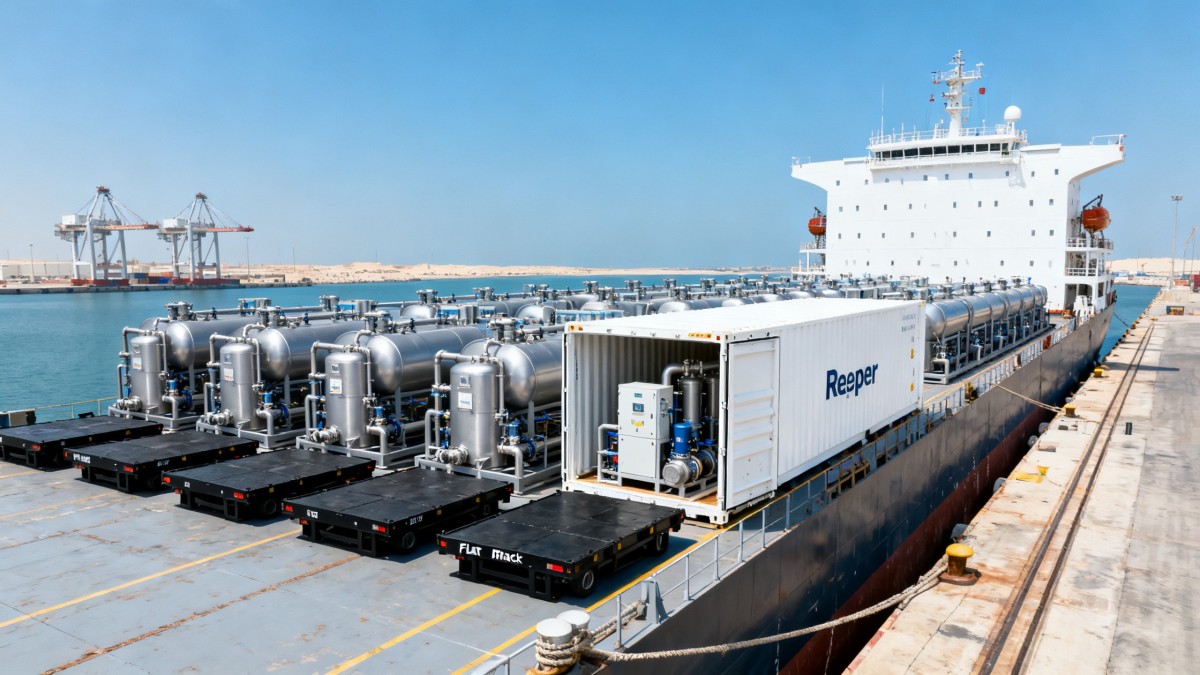
In summary, the freight adjustment signals a material shift in the landed cost structure for aeration and water technology exports from Asia-Pacific to the Middle East. It is neither a temporary anomaly nor a broad-based tariff reform, but a targeted recalibration affecting specific equipment categories, container types, and destination markets. Current understanding should focus on its role as an operational inflection point — one requiring precise, near-term action on quoting, scheduling, and contract language — rather than as a macroeconomic indicator.
Source: Joint notice issued by THE Alliance and Ocean Alliance on April 30, 2026, announcing the Asia-Pacific to Middle East Reefer/Flat Rack/OT freight increase effective May 15, 2026. Note: Carrier-specific implementation details (e.g., exact surcharge values per lane, exemption criteria) remain subject to confirmation and are recommended for verification through official carrier portals or authorized agents prior to shipment booking.
Related Intelligence
- Aeration & Water TechAsia-Pacific to Middle East Reefer/Flat Rack Freight Hike Effective May 15, 2026Reefer/Flat Rack freight rates to Middle East surge 18–22% from May 15, 2026 — critical for aeration, water tech & RAS exporters. Act now.
- Aeration & Water TechAsia-Pacific to Middle East Aeration & Water Tech Container Rates Up 18%Aeration & Water Tech container rates surge 18% Asia-Pacific to Middle East—critical for RAS, smart greenhouse & precision water-tech exporters. Act now.
- Aeration & Water TechChina’s 5-Dept Battery Traceability Drive Impacts Botanical Extracts Equipment ExportsChina’s 5-dept battery traceability drive impacts botanical extracts equipment exports—key compliance insights for exporters of lithium-powered agri-tech and water treatment devices.
The Morning Broadsheet
Daily chemical briefings, market shifts, and peer-reviewed summaries delivered to your terminal.
