
The Authority in Global Agricultural Chemistry & Bio-Resources
Indonesia BPOM Updates Natural Ingredients Labeling Rules
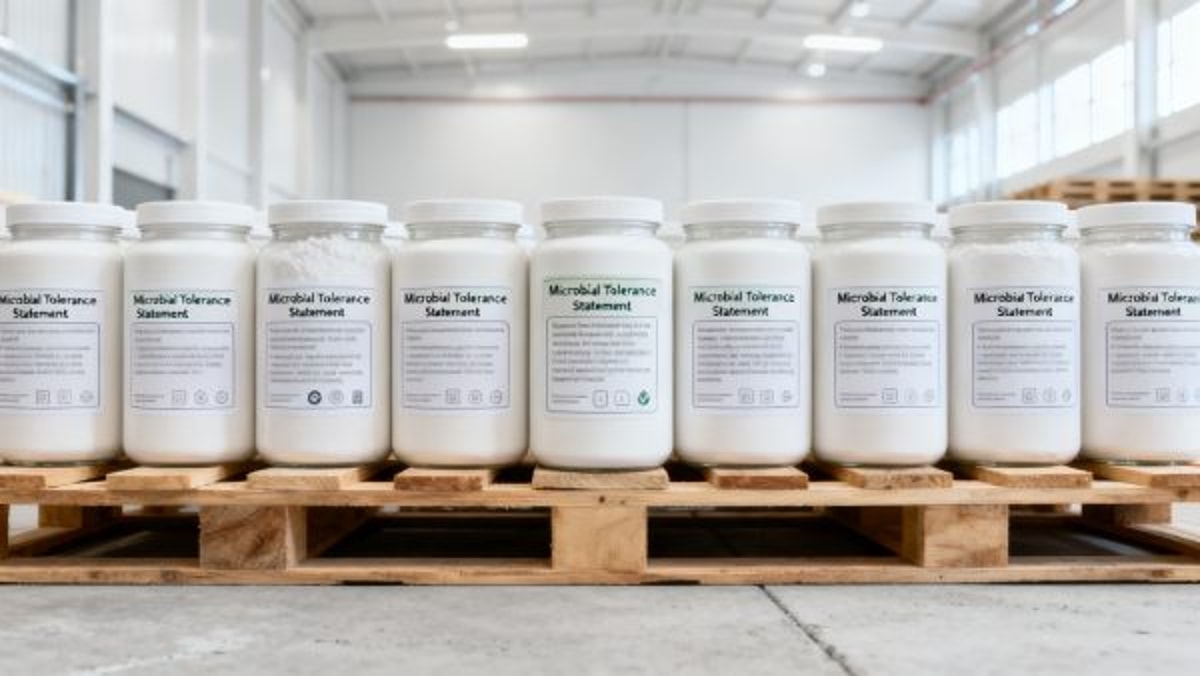
Indonesia’s National Agency of Drug and Food Control (BPOM) has revised labeling requirements for imported natural ingredients, mandating a new Microbial Tolerance Statement effective 1 October 2026. This update directly affects exporters of plant powders, enzyme powders, and prebiotic raw materials from China and other countries — particularly those engaged in B2B ingredient supply to Indonesian manufacturers or distributors.
Event Overview
On 30 April 2026, BPOM issued Circular No. HK.01.07/B/3212/2026, requiring all imported natural ingredients to include a ‘Microbial Tolerance Statement’ on product labels starting 1 October 2026. The statement must specify the maximum allowable change in total viable count (TVC) over six months under storage conditions of 25°C and 60% relative humidity. The regulation applies to all natural ingredients registered or to be registered with BPOM as food-grade raw materials.
Industries Affected
Direct Exporters (China-based)
Exporters shipping plant powders, enzyme powders, and prebiotic ingredients to Indonesia will face immediate label revision requirements. Their current packaging templates — often standardized across ASEAN markets — may no longer comply. Impact manifests in updated artwork approvals, reprinted labels, and potential delays in customs clearance if declarations lack the required statement.
Raw Material Sourcing & Trading Firms
Firms acting as intermediaries between Chinese producers and Indonesian buyers must verify that supplier-provided Certificates of Analysis (CoA) now include microbial stability data under the specified conditions. Previously accepted CoAs without time-bound TVC limits may trigger BPOM rejection during registration or post-import inspection.
Contract Manufacturers & Blenders (Indonesian)
Local manufacturers using imported natural ingredients as input materials must ensure incoming shipments carry compliant labels and supporting documentation. Non-compliant batches risk being held at port or excluded from production lines — affecting batch traceability, GMP compliance, and regulatory audit readiness.
Key Points for Enterprises and Practitioners
Monitor official BPOM guidance on statement wording and formatting
BPOM has not yet published standardized phrasing or layout specifications for the Microbial Tolerance Statement. Enterprises should track updates via BPOM’s official portal and registered notification channels, especially ahead of the 1 October 2026 deadline.
Review and revise QC reporting protocols for key export categories
Chinese producers of plant powders, enzyme powders, and prebiotic ingredients should assess whether their existing stability testing includes 6-month TVC measurement at 25°C/60% RH. If not, laboratory method validation and test scheduling adjustments are needed before shipment preparation.
Distinguish between policy issuance and operational enforcement
The circular is effective 1 October 2026, but BPOM may apply transitional allowances during initial enforcement. However, analysis shows BPOM has tightened label compliance scrutiny in recent years — making early alignment safer than reliance on grace periods.
Update internal cross-functional coordination workflows
Label localization, QC reporting, regulatory affairs, and logistics teams must jointly define handoff points for the new statement — including who validates microbiological data, who drafts compliant label text, and who confirms final print approval prior to container loading.
Editorial Perspective / Industry Observation
Observably, this requirement reflects BPOM’s broader shift toward outcome-based quality control for natural ingredients — moving beyond static microbiological limits at time of release to dynamic tolerance thresholds tied to real-world storage. From an industry perspective, it signals increasing convergence between food safety expectations for finished products and upstream raw materials. Current enforcement remains focused on labeling and documentation; however, analysis suggests future revisions may extend to mandatory stability testing frequency or third-party verification. This is better understood as a regulatory signal — not yet a full operational burden — but one that warrants proactive alignment given Indonesia’s growing role as a regional formulation hub.
This update underscores how evolving national-level labeling rules increasingly shape global ingredient supply chain design — not just for marketing claims, but for technical quality communication. It is more accurately interpreted as a step toward harmonizing microbiological expectations across the natural ingredients value chain, rather than a standalone compliance hurdle.
Information Source: BPOM Circular No. HK.01.07/B/3212/2026 (issued 30 April 2026). Ongoing implementation details — including accepted units of measurement, rounding conventions, and transitional provisions — remain pending official clarification and are subject to monitoring.
Related Intelligence
- Natural IngredientsIndonesia BPOM Updates Natural Ingredients Labeling RulesIndonesia BPOM updates natural ingredients labeling rules: New Microbial Tolerance Statement required for plant, enzyme & prebiotic powders by Oct 2026 — act now to avoid customs delays.
- Natural IngredientsCosmetic raw materials bulk: what causes shade variationCosmetic raw materials bulk shade variation can signal oxidation, source changes, or storage issues. Learn the key causes, QC risks, and smart controls to protect quality and avoid costly delays.
- Natural IngredientsFood additives manufacturer selection for stable repeat ordersFood additives manufacturer selection made practical: learn how distributors and agents can secure stable repeat orders through supplier fit, compliance strength, and reliable delivery.
The Morning Broadsheet
Daily chemical briefings, market shifts, and peer-reviewed summaries delivered to your terminal.
