

The Authority in Global Agricultural Chemistry & Bio-Resources
Food additives manufacturer selection for stable repeat orders
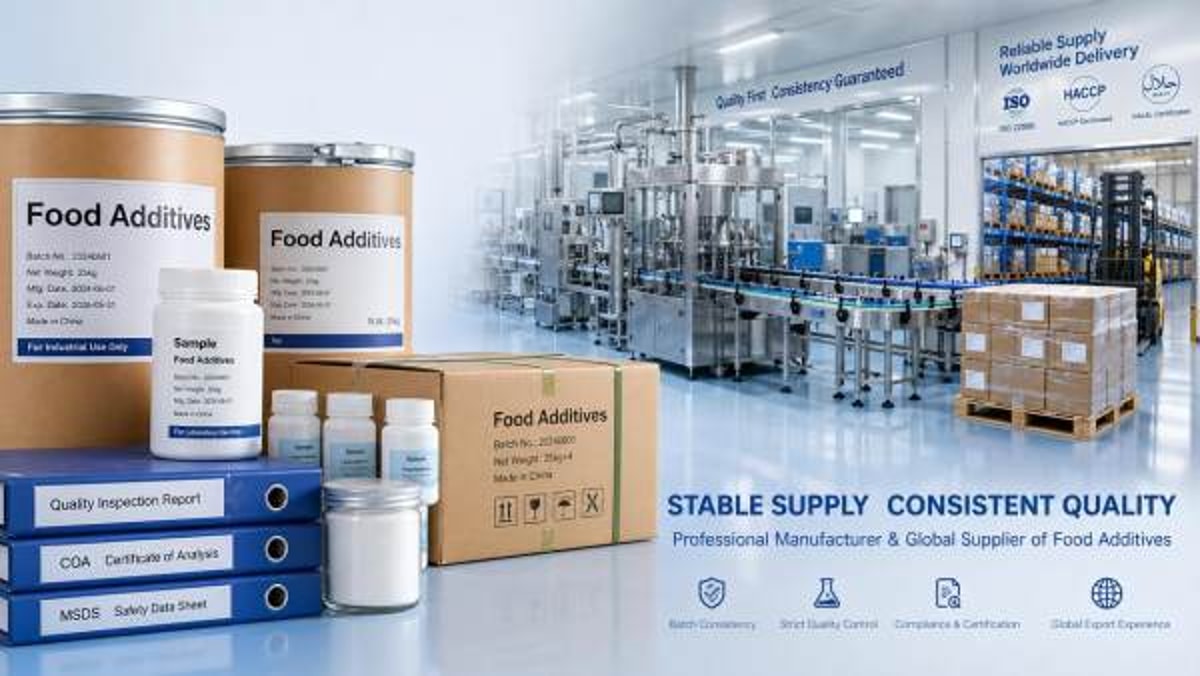
Choosing the right food additives manufacturer is critical for distributors, agents, and resellers who depend on stable repeat orders, consistent quality, and compliant supply chains. In a market shaped by regulatory pressure and shifting buyer expectations, the right partner can reduce risk, protect margins, and strengthen long-term customer trust. This guide explores the key factors that help procurement-focused businesses identify reliable manufacturing partners with confidence.
Why scenario-based selection matters for repeat-order stability
For a distributor, choosing a food additives manufacturer is rarely a one-time sourcing event. It is a decision that affects reorder frequency, complaint rates, customer retention, and cash-flow predictability. The challenge is that different downstream buyers do not evaluate suppliers in the same way. A bakery chain may prioritize batch consistency and fast replenishment, while a beverage brand may focus on solubility, documentation, and export compliance. If an agent uses only price as the selection filter, the result is often unstable supply, reformulation disputes, or delayed customs clearance.
That is why scenario-based evaluation is essential. The best food additives manufacturer for one business model may be the wrong fit for another. Resellers handling commodity preservatives need dependable volume planning and broad shelf-life data. Specialized distributors serving premium ingredient buyers may need deeper formulation support, traceability, and low minimum order flexibility. Stable repeat orders are built when manufacturer capability matches the reseller’s actual order pattern, technical workload, and customer promise.
In practical terms, procurement teams should assess not only what a supplier can produce, but also how that supplier performs under the specific commercial conditions that define their market: fast-turn SKUs, multi-country documentation, private labeling, seasonal spikes, or long-term framework contracts. This is where a reliable food additives manufacturer becomes a strategic partner rather than a simple vendor.
Typical business scenarios where manufacturer choice directly affects reorder success
Distributors and agents usually work across several repeat-order scenarios. Understanding these scenarios helps narrow the manufacturer shortlist faster and reduces mismatch risk.
- High-volume commodity distribution for preservatives, acidity regulators, sweeteners, or stabilizers
- Application-driven sales to bakery, dairy, beverage, meat, or convenience food producers
- Regional agency models requiring exclusive distribution support and channel protection
- Export or cross-border wholesale where regulatory files and labeling conformity are decisive
- Private label or customized blend supply for local industrial customers
- Multi-SKU procurement where order coordination and shipment consolidation affect profitability
Each of these situations changes what “good supplier performance” looks like. A food additives manufacturer that excels in standard bulk output may not be responsive enough for customized technical support. Likewise, a producer with strong R&D may not be ideal if your core need is container-scale shipment reliability every month.
Scenario comparison: what to evaluate before committing to a food additives manufacturer
The table below shows how selection criteria change by business scenario. This kind of comparison helps procurement teams avoid treating all suppliers as interchangeable.
Scenario 1: When you serve high-volume buyers, supply continuity outranks low headline price
For distributors supplying large processors or broad wholesale networks, repeat orders depend on uninterrupted inventory. In this scenario, the right food additives manufacturer should be evaluated first on production planning discipline, not on the lowest initial offer. Buyers in this segment often reorder on forecast cycles, and late delivery can trigger line interruptions or urgent replacement sourcing at much higher cost.
Look for a manufacturer with documented monthly output, multiple raw material procurement channels, and a demonstrated record of serving recurring industrial accounts. Ask how they manage peak season pressure, whether they maintain safety stock for key items, and how often delivery schedules slip. A supplier with slightly higher pricing but stronger fulfillment consistency may produce far better annual margin protection for the distributor.
For commodity-focused repeat orders, practical indicators include lead-time stability over six to twelve months, packaging standardization, warehouse coordination, and lot-to-lot consistency. These factors reduce hidden costs such as emergency freight, relabeling, claims handling, and customer service burden.
Scenario 2: When your customers need application performance, technical support becomes a sales tool
If your downstream customers are formulation-driven manufacturers, selecting a food additives manufacturer only by factory scale is not enough. Bakery improvers, emulsifiers, thickeners, flavor carriers, and stabilizers are purchased for performance in real production environments. In this case, repeat orders depend on whether the ingredient works consistently under actual process conditions.
A suitable manufacturer should provide application data, technical documentation, and responsive support when customer trials need adjustment. Distributors serving this segment benefit from partners that can explain dosage ranges, temperature tolerance, interaction with other ingredients, and storage requirements. This improves conversion rates during sampling and helps prevent costly returns after scale-up.
The key question is simple: can this manufacturer help your customers succeed after purchase? If the answer is uncertain, repeat orders are likely to remain fragile. Technical depth often matters more than factory size in these scenario-based sales environments.
Scenario 3: When you sell across borders, documentation quality is part of the product
For exporters, importers, and regional agents, the commercial value of a food additives manufacturer includes complete paperwork. Product specification sheets, certificates of analysis, allergen statements, non-GMO declarations, halal or kosher support where relevant, and traceability records are not optional extras. They directly influence customs clearance, buyer approval, and the speed of repeat purchases.
A manufacturer that ships on time but provides inconsistent documentation can still damage your business. Distributors should review not only what certificates exist, but how quickly they are updated, whether formats match destination market expectations, and whether the supplier has experience with multiple regulatory environments. The stronger the documentation process, the lower the risk of transaction friction.
In this scenario, a reliable food additives manufacturer is one that understands compliance as an operational system. For repeat-order stability, the best suppliers treat product files, audit readiness, and labeling accuracy as part of routine service, not as last-minute export tasks.
Scenario 4: When you operate as an agent or regional distributor, relationship structure matters
Agents and exclusive distributors need more than acceptable product quality. They need confidence that the manufacturer will support channel development without bypassing the local market partner. In this case, choosing a food additives manufacturer requires close attention to commercial discipline: territory clarity, pricing logic, lead-sharing behavior, and responsiveness to strategic accounts.
A strong supplier for agency models usually shows consistent quotation policies, transparent communication, and a willingness to align on growth plans. They may offer sample support, technical meetings, sales materials, or coordinated forecasting. These factors are especially valuable when building repeat orders from institutional food producers that require months of qualification and relationship management.
The wrong manufacturer in this scenario often creates channel conflict, quote inconsistency, or weak account protection. That can damage trust faster than a single late shipment. For many resellers, long-term reorder strength depends as much on commercial governance as on product specification.
How to judge manufacturer fit by your own operating model
A practical way to evaluate any food additives manufacturer is to begin with your own business model rather than the supplier’s brochure. Ask four internal questions. First, are your orders predictable or highly variable? Second, do your customers buy standard grades or application-sensitive products? Third, do you compete mainly on price, service speed, or technical reliability? Fourth, how much compliance support do your markets require?
Your answers determine the right shortlist. Businesses with recurring bulk orders should prioritize output capacity, raw material security, and logistics discipline. Distributors serving premium or specialized food processors should emphasize technical service, batch consistency, and test support. Export-oriented firms should rank documentation systems and audit readiness near the top. Agency-driven players should assess exclusivity terms and market collaboration behavior.
This approach prevents a common error: selecting a supplier because they look strong in general, without confirming that they are strong in your exact reorder environment.
Common misjudgments that weaken repeat orders
Many sourcing problems begin with reasonable assumptions that turn out to be incomplete. One common mistake is assuming certification alone proves suitability. Certifications matter, but they do not automatically confirm communication quality, technical consistency, or logistics reliability. Another error is overvaluing low MOQ during initial entry while ignoring whether the manufacturer can support future scale once repeat orders grow.
A third misjudgment is failing to test responsiveness before signing. Slow answers during pre-sales often become worse after onboarding. For distributors, this can delay customer quotations, approval cycles, and claims resolution. Another overlooked point is packaging and labeling flexibility. If your local market requires different pack sizes or language-specific documents, inflexible suppliers create extra handling costs that slowly erode margin.
Finally, some buyers do not investigate the manufacturer’s upstream risk exposure. If key raw materials are sourced from a narrow base, even a reputable food additives manufacturer may struggle during price shocks or shortages. Repeat-order stability depends on visibility into these supply chain realities.
A practical checklist before placing the first repeat-order-focused trial
- Verify batch consistency across at least two or three sample lots where possible
- Review lead times, peak season capacity, and emergency replenishment options
- Confirm full document package availability for your target markets
- Check responsiveness of sales, technical, and quality teams separately
- Assess packaging suitability for warehousing, resale, and customer delivery formats
- Discuss pricing stability mechanisms, not only current quotation level
- Clarify complaint handling, replacement process, and traceability workflow
- For agency models, define account ownership and channel rules in writing
FAQ: scenario-based questions distributors often ask
Is the largest food additives manufacturer always the safest choice?
Not always. Large scale helps with capacity, but smaller or mid-sized suppliers may provide better responsiveness, customization, or channel support. The safest choice is the one best aligned with your reorder pattern and customer expectations.
What matters most for repeat-order stability: price, quality, or delivery?
In most distribution models, repeat-order stability comes from balance. If one factor fails consistently, the account weakens. However, in high-volume scenarios, delivery continuity often has the largest financial impact, while in application-sensitive scenarios, technical consistency is usually decisive.
How can an agent test a new food additives manufacturer with lower risk?
Start with a limited trial linked to real documentation checks, delivery timing, and customer feedback on performance. Evaluate the supplier across the full service cycle rather than only approving the sample itself.
Final selection guidance for distributors, resellers, and agents
The most effective way to choose a food additives manufacturer is to match supplier strength with your business scenario, not with generic market reputation alone. Stable repeat orders come from alignment: capacity for bulk resale, technical service for application-driven accounts, documentation discipline for export trade, and channel integrity for agency growth.
For procurement-focused businesses, the next step is to build a short evaluation matrix around your own customer base, reorder cycle, compliance burden, and service promise. Once those factors are clear, it becomes easier to identify which food additives manufacturer can support sustainable margins, fewer disruptions, and stronger long-term buyer trust. In a market where reliability is remembered longer than a low first quote, scenario-fit is the foundation of repeat-order success.
Related Intelligence
- Natural IngredientsIndonesia BPOM Updates Natural Ingredients Labeling RulesIndonesia BPOM updates natural ingredients labeling rules: New Microbial Tolerance Statement required for plant, enzyme & prebiotic powders by Oct 2026 — act now to avoid customs delays.
- Natural IngredientsCosmetic raw materials bulk: what causes shade variationCosmetic raw materials bulk shade variation can signal oxidation, source changes, or storage issues. Learn the key causes, QC risks, and smart controls to protect quality and avoid costly delays.
- Natural IngredientsFood additives manufacturer selection for stable repeat ordersFood additives manufacturer selection made practical: learn how distributors and agents can secure stable repeat orders through supplier fit, compliance strength, and reliable delivery.
The Morning Broadsheet
Daily chemical briefings, market shifts, and peer-reviewed summaries delivered to your terminal.
