
The Authority in Global Agricultural Chemistry & Bio-Resources
Wholesale preservatives: shelf life gains and labeling risks
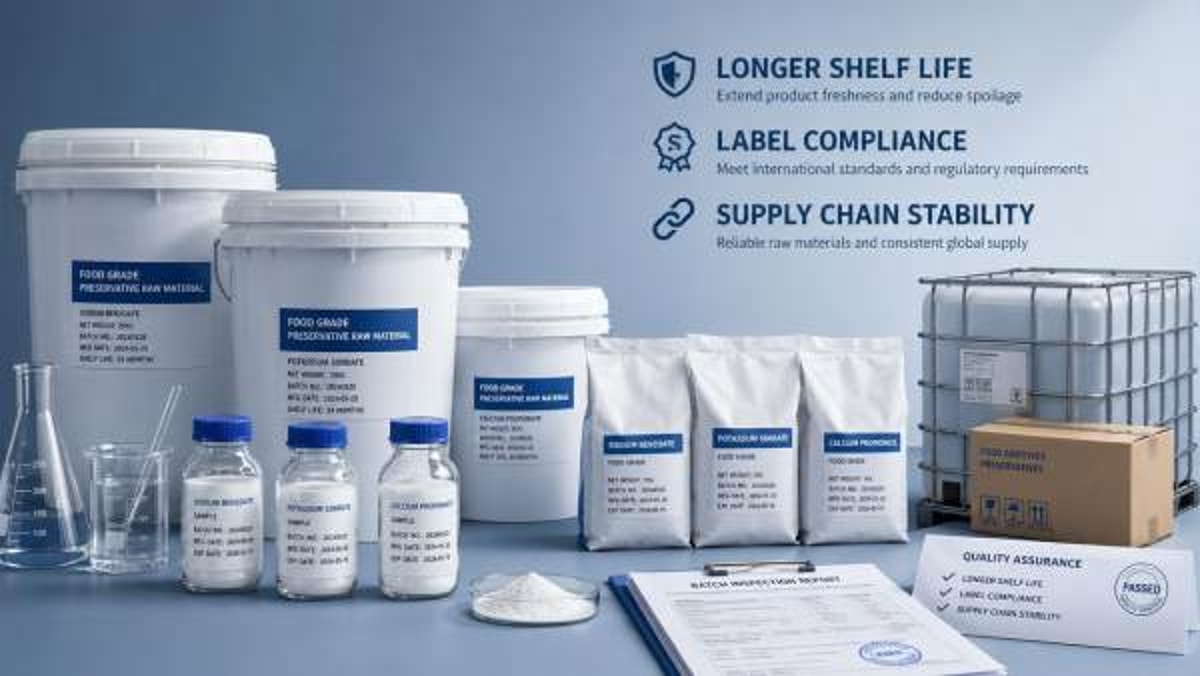
Wholesale preservatives can extend shelf life, stabilize distribution, and reduce waste—but for quality control and safety managers, every gain comes with labeling, dosage, and regulatory risks. In tightly regulated supply chains, selecting the right preservative strategy means balancing product integrity, compliance exposure, and buyer trust across markets.
In primary industries and fine chemicals, that balance is rarely simple. A preservative that performs well in one matrix may underdeliver in another after 30, 60, or 180 days of storage. A label that satisfies one market may trigger review in another if naming conventions, additive classes, or concentration disclosures are incomplete. For teams managing food-adjacent ingredients, bio-extracts, feed inputs, aquaculture treatments, or chemical intermediates, wholesale preservatives are not just a purchasing line item; they are a control point that affects shelf stability, claims integrity, audit readiness, and export eligibility.
For quality control and safety managers, the practical questions are specific: Which preservative system fits the product’s pH, water activity, and transport profile? What documentation should be collected before supplier approval? How should incoming lots be verified, and where do labeling risks most often appear? The answers require a structured view of performance, compliance, and procurement discipline rather than a narrow focus on price per kilogram.
Why wholesale preservatives remain strategically important in regulated supply chains
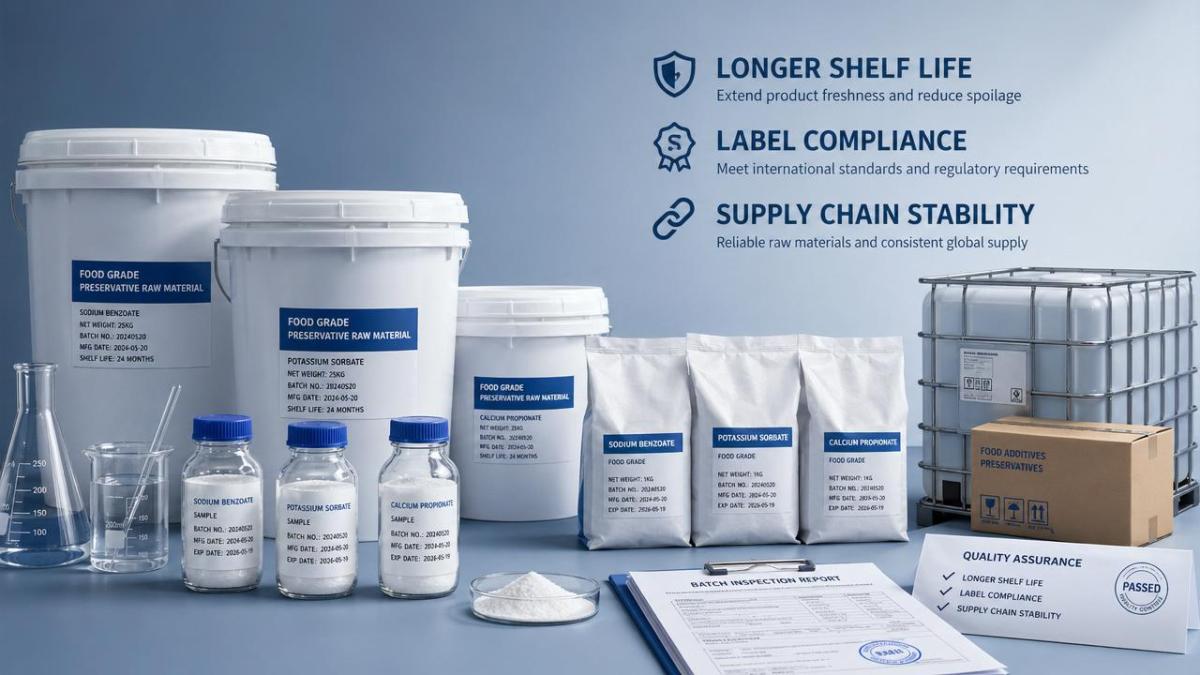
In bulk manufacturing and cross-border distribution, shelf life is an operational variable with direct cost implications. Extending usable life by even 15 to 30 days can reduce write-offs, improve inventory turns, and support slower shipping lanes where temperature excursions or port delays are common. In sectors such as feed additives, botanical ingredients, processing aids, and certain biochemical blends, preservatives also help maintain product consistency across multi-stage storage, repacking, and final application.
The commercial value of wholesale preservatives generally appears in three areas: waste reduction, distribution resilience, and formulation stability. Yet the technical value depends on matching the preservative mechanism to the product environment. Antimicrobial activity can shift sharply when pH moves from 4.5 to 6.5, when moisture rises above a target range, or when the formulation contains proteins, oils, sugars, or plant actives that interact with the preservative system.
Three operational drivers behind preservative demand
- Longer distribution windows: export routes may involve 2–8 weeks of transit plus customs clearance.
- Lower product loss: reduced microbial spoilage can protect batches during warehousing cycles of 30–120 days.
- More stable specifications: preserved products are more likely to remain within odor, color, viscosity, and microbial limits at release and re-test points.
Where QC and safety teams see the greatest pressure
The pressure point is not simply whether a preservative works in a lab trial. It is whether the same result holds across 3 to 5 production lots, under different packaging formats, and after realistic transport stress. In practice, many failures occur because companies validate under static conditions but sell into dynamic ones: variable humidity, partial pallet exposure, repeated opening, or mixed storage temperatures such as 5°C, 25°C, and short-term peaks above 35°C.
This is especially relevant for institutional buyers reading ACC-style technical content. Procurement directors may negotiate volume, but release authority often sits with compliance, microbiology, or safety functions. A low-cost preservative system becomes expensive when it causes relabeling, hold orders, batch segregation, or customer corrective action requests.
How to evaluate preservative performance before wholesale purchase approval
A reliable evaluation framework should combine formulation fit, supplier transparency, and use-condition testing. For QC and safety managers, the goal is to reduce uncertainty before scale-up rather than after a nonconformance event. Most industrial buyers can screen wholesale preservatives through 4 core dimensions: chemistry, compatibility, documentation, and verification.
Key technical variables that affect shelf life gains
At minimum, review pH, water activity, intended shelf life, storage temperature, and packaging permeability. A preservative effective in acidic systems may be weak in neutral products. Likewise, a product targeting 12 months of shelf life requires a more rigorous challenge approach than a product moving through the channel in 45 days. Concentration matters as well, but higher dose is not always safer; overdosing can create sensory issues, reactivity concerns, or labeling complications.
The table below outlines a practical screening matrix for wholesale preservatives used across ingredients, feed processing inputs, bio-extract handling, and related industrial applications.
The main takeaway is that shelf life gains should be treated as conditional, not universal. A supplier brochure may state broad preservation benefits, but QC approval should depend on product-specific evidence collected under conditions close to actual transport and storage. A 2-stage review process—document review first, application trial second—usually reduces avoidable rework.
Documents that should accompany any wholesale preservative proposal
- Current specification sheet with assay, purity range, and physical description.
- Safety data sheet aligned with the destination market language and hazard rules.
- Statement of regulatory status for the intended application category.
- Certificate of analysis for recent lots, ideally covering 3 consecutive batches.
- Storage and handling guidance including temperature, humidity, and retest period.
- Allergen, residual solvent, or contamination declarations where relevant.
For bulk buyers, supplier approval should not stop at paperwork completeness. It should also assess responsiveness: Can the supplier answer technical queries within 24–72 hours? Can they explain concentration logic, incompatibilities, and regional labeling differences without generic wording? Strong documentation paired with weak technical support is a warning sign for scale supply.
Labeling risks that can offset the benefits of wholesale preservatives
Labeling risk is one of the most underestimated costs in preservative procurement. Even when the chemistry is effective, regulatory exposure can arise if the ingredient is listed under an outdated name, grouped under the wrong functional class, or declared inconsistently across product documentation, packaging, and export papers. For safety managers, this creates audit friction; for QC teams, it complicates batch release and customer communication.
The challenge becomes greater when one wholesale preservative is used across multiple markets. Different jurisdictions may vary in allowed use levels, nomenclature expectations, or category-specific restrictions. A product accepted in one channel as a processing aid may require clearer additive disclosure in another. That is why label review should happen before the first commercial PO, not after commercial artwork has been approved.
Common labeling failure modes
- Using a trade description rather than a recognizable ingredient identity.
- Applying the same declaration to food-adjacent, feed, and industrial-use products without category review.
- Failing to update labels when supplier concentration or formulation changes by even 0.1%–0.5% in active content.
- Mismatch between certificate wording, technical data sheet language, and packaging copy.
The next table summarizes practical control points that help QC and safety teams reduce labeling-related nonconformances when sourcing wholesale preservatives at scale.
A disciplined labeling workflow can save more than it costs. In many operations, a single relabeling event affects warehouse labor, packaging inventory, and release timing across 1 to 3 weeks. For export-oriented businesses, the reputational cost may be higher than the direct financial loss because institutional buyers remember document inconsistency long after a batch issue is closed.
A simple 5-step label governance process
- Define the product category and intended use.
- Confirm preservative identity, function, and active concentration.
- Review destination-market naming and disclosure expectations.
- Align technical documents, label copy, and ERP item master wording.
- Revalidate after any formula, supplier, or market change.
Procurement and implementation guidance for QC and safety managers
When sourcing wholesale preservatives, procurement decisions should be made with implementation in mind. The best choice is usually not the cheapest delivered price, but the option that offers predictable performance, transparent documentation, and manageable compliance overhead. For many businesses in agriculture-linked processing, biochemical handling, and ingredient manufacturing, preserving release reliability is worth more than saving 3% to 5% on material cost.
A practical supplier selection checklist
- Can the supplier support trial quantities and commercial volumes without changing source or grade?
- Are lot-to-lot assay and appearance ranges tight enough for your process controls?
- Is there a clear lead time window, such as 2–4 weeks for standard orders and longer for custom blends?
- Can they provide advance notice for formulation or manufacturing site changes?
- Do they understand buyer audit expectations in sectors influenced by GMP, FDA, EPA, or equivalent frameworks?
Implementation controls after supplier onboarding
Post-approval controls should include incoming identity checks, periodic documentation review, and shelf-life verification against retained samples. Many facilities use a 3-tier release model: document review at receipt, analytical confirmation for defined lots, and stability review at scheduled intervals such as 3, 6, and 12 months. This model is especially useful where the preservative is part of a blended system and small compositional shifts can affect finished product behavior.
It is also wise to set trigger points for escalation. If microbial counts trend upward, if pH drifts outside the validated range, or if transport temperatures exceed the agreed limit for more than 24 hours, the batch should move into controlled review. These thresholds create a shared language between operations, QC, and safety teams, reducing subjective release decisions.
Common mistakes to avoid
- Approving wholesale preservatives based only on supplier claims without application trials.
- Using one global label template for all regional destinations.
- Ignoring packaging interactions such as permeable closures or repeated opening cycles.
- Failing to document why a dose was chosen and what upper limit was evaluated.
- Letting commercial urgency override change-control review.
For organizations that publish or source through technically demanding networks such as AgriChem Chronicle’s readership base, preservative decisions increasingly influence digital credibility as well. Buyers expect evidence of process discipline, not broad claims. Companies that can explain why a preservative was selected, how it was validated, and how labels are governed tend to build stronger trust with institutional procurement teams.
Wholesale preservatives deliver real value when they are treated as part of a controlled system rather than a simple additive purchase. The strongest programs connect shelf life targets with pH and storage data, supplier qualification, label governance, and market-specific compliance review. For quality control and safety managers, that approach lowers the risk of spoilage, relabeling, and supply interruption while supporting consistent release decisions.
If your team is reviewing preservative options for feed ingredients, bio-extracts, fine chemicals, or other regulated bulk products, a structured assessment can shorten decision cycles and reduce downstream correction costs. Contact us to discuss your application, obtain a tailored evaluation framework, or explore more solutions for wholesale preservatives in complex industrial supply chains.
Related Intelligence
- Natural IngredientsIndonesia BPOM Updates Natural Ingredients Labeling RulesIndonesia BPOM updates natural ingredients labeling rules: New Microbial Tolerance Statement required for plant, enzyme & prebiotic powders by Oct 2026 — act now to avoid customs delays.
- Natural IngredientsCosmetic raw materials bulk: what causes shade variationCosmetic raw materials bulk shade variation can signal oxidation, source changes, or storage issues. Learn the key causes, QC risks, and smart controls to protect quality and avoid costly delays.
- Natural IngredientsFood additives manufacturer selection for stable repeat ordersFood additives manufacturer selection made practical: learn how distributors and agents can secure stable repeat orders through supplier fit, compliance strength, and reliable delivery.
The Morning Broadsheet
Daily chemical briefings, market shifts, and peer-reviewed summaries delivered to your terminal.
