

The Authority in Global Agricultural Chemistry & Bio-Resources
Indonesia BPOM Updates Natural Ingredients Labeling Rules
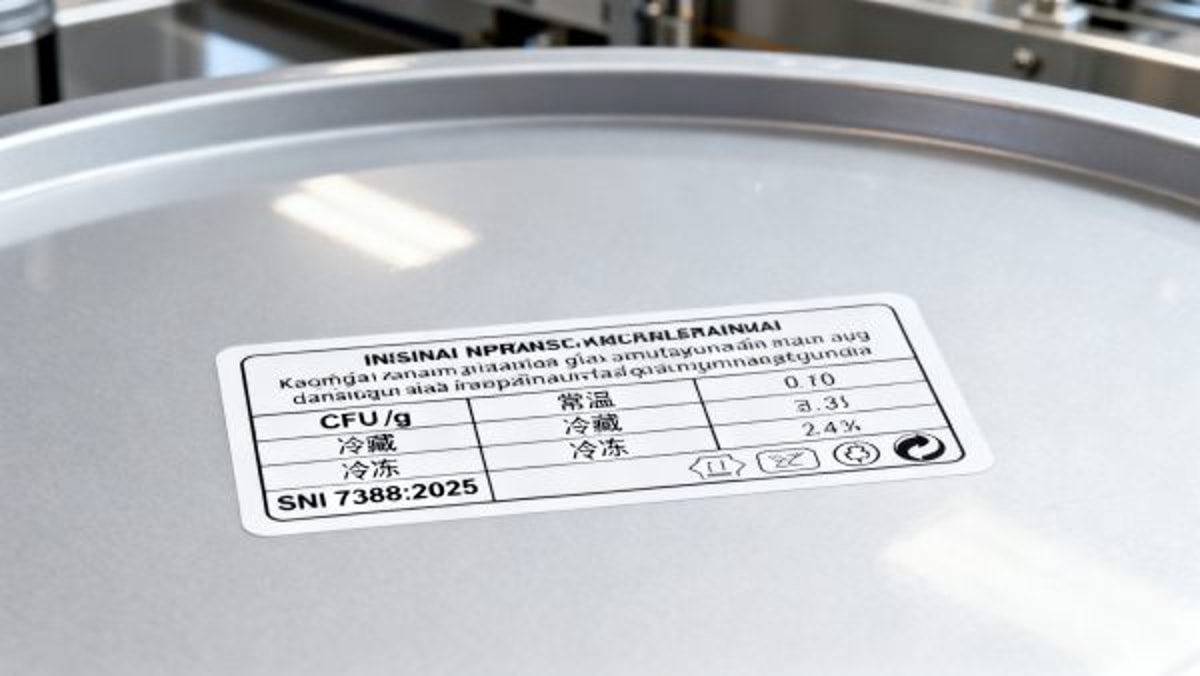
Indonesia’s National Agency of Drug and Food Control (BPOM) enacted Peraturan BPOM No. 22/2026 on May 1, 2026, mandating Indonesian-language ‘Microbial Tolerance Statements’ on all imported natural ingredients labels. This requirement directly affects international suppliers, contract manufacturers, and importers serving Indonesia’s health food, dietary supplement, cosmetic, and functional food sectors — where microbial safety transparency is increasingly scrutinized by regulators and consumers alike.
Event Overview
Effective May 1, 2026, BPOM Regulation No. 22/2026 requires that all imported natural ingredients carry a clear Indonesian-language ‘Microbial Tolerance Statement’ on product labels. The statement must specify maximum allowable total viable count (CFU/g) under ambient, refrigerated, and frozen storage conditions, and reference the official testing standard SNI 7388:2025. Non-compliant or inaccurate labeling triggers penalties: a fine equal to three times the declared value of the affected shipment, plus a six-month suspension of import authorization.
Which Sub-Sectors Are Affected
Direct Importers and Trading Companies
These entities bear primary legal responsibility for label compliance upon customs clearance. They face immediate operational risk — as BPOM inspections now include on-label verification of microbial tolerance claims against supporting test reports and declared storage conditions. A mismatch may delay release or trigger rework, especially for consolidated shipments with mixed origin or formulation batches.
Raw Material Suppliers and Exporters
Suppliers outside Indonesia must adapt packaging and documentation workflows to generate BPOM-compliant labels pre-shipment. Since the regulation applies to ‘imported natural ingredients’, even bulk raw materials (e.g., plant extracts, fermented powders, botanical isolates) require this declaration — not only finished products. Suppliers lacking in-house microbiological testing capacity may need to coordinate third-party labs certified to SNI 7388:2025.
Contract Manufacturers and Formulators
While not direct importers, contract manufacturers producing for Indonesian brands often manage label design and regulatory submission support. Under BPOM’s traceability framework, label accuracy is jointly attributable. Any microbial tolerance claim on a co-manufactured product must align with both the raw material supplier’s data and the final product’s validated stability profile — adding coordination complexity across supply tiers.
Distribution and Brand-Holding Companies
Brands holding BPOM registration (e.g., supplement or cosmetic marketers) are ultimately accountable for label compliance across their entire portfolio. With enforcement tied to ‘each non-compliant batch’, inventory management becomes critical: legacy stock without the required statement cannot be legally distributed after May 1, 2026, unless relabeled under BPOM supervision — a process requiring prior approval and verification.
What Relevant Companies or Practitioners Should Focus On and How to Respond Now
Verify alignment between existing test reports and SNI 7388:2025
Many exporters currently use ISO 4833-1 or AOAC methods. SNI 7388:2025 specifies distinct sample preparation, incubation time/temperature, and reporting conventions. Labs issuing BPOM-submitted reports must confirm method equivalence or retest using the mandated standard — particularly for multi-condition tolerance claims (ambient/refrigerated/frozen).
Update label templates and pre-clear all variants with local regulatory consultants
BPOM does not permit English-only or bilingual microbial statements. The full Indonesian text — including exact CFU/g limits per condition and explicit citation of SNI 7388:2025 — must appear legibly on primary packaging. Companies should submit draft labels to Indonesian regulatory advisors for pre-approval before mass printing, especially when multiple SKUs share similar formulations but differ in declared storage parameters.
Map high-risk SKUs by import frequency, shelf-life, and temperature sensitivity
Products with long ambient shelf life (e.g., dried herbs, resins) or those routinely stored at room temperature in Indonesian distribution hubs face higher scrutiny. Prioritize microbial retesting and label updates for these items first — rather than applying uniform changes across entire portfolios — to allocate lab and design resources efficiently.
Document and retain full traceability from test report to label version to shipment lot
BPOM may request evidence linking each labeled batch to its corresponding SNI 7388:2025 test certificate, including lot number, test date, lab accreditation ID, and sign-off by authorized quality personnel. Digital recordkeeping systems should capture this chain explicitly; paper-based archives risk gaps during audit follow-up.
Editorial Perspective / Industry Observation
Observably, this regulation marks a shift from general hygiene requirements to prescriptive, condition-specific microbial accountability — signaling BPOM’s intent to strengthen post-market surveillance of natural ingredient safety. Analysis shows it is less a standalone compliance hurdle and more an integration point: linking labeling, stability testing, storage logistics, and quality documentation into a single verifiable workflow. From an industry perspective, it reflects growing convergence between food-grade and supplement-grade regulatory expectations in Southeast Asia — where natural ingredients increasingly straddle both categories. Current enforcement patterns suggest BPOM will prioritize high-volume, high-risk imports first, meaning early adopters gain operational advantage over reactive peers.
Current more appropriate understanding is that this is a policy signal with immediate operational consequences — not merely a future guideline. Its mandatory nature, defined penalty structure, and clear effective date indicate enforceable implementation, not phased adoption.
Conclusion: This update formalizes microbial tolerance as a non-negotiable label element for natural ingredients entering Indonesia — elevating technical documentation standards and tightening cross-border supply chain accountability. It does not introduce new safety thresholds, but enforces consistent, transparent, and test-verified communication of existing microbial limits across storage conditions. For stakeholders, the priority is not whether the rule applies, but how precisely and verifiably its requirements can be embedded in current labeling, testing, and import processes.
Information Sources: Official text of Peraturan BPOM No. 22/2026, published by Badan Pengawas Obat dan Makanan (BPOM), Republic of Indonesia; SNI 7388:2025 standard issued by Badan Standardisasi Nasional (BSN). Note: Ongoing monitoring is advised for BPOM circulars clarifying implementation scope (e.g., exemptions for certain traditional herbal preparations) and laboratory accreditation procedures under SNI 7388:2025.
Related Intelligence
- Natural IngredientsIndonesia BPOM Updates Natural Ingredients Labeling RulesIndonesia BPOM Updates Natural Ingredients Labeling Rules: New microbial tolerance statements in Indonesian required by May 2026 — avoid fines & import delays.
- Natural IngredientsIndonesia BPOM Updates Natural Ingredients Labeling RulesIndonesia BPOM updates natural ingredients labeling rules: New Microbial Tolerance Statement required for plant, enzyme & prebiotic powders by Oct 2026 — act now to avoid customs delays.
- Natural IngredientsCosmetic raw materials bulk: what causes shade variationCosmetic raw materials bulk shade variation can signal oxidation, source changes, or storage issues. Learn the key causes, QC risks, and smart controls to protect quality and avoid costly delays.
The Morning Broadsheet
Daily chemical briefings, market shifts, and peer-reviewed summaries delivered to your terminal.
