

The Authority in Global Agricultural Chemistry & Bio-Resources
India Launches Sunset Review on Chinese Commercial Feed Pellets
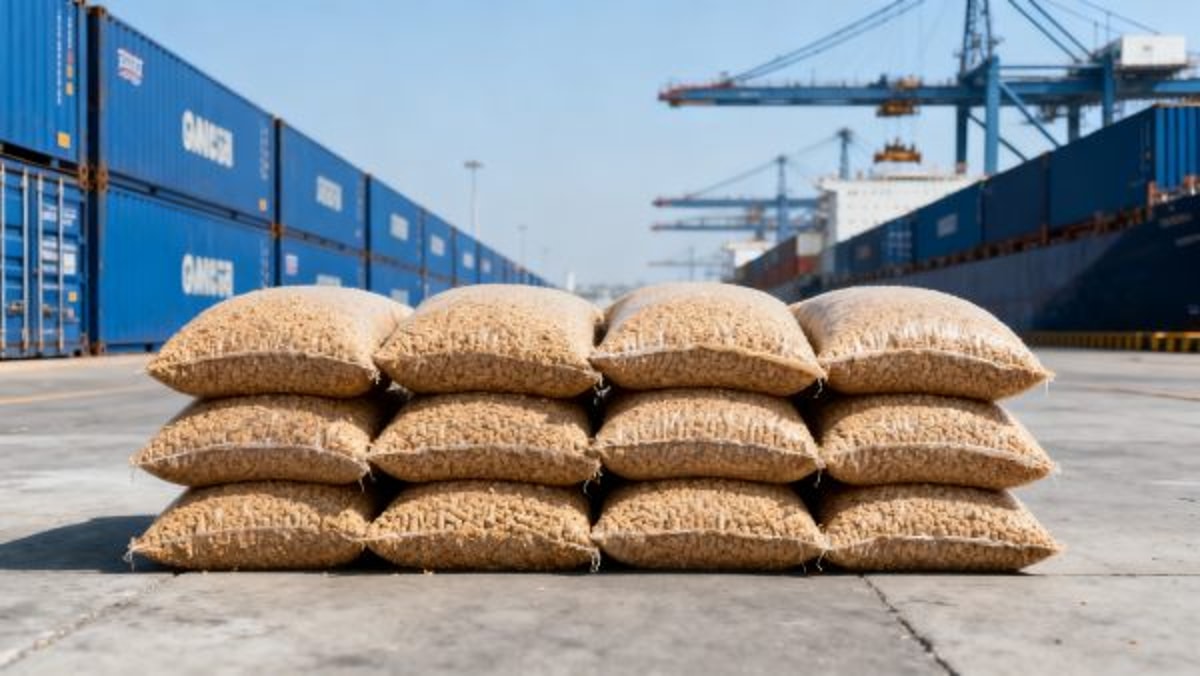
India’s Central Board of Indirect Taxes and Customs (CBIC) initiated a sunset review of anti-dumping duties on Commercial Feed Pellets from China on May 1, 2026 — a development with direct implications for feed manufacturers, exporters, and agri-input suppliers engaged in India-China trade.
Event Overview
On May 1, 2026, the Central Board of Indirect Taxes and Customs (CBIC), under India’s Ministry of Finance, issued a public notice launching a sunset review (anti-dumping expiry review) on Commercial Feed Pellets originating in or exported from China. The first round of sampling has covered 12 major Chinese exporting enterprises. The review will examine export prices to India during 2024–2025, domestic sales structure in China, and the authenticity of production cost data. A final determination — which may uphold, modify, or terminate the current 8.2% anti-dumping duty — is scheduled for November 2026.
Industries Affected by Segment
Direct Exporters (China-based)
Chinese enterprises currently exporting Commercial Feed Pellets to India face potential tariff continuity or adjustment. As the review focuses on 2024–2025 transactional data, companies included in the initial sample must ensure timely submission of verified documentation — including export invoices, domestic sales records, and itemized manufacturing cost breakdowns — to CBIC-appointed authorities.
Feed Formulators & Compound Feed Producers (India-based)
Indian downstream users relying on imported Commercial Feed Pellets as raw inputs may experience cost volatility depending on the outcome. If the 8.2% duty is extended, landed costs could rise, prompting reassessment of input sourcing strategies — especially for formulations where pellet-grade protein or energy sources are non-substitutable in the short term.
Raw Material Suppliers (China & ASEAN)
Suppliers of key feed ingredients — such as soybean meal, fish meal, or synthetic amino acids — used in Commercial Feed Pellet production may see demand-side pressure. Should Chinese pellet exporters scale back India-bound shipments due to compliance burden or margin compression, upstream ingredient orders could decline in Q3–Q4 2026.
Logistics & Trade Compliance Service Providers
Firms offering customs advisory, anti-dumping filing support, or origin certification services are likely to see increased inquiries from affected exporters. The narrow window between sampling notification and preliminary submissions (typically 4–6 weeks) raises demand for rapid-response documentation validation and tariff classification verification.
What Relevant Enterprises Should Monitor and Do Now
Track official CBIC communications and sampling updates
Only 12 exporters were selected in the first sampling round — but CBIC retains authority to expand the sample. Exporters not yet selected should monitor subsequent notices for possible inclusion, particularly if they reported significant India-bound volumes in 2024–2025.
Validate and organize 2024–2025 financial and operational records
The review explicitly targets export pricing, domestic sales patterns, and production cost authenticity. Firms should consolidate auditable records — including third-party cost certifications, transfer pricing documentation, and sales ledger reconciliations — ahead of any formal request.
Distinguish between procedural signals and binding outcomes
The initiation of a sunset review is a standard administrative step under WTO rules — not an indication of likely duty extension. Current duty remains in force until November 2026; no change takes effect automatically upon notice issuance.
Prepare contingency options for procurement and customer communication
Indian importers and Chinese exporters should draft internal memos outlining potential duty scenarios (e.g., continuation vs. termination), assess impact on landed cost and gross margin, and align messaging with key buyers/suppliers before the preliminary findings release.
Editorial Observation / Industry Perspective
Observably, this sunset review functions primarily as a procedural checkpoint rather than an immediate policy shift. It reflects India’s routine enforcement of trade remedy disciplines — not a new investigation triggered by fresh injury allegations. Analysis shows that the timing aligns with the statutory five-year review cycle for anti-dumping measures imposed in 2021. From an industry perspective, the greater significance lies in its role as an early indicator of India’s broader stance toward agri-input imports: consistent scrutiny of cost transparency and market pricing behavior suggests tightening compliance expectations across related categories (e.g., poultry feed additives or aqua-feed premixes) in coming years.
Consequently, this notice is better understood as a signal — not a result — and warrants sustained attention not just for its direct tariff implications, but for what it reveals about regulatory trajectory in India’s agricultural import regime.
India’s CBIC notice dated May 1, 2026, published on the official CBIC website (cbic.gov.in). No further procedural documents or updated sampling lists have been released as of publication. This remains a developing process requiring ongoing monitoring through official CBIC channels.
Related Intelligence
- Commercial Feed PelletIndia Launches Sunset Review on Chinese Commercial Feed PelletsIndia launches sunset review on Chinese commercial feed pellets—key implications for exporters, feed producers & agri-input suppliers. Act now.
- Commercial Feed PelletIndia Launches Sunset Review on Anti-Dumping Duty for Chinese Feed PelletsIndia's sunset review of anti-dumping duty on Chinese feed pellets begins April 2026—key for exporters, importers & feed mills. Act now.
- Commercial Feed PelletFeed and grain processing technology trends that cut wasteFeed & Grain processing technology trends that cut waste: explore smarter drying, real-time sensors, predictive maintenance, and traceability to boost yield, compliance, and ROI.
The Morning Broadsheet
Daily chemical briefings, market shifts, and peer-reviewed summaries delivered to your terminal.
