
The Authority in Global Agricultural Chemistry & Bio-Resources
FAO Adds 3 Chinese RAS Integrators to Global Priority List
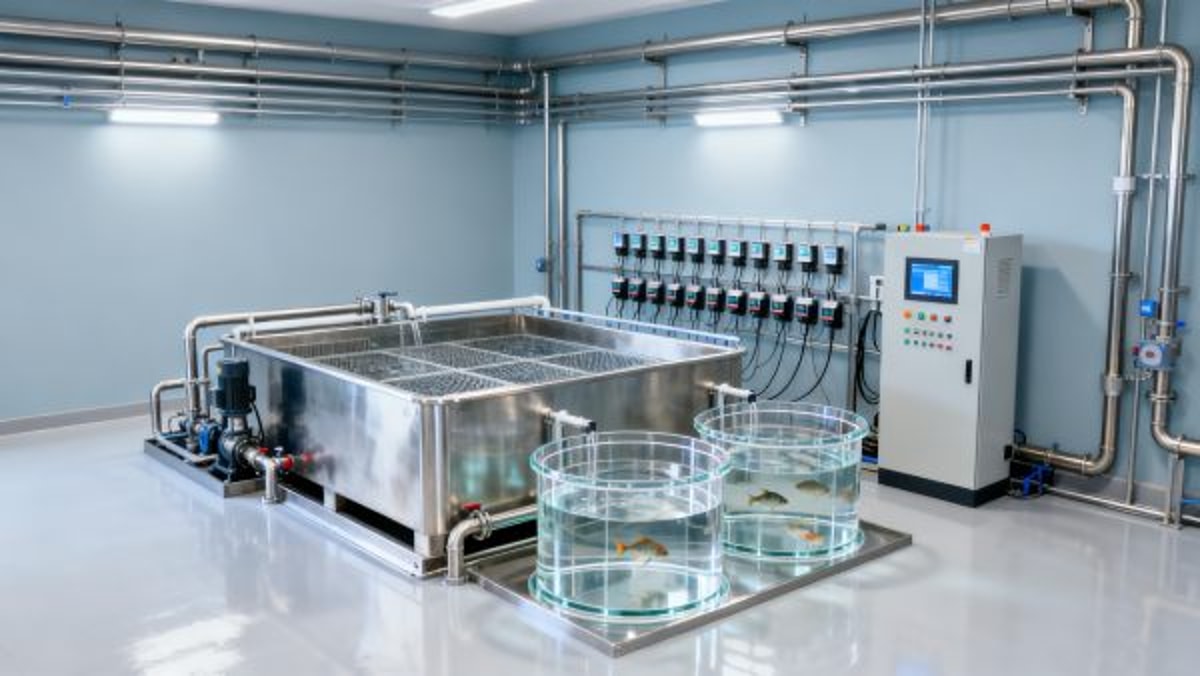
On May 5, the Food and Agriculture Organization of the United Nations (FAO) released its 2026 Global Preferred Technical Solutions Directory for Recirculating Aquaculture Systems (RAS), listing three Chinese RAS system integrators in the ‘High-Priority Supplier’ category. This update signals growing international recognition of China’s RAS engineering capabilities—and carries tangible implications for aquaculture equipment exporters, modular system suppliers, AI-driven aquaculture technology providers, and government procurement stakeholders in water-scarce regions.
Event Overview
On May 5, FAO published the 2026 edition of its Global Preferred Technical Solutions Directory for Recirculating Aquaculture Systems (RAS). Three Chinese RAS system integrators—specializing in integrated intelligent feeding, AI-based water quality control, and modular fish tank systems—were included in the ‘High-Priority Supplier’ list after passing joint FAO-WHO Aquaculture Good Manufacturing Practice (GMP) verification. The directory is now formally referenced by the fisheries ministries of Egypt, Saudi Arabia, and the United Arab Emirates as a preferred source for public procurement decisions.
Industries Affected
Aquaculture Equipment Exporters
These companies face heightened scrutiny on technical compliance and third-party certification alignment. Inclusion in the FAO directory does not constitute automatic market access, but it strengthens eligibility for tenders where FAO-endorsed standards are explicitly required—especially in Middle Eastern public-sector projects.
Modular Aquaculture System Manufacturers
Manufacturers supplying standardized, transportable RAS components (e.g., prefabricated tanks, biofilter modules, pump skids) may see increased demand from downstream integrators seeking FAO-aligned sub-systems. However, integration-level validation—not component-level specs—determines listing eligibility.
AI-Driven Aquaculture Technology Providers
Vendors offering AI-powered water monitoring, predictive feeding, or real-time health analytics must ensure their software interfaces and data governance protocols meet FAO-WHO GMP documentation requirements. The listing emphasizes system-level interoperability and traceability—not standalone algorithm performance.
Government Procurement & Development Project Implementers
National fisheries agencies and multilateral project implementers (e.g., World Bank–funded aquaculture modernization programs) now have an officially endorsed reference for supplier vetting. This reduces pre-qualification time—but also raises the bar for evidence of operational validation under diverse climatic and infrastructural conditions.
What Enterprises and Practitioners Should Monitor and Do Now
Track official updates to FAO’s verification framework
The FAO-WHO Aquaculture GMP verification process remains dynamic. Companies should monitor any revisions to documentation requirements, audit scope, or regional adaptation clauses—particularly ahead of the next directory update cycle.
Confirm alignment with procurement criteria in target markets
Egypt, Saudi Arabia, and the UAE each maintain distinct tender rules—even when referencing the FAO directory. Firms must cross-check whether local procurement notices require full system certification, local representation, or post-installation service commitments beyond what the FAO listing covers.
Distinguish between policy signal and commercial readiness
Inclusion in the directory reflects technical validation—not sales channel activation. Exporters should avoid assuming automatic distribution partnerships or financing support; instead, treat the listing as a credibility anchor for targeted business development—not a substitute for local regulatory registration or tender-specific bidding preparation.
Prepare modular documentation packages for downstream integrators
Suppliers of subsystems (e.g., sensor arrays, UV sterilizers, feed dosing units) should compile FAO-relevant compliance summaries—including test reports, calibration records, and interface specifications—to accelerate integration into FAO-listed system proposals.
Editorial Observation / Industry Insight
Observably, this listing functions primarily as a technical credibility signal—not yet a commercial gateway. It confirms that certain Chinese RAS integrators meet internationally benchmarked engineering and operational hygiene standards, but does not imply harmonized certification across jurisdictions or automatic tariff advantages. From an industry perspective, the value lies less in immediate sales traction and more in strengthened positioning during early-stage feasibility studies and donor-funded pilot deployments. Analysis shows that FAO’s endorsement is gaining weight in arid-region aquaculture planning—not because it replaces national regulations, but because it offers a neutral, science-based benchmark where domestic standards are still evolving.
Current attention should focus on how national fisheries agencies translate the directory into actionable procurement guidelines—not just whether a company appears on the list, but how its inclusion interacts with local licensing, after-sales service mandates, and energy-efficiency reporting requirements.
Conclusion
This FAO update marks a step toward formalized global recognition of Chinese RAS engineering capability—but it is best understood as an institutional validation milestone rather than a market-opening event. For stakeholders, the practical implication is not accelerated entry, but improved leverage in technical negotiations and stronger footing in competitive bidding where third-party verification carries weight. The broader significance lies in the growing use of FAO-endorsed directories as de facto reference frameworks in regions prioritizing climate-resilient aquaculture infrastructure.
Source Attribution
Main source: Food and Agriculture Organization of the United Nations (FAO), 2026 Global Preferred Technical Solutions Directory for Recirculating Aquaculture Systems (RAS), published May 5.
Noted for ongoing observation: Specific verification criteria for future editions, and implementation guidance issued by Egypt, Saudi Arabia, and UAE fisheries ministries following the directory’s release.
Related Intelligence
- RAS SystemsFive Ministries Launch Battery Recycling Enforcement for ExportsBattery recycling enforcement is now live for exports—learn how the Five Ministries' new rules impact RAS pumps, mobile power units & AEO certification.
- RAS SystemsFAO Adds 3 Chinese RAS Integrators to Global Priority ListFAO adds 3 Chinese RAS integrators to its 2026 Global Priority List—boosting credibility for aquaculture equipment exporters, AI-driven tech providers, and modular system suppliers targeting Middle East & arid-region markets.
- RAS SystemsAquaculture & Fishery equipment upgrades that pay back soonerAquaculture & Fishery equipment upgrades that pay back sooner: discover high-ROI improvements in feeding, energy, monitoring, and compliance to cut costs and support smarter capital decisions.
The Morning Broadsheet
Daily chemical briefings, market shifts, and peer-reviewed summaries delivered to your terminal.
