
Why roast consistency fails on some cocoa bean roaster commercial lines
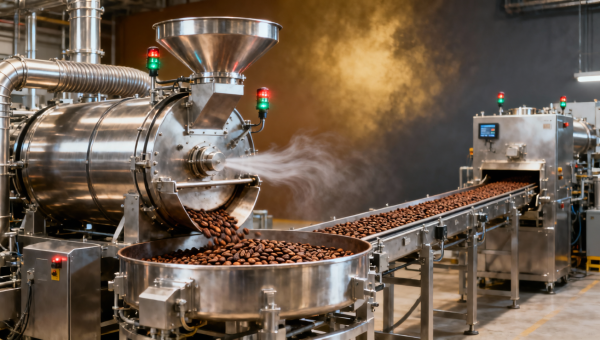
Roast inconsistency on a cocoa bean roaster commercial line rarely comes down to heat alone. For processors comparing coffee processing machinery, seed oil expeller wholesale systems, or even a wheat flour milling plant, the real issue often lies in airflow balance, bean variability, sensor calibration, and line integration. This article examines why commercial cocoa roasting drifts, how operators can diagnose the root causes, and what buyers should evaluate before investing.
In industrial cocoa processing, small roast deviations can trigger larger downstream losses. A 2°C to 5°C temperature error, a residence-time drift of 30 to 90 seconds, or uneven moisture release across bean lots can affect flavor development, shell separation, grinding behavior, and finished liquor stability. For production managers, QC teams, and procurement leads, the challenge is not simply buying a larger machine, but understanding how the full roasting line behaves under real throughput conditions.
That matters especially in B2B environments where output may range from 250 kg/hour to more than 2,000 kg/hour, and where raw material sources can change seasonally. Commercial buyers evaluating a cocoa bean roaster commercial line need to look beyond brochure temperature ranges and examine fan control, thermal recovery, sensor placement, batch-to-batch repeatability, maintenance access, and integration with cleaning, winnowing, and cooling stages.
Why roast consistency breaks down in commercial cocoa roasting
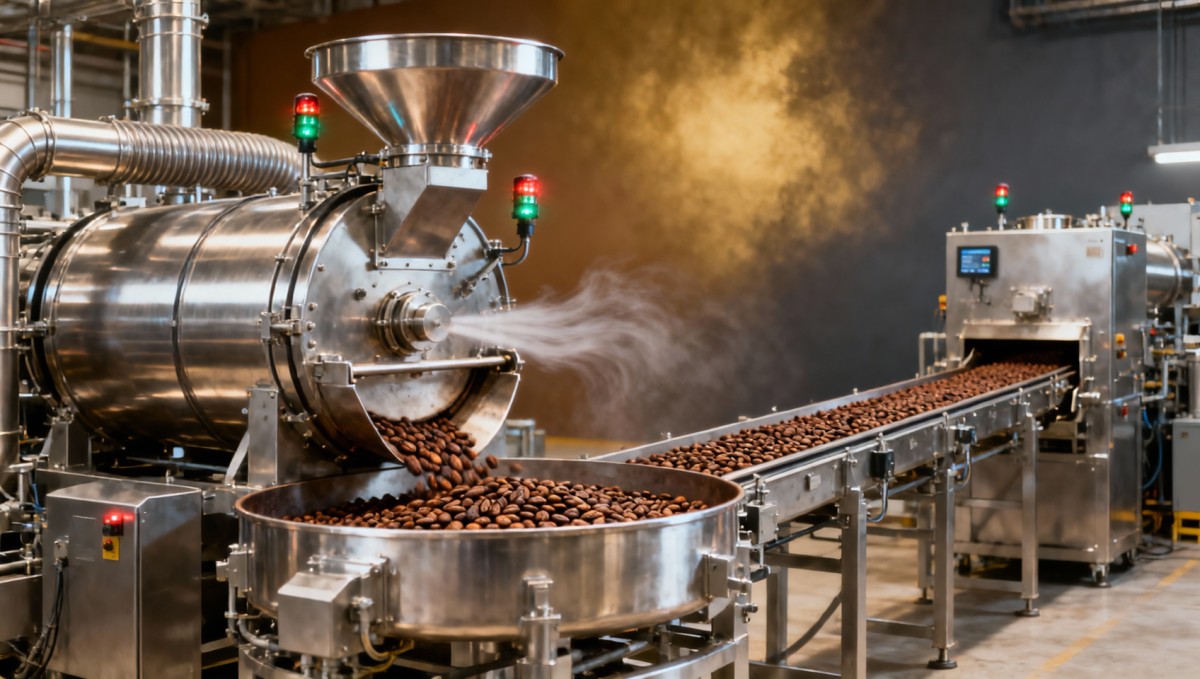
Roast inconsistency usually appears when several moderate issues overlap rather than when one major failure occurs. A commercial line may hold the setpoint at 135°C, yet still produce underdeveloped beans in one lot and scorched notes in the next. That happens because surface temperature, bean core temperature, airflow velocity, and bed movement do not always track together across a full production shift.
One of the most common causes is uneven airflow distribution. In drum, conveyor, and fluid-assisted roasters, hot air must reach all beans with predictable velocity and volume. If ducting accumulates fines, if dampers drift, or if a fan loses efficiency by even 8% to 12%, some zones can receive less heat transfer while others run hotter. Operators often respond by raising burner input, which can worsen roast spread rather than correct it.
Bean variability is the second major driver. Cocoa beans arriving at 6.5% moisture will not roast like beans at 8.5%, and differences in bean size, fermentation quality, origin, and shell thickness can shift required residence time by several minutes. Mixed lots are especially difficult on lines that were tuned around one standard profile. If raw material grading is weak, even a well-built roaster will struggle to maintain uniformity.
A third issue is control-system mismatch. Many processors trust a single chamber sensor, but one probe does not represent all thermal conditions inside a commercial unit. When thermocouples drift by 1°C to 3°C, or when control loops are slow to respond to feed rate changes, the machine may appear stable on the screen while the roast outcome is already moving outside target.
Typical root causes seen on production lines
The table below outlines common mechanical and process reasons why a cocoa bean roaster commercial line loses repeatability over time. These are relevant not only to cocoa processors, but also to buyers familiar with other thermal and mechanical systems in grain, oilseed, and coffee processing plants.
The key takeaway is that “temperature” is only one layer of roast control. In practical terms, repeatable roasting depends on a stable combination of thermal input, air movement, feed consistency, and line timing. If one of these variables changes and the others are not corrected, roast consistency degrades quickly.
How operators and QC teams should diagnose roast drift
When a line starts producing inconsistent cocoa, the most effective response is a structured diagnosis rather than immediate profile adjustment. Many plants lose several days by changing temperature curves before checking the actual condition of fans, dampers, probes, and feed behavior. A disciplined review can often isolate the main issue within 1 to 2 shifts.
First, compare roast output against raw bean inputs. QC should sample at least 3 points per incoming lot: moisture, bean size distribution, and visible defect level. If two lots differ significantly in average bean size or moisture by more than 1%, applying the same roast program may not be valid. This is especially important for processors buying from multiple origins or brokers over a 30-day to 90-day supply cycle.
Second, verify machine-side reality against HMI data. Inspect whether actual exhaust temperature, inlet air temperature, drum speed, and discharge time match displayed values. In older lines, it is not unusual to find a lag of 10 to 20 seconds in valve response or uneven damper travel. Those gaps are enough to affect flavor consistency at commercial capacity.
Third, check whether the inconsistency is random or patterned. If defects appear mainly at startup, thermal recovery may be weak. If the issue emerges after 4 to 6 hours of operation, fouling, sensor heat soak, or burner modulation instability may be involved. Pattern-based troubleshooting reduces the risk of replacing the wrong component.
A practical 5-step diagnostic workflow
- Measure incoming bean moisture and size before production starts, then repeat every major lot change.
- Cross-check control screen readings with handheld or reference instruments at 2 to 3 points in the line.
- Record actual roast time, discharge temperature, and cooling entry condition for at least 5 consecutive batches.
- Inspect airflow path, including fan condition, filter loading, duct obstruction, and damper response.
- Review downstream results such as shell separation rate, nib color consistency, and grinding behavior.
This approach helps separate process variability from equipment faults. For example, if shell removal performance falls from 94% to 88% while roast temperature appears stable, the problem may be moisture or residence-time related rather than purely thermal. Likewise, a line that requires constant manual correction usually points to control instability or weak instrumentation strategy.
Warning signs operators should not ignore
- Roast color variation across one discharge stream rather than only between separate batches.
- Frequent burner cycling or fan speed correction more than 3 to 4 times per hour.
- Cooling section overload causing carryover heat for longer than 2 to 3 minutes.
- Noticeable changes in aroma release, shell brittleness, or nib fracture pattern after lot change.
For facilities with strict QC documentation, it is useful to maintain a line capability record covering at least 4 metrics: inlet moisture, roast loss, color result, and shell separation performance. These records provide a better basis for procurement and maintenance decisions than operator memory alone.
The role of line integration: why the roaster is not an isolated machine
A cocoa bean roaster commercial line is only as consistent as the equipment before and after it. In many plants, roast instability is blamed on the roaster even though the actual cause comes from poor pre-cleaning, uneven feed metering, insufficient destoning, or overloaded cooling. This is common in mixed-processing environments where teams compare cocoa equipment with coffee processing machinery or grain systems and underestimate product-specific handling differences.
Feed uniformity is a major example. If the dosing system sends fluctuating loads into the roasting chamber, residence time and thermal contact become unstable. A variation of just 7% to 10% in feed rate can change bed depth and air penetration enough to alter final roast character. For continuous lines above 500 kg/hour, feeder precision is not optional; it is part of roast control.
Cooling is equally important. Beans that leave the roaster at the correct point can still overdevelop if cooling is delayed or undersized. In some layouts, transfer distance, conveyor exposure, and cooler airflow add 60 to 180 seconds of uncontrolled thermal carryover. That means a line can seem accurate on paper while still producing darker-than-target nibs.
Maintenance and sanitation also affect line integration. Dust buildup, husk fragments, and oil residues can gradually alter airflow and contamination risk. Processors used to oilseed or flour systems already know that fouling changes machine behavior over time. The same principle applies to cocoa, especially where daily cleaning is partial and deep inspection happens only every 2 to 4 weeks.
Where integration failures typically occur
The comparison below shows how upstream and downstream design choices can influence roasting consistency, even when the roaster itself is mechanically sound.
For buyers, this means equipment selection should focus on line compatibility, not just roaster size or burner rating. A machine that performs well in isolation can still fail in production if feeder accuracy, cooler capacity, and control logic are not matched to expected throughput and bean profile variation.
What buyers should evaluate before investing in a commercial cocoa roaster line
Procurement teams often begin with output and fuel type, but those are only the first filters. In technical and financial reviews, the more meaningful question is how reliably the line can hold quality across changing lots, seasonal operating conditions, and maintenance cycles. A lower-capex roaster that requires frequent manual correction, rejects more product, or increases downtime can become the more expensive option within 12 to 24 months.
Capacity should be matched to real use, not just peak ambition. If a plant typically runs 600 kg/hour but buys a system optimized for 1,500 kg/hour and then uses it at partial load, heat-transfer behavior may be less stable. Buyers should ask for the practical operating window, such as whether the line maintains control from 50% to 100% load or only near full capacity.
Instrumentation matters just as much as metallurgy. A robust system should offer more than one measurement point, accessible calibration routines, and clear alarm logic. Buyers should also review the supplier’s service plan: spare parts availability within 7 to 14 days, calibration support intervals, commissioning scope, and operator training time. These factors are highly relevant to finance approvers and plant managers because they directly affect startup risk and ongoing cost.
For distributors and technical evaluators, documentation quality is another decision factor. A supplier should be able to explain process assumptions, utility requirements, expected cleaning frequency, and integration responsibilities. Vague claims about “uniform roasting” without explaining airflow, residence-time control, and instrumentation architecture should be treated cautiously.
A practical procurement checklist
- Confirm usable throughput range, not only maximum nameplate capacity.
- Check how many temperature and airflow measurement points are included as standard.
- Review expected calibration frequency, commonly every 3 to 6 months for critical sensors.
- Ask for startup support scope, including commissioning days, training sessions, and line acceptance criteria.
- Verify maintenance access to fans, ducts, burners, filters, and discharge sections.
- Request clarity on utility demand such as gas, electrical load, compressed air, and exhaust handling.
Decision factors that should appear in internal approval documents
The matrix below can help procurement, operations, QA, and finance teams align on what to evaluate before purchase. It is especially useful when comparing multiple vendors or when deciding between a standalone roaster upgrade and a full commercial line replacement.
A strong procurement decision usually comes from cross-functional review. Operators know what is difficult to clean and tune, QC knows where variation first appears, procurement knows supplier responsiveness, and finance needs a realistic lifecycle picture. Bringing those views together reduces the risk of selecting a line that looks efficient on paper but performs poorly in plant conditions.
Maintenance, calibration, and long-term performance control
Once installed, a commercial cocoa roasting line only remains consistent if maintenance and calibration are treated as part of process control rather than as separate engineering tasks. In many facilities, roast variation appears gradually over 6 to 12 weeks, which makes the decline easy to normalize. By the time rejects, flavor complaints, or shelling losses are obvious, the line may already be operating far from its original baseline.
Routine preventive work should be structured by frequency. Daily checks may include burner flame stability, airflow indication, discharge cleanliness, and cooling performance. Weekly tasks often cover filter inspection, damper response, and abnormal vibration review. Monthly or quarterly work should include sensor verification, fan condition assessment, and deeper duct cleaning. The exact interval depends on throughput, product dust load, and hours of operation, but the principle is the same across most primary processing environments.
Calibration discipline is especially important. If thermocouples, pressure sensors, or flow references are not verified regularly, operators may start adjusting profiles to compensate for false readings. That creates a second layer of error. A line that once produced stable results at a 22-minute roast cycle can drift into a 24-minute workaround simply because measurement confidence has eroded.
Processors should also define acceptance bands for normal production. Examples include allowable inlet moisture range, target roast loss window, acceptable discharge temperature band, and shell separation performance after roasting. These do not need to be complex, but they should be written, reviewed, and linked to corrective action when a threshold is exceeded.
Recommended control routines
- Document one baseline roast profile for each major bean category or origin mix used in production.
- Set a fixed review interval, such as every 30 days, for sensor checks and trend comparison.
- Track at least 4 quality outputs: roast color, shell brittleness, nib condition, and downstream grinding behavior.
- Record every major intervention, including burner servicing, fan replacement, or software retuning.
- Revalidate the process after any line change affecting airflow, feed rate, or cooling capacity.
The commercial value of this approach is straightforward: fewer quality disputes, more predictable labor use, lower waste, and stronger confidence when scaling production. Whether the facility serves chocolate manufacturing, ingredient supply, or broader agro-industrial processing, roast consistency supports both technical performance and purchasing confidence.
FAQ for technical evaluators and buyers
How often should a commercial cocoa roaster be recalibrated?
Critical sensors are commonly checked every 3 to 6 months, while high-use lines may justify shorter intervals. If production runs exceed 16 hours per day or raw material variability is high, monthly verification of key temperature points may be more appropriate.
What throughput range is typical for a cocoa bean roaster commercial line?
Commercial systems often start around 250 kg/hour and can exceed 2,000 kg/hour depending on configuration. The more important figure is the stable operating window across partial and full load, not only the peak nameplate figure.
Can inconsistent beans be fixed by a better roaster alone?
Not fully. Better airflow and controls help, but if incoming beans vary widely in moisture, size, or fermentation level, upstream grading and lot management are still required. Equipment can reduce variability, but it cannot remove all raw material differences.
What is the most overlooked buying mistake?
Treating the roaster as a standalone asset. In many cases, the feeder, cooling section, data logging, and cleaning access determine long-term consistency as much as the heating chamber itself.
Roast consistency fails on some cocoa bean roaster commercial lines because commercial roasting is a system problem, not a temperature problem alone. Airflow balance, bean variability, sensor accuracy, residence-time control, and line integration all shape the final result. For operators, that means diagnosis should be structured and data-based. For buyers, it means vendor comparison should include control architecture, maintenance reality, and full-line compatibility rather than only throughput and price.
If your team is assessing cocoa roasting equipment, broader primary processing machinery, or upgrade paths for integrated production lines, a disciplined technical review will reduce quality risk and improve investment clarity. Contact us to discuss application-specific requirements, compare configuration options, or get a tailored evaluation framework for your next commercial processing project.
Related Intelligence
- Milling MachinerySABIC Cuts PP-Homo Price by 12%: Impact on Milling Machinery Export PartsSABIC cuts PP-Homo price by 12% — key impact on milling machinery export parts, feed pellet mill housings & protective covers. Cost relief for Chinese OEMs & suppliers.
- Milling MachineryParboiled rice mill plant layout mistakes that slow daily productionParboiled rice mill plant layout mistakes can cut daily output and raise costs. Learn practical fixes, workflow tips, and insights relevant to coffee processing machinery and wheat flour milling plant planning.
- Milling MachineryWheat flour milling plant planning starts with more than output targetsWheat flour milling plant planning goes beyond output targets. Compare commercial flour mill machinery, coffee processing machinery, and parboiled rice mill plant solutions for smarter layout, cost, and growth.
The Morning Broadsheet
Daily chemical briefings, market shifts, and peer-reviewed summaries delivered to your terminal.
