
What changes when buying seed oil expeller wholesale in larger volumes
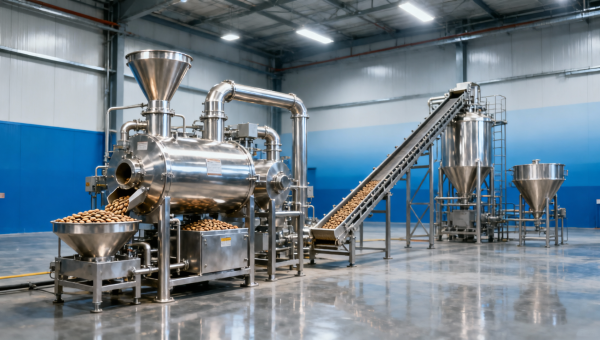
Buying seed oil expeller wholesale in larger volumes changes more than unit price—it affects equipment selection, compliance, logistics, maintenance planning, and long-term ROI. For buyers comparing a sunflower oil press machine, cold press oil machine commercial setup, or even adjacent processing lines such as coffee processing machinery and commercial flour mill machinery, understanding these volume-driven shifts is essential to making a technically sound and financially secure procurement decision.
For procurement teams, plant operators, technical evaluators, distributors, and finance approvers, the move from small-batch buying to larger-volume wholesale purchasing usually marks a shift from product comparison to system-level decision-making. At that point, questions around throughput, spare parts, oil yield stability, sanitation, utility load, and supplier responsiveness become as important as the quoted machine price.
In primary processing sectors, where production continuity and raw material variability directly affect profit margins, a seed oil expeller is not just a standalone machine. It sits inside a wider line that may include cleaning, cracking, conditioning, filtration, storage, and packing. Larger-volume procurement therefore requires a broader due diligence process and a more disciplined evaluation framework.
Volume purchasing changes the technical baseline
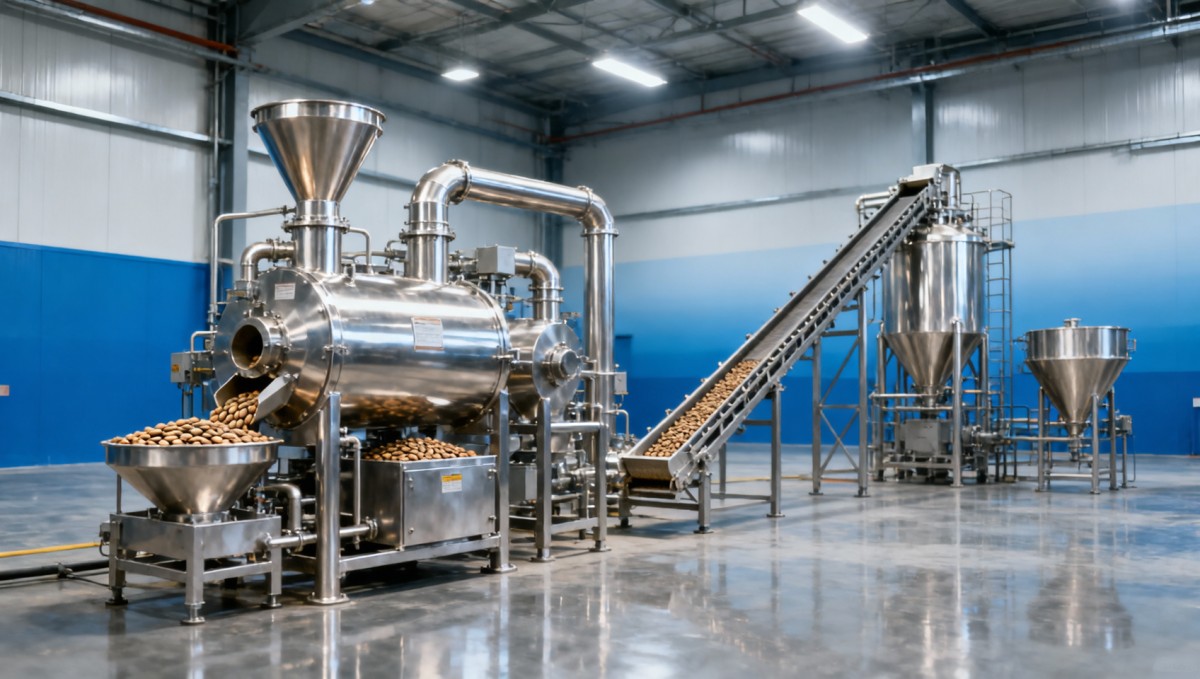
When buying seed oil expeller wholesale in larger quantities, the first major change is technical scope. A buyer who once evaluated a single sunflower oil press machine for 80-150 kg/h may now be assessing multiple units, or a commercial line rated at 500 kg/h, 1 ton/h, or even 3 tons/h. This changes the engineering conversation from “Can it run?” to “Can it run continuously, safely, and at predictable output over 2 or 3 shifts?”
At higher order volumes, consistency across units becomes critical. If 5 machines are purchased together, even a small deviation in screw tolerance, gearbox quality, heating control, or motor efficiency can create uneven oil yield and maintenance schedules. For technical assessment teams, it is no longer enough to inspect one sample machine. Batch consistency, assembly control, and test-run records should be reviewed before contract signature.
Larger-volume buyers also need to define operating conditions more precisely. Seed type, moisture level, target residual oil in cake, expected daily runtime, and whether the process is hot press or cold press all affect configuration. A cold press oil machine commercial setup may prioritize lower processing temperatures and ingredient quality, while a high-capacity expeller for commodity oil may prioritize throughput and extraction efficiency.
This is also where adjacent machinery comparisons matter. Buyers familiar with coffee processing machinery or commercial flour mill machinery often already understand a key truth of industrial procurement: scaling up usually exposes weak points in feeding systems, motors, bearings, and control panels long before it creates savings. Oil pressing lines behave the same way. Larger procurement quantities amplify both performance advantages and hidden design flaws.
Key technical variables that change at scale
Before placing a wholesale order, procurement and engineering teams should align on a common technical checklist. The goal is to avoid a mismatch between rated capacity and usable plant output.
- Throughput range: for example, 100-200 kg/h, 300-500 kg/h, or 1-3 t/h depending on seed type and pre-treatment.
- Motor and power demand: small units may run at 5.5-11 kW, while larger systems can exceed 18.5-30 kW.
- Residual oil in cake: typical targets may fall within 6%-10%, depending on seed, conditioning, and screw design.
- Operating temperature: cold pressing may aim to remain below 60°C, while hot pressing may intentionally exceed 80°C.
- Duty cycle: confirm whether the machine is rated for 8-hour intermittent use or 16-24 hour continuous operation.
The table below shows how technical priorities often shift when order size and production expectations increase.
The practical takeaway is clear: as order volume increases, technical evaluation must move upstream. Buyers should confirm not just machine capacity, but also how multiple expellers will perform together under real plant conditions, including feed variability, ambient temperature, and cleaning intervals.
Wholesale orders reshape cost structure and ROI assumptions
Many buyers enter wholesale negotiations focused on unit-price reduction, often expecting a 5%-15% discount when ordering multiple seed oil expeller units. While volume discounts are real, they represent only one part of the commercial picture. Total acquisition cost can rise materially once buyers include freight, customs handling, installation, voltage adaptation, local safety modifications, and initial spare parts inventory.
Larger-volume procurement usually shifts the financial model from short-term purchase price to lifecycle economics. A machine that costs 8% less upfront but consumes more power, requires screw replacement every 4 months, or suffers 6%-8% more downtime may become the more expensive option within 12-18 months. Finance approvers should therefore request a simple operating cost model before approving capital expenditure.
Another change is inventory risk. If a distributor buys 10 units for regional stock, cash flow exposure is very different from an end-user purchasing 1 or 2 machines for immediate installation. The distributor must consider storage conditions, packaging durability, parts compatibility across all units, and expected sales cycle length. In some markets, inventory held longer than 90-180 days can materially affect working capital and pricing strategy.
For plant operators and business owners, ROI depends heavily on utilization rate. A 1 t/h expeller that runs only 3 hours per day rarely performs as financially well as a smaller unit running 8-10 stable hours. Larger-volume purchases make sense when the buyer can forecast seed supply, labor availability, and downstream demand with reasonable confidence.
Cost categories that deserve review before contract approval
A reliable procurement decision should separate visible and hidden costs. That improves budget accuracy and reduces disagreement between technical and finance teams.
- Machine purchase price and any volume discount tier, such as 3 units, 5 units, or 10 units.
- Utility operating cost, including electricity load, heating requirement, and compressed air if automation is included.
- Consumables and wear parts, especially screws, rings, bearings, filters, and seals.
- Installation and commissioning support, whether remote, on-site, or hybrid.
- Operator training and production ramp-up losses during the first 2-6 weeks.
The table below outlines how financial priorities typically change with purchase scale.
The key conclusion is that larger-volume buying improves bargaining power but also increases the cost of a wrong choice. A strong procurement file should include landed cost, expected maintenance cost over 12 months, and a realistic payback range based on target utilization rather than theoretical capacity.
Compliance, safety, and quality control become more demanding
As wholesale order size rises, compliance is no longer a secondary issue. Quality control managers and safety officers need to verify material contact surfaces, electrical protection, guarding, and documentation standards before machines are approved for shipment. This is especially true when equipment is intended for food-grade oil, nutraceutical ingredients, or export-facing processing environments.
For example, buyers should confirm what parts are in direct contact with seed and oil, whether stainless steel options are available where needed, and how easy the machine is to clean between product changes. A commercial cold press line handling black sesame one week and flaxseed the next may require better sanitation access than a dedicated sunflower line running the same material every day.
Electrical and operator safety standards also become more important at scale. A single small unit in a workshop presents one risk profile; six machines operating on a factory floor present another. Emergency stops, overload protection, guarding around rotating parts, control panel labeling, and maintenance lockout procedures should be reviewed as part of technical acceptance.
Documentation should not be underestimated. At minimum, buyers should request operating manuals, maintenance schedules, packing lists, parts lists, and pre-shipment test records. In regulated or semi-regulated environments, even basic missing documents can delay installation, insurance approval, or internal plant acceptance by 1-3 weeks.
A practical compliance checklist for larger orders
The following points help quality, EHS, and procurement teams align before final payment is released.
- Confirm material specification for food-contact components and identify any carbon steel exposure points.
- Check whether the machine includes emergency stop devices, belt or shaft guarding, and overload protection.
- Request a preventive maintenance schedule with intervals such as daily, weekly, monthly, and every 1,000 operating hours.
- Ask for a clear recommended moisture range for raw seeds, such as 6%-10%, to avoid unstable pressing performance.
- Verify whether the control system and motor configuration match local voltage and frequency requirements, for example 380V/50Hz or 460V/60Hz.
Common quality risks in high-volume machine buying
The most frequent problem is assuming that all units in a wholesale batch will perform identically. In reality, poor assembly consistency can lead to different noise levels, wear rates, and oil yield results. A pre-shipment inspection plan covering at least 10%-20% of the order batch is often a reasonable safeguard for larger buys.
Another frequent issue is vague acceptance criteria. Buyers should define target indicators in advance, such as no-load run stability, temperature rise, basic throughput range, visible weld quality, and parts completeness. Clear acceptance criteria reduce disputes and improve supplier accountability.
Logistics, installation, and service planning matter more than many buyers expect
Once order quantities increase, logistics becomes a strategic variable rather than an administrative step. A wholesale shipment of seed oil expeller machines may require wooden crating, container loading plans, moisture protection, and sequencing by installation priority. If machines arrive without parts labeling or with mixed accessory kits, on-site assembly delays can quickly consume the savings won in price negotiation.
Lead time management also becomes more complex. A single machine might be delivered in 15-25 days depending on stock and customization, but 5-10 units or a line with filtration and conveyors may need 30-60 days. If the buyer also needs voltage changes, stainless contact upgrades, or local control language adaptation, schedule buffers should be added before committing to production launch dates.
Installation planning should include floor loading, cable routing, ventilation, oil collection layout, and raw material flow. In larger processing sites, even small mistakes in equipment spacing can make cleaning and maintenance harder. A practical benchmark is to preserve safe service access around key components and leave room for screw extraction, filter servicing, and motor inspection.
After-sales structure is another decisive factor. Buyers should not just ask whether support exists, but how it is delivered. Response time targets such as 24-48 hours for remote technical feedback, 72-hour parts dispatch windows where feasible, and a first-year spare kit are often more useful than broad service promises.
Suggested implementation flow for larger wholesale orders
A structured rollout lowers commissioning risk and gives each internal stakeholder a clear role.
- Define capacity target, seed types, working hours, and preferred process route.
- Validate technical offer, utility load, spare parts list, and factory test scope.
- Confirm packaging, shipment split, installation sequence, and customs documents.
- Complete on-site commissioning, operator training, and trial run over several production cycles.
- Review first 30-90 days of operation for wear rate, output stability, and maintenance frequency.
The table below helps buyers align logistics and service expectations with project scale.
In practice, buyers that treat logistics and commissioning as part of procurement rather than post-purchase administration usually see smoother start-up and faster time to stable production.
How different buyer groups should evaluate a seed oil expeller wholesale deal
One reason larger-volume purchases become complicated is that each stakeholder evaluates risk differently. Operators want easy cleaning and stable running. Procurement wants dependable delivery and price discipline. Finance wants payback visibility. Quality teams want documentation and safe design. A successful wholesale decision usually depends on combining these viewpoints into one scorecard rather than letting one department dominate the process.
For distributors and agents, resale suitability is especially important. They should assess whether the machine design can serve several customer segments, from small processors to medium commercial users. A model range that covers 100 kg/h, 300 kg/h, and 500 kg/h with common spare parts is often easier to support than a mixed portfolio with incompatible wear components.
For end users, process fit matters more than catalog breadth. A buyer handling sunflower, mustard, soybean, or sesame should evaluate how quickly the machine can be adjusted between different seeds, what pre-treatment is required, and whether filtration is included. In some cases, the best wholesale decision is not more machines, but fewer well-matched machines with better support and a stronger spare strategy.
For decision-makers comparing categories, lessons from coffee processing machinery and commercial flour mill machinery remain relevant: scalable equipment should be judged on line integration, cleaning access, energy use, maintenance rhythm, and operator training demand. These are the factors that determine whether equipment adds productive capacity or merely adds complexity.
Buyer-specific evaluation priorities
For procurement and finance teams
- Request a quotation with separate lines for machine price, accessories, wear parts, and freight assumptions.
- Model payback based on realistic use, such as 6-10 operating hours per day rather than peak output alone.
- Confirm payment milestones against inspection, testing, and document delivery.
For technical evaluators and operators
- Check motor brand level, gearbox robustness, lubrication points, and ease of screw replacement.
- Verify actual feed stability and observe trial pressing if available.
- Ask how long routine cleaning takes and whether two operators are needed during changeover.
For quality and safety managers
- Review machine guarding, emergency controls, and maintenance access points.
- Confirm documentation completeness before shipment.
- Align acceptance criteria with plant hygiene, utility, and operator safety rules.
When these perspectives are integrated early, wholesale buying becomes less reactive and more strategic. That reduces post-installation disputes and improves the odds of hitting productivity targets within the first operating quarter.
Practical questions buyers ask before scaling up orders
As procurement moves from initial interest to final approval, certain questions appear repeatedly. These questions are useful because they connect technical performance, risk control, and commercial feasibility in a way that supports both search-driven research and real purchasing decisions.
How many spare parts should be ordered with a wholesale batch?
A common approach is to secure at least one first-cycle wear kit for every 2-3 machines, depending on operating hours and seed abrasiveness. For higher-duty operation, especially beyond 12 hours per day, buyers may choose a more conservative spare strategy to reduce exposure to shipping delays.
Is a larger cold press oil machine commercial setup always better?
Not necessarily. If raw material supply is inconsistent or the business serves niche premium oils, a smaller but better-controlled system may deliver higher real margins. Oversized equipment often increases energy use, labor inefficiency, and idle capital if utilization stays below 50%-60%.
What delivery timeline should buyers expect?
For standard units, buyers often see production and shipment windows of 2-6 weeks. Larger wholesale orders, customized electrical configuration, or integrated lines may extend that to 6-10 weeks. Internal site readiness should be planned in parallel so installed equipment does not sit unused after arrival.
Which metrics matter most during supplier comparison?
The most useful comparison points are rated and practical throughput, residual oil in cake, power requirement, material of contact parts, wear part replacement cycle, documentation quality, and service responsiveness. A supplier that answers these clearly is usually easier to work with over the long term than one competing only on headline price.
When buying seed oil expeller wholesale in larger volumes, the real change is not only commercial leverage. The entire decision framework becomes broader, involving engineering fit, plant safety, logistics reliability, and lifecycle cost control. Buyers who define technical requirements, compliance expectations, spare strategy, and commissioning responsibilities in advance are more likely to secure stable throughput and defensible ROI.
For enterprises evaluating a sunflower oil press machine, a cold press oil machine commercial solution, or related primary processing equipment, the most effective procurement path is one built on measurable criteria rather than unit price alone. To discuss configuration options, compare process routes, or request a tailored wholesale purchasing plan, contact us today to get a customized solution and deeper technical guidance.
Related Intelligence
- Heavy Agri MachineryTemperature control issues in a cold press oil machine commercial lineCold press oil machine commercial temperature control guide: compare sunflower oil press machine and seed oil expeller wholesale options to improve yield, quality, and ROI.
- Heavy Agri MachineryCold press oil machine commercial setups and the real yield tradeoffCold press oil machine commercial insights: compare real yield, sunflower oil press machine performance, and seed oil expeller wholesale value to choose efficient coffee processing machinery and more.
- Heavy Agri MachineryWhen a sunflower oil press machine needs pretreatment to work wellSunflower oil press machine pretreatment guide: learn when cleaning, drying, and conditioning boost yield, cut downtime, and improve ROI for seed oil expeller wholesale and cold press oil machine commercial buyers.
The Morning Broadsheet
Daily chemical briefings, market shifts, and peer-reviewed summaries delivered to your terminal.
