
When a sunflower oil press machine needs pretreatment to work well
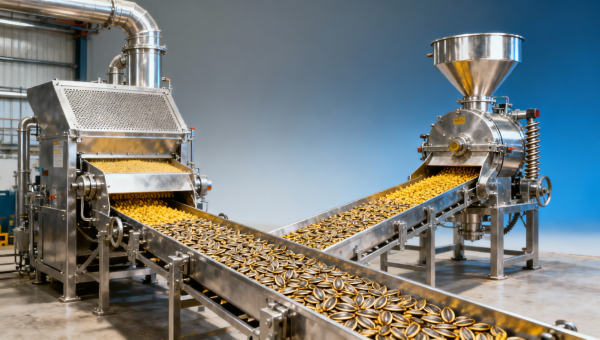
When a sunflower oil press machine handles high-moisture, impure, or poorly conditioned seeds, pretreatment becomes essential for stable output, better oil yield, and safer operation. For buyers comparing coffee processing machinery, seed oil expeller wholesale options, or a cold press oil machine commercial setup, understanding cleaning, drying, cracking, and cooking stages helps reduce downtime, protect quality, and improve overall processing economics.
In industrial oilseed processing, pretreatment is not a secondary add-on. It is often the difference between a line that runs at 70% of its nameplate capacity and one that maintains consistent throughput over 8 to 16 operating hours per shift. For operators, pretreatment reduces clogging and motor overload. For procurement teams, it lowers lifecycle cost. For quality and safety managers, it improves contamination control, process stability, and downstream oil quality.
This is especially relevant in B2B buying environments where decision-making involves users, technical evaluators, purchasing staff, plant managers, finance approvers, and distributors. A sunflower oil press machine may appear simple at first glance, but seed condition, moisture range, impurity load, and thermal preparation directly affect oil yield, cake quality, maintenance frequency, and return on investment.
Why pretreatment matters before pressing sunflower seeds
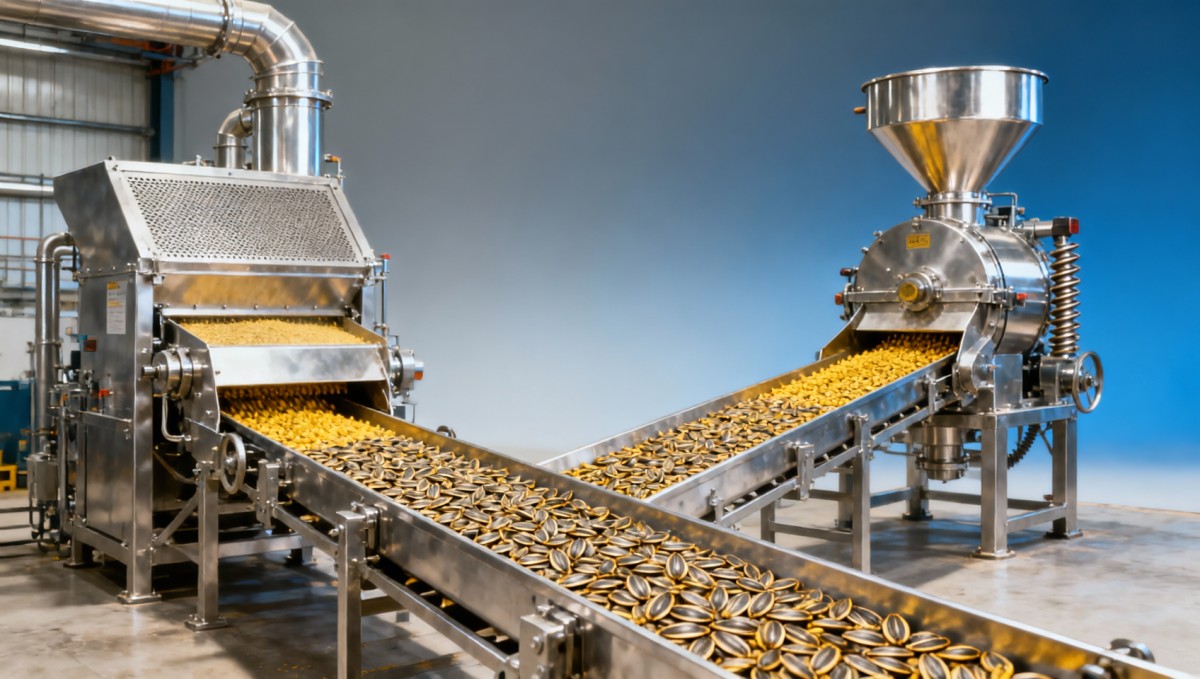
A sunflower oil press machine works best when incoming seeds are uniform, reasonably clean, and within a manageable moisture window. In many commercial settings, raw material moisture may arrive at 10% to 14%, while efficient pressing often benefits from a narrower band, commonly around 6% to 9%, depending on whether the plant uses cold pressing, warm pressing, or a combined mechanical and filtration process.
When seeds contain dust, stones, metal fragments, stalk pieces, or mold-damaged kernels, the press faces several risks. Wear parts degrade faster, screw compression becomes inconsistent, and the expelled cake may retain excessive residual oil. Even a 1% to 3% increase in residual oil in cake can materially change processing economics over monthly volumes of 50 to 300 tons.
Pretreatment also supports safer operation. Excess moisture may create unstable friction and slippage inside the chamber, while excessive fines can raise local heat and create blockages. In practical terms, plants that skip proper cleaning and conditioning often report more shutdowns, more frequent bearing checks, and higher labor input for manual cleaning between production batches.
For commercial buyers evaluating a cold press oil machine commercial line or a seed oil expeller wholesale package, pretreatment should be assessed as a system decision rather than a single machine feature. Cleaning, drying, cracking, dehulling, flaking, and cooking may not all be required in every configuration, but each step solves a specific process problem and affects the final cost per ton of recoverable oil.
Typical process issues caused by poor seed condition
- High moisture above the target range can reduce pressing efficiency and increase emulsion-like oil discharge.
- Impurities above 2% to 5% can accelerate wear on screws, cages, and feed components.
- Uneven seed size causes inconsistent compression and unstable throughput.
- Insufficient heating or conditioning can leave cell structures less ruptured, lowering extraction efficiency.
Core pretreatment objectives
The operational goal is simple: create a feed material that is cleaner, more uniform, thermally balanced, and easier to press. In most plants, the pretreatment section should improve four metrics at the same time: hourly throughput, oil recovery, machine stability, and quality consistency. If one of these metrics improves while another collapses, the line design needs review.
The table below summarizes when pretreatment becomes especially important for a sunflower oil press machine and what each issue usually affects.
The key conclusion is not that every plant needs a complex pretreatment line. It is that raw material variability should determine the level of pretreatment. A small workshop processing uniformly dried seeds may need only basic cleaning. A commercial line handling mixed lots from multiple suppliers may require 4 to 6 pretreatment functions to keep oil recovery and machine reliability within target range.
The main pretreatment stages and what each one changes
Pretreatment is best understood as a sequence of practical control steps. Not every sunflower oil press machine uses the exact same arrangement, but the most common stages are cleaning, drying, cracking or dehulling, flaking, and cooking or conditioning. Each stage changes the physical behavior of the seed before it reaches the pressing chamber.
Cleaning normally comes first. Vibrating screens, destoners, magnetic separators, and aspiration units remove foreign material that could damage equipment or contaminate the oil. In a plant running 1 to 5 tons per hour, basic cleaning can significantly reduce unscheduled stoppages and improve the service life of screws and cages.
Drying or moisture adjustment is often the most underestimated stage. If moisture is too high, pressing becomes inefficient. If moisture is too low, material may become brittle and harder to process optimally. Controlled drying, often with hot air or indirect heating, helps bring the seed into a narrower operating band. For many processors, even a 2% reduction in moisture variability improves press stability noticeably.
Cracking and dehulling are especially relevant when hull content is high or when the processor aims to improve oil concentration in the press feed. Flaking then increases surface area and breaks cellular structures, preparing the material for better oil release. Cooking or conditioning usually uses controlled heat over a short retention period, often 15 to 30 minutes in suitable systems, to soften material and support oil flow during mechanical extraction.
A practical stage-by-stage view
- Cleaning: removes abrasive and contaminating materials before they enter the machine.
- Drying: adjusts moisture to a more press-friendly range and reduces instability.
- Cracking or dehulling: improves feed uniformity and may lower fiber burden.
- Flaking: reduces particle thickness and improves oil release behavior.
- Cooking or conditioning: prepares the material thermally for more effective extraction.
How stage selection differs by processing model
A compact cold press oil machine commercial unit aimed at premium edible oil may prioritize gentle cleaning and moderate moisture control while limiting thermal conditioning. A larger industrial expeller line focused on yield and throughput may justify a fuller pretreatment section because the incremental oil recovery over thousands of tons can outweigh additional capital and utility cost.
The next table shows how common pretreatment stages align with operating objectives in different B2B scenarios.
For technical evaluators, the selection logic should be evidence-based: measure feed condition, define output targets, and match pretreatment complexity to business goals. This is also relevant for distributors and agents who need to position equipment correctly for end users rather than selling a one-size-fits-all configuration.
How to decide whether your sunflower oil press machine needs pretreatment
Not every sunflower oil press machine requires the same level of front-end processing. The right question is not simply whether pretreatment exists, but whether the line can maintain output, quality, and maintenance cost within acceptable limits without it. Buyers should evaluate raw material variability, target capacity, oil quality requirements, labor availability, and maintenance capability before selecting a solution.
A useful starting point is to classify the project into three categories: basic, intermediate, and advanced. A basic setup may process relatively clean, pre-dried seed at below 1 ton per hour. An intermediate line may run 1 to 3 tons per hour with variable lots and require cleaning plus moisture control. An advanced line may exceed 3 tons per hour and justify cracking, flaking, and cooking to improve overall extraction economics.
Finance approvers should look beyond initial equipment price. If pretreatment reduces residual oil in cake, extends wear-part life by several months, or cuts downtime from weekly interruptions to scheduled maintenance windows, the total cost picture changes quickly. In commercial operations, labor, stoppage, utility, and quality-loss costs often exceed the apparent savings of skipping pretreatment.
Quality control teams should also consider feed traceability and contamination management. A well-configured cleaning and conditioning section makes it easier to standardize incoming lots, isolate poor-quality batches, and support internal quality procedures. This matters not only for edible oil producers but also for enterprises that sell cake for feed applications and need more predictable byproduct quality.
Five practical checkpoints before buying
- Raw material consistency: Are seeds sourced from one controlled supplier or multiple seasonal channels?
- Moisture and impurity range: What is the normal incoming condition across 10 to 20 deliveries?
- Target capacity: Is the line expected to run intermittently or for 8 to 24 hours per day?
- Quality target: Is the focus premium cold-pressed oil, bulk edible oil, or industrial-grade output?
- Maintenance resources: Can the plant support frequent manual intervention, or is process stability essential?
A procurement-oriented comparison
The table below offers a decision framework useful for purchasing departments, technical reviewers, and plant managers when comparing sunflower oil press machine options.
This comparison highlights a simple rule: the more variable the seed input and the higher the production target, the more pretreatment tends to pay back. For buyers reviewing seed oil expeller wholesale quotations, asking what pretreatment assumptions are built into the proposal is often more informative than comparing machine power alone.
Operational risks, maintenance realities, and common buying mistakes
One of the most common mistakes in oil processing projects is evaluating a sunflower oil press machine only by output rating. Nameplate capacity may be based on ideal seed condition, not real-world material with seasonal variation. If the plant regularly receives seeds with moisture swings of 3% to 5% or impurity spikes after harvest, actual throughput can fall well below quoted figures unless pretreatment is included.
Another recurring mistake is underestimating maintenance burden. Without proper cleaning and conditioning, wear surfaces may require inspection much more frequently. In some facilities, manual intervention shifts from scheduled checks every 2 to 4 weeks to reactive cleaning several times per week. That affects labor planning, spare-parts usage, and production scheduling.
Safety and compliance also deserve attention. Dust accumulation, overheated material, and metal contamination are not only operational issues. They can affect workplace safety, oil quality, and internal audit performance. A basic magnetic separator, proper aspiration, and controlled conditioning temperatures are practical safeguards that often deliver value disproportionate to their cost.
For distributors, agents, and OEM partners, the commercial risk is equally important. Overselling a machine without clarifying pretreatment needs can lead to complaints about yield, reliability, or product quality. A better approach is to specify the expected seed condition, moisture range, impurity load, and operating hours in the quotation and commissioning plan.
Common misconceptions in the market
- “Cold press means no pretreatment is necessary.” In reality, cleaning and moderate moisture control may still be essential.
- “A bigger motor solves difficult material.” Power helps, but poor seed preparation still reduces efficiency and increases wear.
- “Pretreatment only matters for large factories.” Even smaller lines benefit when raw material quality is inconsistent.
- “Lower upfront cost means better ROI.” Hidden costs from downtime and yield loss can reverse that assumption within one season.
FAQ for technical and procurement teams
How much pretreatment is enough for a commercial line?
Enough pretreatment means the line can run stable batches with acceptable residual oil, manageable maintenance, and consistent product quality. For many commercial projects, cleaning and moisture adjustment are the minimum baseline. Additional cracking, flaking, or cooking should be considered when capacity increases, seed quality varies, or yield targets are tighter.
Can pretreatment improve oil quality as well as yield?
Yes. Better cleaning reduces foreign matter, and controlled conditioning supports more consistent pressing. This can help reduce suspended solids, stabilize filtration load, and improve downstream handling. However, overprocessing or excessive heat can work against premium quality goals, so settings should match the intended oil profile.
What should buyers request from suppliers?
Ask for the assumed seed moisture range, impurity allowance, target throughput basis, recommended pretreatment steps, estimated wear-part maintenance cycle, utility requirements, and commissioning support scope. These details make it easier to compare quotations on an operational basis instead of a headline price basis.
Implementation planning for buyers, operators, and decision-makers
Once a company determines that pretreatment is needed, the next step is implementation planning. In practice, successful projects define feedstock parameters, target output, utility availability, staffing, and spare-part strategy before equipment layout is finalized. This reduces commissioning delays and avoids mismatches between the sunflower oil press machine and the pretreatment section.
A practical implementation plan often follows five steps: feed analysis, process selection, utility and layout review, trial or parameter validation, and operator training. Depending on project scale, equipment lead time may range from several weeks for standard systems to 8 to 16 weeks for more integrated commercial lines. Installation and commissioning schedules should also consider electrical work, ventilation, dust control, and material flow paths.
Operator training is not a minor detail. Even a well-designed line underperforms if staff cannot recognize the signs of poor conditioning, moisture drift, or abnormal discharge behavior. A short training program covering start-up checks, parameter adjustment, cleaning intervals, and shutdown procedures can reduce avoidable stoppages during the first 30 to 60 days of operation.
For enterprise decision-makers, the strongest projects are those that link equipment selection to measurable business targets: target tons per day, acceptable residual oil range, planned operating hours, maintenance windows, and expected payback logic. This is the level of detail that allows technical, financial, and operational teams to align around one procurement decision rather than several competing assumptions.
Recommended implementation checklist
- Document incoming seed moisture, impurity level, and lot variability over multiple deliveries.
- Match pretreatment steps to production target, quality goal, and operating hours.
- Confirm power, heat source, ventilation, and maintenance access before final purchase.
- Request operating guidance for start-up, shutdown, and routine inspection intervals.
- Plan spare parts and service response expectations for the first 6 to 12 months.
A sunflower oil press machine performs best when pretreatment decisions are made on real material conditions, not assumptions. Cleaning, drying, cracking, and cooking are not optional buzzwords; they are process controls that influence output stability, oil recovery, equipment life, and operational safety. For buyers comparing coffee processing machinery, seed oil expeller wholesale packages, or a cold press oil machine commercial solution, the most valuable proposals are those that clearly explain feed requirements and pretreatment logic.
If you are evaluating a new line, upgrading an existing process, or reviewing supplier quotations, a structured pretreatment assessment will help you protect production economics and reduce avoidable risk. Contact us to discuss your operating scenario, request a tailored process recommendation, or learn more about practical equipment selection strategies for commercial oilseed processing.
Related Intelligence
- Heavy Agri MachineryIndia Extends Anti-Dumping Review on Chinese Tractors, SeedersIndia extends anti-dumping review on Chinese tractors and seeders—impacting exporters, OEMs, and agri-supply chains. Act now to navigate tariffs, compliance, and sourcing shifts.
- Heavy Agri MachinerySmall palm oil extraction machine or full line for daily throughput?Palm oil extraction machine guide: compare small units vs full lines by throughput, ROI, and quality. Also explore cold press oil machine commercial and seed oil expeller wholesale options.
- Heavy Agri MachineryPalm oil extraction machine capacity looks good on paper, then falls shortPalm oil extraction machine capacity often drops in real production. Compare sunflower oil press machine, cold press oil machine commercial, and seed oil expeller wholesale options with practical buying insights.
The Morning Broadsheet
Daily chemical briefings, market shifts, and peer-reviewed summaries delivered to your terminal.
