
How to compare cocoa bean roaster commercial models by batch size
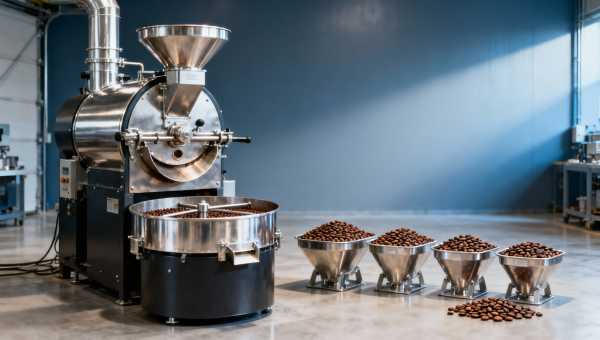
Choosing the right cocoa bean roaster commercial model starts with understanding how batch size affects throughput, roast consistency, labor demands, and operating cost. For buyers already comparing coffee processing machinery, seed oil expeller wholesale systems, sunflower oil press machine lines, or commercial flour mill machinery, this guide explains the key technical and commercial factors that separate small-batch flexibility from high-capacity production performance.
In commercial cocoa processing, batch size is not a simple capacity label. It influences roast curve stability, charging and discharge rhythm, heat recovery, operator scheduling, utility sizing, and the practical cost per kilogram. A 15 kg roaster and a 240 kg roaster may both deliver acceptable roast quality, but they fit very different production plans, staffing models, and customer commitments.
This matters to a broad set of stakeholders. Operators need manageable loading cycles and predictable controls. Technical evaluators need to compare burner output, airflow response, drum geometry, and data logging. Procurement teams need realistic throughput figures instead of headline capacity alone. Financial approvers need to understand payback, utilization, and expansion risk before signing off on capital expenditure.
For distributors, quality managers, and processing businesses entering bean-to-bar or ingredient supply, the most effective comparison starts with one question: how many kilograms of roasted cocoa beans must be produced per hour, per shift, and per month without compromising consistency? Once that baseline is clear, comparing commercial models by batch size becomes far more precise.
Why batch size is the first screening filter in commercial cocoa roasting
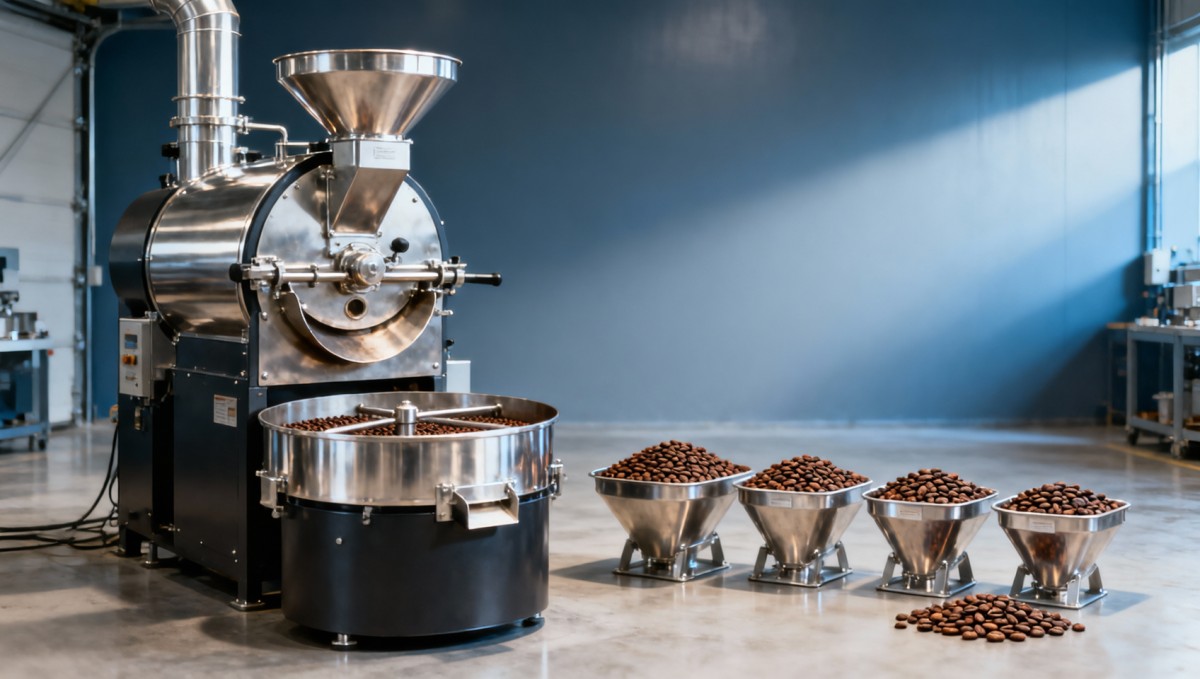
A cocoa bean roaster commercial model is usually marketed by batch capacity, such as 15 kg, 30 kg, 60 kg, 120 kg, or 240 kg per batch. Yet practical production output depends on the full roast cycle, not just the load size. If one batch takes 25 minutes to roast and 10 minutes to cool and discharge, the true cycle is 35 minutes. That difference is crucial when calculating hourly output.
For example, a nominal 60 kg batch roaster running a 35-minute cycle may produce roughly 100 kg to 110 kg per hour under stable conditions. A 120 kg machine with a 45-minute full cycle may produce around 150 kg to 160 kg per hour. Buyers who compare only the nameplate batch number can either overspend on underused capacity or install a unit that cannot meet shipment deadlines.
Batch size also affects roast control. Smaller machines often respond faster to temperature changes and are useful for recipe development, specialty lots, and origin-specific adjustments. Larger machines usually offer better economies at scale but can require tighter process discipline, stronger ventilation design, and better-trained staff to avoid uneven roasting across the drum mass.
In integrated processing environments, cocoa roasters are rarely selected in isolation. They must align with cleaning, destoning, cracking, winnowing, conveying, and downstream grinding or pressing steps. If the roaster is oversized relative to the cracker or nib grinder, the line accumulates bottlenecks. If it is undersized, expensive upstream cleaning equipment sits idle for long periods.
Throughput should be measured in three time frames
A disciplined comparison uses at least three throughput windows rather than one headline figure:
- Hourly output, which helps compare roasting cycles, cooling time, and operator rhythm.
- Shift output over 8 to 10 hours, which reveals the effect of warm-up time, cleaning stops, and recipe changes.
- Monthly output, which captures downtime, maintenance intervals, and actual plant utilization, often between 60% and 85%.
The table below shows how nameplate batch size and practical output can diverge in real operations.
The key conclusion is that batch size is a screening tool, not the final answer. Buyers should translate batch capacity into output per hour and per shift, then compare that figure against real demand, maintenance windows, and future expansion plans over the next 12 to 36 months.
How to match roaster size to production goals and plant workflow
The correct batch size depends on the business model behind the roasting line. A specialty chocolate maker serving 10 to 20 SKUs may value flexibility more than raw capacity. A processor supplying cocoa liquor, powder, or intermediate ingredients to industrial buyers may prioritize stable throughput, lower labor cost per ton, and compatibility with continuous downstream systems.
A useful rule is to target a roaster that can cover average daily demand at 70% to 80% utilization, not 95% to 100%. Running at maximum load every day leaves little room for maintenance, recipe variation, or seasonal spikes. It also increases the financial risk of line stoppage because one unplanned failure can delay multiple customer orders within the same shift.
Technical assessors should also review whether the stated batch size refers to raw beans, preconditioned beans, or a specific moisture range. Cocoa beans can behave differently depending on origin, bean size distribution, and pre-cleaning condition. A machine advertised at 120 kg may not deliver the same roast profile when bean density or incoming moisture rises beyond the typical operating range.
Plant layout is another common oversight. Larger roasters often need more floor area for loading hoppers, cooling trays, exhaust treatment, and safe operator access. Utilities also scale up. Gas-fired units may require higher line pressure, while electric systems may demand 30 kW to 150 kW depending on capacity and insulation design. Without utility verification, installation delays can easily extend by 2 to 6 weeks.
A practical sizing sequence for buyers
- Define target roasted output in kilograms per shift and per month.
- Estimate average roast cycle by product type, usually 20 to 45 minutes.
- Add loading, discharge, cooling, and cleaning time, often 8 to 18 minutes per batch.
- Check upstream and downstream capacity so the roaster does not become the only fast or slow point in the line.
- Reserve 20% to 30% spare capacity for growth, preventive maintenance, and seasonal demand variation.
Common fit by user profile
Small processors, training centers, and product developers often start in the 15 kg to 60 kg range because recipe changes are frequent and lot traceability is easier. Mid-sized processors commonly choose 60 kg to 120 kg models when they need a balance between flexibility and scale. Industrial plants with continuous cracking, winnowing, or pressing equipment generally evaluate 180 kg and above because labor and energy efficiency become more favorable at higher daily volumes.
The decision should also reflect service strategy. If local technical support can arrive within 24 to 72 hours, a higher-capacity unit may be acceptable. If spare parts take 3 to 5 weeks, some buyers intentionally prefer two medium roasters instead of one large machine to preserve redundancy and reduce stoppage risk.
Technical parameters that matter more than the batch label
Once the shortlist is built by batch size, the next step is to compare the machine architecture. Two roasters with the same 60 kg or 120 kg nominal batch can perform very differently depending on heat source, drum design, airflow management, burner modulation, and control precision. These factors determine whether the machine can repeat roast profiles across shifts and seasons.
The most important technical point is heat transfer balance. Cocoa roasting depends on a controlled mix of conductive, convective, and radiant heat. If airflow is too weak, moisture removal slows and flavor development becomes uneven. If airflow is too aggressive, lighter beans or shell fragments can behave unpredictably, and the machine may lose thermal stability between batches.
Control systems deserve equal attention. Commercial buyers should ask whether temperature sensors are placed in the drum air, bean mass, or both. A useful control package usually includes variable drum speed, airflow adjustment, burner or heater modulation, and roast data logging. For operations running 3 to 10 recipes, repeatability can improve significantly when operators can store profiles instead of relying on manual note-taking alone.
Safety and hygiene are part of the technical review, especially in regulated food production environments. Buyers should inspect access for cleaning, dust management, emergency stop placement, insulation quality, and discharge design. Surfaces and contact zones should support fast sanitation between lots, particularly when allergen segregation or export-oriented documentation is required.
Key comparison points for technical evaluation
The following table helps engineering teams, quality managers, and procurement staff compare commercial models beyond nominal capacity.
A frequent mistake is to focus on burner power alone. Higher power does not automatically mean better cocoa roasting. What matters is controlled energy delivery, stable bean agitation, and a cooling stage that can stop roast development quickly. For many buyers, a well-controlled 60 kg to 120 kg system delivers better commercial reliability than an oversized machine with weak controls.
Cost, labor, and maintenance trade-offs across small and large batch models
Commercial comparison must include total operating economics, not only purchase price. Smaller batch roasters usually have lower initial capital requirements and simpler installation. However, when daily demand exceeds 500 kg to 800 kg, repeated charging and discharge cycles can push labor hours upward and reduce overall efficiency. At that point, a larger machine or a two-roaster strategy often becomes more economical.
Labor cost scales in a non-linear way. A 30 kg roaster may need nearly the same operator attention per cycle as a 120 kg unit, especially in plants that rely on manual loading and recipe supervision. If one operator can manage 40 kg to 60 kg roasted output per hour on a small unit but 140 kg to 160 kg per hour on a larger semi-automatic model, labor cost per kilogram drops materially even if utility use rises.
Maintenance should also be part of procurement review. Bearings, motors, fans, sensors, burners, and seals all have service intervals. Access matters as much as part quality. If routine cleaning takes 45 minutes instead of 15 minutes, weekly lost production accumulates quickly. Over 50 operating weeks per year, even a 30-minute difference can remove 25 production hours from the calendar.
Financial approvers often ask about payback. A practical answer depends on utilization, product value, and whether roasting is replacing outsourced services. In many processing businesses, payback is driven less by headline capacity than by reduced rejects, lower re-roast rates, tighter batch traceability, and the ability to serve more than one customer segment from the same line.
A comparison framework for cost review
- Capital cost: machine, installation, ducting, controls, and commissioning.
- Operating cost: fuel or electricity, operator time, cleaning hours, consumables.
- Quality cost: rejected batches, profile drift, inconsistency across lots, traceability issues.
- Downtime cost: spare parts lead time, local service access, and preventive maintenance schedule.
- Expansion cost: whether the system can integrate feeders, coolers, or data systems later.
When two medium roasters make more sense than one large unit
For plants managing multiple bean origins or roast profiles, two 60 kg to 120 kg machines can outperform one 240 kg unit. This setup supports parallel recipes, maintenance redundancy, and better control of customer-specific lots. It can also reduce risk for distributors or contract processors that need to switch between dark, medium, and light cocoa roast programs within the same day.
That said, dual-machine layouts increase footprint, utility connections, and spare parts diversity. The better choice depends on production mix. If more than 70% of output follows one stable profile, a larger machine can be justified. If the business handles 5 to 12 product variants weekly, medium-capacity flexibility often wins.
Procurement checklist, common mistakes, and implementation advice
Procurement teams should convert commercial claims into a documented comparison sheet before requesting quotations. This is especially important when comparing suppliers across regions, because the term commercial cocoa roaster can cover everything from pilot-scale drum units to heavy-duty industrial roasting systems. A disciplined checklist reduces the chance of buying a machine that looks efficient on paper but disrupts daily production.
One common mistake is ignoring commissioning support. Even a well-built machine needs process tuning after installation. Bean origin, ambient humidity, utility stability, and operator training can all affect final roast quality. Buyers should ask what is included in startup support, how many training days are provided, and whether recipe optimization is remote, on-site, or self-managed.
Another common error is underestimating compliance and safety requirements. Food processing facilities may need dust control, thermal insulation, safe gas line integration, and documented cleaning procedures. If the plant supplies institutional or export buyers, traceability and batch records can become contractual expectations rather than optional process notes.
Lead time is equally relevant. Standard commercial roasting equipment may ship in 4 to 12 weeks, but custom layouts, site modifications, and utility approvals can extend total project time to 8 to 20 weeks. Procurement planning should therefore include not only manufacturing lead time but also installation readiness and operator availability for commissioning.
Recommended buyer checklist
The checklist below can be used by technical evaluators, purchasing managers, and finance reviewers when comparing multiple cocoa bean roaster commercial models.
The most reliable purchasing decision usually comes from cross-functional review. Operations, engineering, quality, procurement, and finance often see different risks in the same machine. Bringing those views together early leads to better equipment utilization and fewer corrective changes after installation.
FAQ for buyers comparing cocoa bean roaster commercial models
How much spare capacity should a commercial roaster have?
A common planning range is 20% to 30% above current average demand. This buffer supports maintenance, recipe variation, operator learning, and seasonal sales peaks. Plants expecting rapid growth within 12 months may choose closer to 35%, but too much oversizing can weaken energy efficiency at low loads.
Is a larger batch roaster always more cost-effective?
Not always. A larger model usually lowers labor cost per kilogram at higher throughput, but it can reduce flexibility, require bigger utilities, and increase quality risk if many small custom lots are processed. Cost-effectiveness improves when the plant runs stable profiles and high daily volume, not simply because the machine is bigger.
What should quality managers prioritize during evaluation?
Focus on repeatability, cleaning access, data logging, cooling performance, and how quickly the machine recovers between batches. These factors often have a stronger impact on lot consistency than nameplate capacity. If possible, request trial roasting on at least 2 to 3 bean origins or moisture conditions.
How long does implementation usually take?
For standard configurations, buyers often see 4 to 12 weeks for equipment supply and another 1 to 4 weeks for site preparation, installation, and commissioning. Projects involving custom ducting, electrical upgrades, or integrated upstream and downstream lines may take 8 to 20 weeks in total.
Comparing a cocoa bean roaster commercial model by batch size works best when capacity is linked to real hourly output, workflow fit, control precision, labor efficiency, and maintenance practicality. Small-batch units support flexibility and product development, while larger systems improve scale economics when demand is stable and the full line can support higher throughput.
For ACC readers evaluating agricultural and primary processing equipment, the strongest procurement outcomes come from balancing engineering detail with commercial realism. If you are reviewing cocoa roasting equipment alongside broader food and raw-material processing assets, now is the right time to compare specifications, utility demands, and lifecycle cost side by side. Contact us to discuss your production target, request a tailored equipment comparison framework, or explore more processing solutions for industrial-scale operations.
Related Intelligence
- Milling MachinerySABIC Cuts PP-Homo Price by 12%: Impact on Milling Machinery Export PartsSABIC cuts PP-Homo price by 12% — key impact on milling machinery export parts, feed pellet mill housings & protective covers. Cost relief for Chinese OEMs & suppliers.
- Milling MachineryHow to compare cocoa bean roaster commercial models by batch sizeCompare cocoa bean roaster commercial models by batch size, throughput, and cost, with insights for coffee processing machinery and food processing lines. Click for smart buying tips.
- Milling MachineryWet or dry coffee processing machinery for different bean origins?Coffee processing machinery guide: choose wet or dry systems by bean origin, climate, and ROI. Compare with cocoa bean roaster commercial and other agro-processing lines for smarter buying.
The Morning Broadsheet
Daily chemical briefings, market shifts, and peer-reviewed summaries delivered to your terminal.
