
Wet or dry coffee processing machinery for different bean origins?
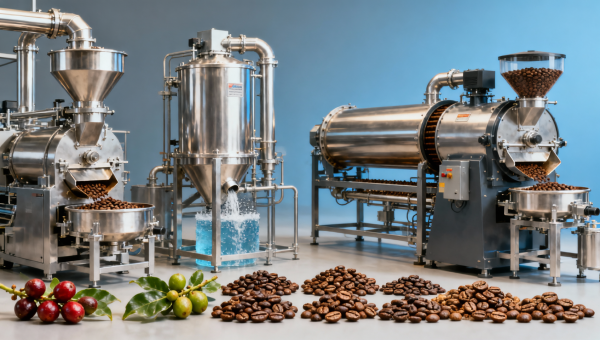
Choosing between wet or dry coffee processing machinery depends heavily on bean origin, climate, water access, cup profile goals, and downstream handling requirements. For buyers comparing coffee processing machinery alongside cocoa bean roaster commercial systems, wheat flour milling plant lines, or commercial flour mill machinery, understanding origin-specific processing variables is essential to improve quality, cost control, compliance, and long-term equipment ROI.
For producers, mill operators, technical evaluators, and procurement teams, the decision is rarely about one machine in isolation. It is about how bean origin interacts with moisture, altitude, fruit density, fermentation behavior, wastewater management, labor availability, and export specifications. A wet line that performs well for high-altitude washed Arabica may be inefficient or unnecessarily expensive for naturally processed beans from arid regions.
This article examines how coffee origin should shape machinery selection, what processing stages require the closest engineering attention, and how buyers can compare wet and dry systems using operational, financial, and quality-control criteria. The goal is to support better equipment planning across estates, cooperatives, dry mills, integrated agro-processing sites, and diversified primary processing businesses.
Why Bean Origin Changes the Machinery Decision
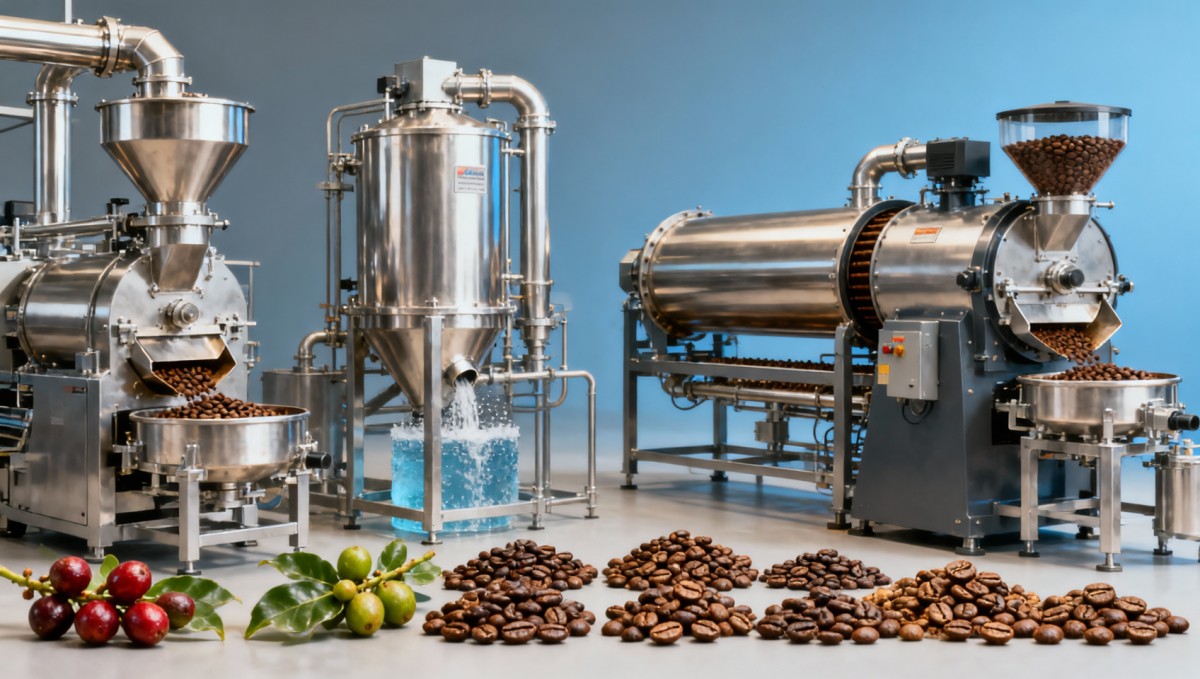
Coffee origin influences far more than branding. It affects cherry size, mucilage thickness, sugar content, defect risk, drying speed, and the practical feasibility of wet or dry processing. In broad terms, regions with higher rainfall, stable water access, and strong washed-coffee market premiums often justify wet coffee processing machinery. Regions with lower water availability, hotter drying conditions, or stronger demand for naturals may favor dry processing lines.
Altitude is a major variable. Beans grown at 1,200–2,000 meters often mature more slowly and may support premium washed profiles, especially in parts of East Africa, Central America, and Colombia. By contrast, lower-altitude or highly seasonal zones may prioritize mechanical drying and hull-based post-harvest systems that reduce dependency on water-intensive fermentation infrastructure.
Climate shapes risk exposure. In humid areas with 70%–90% relative humidity during harvest, delayed drying can rapidly increase mold pressure and inconsistent moisture levels. That makes mechanical demucilagers, controlled fermentation tanks, and hybrid drying systems more attractive. In dry climates, patio or greenhouse pre-drying may reduce the need for large wet-mill installations, though uniformity still depends on reliable hulling, cleaning, and moisture control equipment.
Water access and compliance requirements are equally important. Wet processing can require significant water volumes per ton of cherry unless recycling systems are installed. For operators in regulated agricultural zones or export-focused businesses with strict environmental audits, wastewater handling, sludge management, and sanitation design are procurement issues, not secondary afterthoughts.
Typical origin-related variables that affect machinery configuration
- Cherry density and ripeness spread, which influence pulper settings and sorting efficiency.
- Mucilage load and sugar content, which affect fermentation time, usually ranging from 12–48 hours.
- Harvest weather patterns, which determine whether open-air drying is viable within 7–15 days.
- Access to clean process water, recirculation systems, and wastewater treatment capacity.
- Target market profile, such as washed specialty lots, honey coffees, naturals, or commodity-grade exports.
The comparison below shows how origin conditions usually translate into machinery priorities. It is not a rigid rulebook, but it gives technical buyers a practical starting point when screening suppliers or planning a new processing line.
A key takeaway is that bean origin should determine processing architecture from the start. Buying coffee processing machinery without mapping climate, water, and market destination can lock an operation into avoidable energy use, excessive labor steps, or quality losses that appear only after the first harvest cycle.
Wet Processing Machinery: Best Fit, Strengths, and Constraints
Wet processing machinery is usually selected when producers want cleaner cup profiles, brighter acidity, and tighter lot differentiation. A typical line includes cherry reception, flotation or density sorting, depulping, fermentation or demucilaging, washing, and controlled drying. For estates and cooperatives handling 0.5–5 tons per hour, line integration matters more than individual machine output.
The strongest fit is often found in origins where washed coffee commands a measurable premium and where operators can manage water responsibly. In such cases, equipment choice should focus on pulp removal consistency, minimal bean damage, easy clean-down, and moisture stabilization toward the common export target of 10%–12%. If final moisture drifts above 12.5%, storage risk rises sharply in many climates.
Wet systems also support better process control for differentiated microlots. Fermentation can be monitored over 12, 18, 24, or 36 hours depending on temperature and mucilage load. Mechanical demucilagers can reduce water demand and improve throughput consistency, but they require correct adjustment and operator training. Poor tuning may increase parchment damage or create uneven mucilage removal.
The main constraints are infrastructure and compliance. Wet mills require drainage planning, water source security, wastewater treatment, spare-parts discipline, and stricter sanitation routines. For remote processing sites, the true cost includes pumps, tanks, piping, sludge handling, and power stability. Buyers who compare only pulper price often underestimate total installed cost by 15%–30%.
Core engineering checkpoints for wet lines
Pulping and sorting
A wet line should begin with clear separation of floaters, underripe cherries, and foreign matter. Even a high-quality pulper cannot compensate for poor intake sorting. Operators should ask for throughput tested under realistic cherry conditions, not empty-load figures.
Fermentation and washing control
Tank material, cleanability, drain geometry, and residue removal directly affect microbial consistency. In cooler regions, fermentation may need 24–48 hours; in warmer regions, 12–24 hours may be enough. This changes tank sizing and batch scheduling.
Drying stability
Even when wet processing is chosen, drying technology remains decisive. Mechanical dryers should deliver gentle temperature control, commonly in the 35°C–45°C range for parchment protection, with stable airflow and moisture sampling access.
For buyers balancing quality and capex, the table below highlights where wet systems usually deliver value and where they create pressure on budgets or utilities.
In practice, wet processing machinery is most effective when coffee origin, premium market access, water governance, and trained supervision all align. Without those four conditions, a lower-complexity dry route may outperform it on real ROI.
Dry Processing Machinery: Operational Simplicity and Where It Wins
Dry coffee processing machinery is often the logical choice for origins with limited water, strong sun exposure, or established demand for natural coffees. The process usually emphasizes cleaning, drying whole cherries to a stable level, hulling, separation, grading, and bagging. In many operations, fewer wet stages mean lower infrastructure complexity and easier deployment in remote sites.
That said, dry processing is not a low-control system. Whole cherries are highly sensitive to uneven drying, especially when harvest lots contain variable ripeness. Drying too slowly can increase mold and off-flavor risk. Drying too fast or under excessive heat can create shell-like outer dryness while the center retains excess moisture. Many operators target final moisture near 10%–12%, with careful tempering before hulling.
Dry systems become especially valuable when labor is available for sorting and turning, or when mechanical dryers can compensate for unstable weather. Origins with 20–30 days of low-rain harvest windows may rely heavily on natural processing, but larger commercial operations increasingly add batch or continuous-flow dryers to reduce dependence on sun-only methods.
For exporters, dry milling quality is the real differentiator. Hulling pressure, aspiration, destoning, screen grading, and density separation determine how much value survives after drying. A poorly configured dry mill can erase the apparent simplicity benefits of natural processing by increasing breakage, defect carryover, and rework costs.
When dry systems are commercially attractive
- When water is scarce or costly, and environmental permitting for wet discharge is difficult.
- When target buyers accept or prefer naturals, fruit-forward profiles, or lower-cost commercial lots.
- When farms need modular equipment that can scale from smallholders to centralized dry mills.
- When power, maintenance skills, and spare-parts logistics favor simpler mechanical layouts.
Compared with wet systems, dry machinery usually shifts investment toward dryers, hullers, cleaners, and grading units. It also demands disciplined storage management. Whole dried cherry and hulled green coffee should be protected from reabsorption in humid environments, ideally with warehouse RH control and regular moisture checks every 7–14 days during storage.
Buyers in diversified agro-processing businesses often appreciate that dry-system design logic resembles other primary processing lines. The need for robust pre-cleaning, staged drying, abrasive or friction-based husk removal, screening, dust control, and downstream packaging creates decision frameworks familiar to teams already evaluating wheat flour milling plant upgrades or commercial flour mill machinery layouts.
How to Compare Wet and Dry Coffee Processing Machinery for ROI
A sound procurement decision should compare total process economics, not just machine quotations. Technical teams should review at least 6 dimensions: raw material profile, utility demand, labor model, cup-quality objective, compliance burden, and maintenance support. The right answer may be a pure wet line, a pure dry line, or a hybrid installation that handles multiple origins and market channels.
Capacity planning is usually the first filter. A plant sized for 2 tons per hour but receiving short harvest peaks of 4 tons per hour will create cherry queues, fermentation bottlenecks, or drying overload. Oversizing, however, raises idle-capital cost. Buyers should map 3 numbers before requesting proposals: average hourly intake, peak daily intake, and required finished moisture stabilization window.
Energy and water balance also shape ROI. Wet machinery may use less drying time for parchment in some conditions but more water infrastructure overall. Dry systems may reduce water demand while increasing drying energy or storage handling. For financial approvers, the most useful supplier proposals separate capex, utility consumption, wear parts, and labor assumptions over at least a 3–5 year operating horizon.
Serviceability matters just as much as machine specification. If a key bearing, belt, screen, or sensor has a 6–8 week replacement lead time during harvest, even a technically strong line can become a production liability. Procurement teams should require a spare-parts list, preventive maintenance schedule, and remote troubleshooting protocol before purchase approval.
Practical procurement checklist
The strongest ROI cases usually come from matching machine complexity to the operational reality of the origin. If the harvest lasts only 8–10 weeks, every hour of stoppage becomes expensive. If lots are sold into quality-differentiated channels, tighter process control can justify higher capex. If the business depends on commodity export margins, simpler and more durable systems may create better financial performance.
Implementation, Quality Control, and Common Selection Mistakes
Successful installation depends on process design, not just equipment delivery. Most projects move through 5 stages: origin and harvest assessment, process flow design, utility mapping, installation and commissioning, then operator training with trial lots. Depending on site complexity, a realistic implementation period may range from 4–12 weeks excluding civil works and shipping.
Quality control teams should define acceptance criteria before commissioning. At minimum, these usually include throughput verification, bean damage rate, moisture consistency, cleaning effectiveness, and sanitation access. For dry mills, additional focus should be placed on hulling breakage, screen uniformity, and foreign-matter removal. For wet mills, fermentation repeatability and wastewater handling should be documented from the first operating week.
One common mistake is copying a neighboring origin’s machinery layout without verifying whether the same water regime, cherry characteristics, and market objectives apply. Another is underestimating operator skill requirements. A high-spec line can still fail if pulper gaps are not calibrated, dryers are overloaded, or moisture meters are not cross-checked regularly. Process discipline often determines more value than added machine features.
Another procurement error is separating coffee machinery decisions from broader processing strategy. Many industrial buyers evaluate coffee equipment alongside cocoa bean roaster commercial systems, grain cleaning modules, or flour milling assets because they share infrastructure such as power distribution, dust control, spare-parts policy, and preventive maintenance staffing. Integrated planning can lower support costs and simplify technical oversight across multiple lines.
Risk-control priorities after startup
- Check moisture instruments against reference methods at a fixed interval, such as weekly during harvest.
- Inspect wear points, belts, screens, bearings, and dryer airflow paths every 100–250 operating hours.
- Record defect trends by lot, not just by day, so origin-specific issues are not hidden inside blended averages.
- Document cleaning and sanitation routines, especially in wet systems with tanks, channels, and residue contact points.
FAQ: Which system suits mixed-origin sourcing?
If a processor buys cherries or parchment from multiple elevations and microclimates, a modular or hybrid system is often the safest path. It allows selective wet processing for premium lots and efficient dry handling for volume business, reducing the need to force one method onto incompatible material.
FAQ: How long should buyers expect for operator training?
Basic operation may take 2–5 days, but stable quality control usually requires a full harvest cycle of supervised practice. Teams should train operators, maintenance staff, and QC personnel together so process adjustments are not made in isolation.
FAQ: What should procurement teams request from suppliers?
Ask for process flow diagrams, utility requirements, wear-part schedules, sanitation guidance, commissioning scope, and realistic capacity data based on actual coffee conditions. These documents are often more useful than headline claims about speed or automation.
Wet or dry coffee processing machinery should ultimately be selected around origin reality, not generic preference. Climate, water access, harvest pattern, target cup profile, utility cost, and service readiness all influence whether a system will protect quality and deliver dependable returns. For B2B buyers, the best investment is usually the one that fits raw material behavior, site conditions, and export objectives with the least avoidable complexity.
If you are evaluating coffee processing machinery as part of a wider agro-processing upgrade, ACC can help translate technical requirements into clearer procurement criteria. Contact us to discuss origin-specific configurations, compare wet and dry line options, and explore a customized solution that supports quality, compliance, and long-term equipment ROI.
Related Intelligence
- Milling MachinerySABIC Cuts PP-Homo Price by 12%: Impact on Milling Machinery Export PartsSABIC cuts PP-Homo price by 12% — key impact on milling machinery export parts, feed pellet mill housings & protective covers. Cost relief for Chinese OEMs & suppliers.
- Milling MachineryHow to compare cocoa bean roaster commercial models by batch sizeCompare cocoa bean roaster commercial models by batch size, throughput, and cost, with insights for coffee processing machinery and food processing lines. Click for smart buying tips.
- Milling MachineryCoffee processing machinery that cuts water use without hurting cup qualityCoffee processing machinery that cuts water use while protecting cup quality—plus insights on cocoa bean roaster commercial, seed oil expeller wholesale, and parboiled rice mill plant solutions.
The Morning Broadsheet
Daily chemical briefings, market shifts, and peer-reviewed summaries delivered to your terminal.
