
Coffee processing machinery that cuts water use without hurting cup quality
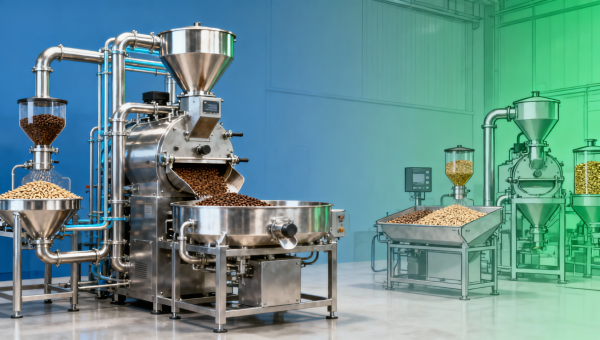
As water scarcity reshapes industrial food and beverage operations, coffee processing machinery that reduces water use without compromising cup quality is becoming a strategic investment. For buyers comparing broader processing assets—from cocoa bean roaster commercial systems and seed oil expeller wholesale options to wheat flour milling plant, commercial flour mill machinery, and parboiled rice mill plant solutions—efficiency, compliance, and product integrity now define purchasing decisions.
In coffee processing, water is no longer just a utility cost. It is a sourcing risk, a sustainability metric, a wastewater liability, and, increasingly, a procurement variable that affects financing approval and market access. For exporters, roasters, mill operators, and engineering teams, the question is not whether to reduce water use, but how to do so without flattening flavor, increasing defects, or creating maintenance burdens upstream and downstream.
This matters across the wider primary processing sector covered by AgriChem Chronicle. The same buyers who evaluate coffee wet mills often assess grain cleaning systems, oilseed pressing lines, and thermal processing assets under similar criteria: throughput, hygiene control, environmental load, energy efficiency, spare parts access, and verifiable product quality. In that context, coffee processing machinery must be judged as part of an integrated industrial decision, not a standalone farm tool.
Why water-saving coffee processing equipment is moving from niche to mainstream
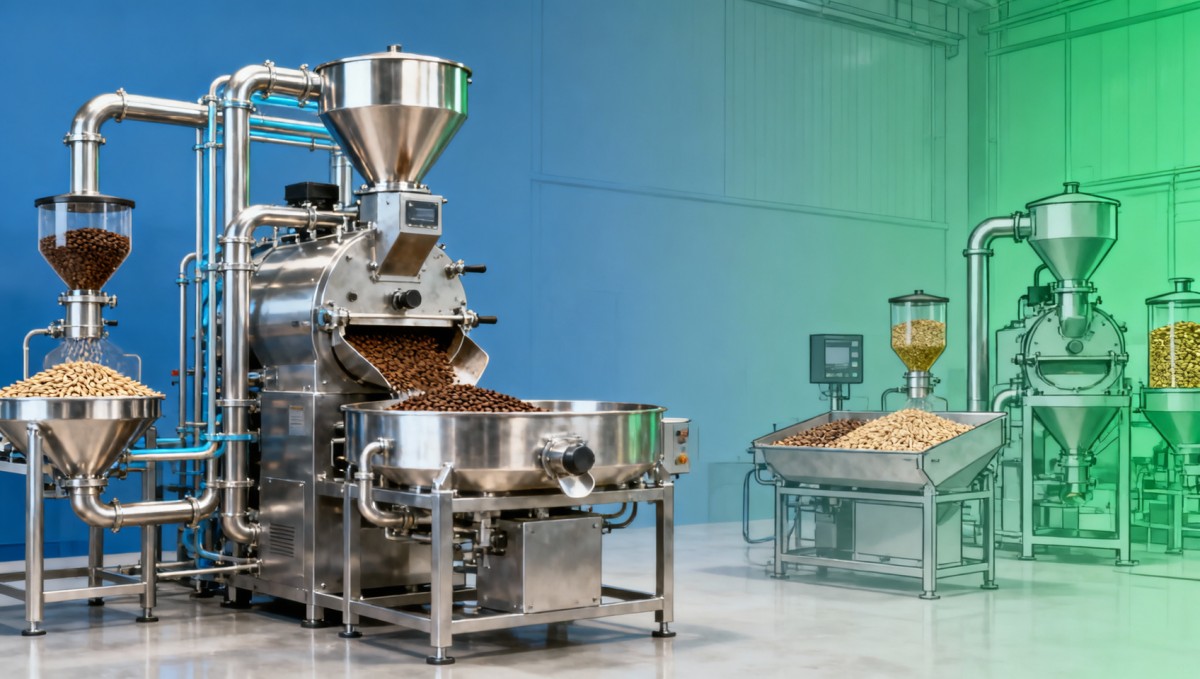
Traditional wet coffee processing can consume substantial volumes of water during pulping, mucilage removal, density separation, washing, and channel transport. Depending on process design, maintenance condition, and cherry quality, water demand may range from roughly 1 to 10 liters per kilogram of cherry processed. That spread is too wide for modern facilities operating under tighter water permits, higher discharge costs, or seasonal supply uncertainty.
The commercial pressure is not only environmental. Poorly managed water circuits raise chemical oxygen demand in effluent, increase sludge handling, and create microbial risks that can affect fermentation consistency. Even a well-run plant can lose margin if it relies on single-pass washing, oversized pumps, or poorly calibrated demucilaging equipment. In procurement reviews, water intensity is now often examined alongside yield loss, labor hours, and cup score retention.
For operators and technical evaluators, the goal is a balanced process window. Excessive water reduction can trap residues, elevate defect risk, or destabilize fermentation. Effective low-water coffee processing machinery therefore focuses on controlled application, recirculation where appropriate, solids separation, and measurable process repeatability. Plants targeting specialty quality often accept a narrower operating range, while commercial volume facilities may prioritize robust handling across variable cherry inputs.
From a capital planning perspective, the shift mirrors trends in other primary industries. A wheat flour milling plant is expected to minimize dust and product loss; a seed oil expeller line must optimize oil recovery and cake consistency; a parboiled rice mill plant is judged on water, steam, and breakage control. Coffee machinery is now evaluated under the same industrial lens: lower resource intensity with no unacceptable trade-off in final product quality.
Key drivers behind adoption
- Seasonal water stress in producing regions, especially during harvest peaks lasting 6 to 12 weeks.
- Higher wastewater treatment costs where local discharge thresholds are tightening.
- Buyer pressure for traceable sustainability metrics in export contracts and supplier audits.
- Improved machine design that reduces wash water while preserving uniform mucilage removal.
Typical operational priorities
Most serious buyers rank four priorities at the same time: liters of water per kilogram, throughput stability, ease of cleaning, and impact on cup quality. If any one of these breaks down, the machine may look efficient on paper but underperform in a real plant environment with fluctuating cherry maturity, variable mucilage load, and uneven operator skill.
What technologies actually reduce water use without damaging cup profile
The most effective systems do not simply “use less water.” They redesign where water enters the process and what tasks it must perform. Low-water pulpers with controlled feed, mechanical demucilagers, closed-loop channel systems, and compact washing modules are the main equipment categories now considered by exporters and processors upgrading medium- to large-scale operations.
Mechanical demucilaging is central in many low-water configurations. Instead of prolonged washing, the machine removes much of the mucilage through friction and calibrated pressure, often reducing fresh water demand significantly compared with conventional fermentation-and-wash setups. However, success depends on drum speed, clearance settings, bean hardness, and cherry maturity distribution. Poor calibration can increase parchment damage or create uneven residue levels.
Recirculation systems can further cut total water intake, but they require disciplined solids management. Screens, settling tanks, and staged filtration help prevent abrasive particles and organic load from degrading machine performance. In practice, processors often divide water into at least 2 or 3 quality tiers: fresh water for final rinse or sensitive contact points, reused water for conveying, and separated streams for treatment or controlled disposal.
Sensor-based monitoring is also becoming more relevant. Flow meters, conductivity checks, and timed wash cycles give operators a way to avoid overuse caused by manual habits. On plants processing 1 to 5 tons per hour, even small reductions in wash duration can save meaningful daily volume, especially across a 60- to 90-day harvest campaign.
Comparing common low-water processing approaches
The table below summarizes typical machinery approaches used to reduce water demand while maintaining acceptable bean handling and flavor outcomes. Actual performance varies by cherry quality, altitude, process style, and maintenance discipline, so these figures should be treated as evaluation ranges rather than fixed guarantees.
The main takeaway is that low water use alone does not define processing success. Machinery must match the plant’s desired profile, labor capability, cleaning protocol, and downstream drying capacity. A system that saves 50% water but increases rework or cup inconsistency may weaken total plant economics rather than improve them.
Technical points that deserve closer scrutiny
- Feed-rate stability at rated capacity, especially above 1.5 tons per hour.
- Adjustability of demucilager pressure, clearances, and rotational speed.
- Clean-out time per batch or per shift, ideally within 20 to 40 minutes for key contact areas.
- Compatibility with solids separation and wastewater handling already installed on site.
How buyers should evaluate machinery: quality, compliance, and total cost of ownership
Procurement teams should avoid evaluating coffee processing machinery on upfront price alone. Water-saving systems often change operating economics across labor, cleaning chemicals, wastewater treatment, downtime, and reject rates. A machine that costs more initially may still shorten payback if it reduces fresh-water intake, lowers sludge load, and keeps cup results within the target profile over multiple harvest cycles.
Technical evaluators should request verifiable performance data under realistic conditions. That includes feedstock assumptions, moisture range, cherry maturity distribution, throughput at steady load, and cleaning intervals. If a supplier only presents idealized figures from controlled trials, the buyer should ask what happens at 80% ripe cherry mix, variable foreign matter levels, or ambient temperatures above 30°C.
For quality control and safety teams, hygienic design matters as much as water savings. Contact surfaces, drainage geometry, and access points influence microbial control and cleaning effectiveness. If recirculated water is part of the design, the process should clearly define where fresh water is mandatory and where reclaimed water is acceptable. Ambiguity at this stage often creates compliance gaps later.
Finance approvers and enterprise decision-makers generally want a simple answer to a complex issue: What is the risk-adjusted return? A practical framework is to model the machinery over 3 to 5 years using six metrics: capital cost, water savings, wastewater cost reduction, maintenance labor, product loss, and quality premium protection. This aligns technical and financial discussions far better than headline equipment pricing.
A practical procurement checklist
The following matrix helps cross-functional teams compare options in a structured way. It is especially useful where operators, QA managers, distributors, and financial controllers need a shared basis for approval.
This comparison framework also applies to adjacent processing investments. Whether a buyer is considering commercial flour mill machinery or a cocoa bean roaster commercial package, the same discipline holds: verify process assumptions, utility demand, product integrity, and service readiness before signing procurement documents.
Recommended approval sequence
- Define baseline water use, defect rate, and throughput over at least 2 representative weeks.
- Screen machine concepts by process type: wet, low-water wet, hybrid, or minimal-wash.
- Run technical review of utilities, wastewater, and cleaning procedures.
- Evaluate payback under low, medium, and peak harvest volumes.
- Approve only after trial evidence and spare-parts commitments are documented.
Implementation, operator training, and maintenance: where savings are won or lost
Even the best coffee processing machinery underperforms when installation and training are treated as minor details. Water-efficient systems are more sensitive to setup quality because they depend on controlled flow, balanced feed, and disciplined cleaning. If channel slope, drain separation, and pump sizing are not aligned with the machine design, operators often compensate by adding water manually, erasing the intended savings.
Commissioning should include a staged startup rather than a single acceptance run. In practical terms, this means a dry mechanical check, a water-circuit test, and then a product trial under normal plant loads. A 3-step acceptance process helps teams verify leaks, solids carryover, and operator visibility before peak harvest pressure arrives. For larger facilities, this process commonly takes 2 to 5 days depending on integration complexity.
Operator training is not just about buttons and safety guards. Staff need to understand why water is used at specific points, what “too little” and “too much” look like, and how machine settings affect cup quality. A common failure pattern is that a new low-water machine runs well for the first week, then drifts out of specification because settings are changed informally between shifts. Standard work instructions and daily checks prevent that drift.
Maintenance planning should focus on wear surfaces, seals, screens, and residue-prone zones. High-mucilage contact areas can accumulate build-up fast, especially in warm climates. Weekly deep cleaning during harvest, plus daily inspection of critical points, is often more cost-effective than waiting for performance decline. In many plants, 15 to 30 minutes of end-of-shift sanitation protects both water efficiency and cup consistency.
Common implementation mistakes
- Using recirculated water without adequate solids separation or freshness control.
- Oversizing equipment for nominal peak loads that occur only a few days per season.
- Skipping operator calibration training for demucilager pressure and feed settings.
- Failing to stock wear parts before a 60- to 90-day harvest window begins.
Support expectations buyers should confirm
Before purchase, ask for a clear support scope: remote response time, commissioning support, recommended spare package, and preventive maintenance intervals. For distributors and industrial users alike, a realistic service plan matters more than broad marketing promises. In B2B processing environments, even 24 to 48 hours of downtime during peak intake can offset a large share of annual efficiency gains.
Frequently asked questions from processors, buyers, and technical reviewers
The market for water-saving coffee processing machinery is growing, but many purchase decisions still stall over a few recurring questions. These are not academic concerns; they affect specification accuracy, budget sign-off, and operating confidence in real facilities.
How much water reduction is realistic without hurting cup quality?
A realistic target depends on the starting point. Plants with inefficient open washing may cut water use sharply after moving to a pulper-demucilager configuration with better flow control. Facilities that are already optimized may see more modest gains. The right benchmark is not the lowest theoretical figure, but stable water use at full operating load with no unacceptable rise in defects, parchment damage, or cleaning failures.
Are low-water systems suitable for specialty coffee?
Yes, but only when process control is disciplined. Specialty-oriented processors should test machinery across at least 2 or 3 lot conditions, including different ripeness levels and mucilage loads. The machine must support repeatable settings, easy sanitation, and clear separation of water grades. If those controls are weak, the quality risk rises even if nominal water savings look attractive.
What delivery and installation timeline should buyers expect?
For standard industrial equipment, lead times commonly range from 6 to 16 weeks depending on fabrication load, electrical specification, and shipping route. Site preparation may require another 1 to 3 weeks if drainage, pads, or utility connections need modification. Buyers should align order timing with harvest calendars; a machine arriving after the intake peak may delay measurable returns by an entire season.
Which metrics matter most in a final purchase review?
Focus on five metrics: water per kilogram processed, throughput at stable load, product loss or damage, cleaning time, and serviceability. If possible, tie each metric to a financial effect over 3 to 5 years. That approach gives procurement managers, plant operators, and finance teams a common language for making a defensible decision.
For industrial coffee processors and buyers evaluating broader agricultural and primary processing assets, the strongest investments are the ones that reduce resource strain while preserving product integrity. Water-saving coffee processing machinery delivers value when it is selected with the same rigor applied to commercial flour mill machinery, seed oil expeller wholesale lines, or a parboiled rice mill plant: process fit, measurable performance, maintainability, and operational transparency.
If your team is assessing new processing equipment, upgrading a legacy wet mill, or comparing technologies across multiple commodity lines, a structured technical review can reduce procurement risk and improve long-term return. Contact us to discuss your processing objectives, request a tailored equipment evaluation framework, or explore more solutions for efficient, compliance-ready primary processing operations.
Related Intelligence
- Milling MachinerySABIC Cuts PP-Homo Price by 12%: Impact on Milling Machinery Export PartsSABIC cuts PP-Homo price by 12% — key impact on milling machinery export parts, feed pellet mill housings & protective covers. Cost relief for Chinese OEMs & suppliers.
- Milling MachineryWheat flour milling plant planning starts with more than output targetsWheat flour milling plant planning goes beyond output targets. Compare commercial flour mill machinery, coffee processing machinery, and parboiled rice mill plant solutions for smarter layout, cost, and growth.
- Milling MachineryHow to compare cocoa bean roaster commercial models by batch sizeCompare cocoa bean roaster commercial models by batch size, throughput, and cost, with insights for coffee processing machinery and food processing lines. Click for smart buying tips.
The Morning Broadsheet
Daily chemical briefings, market shifts, and peer-reviewed summaries delivered to your terminal.
