
Seed oil expeller wholesale pricing often hides maintenance costs
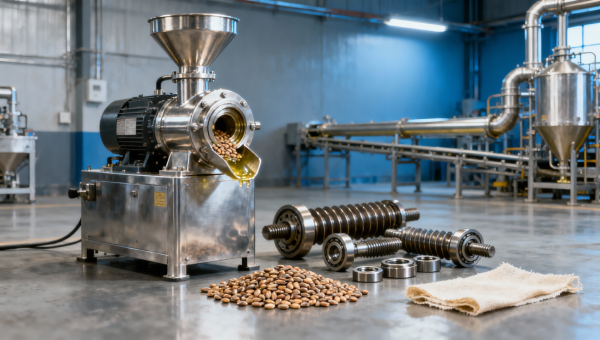
Seed oil expeller wholesale quotes can look attractive, yet hidden maintenance, downtime, and parts replacement often reshape the real cost of ownership. For buyers comparing a sunflower oil press machine, cold press oil machine commercial models, or even adjacent coffee processing machinery and commercial flour mill machinery, understanding lifecycle expenses is essential. This article helps procurement teams, operators, and technical evaluators identify where pricing gaps emerge and how to assess long-term value with greater confidence.
In industrial procurement, the lowest ex-works figure rarely tells the full story. A seed oil expeller may operate 8–16 hours per day, process several tons of raw material per shift, and run in environments where dust, heat, and variable feed quality accelerate wear. Under those conditions, maintenance discipline and spare parts planning can influence annual operating cost more than the initial discount shown on a wholesale quotation.
This matters not only to edible oil processors, but also to distributors, plant engineers, finance approvers, safety supervisors, and OEM sourcing teams working across primary processing equipment. Similar cost patterns appear in commercial flour mill machinery, coffee processing machinery, and other continuous-operation systems where bearings, motors, gearboxes, filters, and operator error can affect uptime.
For B2B buyers, a realistic comparison should include service intervals, consumables, expected downtime, utility load, training requirements, and supplier responsiveness within the first 12–36 months. When these elements are missing, the apparent wholesale advantage can disappear quickly after commissioning.
Why seed oil expeller wholesale prices often understate real ownership cost
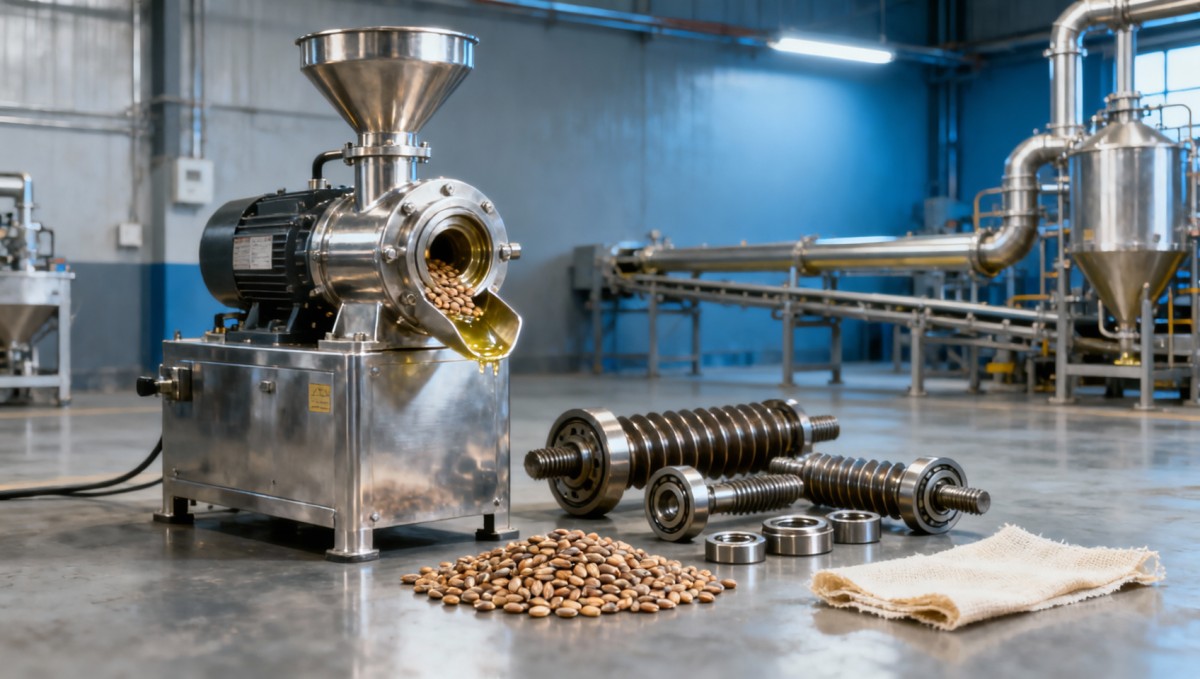
A seed oil expeller wholesale quotation commonly focuses on machine frame, motor configuration, nominal throughput, and shipping terms. What it may not fully itemize are wear components such as press worms, cages, bearings, shaft seals, heaters, filter cloths, and gearbox oil. In many plants, these items begin affecting cost within the first 3–6 months of use, especially when seed moisture, feed cleanliness, or operator setup is inconsistent.
The issue becomes more visible when buyers compare a sunflower oil press machine with a cold press oil machine commercial unit. Cold press systems may reduce heat exposure, but they can still demand frequent cleaning, careful feed control, and replacement of pressing elements if operated beyond recommended load. A machine offered at 8%–15% lower purchase price may create 20%–30% higher maintenance spend over a two-year period if critical parts are non-standard or difficult to source.
Another gap comes from installation assumptions. Some suppliers quote the expeller body only, while practical commissioning also requires foundations, electrical protection, dust handling, seed conditioning, pre-cleaning, and trained operators. If a line needs an extra 5–20 kW in auxiliary power or 2–4 days of onsite adjustment, the real project cost shifts significantly beyond the wholesale headline.
For finance and procurement teams, the better question is not “What is the unit price?” but “What is the cost per operating hour, per ton processed, and per month of uptime?” Once cost is measured across 1,000–3,000 operating hours, hidden maintenance becomes easier to compare across competing offers.
The most common cost categories left outside basic quotations
Below is a practical breakdown used by many technical evaluators when reviewing processing machinery offers. It helps identify where a low quote may transfer cost into operations after delivery.
The key takeaway is simple: a quotation can be technically accurate and still commercially incomplete. Buyers who request a 12-month maintenance list and a recommended spare parts package before placing an order usually get a more reliable picture of total cost.
Practical warning signs during quote review
- Only nominal capacity is stated, without feed condition assumptions such as moisture, impurity level, or preheating range.
- Wear parts are described as “standard” but no service life estimate is provided in operating hours.
- No clear lead time is given for replacement worms, cages, bearings, or electrical components.
- Power consumption is shown for the main drive only, excluding feeders, heaters, and filtration accessories.
Maintenance variables that change the economics of oil press equipment
Maintenance cost is not just a service issue; it is a throughput issue, a labor issue, and a quality issue. In a commercial oil pressing environment, unplanned downtime of even 4–6 hours can interrupt feedstock scheduling, labor allocation, and shipment timing. If seeds have already been cleaned, conditioned, or staged for production, stoppages may also affect material quality and housekeeping requirements.
Wear rate depends heavily on operating discipline. A sunflower oil press machine handling clean, properly conditioned seed may deliver stable performance for longer intervals than the same machine processing abrasive or poorly screened feed. In practice, technical teams often track inspection cycles every 250–500 hours and plan major wear review every 1,000–1,500 hours, although the exact interval depends on raw material, pressure settings, and production intensity.
For a cold press oil machine commercial setup, temperature control and throughput balance are especially important. Running below target feed rate can reduce efficiency, while overloading can increase friction and shorten component life. The result is not just replacement cost, but inconsistency in oil yield and cake condition, both of which matter to processors monitoring recovery and downstream value.
Many buyers underestimate cleaning time. In smaller operations this may be 30–60 minutes per shift, but in larger multi-seed plants it can extend to 1–2 hours when cross-product contamination controls or hygiene standards are stricter. Labor and sanitation routines therefore belong in any real ownership-cost calculation.
Components that deserve early scrutiny
When comparing suppliers, request details for the items below rather than relying on generic maintenance claims.
- Press screw or worm material, hardening method, and typical replacement interval.
- Cage bar wear tolerance and whether the geometry is standardized or supplier-specific.
- Bearing brand, lubrication interval, and sealing arrangement for dusty conditions.
- Gearbox service schedule, oil grade, and acceptable operating temperature range.
- Availability of local technicians or remote troubleshooting within 24–72 hours.
Typical maintenance impact areas
The table below shows how maintenance variables influence operating economics in practical procurement reviews across oil pressing and adjacent processing machinery segments.
A disciplined buyer uses this information to convert maintenance into measurable commercial risk. That approach helps technical and financial teams speak the same language when deciding between two similar-looking expeller offers.
How to compare seed oil expeller offers using total cost of ownership
A robust comparison framework should cover at least five dimensions: purchase price, operating cost, maintenance cost, downtime risk, and support capability. This is especially useful when a procurement team is comparing not only oil press equipment but also coffee processing machinery and commercial flour mill machinery, where the initial machine quote often excludes several lifecycle cost drivers.
Start with a 12–24 month cost model. Include main machine price, freight, installation, auxiliary utilities, planned spare parts, routine labor, and expected downtime cost. Even if some values are estimates, the model exposes where a low seed oil expeller wholesale quote may be financially weaker than a higher but better-supported alternative.
It is also important to normalize capacity claims. One supplier may quote output at optimal seed moisture and continuous feeding, while another may quote a theoretical maximum. Ask for throughput ranges instead of a single number, such as 80–120 kg/h, 300–500 kg/h, or 1–3 t/h depending on material condition and process configuration. This gives a more realistic basis for cost-per-ton calculations.
For enterprise decision-makers, supplier support should be weighted almost as heavily as machine specification. A distributor or OEM partner that can deliver critical spare parts in 7–10 days may save more value over 2 years than a one-time purchase discount of 5%.
A practical comparison framework for procurement teams
The matrix below can be adapted for RFQ evaluation across oil pressing and related primary processing equipment categories.
When this framework is applied consistently, the procurement discussion shifts from “Which quote is cheaper?” to “Which line will perform more predictably over 24 months?” That is usually the more profitable question.
Minimum checklist before approving a purchase
- Confirm whether the quote includes startup spare parts for at least the first 6 months.
- Request maintenance intervals in hours, not only generic monthly guidance.
- Ask which parts are interchangeable with standard market components and which are proprietary.
- Clarify warranty scope for motors, bearings, electrical panels, and wear components separately.
- Validate operator training duration, such as 1 day remote, 2 days onsite, or longer for integrated lines.
Implementation, service planning, and risk control after purchase
Even the best commercial evaluation can lose value if post-purchase execution is weak. Once a seed oil expeller arrives, the first 30–90 days are critical. This is when alignment issues, feed inconsistency, operator habits, and lubrication discipline begin to shape long-term maintenance behavior. Plants that formalize startup procedures usually reduce avoidable stoppages earlier than those that rely on ad hoc adjustments.
A practical commissioning plan should include raw material testing, utility verification, baseline ampere and temperature readings, trial-run logging, and a spare parts register. For example, recording motor current, bearing temperature, and hourly output for the first 7–14 days creates a reference point for future troubleshooting. This simple step helps quality, maintenance, and production teams detect drift before it becomes a shutdown event.
Service planning is equally important for distributors and agents. If a reseller promotes a sunflower oil press machine or cold press oil machine commercial system without after-sales structure, customer dissatisfaction often appears during the first replacement cycle. Clear service channels, local technician access, and documented troubleshooting procedures are therefore commercial assets, not just operational details.
Risk control should also cover safety and compliance. Rotating components, heated surfaces, electrical loads, and oil residue require routine inspection. Safety managers should verify guards, lockout procedures, cleaning methods, and housekeeping frequency, especially in plants running multiple lines for oil, grain, or coffee processing.
Recommended post-purchase operating sequence
- Inspect installation integrity, power quality, and mechanical fastening before first startup.
- Run a controlled trial for 4–8 hours with logged readings for load, temperature, and output.
- Train operators on shutdown, cleaning, lubrication, and abnormal noise recognition.
- Stock critical spare parts for at least one planned maintenance cycle.
- Review performance after 30 days and adjust maintenance frequency based on actual wear.
FAQ for buyers and technical evaluators
How can buyers tell if a wholesale quote is too narrow?
If the quote lists only machine price, motor power, and nominal output, it is usually too narrow for final approval. Ask for at least 6 items: wear parts list, maintenance intervals, utility demand, training scope, parts lead time, and warranty exclusions. Without those details, the commercial picture is incomplete.
What maintenance horizon should finance teams review?
A 12-month estimate is the minimum, but 24–36 months gives a better picture for medium-duty and continuous-duty applications. This longer window captures multiple replacement cycles and exposes whether parts availability or downtime risk will erode the initial price advantage.
Are these evaluation methods relevant beyond oil processing?
Yes. The same logic applies to commercial flour mill machinery, coffee processing machinery, and other primary processing systems where uptime, cleaning, wear, and service access determine commercial performance. The equipment differs, but the ownership-cost discipline is similar.
Seed oil expeller wholesale pricing should be treated as the opening number in a longer calculation, not the final answer. The most dependable buying decisions come from comparing machine cost with maintenance intervals, spare parts strategy, utility demand, downtime exposure, and supplier support over at least 12–24 months.
For procurement teams, operators, technical reviewers, and financial approvers, this lifecycle view reduces unpleasant surprises and improves confidence in supplier selection. If you are assessing a sunflower oil press machine, a cold press oil machine commercial unit, or adjacent processing equipment, a structured cost review will protect both budget and uptime.
To evaluate your options more effectively, consult a detailed maintenance schedule, request a spare-parts forecast, and compare support responsiveness before finalizing the order. To explore more industry intelligence or discuss a tailored evaluation framework, contact us today for deeper guidance and solution-oriented support.
Related Intelligence
- Heavy Agri MachineryIndia Extends Anti-Dumping Review on Chinese Tractors, SeedersIndia extends anti-dumping review on Chinese tractors and seeders—impacting exporters, OEMs, and agri-supply chains. Act now to navigate tariffs, compliance, and sourcing shifts.
- Heavy Agri MachineryCassava grating machines and the hidden cause of uneven particle sizeCassava grating machines uneven particle size often stems from feed, moisture, and screen issues—not one part. Learn how this buying insight also applies to coffee processing machinery and wheat flour milling plant selection.
- Heavy Agri MachinerySmall palm oil extraction machine or full line for daily throughput?Palm oil extraction machine guide: compare small units vs full lines by throughput, ROI, and quality. Also explore cold press oil machine commercial and seed oil expeller wholesale options.
The Morning Broadsheet
Daily chemical briefings, market shifts, and peer-reviewed summaries delivered to your terminal.
