
Small palm oil extraction machine or full line for daily throughput?
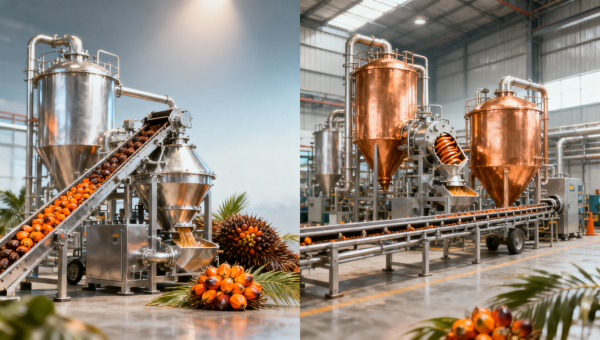
Choosing between a small palm oil extraction machine and a full processing line depends on daily throughput, labor, budget, and quality targets. For buyers comparing a palm oil extraction machine with options like a cold press oil machine commercial setup or seed oil expeller wholesale solutions, the right decision affects efficiency, oil yield, compliance, and long-term ROI across modern agro-processing operations.
For research teams, plant operators, technical evaluators, procurement managers, and financial approvers, the core question is not simply machine size. It is whether the selected configuration matches feedstock volume, local labor costs, utility stability, product quality expectations, and future expansion plans over the next 3–5 years.
In palm oil processing, underbuying can create bottlenecks, inconsistent oil recovery, and rising unit costs. Overbuying can lock capital into underutilized assets, increase maintenance burden, and complicate plant management. The right choice starts with throughput analysis, then moves into process design, oil clarification, hygiene control, and service support.
This guide examines when a small palm oil extraction machine is the practical answer, when a full line becomes economically justified, and which technical and commercial checkpoints should shape a defensible purchasing decision in today’s agro-processing market.
Understanding the Two Main Processing Paths
A small palm oil extraction machine is typically designed for lower daily throughput, often in the range of 0.5–3 tons of fresh fruit bunch equivalent input per day, depending on preprocessing conditions. It usually focuses on core extraction functions and may combine sterilizing, digesting, pressing, or filtering in a simplified format. This setup is widely used by small mills, pilot operations, estate-linked processors, and regional entrepreneurs entering value-added oil production.
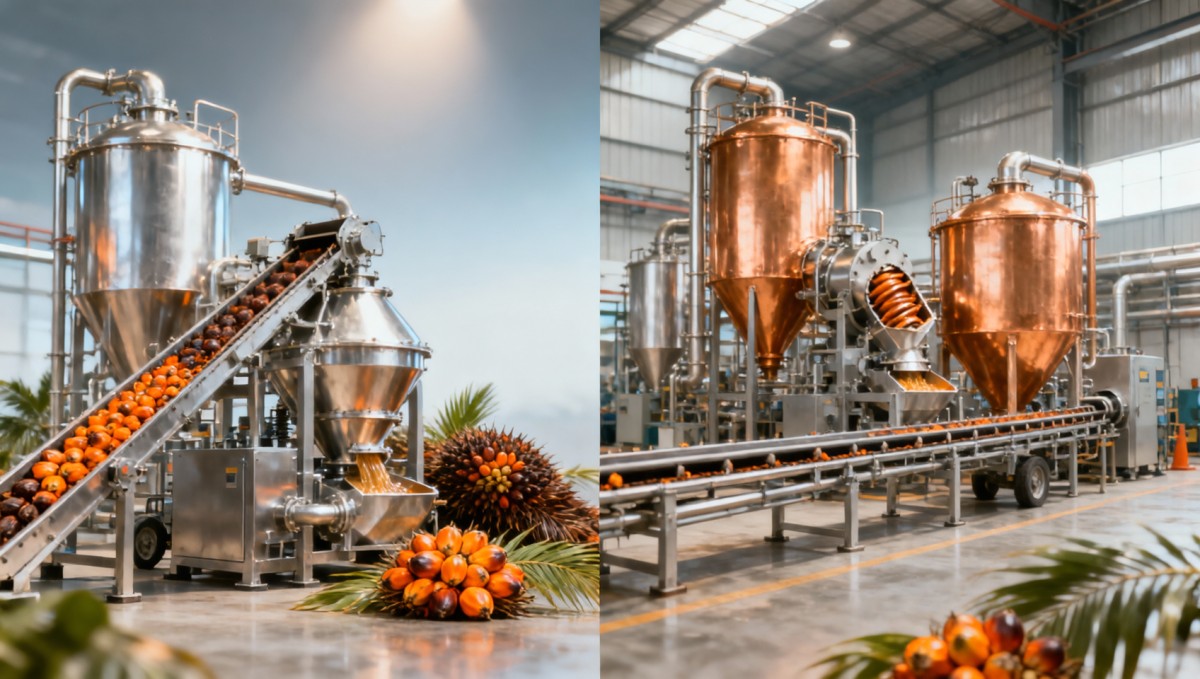
A full processing line is a more integrated system. It generally includes fruit reception, sterilization, threshing, digestion, pressing, crude oil clarification, fiber and nut separation, kernel recovery, wastewater management, and in some cases storage and filling. Daily capacity may begin around 5 tons and scale upward to 30 tons, 60 tons, or more, depending on plant design and utility infrastructure.
The commercial difference is significant. A small palm oil extraction machine can reduce entry barriers, shorten installation time to roughly 15–30 days, and lower staffing requirements. A full line, however, can improve production continuity, process consistency, and oil handling discipline, especially where raw material supply is stable across 200–300 operating days per year.
Buyers often compare palm systems with a cold press oil machine commercial package or seed oil expeller wholesale alternatives. That comparison can be useful for understanding press mechanics and output economics, but palm fruit behaves differently from sunflower seed, soybean, or groundnut. Palm processing requires stronger attention to fruit freshness, thermal treatment, sludge separation, and the timing between harvest and extraction, often within 24–48 hours for quality protection.
What a small unit usually includes
In most practical configurations, a compact system may include 4–6 key components: fruit cooker or sterilizer, digester, screw press, crude oil settling tank, filter, and basic pump transfer. Some models combine multiple functions to save footprint, which may be useful where the plant area is below 150–300 square meters.
Typical use cases
- Community-level processing centers with seasonal harvest peaks
- New investors testing local feedstock security before expanding
- Estate operations seeking partial in-house processing instead of raw fruit disposal
- Distributors needing an entry-level palm oil extraction machine for emerging markets
The table below outlines the operational contrast between a small palm oil extraction machine and a full line, using common industry ranges rather than brand-specific claims.
The key takeaway is simple: compact machines are attractive when procurement speed and lower capital exposure matter most, while full lines are preferable when throughput consistency, process control, and long-run economics outweigh the higher initial investment.
How Daily Throughput Changes the Decision
Daily throughput is the first filter in any equipment selection exercise. If a facility expects less than 1 ton per day on most working days, a small palm oil extraction machine often delivers better asset utilization. If the realistic throughput is 5 tons per day or higher for at least 8–10 months annually, a full line usually deserves closer attention because manual handling and stop-start operation become increasingly costly.
Many projects fail because buyers size equipment based on harvest peaks rather than average stable volume. A plant receiving 6 tons on peak days but only 1.5 tons on regular days may not justify a larger line unless storage, fruit collection, and processing schedules are coordinated. Palm fruit quality degrades quickly, so oversizing capacity without guaranteed feedstock can lead to poor utilization and uneven operating costs.
Throughput also affects utility planning. Smaller systems may operate with simpler steam or electric heating arrangements and power demand in a lower range, sometimes around 5–20 kW for key components depending on configuration. Full lines may require more robust steam generation, multiple motors, water circulation, and sludge management systems. That difference directly impacts site readiness, power backup strategy, and monthly operating overhead.
For finance teams, throughput must be tied to unit economics. A compact plant may show a lower capex burden, but the cost per ton can rise if labor intensity, downtime, and oil losses remain high. Conversely, a larger line can improve per-ton processing economics only if utilization stays strong enough to absorb depreciation, maintenance, and staffing.
A practical throughput checklist
- Calculate average daily feedstock over at least 90 harvest days, not just peak harvest week.
- Estimate how much fruit can be processed within 24 hours of arrival to protect oil quality.
- Confirm whether the site can support 1 shift, 2 shifts, or seasonal overtime.
- Measure expected downtime for cleaning, press adjustment, and maintenance every 7–14 days.
- Check whether future expansion within 12–24 months is likely.
The following table helps connect throughput levels with a more suitable machine architecture and business context.
This comparison shows why daily volume should be verified early. It shapes not only the palm oil extraction machine selection, but also civil layout, labor planning, maintenance frequency, and the commercial viability of adding clarification and downstream finishing equipment.
Key Technical Factors Beyond Capacity
Capacity alone does not determine performance. Buyers should also evaluate oil recovery efficiency, fruit handling discipline, clarification quality, and the reliability of wear components. A lower-cost machine may appear attractive in quotation form, but if screw wear is rapid, filtration is weak, or sludge separation is unstable, the total cost of ownership can rise sharply within the first 6–12 months.
For operators and quality teams, temperature control matters. Palm fruit generally needs adequate heat treatment before pressing to soften pulp and improve oil release. Poor sterilization or inconsistent digestion can reduce oil yield and increase impurities. In compact systems, this often depends on operator skill. In a full line, process sequencing is usually more stable, though it requires better commissioning and control discipline.
Maintenance access is another overlooked factor. In field conditions, replacing wear parts in less than 2–4 hours can mean the difference between a manageable stoppage and a full day of lost production. Procurement teams should ask whether critical spare parts are standard, how often press cages or screws may need inspection, and whether local technicians can support preventive maintenance every 250–500 operating hours.
Compliance and safety are equally relevant. Even when local regulations are less formalized, industrial buyers increasingly expect guarded transmission parts, cleaner oil contact surfaces, manageable wastewater practices, and documented operating procedures. These points matter to distributors, investors, and institutional buyers reviewing whether a processing line is scalable and defensible.
Technical checkpoints before purchase
- Confirm the expected crude oil clarity level after first-stage separation and whether secondary clarification is required.
- Check the material grade of oil-contact parts and the ease of cleaning after each production cycle.
- Review spare parts lists for screw press components, bearings, seals, and filters.
- Verify whether the system supports modular expansion from basic extraction to clarification and storage.
- Ask for realistic utility consumption ranges for power, water, and thermal input.
Common buyer mistake
One frequent mistake is comparing a palm oil extraction machine directly against a cold press oil machine commercial design used for dry seeds. Palm fruit is wetter, bulkier, and more time-sensitive. Another mistake is treating seed oil expeller wholesale listings as equivalent offers. Expeller logic may overlap, but palm processing requires more careful upstream handling and downstream clarification than many seed-based oil routes.
When technical assessment is done properly, machine selection becomes less about advertised size and more about process stability, uptime, sanitation, and the quality of the final crude oil stream delivered to storage or further refining.
Procurement, Budget Control, and ROI Planning
Procurement decisions in agro-processing rarely depend on equipment price alone. Financial approvers need to understand total acquisition cost, installation cost, training needs, spare parts exposure, and the payback logic tied to forecasted throughput. A smaller palm oil extraction machine often wins on faster approval cycles because civil works, utility upgrades, and commissioning complexity are limited. That can be a strong advantage for first-stage projects or decentralized processing models.
However, the lower initial price does not automatically mean a better investment. If a compact machine causes oil losses of even a few percentage points due to unstable digestion or weak clarification, the economic impact accumulates quickly. Over 12 months, recurring losses in yield, higher labor per ton, and unscheduled stoppages can offset the early capex savings. This is why ROI should be modeled across 2–5 years, not judged only at purchase order stage.
For enterprise buyers and distributors, vendor support is another financial variable. Lead time for delivery may range from 20–45 days for a simple unit and 45–90 days for a more complete line, depending on scope and localization requirements. If spare parts take 3–6 weeks to arrive after breakdown, inventory planning becomes part of the investment decision. Downtime risk should be costed, not treated as an afterthought.
A strong procurement review should combine technical, commercial, and operational criteria. It should also distinguish between current needs and phase-two expansion, especially where the business aims to move from local oil sales toward branded packaging, bulk trade, or supply to industrial users.
Procurement evaluation matrix
The matrix below helps buyers compare options using operationally meaningful criteria rather than headline price alone.
A disciplined procurement process tends to reveal whether a small machine is a tactical entry solution or whether a full line is the more economical strategic choice. In many cases, the winning option is not the cheapest quotation, but the one with the best fit between feedstock security, process design, and support capability.
Implementation, Risk Control, and Scale-Up Strategy
Once the machine type is selected, project success depends on implementation discipline. Installation should begin with a site audit covering floor layout, drainage, raw material flow, utility access, and safe operator movement. Even a small palm oil extraction machine benefits from proper zoning between fruit intake, hot processing, crude oil collection, and waste handling. In compact plants, poor layout can reduce actual productivity by 10–20% through avoidable handling delays.
Commissioning should include at least 3 stages: dry run, water or no-load verification, and loaded production test. This is where operators learn feed rate control, heat management, and shutdown cleaning routines. For larger lines, startup instability often comes from coordination gaps between sterilization, pressing, and clarification rather than from the press itself. A 2–5 day commissioning window is common for simpler systems, while integrated lines may need longer depending on automation level.
Risk control should also cover waste streams and housekeeping. Palm processing generates fiber, nuts, sludge, and effluent. Smaller units may manage these manually, but larger lines require clearer handling pathways to avoid contamination, slipping hazards, and production interruptions. Quality and safety teams should define inspection points for lubrication, guarding, temperature checks, and oil-contact cleanliness on a daily and weekly basis.
For growing businesses, modularity matters. If current demand supports only a compact machine, buyers should still ask whether the layout allows later addition of clarification tanks, storage, kernel recovery, or improved filtration. This phased approach can reduce initial risk while preserving expansion flexibility over the next 12–36 months.
Recommended implementation steps
- Validate feedstock volume and freshness window before finalizing capacity.
- Confirm utilities, drainage, and floor load conditions at the site.
- Train operators on startup, shutdown, cleaning, and daily inspection points.
- Stock critical spares before first commercial run.
- Review actual throughput and oil recovery after the first 30 operating days.
FAQ for buyers and technical teams
How do I know if a small palm oil extraction machine is enough? If your verified average throughput is below 3 tons per day, labor is available, and expansion risk is still uncertain, a compact machine is often the sensible first step. It is especially practical where the project needs fast market entry or pilot-scale validation.
When does a full line become more economical? Usually when daily throughput stays above 5 tons, product quality consistency matters, and the business can support regular operation for most of the year. At that stage, better process integration can lower bottlenecks and improve long-term per-ton economics.
Can I compare palm processing with seed oil expeller wholesale offers? Only at a broad mechanical level. Palm fruit requires more integrated thermal and clarification control than many seed-based processes. Direct one-to-one comparison can lead to under-specification.
What should operators inspect daily? Feed uniformity, bearing heat, press sound, leakage, crude oil clarity, and cleaning status. A 15–20 minute daily checklist can prevent larger maintenance events and reduce unplanned downtime.
The most resilient investment strategy is usually the one that aligns machine size with real throughput, site readiness, operator capability, and the next expansion step. Whether the answer is a compact unit or a full line, execution quality determines whether projected ROI turns into actual plant performance.
Selecting between a small palm oil extraction machine and a full processing line is ultimately a decision about throughput realism, process control, labor structure, and capital discipline. Buyers who evaluate not just rated capacity but also oil recovery, maintenance access, utility demand, and scale-up potential are far more likely to build a profitable and durable operation.
For processors, distributors, and industrial decision-makers comparing a palm oil extraction machine with cold press oil machine commercial options or seed oil expeller wholesale solutions, the best outcome comes from matching equipment architecture to the specific palm processing scenario rather than buying on price alone.
If you are assessing a new project or upgrading an existing mill, now is the right time to review your daily throughput, utility conditions, quality targets, and expansion plan. Contact us to get a tailored solution, discuss technical details, and explore the most suitable processing path for your operation.
Related Intelligence
- Heavy Agri MachineryIndia Extends Anti-Dumping Review on Chinese Tractors, SeedersIndia extends anti-dumping review on Chinese tractors and seeders—impacting exporters, OEMs, and agri-supply chains. Act now to navigate tariffs, compliance, and sourcing shifts.
- Heavy Agri MachineryWhy some cassava grating machines waste more starch than expectedCassava grating machines can waste starch through poor design and maintenance. Compare key loss factors alongside coffee processing machinery, palm oil extraction machine, and wheat flour milling plant solutions.
- Heavy Agri MachineryCassava grating machines and the hidden cause of uneven particle sizeCassava grating machines uneven particle size often stems from feed, moisture, and screen issues—not one part. Learn how this buying insight also applies to coffee processing machinery and wheat flour milling plant selection.
The Morning Broadsheet
Daily chemical briefings, market shifts, and peer-reviewed summaries delivered to your terminal.
