
Why Agricultural Processing Bottlenecks Start After Installation
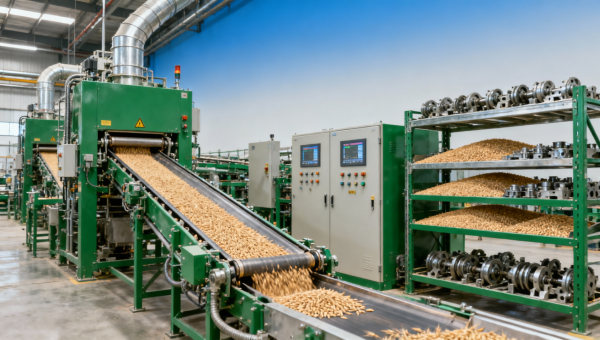
Across Agricultural Processing, the real bottlenecks often emerge after installation, when processing machinery must perform under variable loads, compliance demands, and fragmented supply chains. From Grain Storage and Feed Additives to Fine Chemicals, forestry equipment, Fishery Equipment, and Industrial Farming, delays are rarely caused by hardware alone. This article examines how Supply Chain Transparency, operator readiness, and Market Forecasting shape post-installation performance and long-term operational efficiency.
Why post-installation failures are usually operational, not mechanical
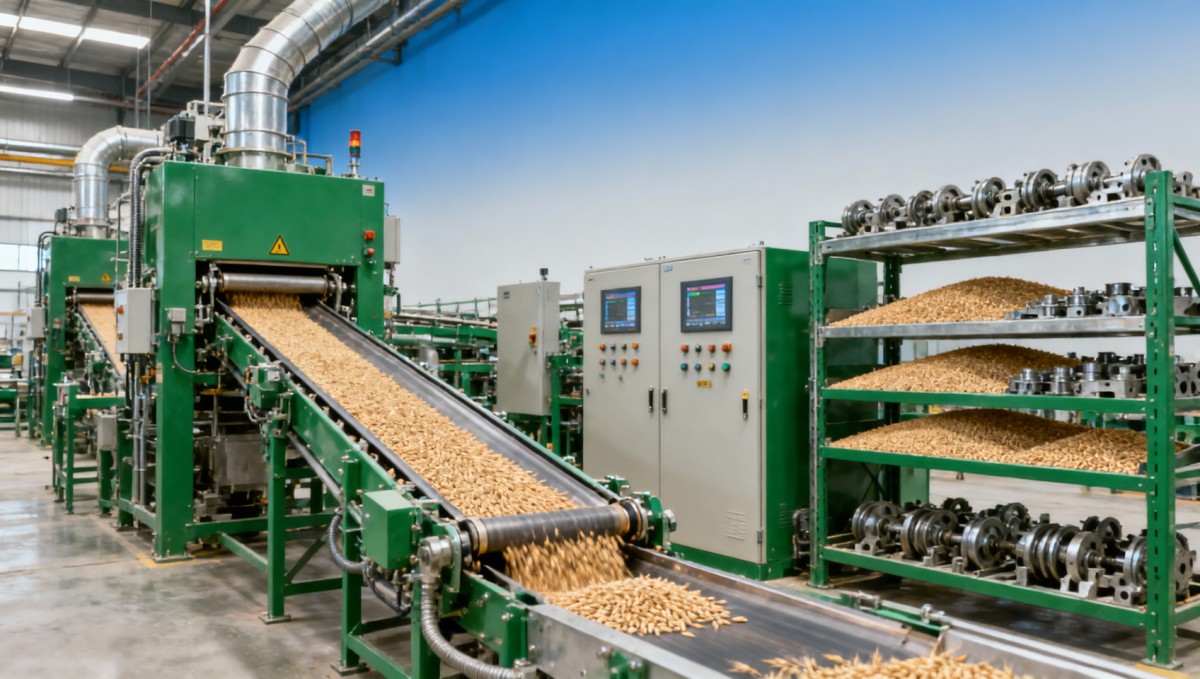
In primary processing environments, installation marks the end of procurement but not the start of stable output. A grain handling line, feed blending system, extraction skid, or fishery processing unit may pass commissioning in 7–14 days and still underperform for the next 3–6 months. The reason is simple: real operating conditions differ from acceptance-test conditions. Moisture variation, input inconsistency, staffing shifts, maintenance discipline, and uneven utility supply all surface only after the line enters normal production.
This matters to different stakeholders in different ways. Operators face stoppages, cleaning burden, and alarm fatigue. Technical evaluators must determine whether throughput loss comes from design, settings, or feedstock variability. Project managers struggle with delayed ramp-up milestones. Finance approvers see capital tied up in assets that are installed but not yet delivering target utilization. Quality and safety teams are then forced to react when deviations begin to affect traceability, hygiene, or batch consistency.
In agricultural processing, bottlenecks usually concentrate in 4 areas: material flow stability, control logic adaptation, labor readiness, and spare-part response time. A forestry chipper may be sized correctly but jam because upstream screening was not matched to actual wood variability. A feed additive line may meet nameplate performance but lose efficiency because changeover cleaning takes 90 minutes instead of the planned 30–45 minutes. A fine chemical dosing system may be precise in testing yet drift under continuous shift operation if calibration discipline is weak.
For information researchers and decision-makers, the key lesson is that installation success should never be judged by energization alone. A more useful question is whether the system can sustain output across 3 shifts, under variable raw material quality, and within GMP, FDA, EPA, or site-specific safety procedures where relevant. This is why experienced industrial buyers increasingly examine the post-installation operating model, not just equipment specifications.
The most common sources of hidden friction
Teams often assume that once the line is installed, throughput depends mainly on machine speed. In reality, the first 30–90 days expose coordination gaps between engineering, procurement, compliance, and production. Those gaps can be small on paper but costly in output hours.
- Raw material variability exceeds design assumptions, such as moisture swings in grain, density changes in bio-extracts, or particulate inconsistency in feed ingredients.
- Critical consumables, seals, filters, sensors, and wear parts are not stocked locally, extending a simple repair from 8 hours to 2–3 weeks.
- Operator training covers startup but not upset recovery, shutdown discipline, sanitation verification, or parameter adjustment under different production loads.
- Data from the line is available, but not translated into actionable KPIs such as OEE, batch variance, reject rate, unplanned downtime, or energy use per ton.
A better definition of commissioning readiness
Practical commissioning readiness includes more than mechanical completion. It should cover at least 6 acceptance items: utility stability, control validation, operator qualification, spare-part availability, cleaning procedure verification, and escalation response mapping. If even 1 or 2 of these areas are incomplete, the installed line may appear operational while carrying a high probability of early bottlenecks.
Which post-installation bottlenecks appear in different processing scenarios?
Not all agricultural processing bottlenecks look the same. The pattern depends on whether the process is continuous or batch-based, raw-material sensitive or formulation sensitive, highly regulated or mainly throughput-driven. Understanding these distinctions helps technical teams and procurement managers avoid applying one evaluation model to every asset category.
The table below compares typical post-installation pressure points across several integrated sectors covered by AgriChem Chronicle. It is designed for teams reviewing capacity ramp-up, supplier support depth, and operational risk after handover.
The comparison shows that the bottleneck rarely sits in one component. Instead, it emerges at the interface between machine capability, materials, people, and compliance. For B2B buyers, this is critical: post-installation resilience should be evaluated by scenario, not by catalog claims.
In practice, lines handling biological or natural inputs face wider performance variation than lines running tightly standardized inputs. That means operator judgment, rapid data interpretation, and supplier responsiveness become part of the effective equipment specification. A system that looks similar on paper may carry a very different operational burden once installed in a real plant.
Scenario-specific warning signs procurement teams should flag
During site review and supplier comparison, project stakeholders should ask not only what output rate is achievable, but under what material conditions, cleaning intervals, and staffing assumptions that rate remains stable.
- If throughput falls sharply when raw material moisture changes by a typical seasonal range, the bottleneck is likely process adaptability rather than installed capacity.
- If alarms increase during night shifts or weekends, the constraint may be training depth and escalation design rather than hardware reliability.
- If compliance records are completed late, batch release and customer shipment can become the real bottleneck, especially in regulated chemical or ingredient processing.
How supply chain transparency and operator readiness determine ramp-up speed
Two installed lines with similar capacity can deliver very different outcomes if one has transparent support logistics and the other does not. Supply Chain Transparency affects far more than procurement ethics. It directly shapes mean time to repair, change-part lead time, compliance documentation access, and the confidence of finance teams approving ongoing expansion or repeat orders.
For example, a replacement sensor, dosing pump seal, control module, or food-contact gasket may seem minor during buying. After installation, however, the absence of source traceability or stocking visibility can delay restart by 5–10 business days. In grain, feed, bio-extracts, or fishery systems, that delay can cascade into missed production windows, spoilage exposure, or overtime labor. Transparent supplier mapping, approved equivalent parts, and service-level expectations are therefore part of operational design.
Operator readiness is equally decisive. A typical startup training session lasts 1–3 days, but stable operation often requires a 3-stage learning approach: initial operation, upset-condition handling, and optimization review after 2–4 weeks of live production. Without this progression, teams know how to start the system, but not how to sustain it when inputs shift, yield falls, or CIP routines take longer than planned.
This is where AgriChem Chronicle adds value for industrial readers. ACC does not treat post-installation performance as a narrow maintenance topic. Through cross-sector reporting on agricultural machinery, APIs, aquaculture systems, and processing lines, ACC helps buyers compare supplier maturity, understand support-model differences, and anticipate where transparency gaps are likely to create downstream operating costs.
A practical readiness checklist before full-rate production
Before moving from commissioning to sustained production, cross-functional teams should verify a short but disciplined checklist. This reduces the chance that the first large order becomes the first major failure event.
- Confirm 3 categories of spare-part availability: critical breakdown parts, routine wear parts, and compliance-sensitive contact parts.
- Verify operator competency across startup, shutdown, changeover, cleaning, and deviation response, not only normal running.
- Check that SOPs match actual site workflow, including shift handover, sanitation records, and escalation paths within 15–30 minutes of a serious alarm.
- Review service lead times for remote support, field intervention, and document retrieval, especially where GMP, FDA, or EPA-related records may be needed.
Why market forecasting matters after installation
Market Forecasting is not only a pre-purchase activity. Once a system is live, production planners must decide whether to prioritize uptime, flexibility, or validation depth depending on expected demand. If seasonal grain inflow, ingredient price volatility, or fishery harvest timing changes within a quarter, the plant may need a different maintenance interval, stocking plan, or batch strategy. Post-installation bottlenecks often intensify when the operating plan ignores market timing.
What should buyers, engineers, and finance teams evaluate before blaming the equipment?
When output falls below target, organizations often default to one conclusion: the machine is underperforming. That can be true, but it is not the best starting point. A disciplined review should separate equipment limits from implementation gaps, material issues, and support weaknesses. This approach helps decision-makers avoid unnecessary replacement spending or conflict with suppliers when the root cause lies elsewhere.
The evaluation framework below is useful for project managers, technical assessors, and finance approvers. It translates post-installation performance into measurable review dimensions that can guide corrective action, warranty discussions, or future procurement strategy.
For procurement teams, this table also highlights why total cost of ownership should include more than purchase price. The lower-cost option may create higher exposure if parts visibility is poor, training depth is light, or compliance documents require repeated chasing. In regulated or traceability-sensitive sectors, those hidden costs often appear within the first quarter after startup.
A practical review cycle is to assess installed performance at 2 weeks, 30 days, and 90 days. This 3-point approach captures startup instability, early process learning, and recurring bottlenecks. It also gives executives a clearer view of whether problems are shrinking through normal ramp-up or becoming structural issues that require supplier intervention or process redesign.
Common misconceptions that slow corrective action
Many avoidable delays come from assumptions that sound reasonable but do not hold in live industrial settings.
- “If the FAT and SAT were passed, production problems must be operator error.” In reality, site conditions and material variability often emerge only after sustained use.
- “If spare parts are low-cost, stocking is optional.” Minor items can still become line-stopping constraints if lead times extend beyond 1 week.
- “Documentation can be completed after throughput stabilizes.” In many sectors, documentation delay becomes a shipment bottleneck even when physical output is available.
FAQ: how to reduce agricultural processing bottlenecks after installation
The questions below reflect typical search intent from industrial buyers, plant teams, and project stakeholders comparing processing solutions across agriculture, chemicals, and primary industries.
How long does it usually take for a processing line to stabilize after installation?
For many systems, mechanical installation and commissioning may finish within 1–3 weeks, but operational stabilization often takes 30–90 days. The range depends on input variability, shift structure, operator experience, and whether the process includes cleaning validation, documentation review, or environmental controls. Batch-sensitive lines in fine chemicals or ingredient processing may need several validation cycles before stable release performance is achieved.
What should be checked first when throughput is below target?
Start with 5 checkpoints: incoming material condition, actual setpoints, downtime pattern, spare-part responsiveness, and SOP compliance. If the line only struggles under certain shifts, materials, or changeover sequences, the issue is unlikely to be pure mechanical under-capacity. A structured root-cause review is faster and less costly than immediately escalating to redesign or replacement.
Which documents matter most after installation in regulated or traceability-driven sectors?
Teams should prioritize calibration records, cleaning procedures, maintenance logs, batch traceability, component specifications, and change-control records where applicable. In operations influenced by GMP, FDA, or EPA requirements, missing or inconsistent records can delay release even if production is technically complete. Documentation flow should therefore be tested during ramp-up, not left for later.
How can buyers assess supplier support quality before purchasing?
Ask for practical details instead of general promises. Review spare-part lead-time ranges, remote support availability, local service coverage, training scope, recommended stocking lists, and document access procedures. Strong suppliers can usually define response windows, critical-part categories, and escalation contacts clearly. If support language remains vague, post-installation risk is often higher than the purchase proposal suggests.
Why industry buyers rely on AgriChem Chronicle for post-installation decision support
For institutional buyers and technical teams, the hardest part of capital equipment evaluation is often not comparing brochures. It is understanding how a system behaves after installation, under real supply chain pressure and real compliance expectations. AgriChem Chronicle addresses that gap by connecting market forecasting, technical analysis, processing discipline, and supply chain transparency across five linked sectors: Fine Chemicals & APIs, Agricultural & Forestry Machinery, Aquaculture & Fishery Tech, Bio-Extracts & Ingredients, and Feed & Grain Processing.
Because ACC’s editorial perspective is shaped by biochemical engineers, agricultural scientists, and trade compliance experts, readers gain a more useful lens for procurement and project review. Instead of asking only whether a system can be installed, they can ask whether it can be supported, validated, scaled, and audited. That distinction is essential for enterprise decision-makers managing operating risk across multiple sites or regions.
If your team is comparing processing equipment, evaluating post-installation bottlenecks, or reviewing supply chain resilience, ACC can support the next step with practical intelligence. You can consult on parameter confirmation, supplier comparison, ramp-up risk points, delivery cycle expectations, compliance-sensitive documentation, spare-part planning, and market context that may affect capacity decisions over the next 1–4 quarters.
Contact AgriChem Chronicle when you need clearer answers before procurement, during commissioning, or after startup. Whether the issue involves product selection, implementation timing, technical documentation, custom operating scenarios, certification-related review, sample or pilot planning, or quotation-stage benchmarking, ACC helps industrial buyers move from uncertainty to defensible decisions.
Related Intelligence
- Milling MachineryHow to Choose a Horizontal Ribbon Blender for FeedHorizontal ribbon blender feed buying guide: compare vertical feed mixer machine options, animal feed mixers wholesale offers, and line fit for poultry, cattle, and floating fish feed plant projects.
- Milling MachineryWhy use a rotary drum sieve grain line?Why use a rotary drum sieve grain line? Discover how rotary drum sieve grain, grain pre cleaner machine, gravity separator grain, and magnetic separator for feed improve efficiency and quality.
- Milling MachineryHow to avoid grain destoner machine issues?Grain destoner machine issues explained: learn how gravity separator grain, grain pre cleaner machine, and rotary drum sieve grain setup affect performance, reduce downtime, and improve line efficiency.
The Morning Broadsheet
Daily chemical briefings, market shifts, and peer-reviewed summaries delivered to your terminal.
