
When Does a Wheat Flour Milling Plant Need Plansifter Upgrades?
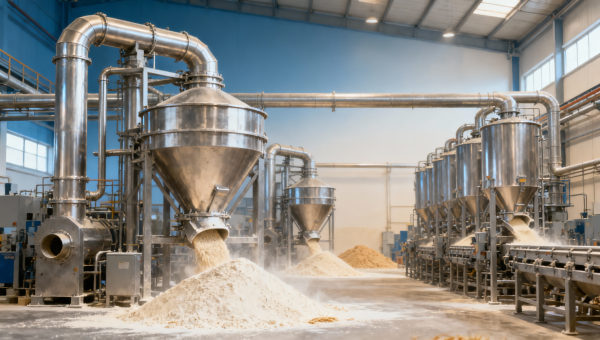
In a wheat flour milling plant, declining flour consistency, rising energy use, and frequent maintenance often signal that plansifter upgrades are no longer optional. For buyers comparing commercial flour mill machinery with adjacent processing systems like rice milling machines wholesale or cassava grating machines, understanding when to modernize is critical for throughput, quality control, and long-term return on investment.
In practical terms, a plansifter sits at the center of flour classification. When it begins to underperform, the problem rarely stays isolated. Extraction rates can drift by 1% to 3%, ash control becomes harder to stabilize, and operators may need more manual correction across the milling line. For technical evaluators, project managers, and procurement teams, the key question is not whether the plansifter matters, but when an upgrade delivers measurable plant-wide value.
This article explains the operational signals, risk thresholds, upgrade options, and procurement criteria that indicate when a wheat flour milling plant should modernize its plansifter system. It is written for users who need a practical decision framework rather than generic equipment promotion.
Why the Plansifter Becomes a Bottleneck in Flour Milling Performance
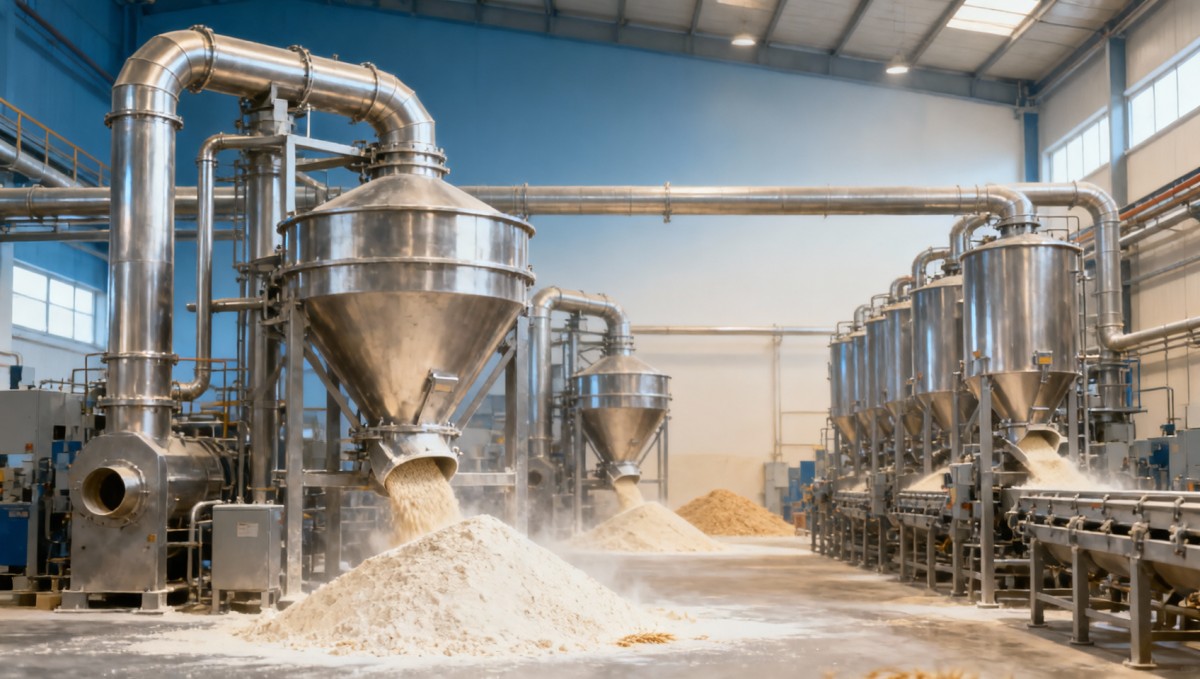
A plansifter separates milled stock into defined particle sizes after grinding. In a wheat flour milling plant, this affects flour uniformity, bran separation, semolina recovery, and the load balance placed on downstream and upstream machines. If the machine frame, sieve stack, suspension system, or drive components are outdated, the result is not only lower screening precision but also unstable line efficiency.
Many plants continue operating older units for 10 to 20 years, especially if the machine can still run. However, age alone is not the only issue. Process demands may have changed. A line designed for 80 TPD may now run 120 TPD, or a standard flour output may have shifted toward tighter specifications for bakery, noodle, or premix applications. In those cases, the existing plansifter may still function mechanically while failing commercially.
From a quality standpoint, even small deviations matter. If flour particle distribution widens beyond the target band or if bran speck incidence rises in premium grades, packers and end users notice quickly. For plants selling into institutional or export channels, repeated deviations can trigger rework, downgraded batches, or more frequent quality holds.
From an operational standpoint, a worn plansifter often increases vibration, sieve leakage, and bearing stress. These conditions can raise maintenance interventions from a quarterly schedule to monthly or even weekly checks. When maintenance hours rise while throughput stays flat, the equipment is no longer supporting scale.
Typical process areas affected by an aging plansifter
- Reduction passage efficiency, where overtail and undertail balance can drift outside the desired process window.
- Flour blending consistency, especially when multiple streams must be controlled within narrow ash and granulation limits.
- Machine loading across the mill, because poor separation forces rollers and purifiers to compensate for classification losses.
- Food safety and housekeeping, if sieve leakage or dust escape increases in a high-throughput environment.
Early versus late-stage performance symptoms
In the early stage, plants usually see subtle signs: more frequent sieve cleaning, minor yield loss, and slightly higher motor load. In the late stage, the symptoms become expensive: unstable product grades, unplanned shutdowns, cracked sieve frames, and elevated energy consumption per ton. Once a plant reaches the late stage, the upgrade decision tends to become urgent rather than strategic.
Operational Signs That an Upgrade Is Due
The strongest case for plansifter upgrades usually comes from a pattern of operational data rather than a single failure. Plant managers should review at least 6 to 12 months of records covering output stability, maintenance frequency, flour quality deviations, spare parts usage, and energy consumption. If multiple indicators are moving in the wrong direction at the same time, modernization should be evaluated immediately.
One common trigger is declining flour consistency. If the same wheat blend produces wider variation in particle size or ash performance than it did 12 months earlier, the screening stage may no longer be classifying efficiently. Another trigger is capacity mismatch. A plansifter originally specified for lower daily tonnage can become overloaded when the line is expanded, causing reduced separation sharpness and more recirculation.
Maintenance is another decisive signal. If operators are replacing sieves, gaskets, suspension components, or bearings more often than every 8 to 12 weeks under normal conditions, the system may be beyond economical repair. Rising vibration levels, frame noise, or repeated alignment work also indicate that the machine is consuming maintenance resources that could be better spent elsewhere.
Energy performance should not be ignored. Even when power increase appears modest, a 3% to 8% rise in specific energy per ton over a full production year can materially affect operating cost. For high-volume plants, that cost increase often exceeds the annualized financing burden of a controlled upgrade program.
Practical thresholds to investigate
The table below summarizes common warning signs that suggest a wheat flour milling plant should audit its plansifter condition, loading, and upgrade options.
These thresholds are not rigid standards, but they are useful for screening investment needs. If a plant records three or more of these conditions simultaneously, the probability that a plansifter upgrade will improve line economics is high.
Common mistake in diagnosis
A frequent mistake is to blame flour inconsistency only on wheat variation or roller settings. Those factors matter, but if the same recipe and operator team now need more adjustment effort than before, the plansifter may be the hidden bottleneck. A proper review should compare mechanical condition, sieve stack integrity, airflow behavior, and machine loading before changing upstream process assumptions.
Upgrade Paths: Retrofit, Partial Modernization, or Full Replacement
Not every wheat flour milling plant needs a full machine replacement. The best route depends on plant age, production target, maintenance history, and budget cycle. In many facilities, a structured retrofit can recover 60% to 80% of the performance gap if the frame and main structure remain sound. In other cases, replacing only wear components delays a larger problem without solving throughput and quality limitations.
A retrofit usually makes sense when the housing is still stable, alignment can be maintained, and the plant’s target capacity has not fundamentally changed. Typical retrofit scope includes sieve boxes, seals, suspensions, drive balancing, cleaning elements, and dust-control improvements. This route often requires a shutdown window of 3 to 7 days if components are pre-staged.
Partial modernization is suitable when the plant wants better screening control but cannot stop the line for a long rebuild. Examples include adding condition monitoring, vibration reduction measures, improved sieve materials, or updated modular internals. This option can extend service life while creating time for a staged capital decision.
Full replacement becomes more attractive when capacity is increasing, product mix is changing, or legacy equipment repeatedly causes line interruptions. For example, if a mill is moving from commodity flour to tighter bakery or noodle grades, the value of stable classification often justifies higher upfront spending. Replacement also improves spare parts planning because modern equipment typically uses more standardized assemblies.
Comparison of common upgrade strategies
The following comparison helps technical and commercial teams assess which path aligns with production goals, downtime tolerance, and capital discipline.
In decision meetings, it helps to compare not just purchase cost but the total effect on flour yield, labor hours, maintenance burden, and annual downtime. A cheaper repair can become the more expensive option if it preserves hidden process losses for another 12 to 24 months.
Selection checklist for project teams
- Verify current and future tonnage, such as 100 TPD today versus 150 TPD after expansion.
- Review quality targets for ash, granulation, and flour grade differentiation.
- Estimate annual downtime cost, including labor and lost production.
- Check availability of spare parts over the next 3 to 5 years.
- Match shutdown windows with harvest, procurement, and customer delivery cycles.
What Buyers Should Evaluate Before Approving a Plansifter Upgrade
A successful upgrade decision requires more than technical preference. Quality teams need stable flour output, operations teams need lower intervention frequency, finance teams need a defensible payback case, and management needs confidence that the upgrade fits long-term production strategy. That means procurement should assess technical fit, lifecycle cost, service support, and implementation risk together rather than in separate silos.
Start with process compatibility. The plansifter must match the mill flow, sieve passage design, and target flour streams. If the plant produces multiple grades, flexibility in sieve configuration and cleaning arrangement becomes more important than headline capacity alone. Buyers should also evaluate vibration behavior, sealing quality, sanitation access, and ease of routine inspection.
The next area is lifecycle economics. A lower quoted price may hide higher costs in maintenance labor, parts replacement, energy use, or longer commissioning. For many mid-size and large mills, a realistic payback window falls between 18 and 36 months when the upgrade improves both yield and downtime performance. Where product claims are tighter and value per ton is higher, payback can be shorter.
Service readiness also matters. If spare parts lead time is 8 to 12 weeks, the plant may need to carry more inventory. If local technical support is limited, start-up risk increases. Distributors and engineering contractors should therefore evaluate installation support, operator training hours, documentation quality, and troubleshooting response time before purchase approval.
Procurement criteria for cross-functional review
The table below can be used by technical evaluators, quality personnel, and financial approvers to align decision criteria before final vendor comparison.
For B2B buyers comparing flour milling equipment with adjacent processing assets such as rice milling or cassava processing lines, the same rule applies: judge machinery by process stability, serviceability, and long-horizon cost, not by upfront quotation alone.
Questions financial approvers should ask
- How many hours of unplanned stoppage did the current plansifter cause in the last 12 months?
- What is the estimated gain in extraction, throughput, or labor efficiency after modernization?
- Can the project be phased to align with quarterly cash flow or shutdown planning?
- What spare parts package should be budgeted for the first 6 to 12 months of operation?
Implementation, Risk Control, and FAQ for a Smooth Upgrade
Even the right upgrade can underperform if implementation is rushed. The most effective projects usually follow a 5-step sequence: site audit, process review, mechanical specification, shutdown execution, and post-start optimization. Plants that compress these steps often save a few days upfront but lose more time later in adjustments and troubleshooting.
A pre-upgrade audit should verify actual throughput, sieve map, vibration condition, floor support, dust handling, and upstream feed stability. This matters because plansifter performance depends on system integration, not just machine quality. If the surrounding flow is unstable, the new unit may be blamed for issues it did not create.
Risk control should also include operator readiness. A modernized machine can change inspection routines, cleaning intervals, and balancing procedures. Training should therefore be planned in advance, with clear SOP updates and at least one full maintenance review after the first 30 to 60 days of operation.
For project managers, practical success means more than installation completion. It means the upgraded plansifter reaches agreed output, maintains target product quality, and reduces intervention burden over the first full production cycle.
Recommended implementation sequence
- Audit 6 to 12 months of operating data to identify true pain points.
- Confirm target capacity, flour grades, and acceptable shutdown window.
- Select retrofit or replacement scope with spare parts and training package.
- Execute installation with alignment, vibration, and sealing checks before restart.
- Review performance after 2 weeks and again after 60 days to confirm stabilization.
FAQ
How often should a flour mill reassess plansifter condition?
A structured review every 6 months is advisable for stable plants, while high-load plants or mills processing variable wheat blends may benefit from quarterly checks. The review should include vibration, sieve integrity, maintenance records, and product consistency trends.
Is retrofit enough for older wheat flour milling plants?
It can be, if the machine structure is still mechanically sound and the production target has not changed substantially. If the plant is running close to or above original design load, or if product specifications have tightened, full replacement often offers a stronger long-term return.
What is a realistic shutdown period for upgrading a plansifter?
Minor retrofits may fit within 3 to 7 days. A broader modernization may need 5 to 10 days. Full replacement with integration work commonly requires 2 to 4 weeks, depending on civil readiness, access, and commissioning scope.
Which teams should be involved in the decision?
At minimum, involve operations, maintenance, quality control, procurement, finance, and the project lead. In larger facilities, safety and engineering compliance personnel should also review dust control, access, and maintenance safety before approval.
A wheat flour milling plant typically needs plansifter upgrades when a combination of quality drift, maintenance escalation, capacity mismatch, and rising energy cost begins to affect commercial performance. The most reliable decision process compares operating data, process goals, and lifecycle economics instead of focusing only on equipment age. Whether the best path is retrofit, staged modernization, or full replacement, the value lies in restoring classification precision and protecting plant-wide efficiency.
For milling businesses, distributors, and industrial buyers evaluating flour processing upgrades alongside broader grain and primary processing equipment investments, a well-scoped plansifter project can improve output stability, reduce downtime, and support stronger procurement decisions. To assess the right upgrade path for your production line, contact us to get a tailored solution, discuss technical details, or explore additional processing equipment options.
Related Intelligence
- Milling MachinerySABIC Cuts PP-Homo Price by 12%: Impact on Milling Machinery Export PartsSABIC cuts PP-Homo price by 12% — key impact on milling machinery export parts, feed pellet mill housings & protective covers. Cost relief for Chinese OEMs & suppliers.
- Milling MachineryWhy After Sales Terms Matter in Rice Milling Machines WholesaleRice milling machines wholesale success depends on after-sales terms. Compare support, warranty, and spares for parboiled rice mill plant and commercial flour mill machinery before you buy.
- Milling MachineryRice Milling Machines Wholesale: What Changes at Larger Order VolumesRice milling machines wholesale guide: learn how larger orders affect pricing, QA, lead times, and support across parboiled rice mill plant, commercial flour mill machinery, and more.
The Morning Broadsheet
Daily chemical briefings, market shifts, and peer-reviewed summaries delivered to your terminal.
