
Commercial Flour Mill Machinery That Cuts Ash Variation
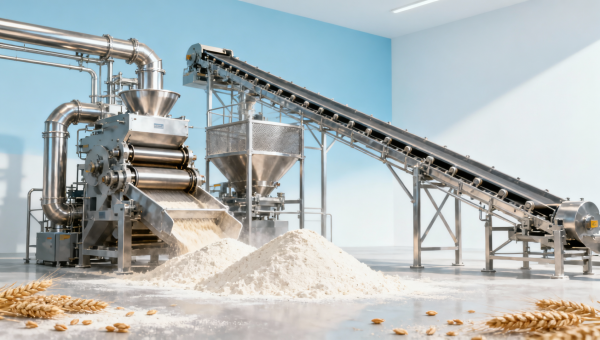
For buyers evaluating commercial flour mill machinery, consistency is no longer optional. From a wheat flour milling plant to integrated grain lines that may also include rice milling machines wholesale or parboiled rice mill plant modules, controlling ash variation directly affects flour grade, yield, compliance, and buyer confidence. This article examines how modern milling design, process control, and equipment selection help industrial processors reduce variability and improve commercial performance.
In commercial flour production, ash variation is more than a laboratory number. It influences flour color, baking behavior, product specification matching, and how reliably a processor can serve industrial bakeries, food brands, and distribution partners. Even a shift of 0.03% to 0.08% in ash can move flour outside a target grade, creating blending losses, customer complaints, or unnecessary downgrading.
For technical evaluators, ash consistency is a function of machine design, grain preparation, roll balance, sieving efficiency, and automation accuracy. For business and finance stakeholders, it is tied to yield recovery, rework cost, energy use, and contract performance. That makes commercial flour mill machinery selection a cross-functional decision involving operators, quality teams, engineers, and procurement leaders.
Why Ash Variation Matters in Commercial Flour Milling
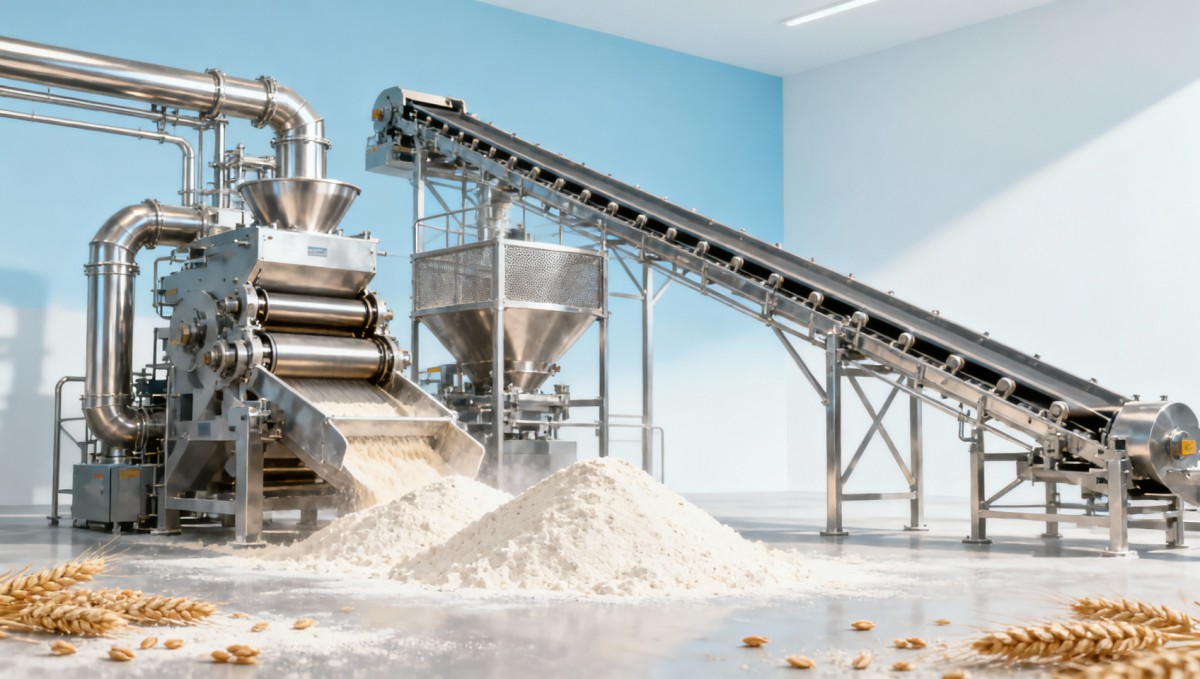
Ash content reflects the mineral residue remaining after flour is incinerated under standard testing conditions, and in practical milling terms it indicates how much bran or outer kernel material has entered the flour stream. Lower and more stable ash generally means cleaner endosperm extraction. In many industrial plants, target ash bands are controlled within ranges such as 0.45%–0.55% for refined flour, though actual specifications vary by market and application.
When ash variation is high, the effect spreads across the whole operation. A flour mill may need more manual correction, more blending between bins, and more frequent lab checks every 1–2 hours instead of every 3–4 hours. This increases labor dependency and raises the risk of dispatching off-spec batches. For food manufacturers purchasing large monthly volumes, consistency is often valued as highly as nominal capacity.
Ash control also influences extraction rate. If the plant chases very low ash without the right break and reduction configuration, flour yield can drop by 1%–3%. On a line processing 120 tons per day, that difference has clear financial weight. The right machinery should therefore reduce ash variation without forcing unnecessary yield sacrifice.
In integrated grain businesses, the issue becomes broader. Companies that operate a wheat flour milling plant alongside rice or feed sections need process discipline across multiple raw material streams. Shared utilities, dust control, and cleaning systems must not compromise flour precision. For this reason, ash consistency should be assessed as a plant-level performance indicator rather than a single-machine feature.
Key operational consequences of unstable ash
- Higher batch rejection risk when customer specifications allow only narrow ash tolerances, such as ±0.02% or ±0.03%.
- Reduced extraction efficiency when operators overcorrect machine settings to avoid dark flour.
- More sieve loading, bran contamination, and inconsistent flour color between shifts.
- Greater laboratory and documentation burden for QA teams handling export or regulated contracts.
Machine Design Features That Reduce Ash Variation
Not all commercial flour mill machinery controls ash in the same way. Stable ash begins with raw grain cleaning, but the decisive gains usually come from the relationship between roller mills, plansifters, purifiers, aspiration, and flow control. A well-designed line separates stock progressively, avoiding sudden overload on reduction passages that can pull fine bran into the flour stream.
Roller mill precision is one of the first checkpoints. Differential speed, roll disposition, corrugation condition, and grinding pressure all affect how cleanly the endosperm is released. In practical terms, gap stability within small tolerances and predictable roll wear patterns matter more than headline motor size alone. On medium to large lines, roll inspection cycles are often planned every 800–1,500 operating hours depending on wheat hardness and throughput.
Purification and sieving stages are equally important. Efficient purifiers help remove bran particles from semolina before final reduction, while correctly sized plansifters improve classification sharpness. Poor air balance or worn sieve cloth can raise ash even when the roller section is well adjusted. Many mills only discover this after quality drift appears across several lots.
Feed uniformity must also be considered. Dampening consistency, tempering time, and feeder control influence how grain behaves through break passages. If moisture distribution is uneven by even 0.5%–1.0%, the milling response can fluctuate across shifts. In modern plants, this is why dosing accuracy and residence time control are treated as part of ash management, not just grain conditioning.
Critical equipment features to assess
The table below summarizes which machine features usually have the strongest effect on ash stability during commercial operation.
The main takeaway is that ash control depends on system coordination. Buyers should not judge a line only by installed tonnage or the number of roller passages. The better question is whether each process stage supports stable separation over 8-hour, 16-hour, and 24-hour production windows.
A common evaluation mistake
A frequent procurement error is focusing on nominal capacity, such as 50 TPD or 200 TPD, without checking how the line performs when wheat quality shifts. Commercial flour mill machinery that runs well only on uniform grain will struggle in real sourcing conditions. Equipment should be evaluated against normal raw material variability, not ideal test batches.
Process Control, Automation, and Quality Monitoring
Mechanical design alone does not guarantee stable ash. The second layer is process control. In modern milling plants, automation reduces the dependence on operator intuition by stabilizing feed rates, moisture addition, machine loading, and product routing. This matters especially in multi-shift operations where one experienced supervisor cannot personally correct every change in stock behavior.
At minimum, buyers should look for automated control of grain conditioning, roll feeder speed, aspiration balance, and bin management. More advanced systems may include recipe control, trend logging, alarms for abnormal current draw, and traceable batch records. These functions do not replace laboratory ash testing, but they reduce the frequency and severity of process drift.
Quality assurance teams benefit when test points are defined clearly. A practical plan may include in-process checks at 4–6 critical locations: cleaned wheat, break flour, purifier discharge, reduction flour, finished flour, and blended storage. With this structure, deviations can be traced faster, often within the same shift rather than after dispatch or bagging.
Digital records also support commercial governance. For distributors, project managers, and finance approvers, a line that provides trend history over 30, 60, or 90 days is easier to justify than one relying on manual notebooks. It lowers operator dependency and creates stronger evidence when comparing equipment suppliers during technical due diligence.
Typical control points in an ash-focused milling line
- Moisture addition calibration before tempering, usually checked at least once per shift.
- Roll feeder load stability to avoid sudden stock surges into break passages.
- Airflow balance in purification sections, especially after sieve changes or maintenance.
- Finished flour segregation and blending logic to prevent off-spec material from mixing across bins.
- Routine lab validation with documented alarm thresholds for corrective action.
Automation levels and their operational value
The following comparison helps procurement teams align automation investment with plant scale and risk exposure.
For many B2B buyers, the intermediate level is the practical minimum when ash consistency is commercially important. It usually provides enough control to reduce variation without overengineering the line for plants that do not need full digital integration from day one.
How to Evaluate Commercial Flour Mill Machinery Before Purchase
Selecting the right system requires more than checking brochures. Technical teams should begin by defining the flour portfolio, expected throughput, raw wheat range, utility conditions, and target ash bands. A plant making 2 or 3 flour grades for local bakeries will prioritize differently from a processor supplying noodle, bread, and biscuit mills under separate contracts.
Capacity planning should include actual operating assumptions, not only peak nameplate output. For example, a 100 TPD line running 20 hours per day with seasonal wheat variation may perform very differently from a line rated the same but designed for more stable 24-hour continuous duty. Buyers should ask how ash performance changes at 70%, 85%, and 100% load.
Maintenance access is another procurement factor that often affects ash indirectly. When rolls, sifters, or purifier screens are hard to service, maintenance intervals stretch and separation quality declines. A machine with lower initial cost but difficult access may become more expensive over 12–24 months through quality drift and longer stoppages.
Commercial stakeholders should also review the supplier’s commissioning scope, operator training depth, spare parts structure, and after-sales response window. Even a well-built wheat flour milling plant can underperform if startup tuning is rushed. In many projects, the first 7–30 days after installation are when ash stability is either established or compromised.
Procurement checklist for multi-role evaluation teams
- Define target ash range for each flour grade and acceptable variation by shift or lot.
- Confirm whether the line can handle local wheat hardness, moisture variation, and impurity profile.
- Review service intervals for rolls, sieve cloth, bearings, and air handling components.
- Check utility demand, including power stability, compressed air requirements, and dust collection needs.
- Request startup support details, training hours, and recommended spare parts for the first 6–12 months.
Decision criteria by stakeholder group
Different functions inside the buying organization will rank equipment differently. Aligning these priorities early shortens the approval cycle and reduces specification changes late in the project.
This type of decision matrix is especially useful when comparing flour equipment with broader integrated grain projects that may also include rice milling machines wholesale procurement or a parboiled rice mill plant expansion. It keeps the flour section focused on product quality economics rather than on generic equipment claims.
Implementation, Maintenance, and Long-Term Performance Control
Reducing ash variation is not a one-time installation result. It depends on how the machinery is commissioned, how operators are trained, and how maintenance discipline is maintained after handover. Plants with similar equipment can show very different quality results after 6 months if one site manages roll wear, screen condition, and airflow calibration systematically while the other does not.
A practical implementation plan usually has 3 stages: installation and dry checks, wet commissioning with grain, and stabilization under live production. During stabilization, operators should log ash, moisture, throughput, and energy patterns by shift for at least 2–4 weeks. This provides a baseline and helps identify whether quality drift comes from raw material, settings, or wear.
Preventive maintenance should be built around measurable triggers. Examples include vibration changes, roll surface condition, sifter cloth integrity, purifier suction deviation, and feeder calibration accuracy. Waiting until flour color changes or ash rises consistently is usually too late, because by then yield loss and customer risk have already appeared.
Service support matters just as much for distributors and regional agents. If spare parts lead times extend beyond 2–6 weeks for routine wear items, the plant may operate in a compromised state. Buyers should therefore evaluate the support model as part of the machine itself, particularly for industrial sites running continuous schedules.
Recommended post-installation control routine
- Validate grain cleaning and moisture addition settings before full-load operation.
- Monitor ash and extraction trend by product grade during the first 14 days.
- Review roll condition, sieve tension, and aspiration balance after the first major production cycle.
- Train at least 2–3 shift leaders on corrective action procedures for quality drift.
- Set monthly technical reviews covering downtime, yield, ash deviation, and maintenance compliance.
Frequently asked questions from buyers and project teams
How much ash variation is typically acceptable?
It depends on flour grade and customer contract, but many commercial buyers work within narrow control bands. For refined flour, internal operational control may target a much tighter band than the contractual maximum, allowing room for normal process movement while still protecting dispatch quality.
Can automation alone solve ash inconsistency?
No. Automation improves repeatability, but it cannot compensate for poor cleaning, incorrect flow design, worn rolls, or weak purifier performance. The best results come from combining sound machine engineering with disciplined process control and trained operators.
What is a realistic delivery and startup timeline?
For standard commercial flour mill machinery projects, lead time often depends on capacity, local civil readiness, and customization scope. Buyers should separate equipment manufacturing time from installation, commissioning, and stabilization time when planning return on investment and working capital.
Commercial flour mill machinery that cuts ash variation delivers value far beyond a better lab number. It improves grade consistency, supports stronger buyer confidence, reduces rework pressure, and protects extraction economics across daily production. The most reliable results come from matching machine design, automation level, maintenance access, and commissioning support to the actual wheat profile and product mix of the plant.
For information researchers, operators, technical evaluators, project leaders, and financial decision-makers, the right question is not simply which line has the highest capacity. It is which system can maintain stable ash, practical yield, and manageable lifecycle cost under real commercial conditions. To assess the best-fit solution for your flour, grain, or integrated processing project, contact us to discuss plant objectives, compare equipment configurations, and obtain a tailored technical proposal.
Related Intelligence
- Milling MachineryWhy After Sales Terms Matter in Rice Milling Machines WholesaleRice milling machines wholesale success depends on after-sales terms. Compare support, warranty, and spares for parboiled rice mill plant and commercial flour mill machinery before you buy.
- Milling MachineryRice Milling Machines Wholesale: What Changes at Larger Order VolumesRice milling machines wholesale guide: learn how larger orders affect pricing, QA, lead times, and support across parboiled rice mill plant, commercial flour mill machinery, and more.
- Milling MachineryHow to Spot Steam and Drying Bottlenecks in a Parboiled Rice Mill PlantParboiled rice mill plant guide: spot steam and drying bottlenecks, improve throughput, and compare rice milling machines wholesale for better quality and lower operating cost.
The Morning Broadsheet
Daily chemical briefings, market shifts, and peer-reviewed summaries delivered to your terminal.
