
Industrial milling or pharma processing: what's different?
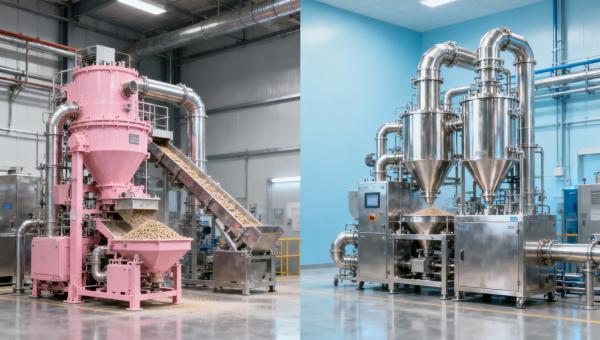
From industrial milling to pharmaceutical processing, the differences go far beyond scale—they shape compliance, quality control, and procurement risk. For buyers and operators working with Feed Ingredients, Bio Ingredients, aquaculture products, and aquaculture equipment, understanding FDA Standards, Aquaculture Tech, and Peer Analysis is essential to safer aquaculture production and more reliable industrial decision-making.
For research teams, plant operators, quality managers, project leaders, and budget approvers, the comparison is not academic. It directly affects equipment specification, documentation burden, validation timelines, hygiene design, operator training, and total cost of ownership. A hammer mill handling grain byproducts and a pharmaceutical mill reducing API particle size may both grind solids, but they operate under very different tolerances, cleaning standards, and batch-release expectations.
This distinction matters across integrated supply chains. In feed and grain processing, acceptable variability may be measured in practical throughput and nutritional consistency. In pharma processing, that same variability can trigger batch deviation, failed dissolution targets, or regulatory action. For institutional buyers and industrial procurement teams, knowing where industrial practice ends and pharmaceutical discipline begins is a core risk-control capability.
Why the same unit operation leads to different risk profiles
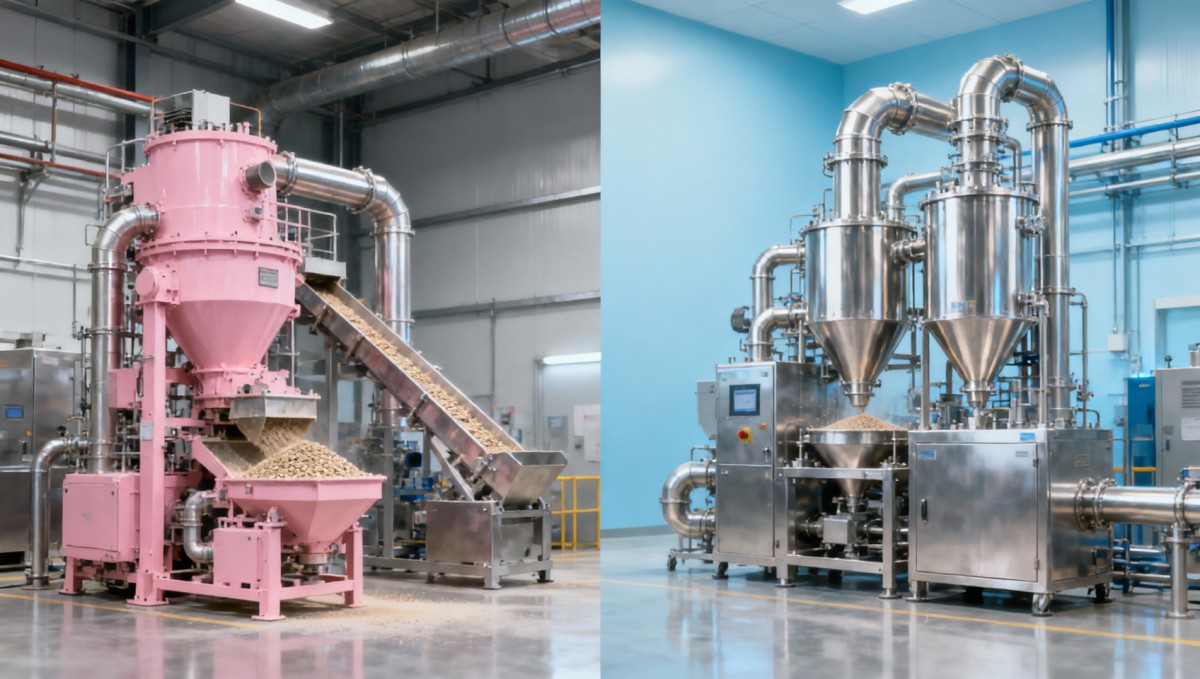
At a process level, industrial milling and pharma processing both involve size reduction, blending, transfer, containment, and packaging. The divergence begins with product criticality. In industrial settings such as feed ingredients, bio extracts, or mineral intermediates, process control typically focuses on throughput, energy efficiency, moisture handling, and broad particle-size targets. In pharmaceutical environments, every step must protect identity, strength, quality, and purity.
A typical industrial mill may be selected to process 2–20 tons per hour, depending on bulk density and target mesh. A pharma mill, by contrast, may process 50–500 kg per hour with far tighter limits on heat generation, metallic contamination, dust escape, and cleanability. Throughput is important in both cases, but the penalty for deviation is very different. In feed or aquaculture production, a 5% shift in particle distribution may reduce performance. In a regulated drug process, it can affect bioavailability and batch acceptance.
Another key difference is documentation. Industrial operations usually require equipment manuals, maintenance logs, material certificates, and safety assessments. Pharmaceutical processing often adds installation qualification, operational qualification, performance qualification, cleaning validation, calibration traceability, and change-control records. That can expand project lead time from 4–8 weeks in a standard industrial upgrade to 3–6 months for a validated pharma implementation.
For procurement teams comparing platforms across sectors, the table below highlights where the main operational and compliance gaps appear.
The main conclusion is practical: the more critical the product and the stricter the downstream standard, the less useful a simple “bigger or smaller machine” comparison becomes. Buyers must compare process capability, audit readiness, and contamination control, not only output rate.
Where cross-industry confusion usually starts
Confusion often appears when companies diversify. A bio-ingredients producer moving toward nutraceutical or quasi-pharma applications may assume its industrial milling line can be upgraded with minor modifications. In reality, even small design details matter: gasket material, dead-leg geometry, internal finish, dust containment, and access for inspection can all determine whether the line is suitable for a higher-regulation environment.
The same issue affects aquaculture and feed facilities handling sensitive additive premixes. If micro-ingredients are blended at inclusion rates below 1%, inconsistent particle size or residual carryover from previous batches can create formulation drift. That may not be a pharmaceutical issue in legal terms, but it still becomes a major quality and commercial risk.
Compliance, hygiene, and quality control are built differently
Industrial systems are usually designed around operational resilience: abrasion resistance, easy parts replacement, manageable downtime, and safe dust handling. Pharmaceutical processing adds a more disciplined hygiene architecture. Equipment contact surfaces often require higher polish standards, fewer retention zones, documented material compatibility, and cleaning procedures tied to residue limits. In many facilities, cleaning time can represent 15%–30% of available production time, which makes design-for-cleanability a financial issue as well as a compliance issue.
For quality-control teams, the difference is not only in the final lab result. It is also in how the result is protected through the process. Industrial operations may sample by shift, lot, or production campaign. Pharmaceutical lines may require sampling at predefined process stages with tighter chain-of-custody practices, environmental monitoring, and documented line clearance before batch start. This changes staffing, SOP structure, and release timing.
Regulatory expectations also affect equipment selection. A mill or blender used for feed ingredients may need robust sanitation and traceability, especially when materials are exported or integrated into aquaculture production systems. But when the process falls under stricter FDA or GMP expectations, the machine must support repeatable cleaning, calibrated controls, and predictable process performance under validated conditions. A lower-cost industrial unit may be acceptable for non-critical solids, yet become expensive if retrofits, extra testing, and repeated cleaning failures appear later.
Core control points that separate sectors
- Surface finish and hygienic geometry: rough internal surfaces or hidden pockets increase hold-up and cross-contact risk.
- Dust containment: industrial dust systems may focus on worker safety, while pharma containment also protects product integrity and operator exposure limits.
- Cleaning verification: rinse-and-inspect may be enough for some industrial campaigns, but validated residue testing is often mandatory in pharma processing.
- Batch traceability: lot coding alone may be insufficient where material genealogy, parameter history, and intervention records must be retained for years.
A practical comparison for QC and safety teams
The table below is useful when screening mixed-use facilities, contract processors, or suppliers claiming to serve both industrial and pharmaceutical markets.
For decision-makers, this means quality systems cannot be bolted on at the end. If the process target includes regulated APIs, highly sensitive bio ingredients, or cross-border buyers demanding traceability, the equipment and workflow must be specified from day 1 with the right compliance level in mind.
For financial approvers, a useful rule is to compare 3 costs together: acquisition cost, validation or qualification cost, and recurring sanitation cost. A lower purchase price can be misleading if cleaning time increases by 45 minutes per batch or if documentation support requires outside consultants.
Procurement criteria for buyers across feed, bio, aquaculture, and pharma-adjacent operations
Buyers in primary industries increasingly face hybrid procurement decisions. A facility may process feed ingredients for aquaculture in one campaign, botanical extracts in another, and higher-value functional powders in a third. In these cases, the smartest sourcing strategy is not to ask whether a machine is “industrial” or “pharma” in marketing language, but whether it fits the actual contamination risk, cleaning regime, and documentation need of the target product family.
Start with material behavior. Fibrous materials, oily bio ingredients, crystalline salts, hygroscopic powders, and abrasive minerals all create different wear, heat, and flow risks. A project manager specifying a 10–15 ton/hour line for feed applications may prioritize motor power, screen life, and service access. A procurement director sourcing for an active ingredient intermediate may prioritize low heat generation, containment, metal detection integration, and documented parts traceability.
Supplier transparency is another dividing line. For critical operations, ask not only for brochures but for weld-quality evidence, material certificates, spare-parts lists, recommended calibration intervals, and cleaning access diagrams. Lead time should also be separated into 3 stages: manufacturing, factory testing, and documentation review. A nominal 8-week delivery can become 12–16 weeks once FAT scheduling, corrective actions, and qualification package approval are included.
A 6-point procurement checklist
- Define product criticality by batch value, regulatory exposure, and carryover sensitivity.
- Match target particle-size range to actual application performance, not only supplier claims.
- Review cleanability in real operating conditions, including seals, screens, access points, and tool requirements.
- Confirm documentation depth, especially if export, audits, or regulated customers are involved.
- Estimate downtime impact: changeover, sanitation, spare replacement, and operator retraining.
- Check whether the supplier can support commissioning, troubleshooting, and process optimization within 24–72 hours if remote support is needed.
Decision matrix for mixed-industry buyers
This matrix helps compare options when the same procurement team serves agricultural, biochemical, and fine chemical operations.
The practical takeaway is that procurement should map the machine to the risk of the powder, not to the marketing category of the supplier. This is especially important in aquaculture tech and bio-processing, where product safety, environmental responsibility, and customer audits increasingly overlap.
Implementation, validation, and operator readiness
Even the right equipment can underperform if implementation is treated as a simple installation exercise. In industrial milling, commissioning may focus on alignment, power draw, throughput confirmation, and basic safety interlocks over a 2–5 day period. In pharma processing or tightly controlled fine-chemical operations, implementation often extends into a formal sequence of design review, installation verification, instrument calibration, trial batches, SOP issuance, and training sign-off.
Operator readiness is a major success factor. A line that changes products every 8 hours requires different training than a dedicated line running one material for 3 weeks. Teams should be trained on start-up checks, parameter windows, abnormal sounds or vibration, contamination indicators, and cleaning checkpoints. For multi-product sites, visual aids and digital work instructions can reduce changeover error and shorten retraining time by 20%–30% compared with undocumented tribal practice.
Project managers should also define acceptance criteria in advance. These usually include at least 4 dimensions: throughput, particle-size result, cleaning time, and documentation completeness. Without these, disputes emerge after delivery, especially when a supplier proves nominal capacity on one raw material while the plant runs a denser or more heat-sensitive material in live production.
A staged implementation model
- Pre-install review: utility load, footprint, dust extraction, and material flow mapping.
- Commissioning: dry run, mechanical checks, baseline throughput, and safety verification.
- Process tuning: target screen or tool selection, feed-rate adjustment, and heat or fines monitoring.
- Cleaning and changeover validation: time study, residue inspection, and documented recovery steps.
- Performance handover: operator training, spare-parts plan, preventive maintenance calendar, and escalation route.
Common implementation mistakes
One common error is underestimating dust-system design. A unit may operate well during FAT but fail in production because the extraction rate is mismatched to the material. Another is skipping cleaning trials using the actual product family. Water-friendly residues behave very differently from oily or sticky bio ingredients, and cleaning time can double if this is discovered after handover.
A third mistake is separating engineering and quality decisions. In regulated or audit-sensitive contexts, it is better to involve operations, QA, procurement, and EHS in a shared review. That cross-functional alignment reduces rework and helps ensure the chosen system supports both production efficiency and compliance discipline.
FAQ for industrial and pharmaceutical process buyers
How do I know if an industrial mill is unsuitable for pharma-style processing?
Look beyond output capacity. Warning signs include poor access for cleaning, undocumented contact materials, visible dead zones, unstable particle-size performance, and limited calibration support. If your process requires residue control, repeatable batch performance, or customer audits, those gaps matter more than the purchase price.
Can feed and aquaculture plants benefit from pharma-style practices without becoming pharmaceutical facilities?
Yes. Many plants improve safety and export readiness by adopting selected higher-discipline practices such as better traceability, stricter sanitation, defined changeover checks, and tighter micro-ingredient control. These upgrades are especially valuable when handling specialty additives, bio ingredients, or premium aquaculture formulations where contamination or inconsistency has a high commercial cost.
What lead time should buyers expect?
For standard industrial equipment, 6–10 weeks is common for manufacture and dispatch, depending on configuration and region. For systems needing expanded documentation, factory testing, or validation support, 12–20 weeks is a more realistic planning window. If site acceptance testing and training are included, project completion can extend further.
Which metrics matter most during supplier evaluation?
Prioritize 5 metrics: actual throughput on similar materials, particle-size consistency, cleaning time, documentation depth, and service response capability. If the product is critical, also review containment, metal control, and spare-parts lead time. These metrics usually tell more about long-term suitability than headline motor size or brochure claims.
Industrial milling and pharmaceutical processing may share core unit operations, but they are separated by very different expectations around control, cleanability, documentation, and risk tolerance. For businesses spanning feed ingredients, bio ingredients, fine chemicals, and aquaculture tech, that distinction influences not only compliance exposure but also uptime, batch consistency, and procurement confidence.
AgriChem Chronicle helps buyers, operators, and decision-makers assess these differences with practical, sector-aware analysis. If you are evaluating new equipment, comparing suppliers, or planning a mixed-industry processing upgrade, contact us to discuss your application, obtain a tailored content partnership, or explore more solution-focused intelligence for regulated and high-performance supply chains.
Related Intelligence
- Milling MachineryHow to Choose a Horizontal Ribbon Blender for FeedHorizontal ribbon blender feed buying guide: compare vertical feed mixer machine options, animal feed mixers wholesale offers, and line fit for poultry, cattle, and floating fish feed plant projects.
- Milling MachineryWhy use a rotary drum sieve grain line?Why use a rotary drum sieve grain line? Discover how rotary drum sieve grain, grain pre cleaner machine, gravity separator grain, and magnetic separator for feed improve efficiency and quality.
- Milling MachineryHow to avoid grain destoner machine issues?Grain destoner machine issues explained: learn how gravity separator grain, grain pre cleaner machine, and rotary drum sieve grain setup affect performance, reduce downtime, and improve line efficiency.
The Morning Broadsheet
Daily chemical briefings, market shifts, and peer-reviewed summaries delivered to your terminal.
