
How aquaculture tech improves water quality control?
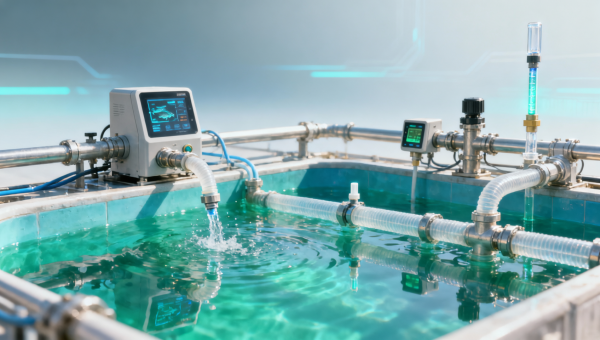
From sensors and AI to automated dosing and filtration, Aquaculture Tech is transforming how producers manage water quality control across modern aquaculture production. For buyers and operators evaluating aquaculture equipment, aquaculture products, and Feed Ingredients under evolving FDA Standards, this overview delivers clear, Peer Analysis-driven insights into how smarter systems reduce risk, improve fish health, and support compliant, efficient performance.
Why water quality control has become a strategic issue in aquaculture
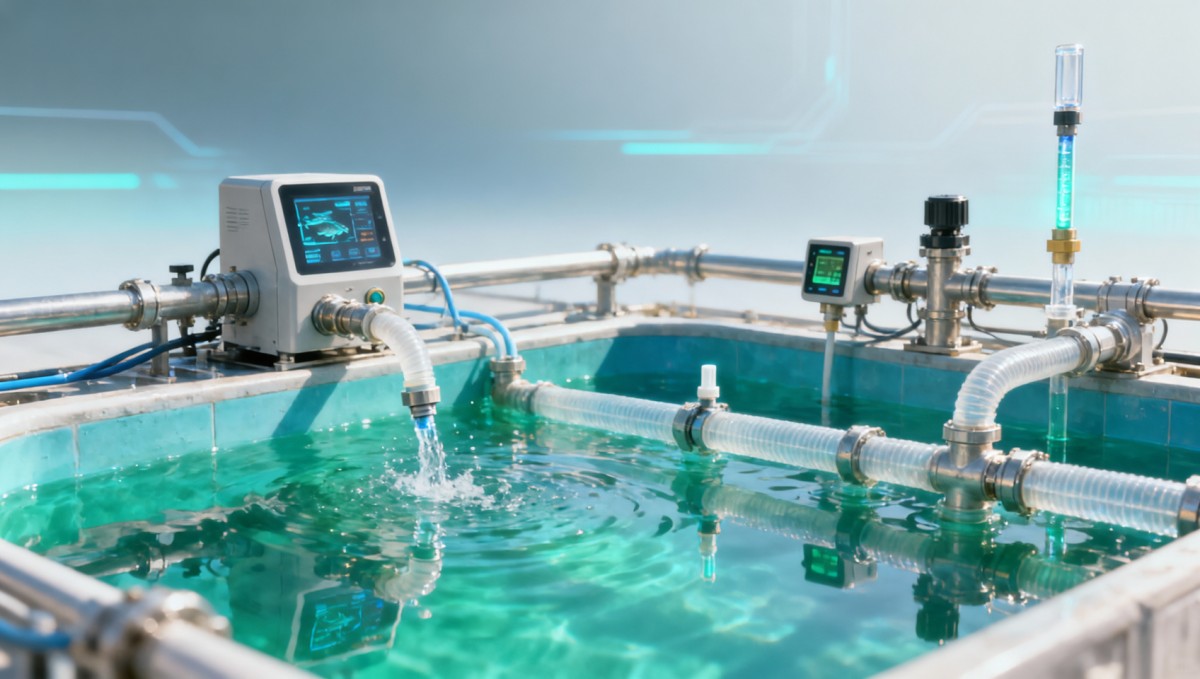
In commercial aquaculture, water quality control is no longer a narrow operations task. It now affects survival rate, feed conversion, harvest timing, labor planning, and audit readiness. Whether a site runs ponds, tanks, recirculating aquaculture systems, or hatchery units, even small shifts in dissolved oxygen, pH, ammonia, or temperature can trigger losses within hours rather than weeks.
For information researchers and project managers, the challenge is not simply understanding water chemistry. The real difficulty is connecting aquaculture tech choices to operational outcomes. A manual testing routine done 2–4 times per day may miss rapid overnight changes, while a continuous monitoring setup can flag risk in minutes and support faster intervention.
For enterprise decision-makers and finance approvers, the question is usually broader: which technology produces measurable control without overbuilding the system? In many facilities, the cost of one preventable water quality event can exceed the price difference between a basic monitoring package and a more integrated automation platform.
Quality control personnel and safety managers also face rising compliance pressure. Water treatment records, dosing logs, filtration performance, alarm history, and maintenance intervals increasingly matter when a site must demonstrate disciplined operating procedures aligned with FDA, EPA, and internal food safety requirements.
Which water parameters matter most in daily aquaculture operations?
Although species and production intensity differ, most operators track a core group of 6 indicators: dissolved oxygen, temperature, pH, ammonia, nitrite, and turbidity or total suspended solids. In more advanced systems, oxidation-reduction potential, salinity, alkalinity, carbon dioxide, and flow consistency also become important for stable control.
The key point is interaction. A dissolved oxygen reading cannot be assessed in isolation from stocking density, aeration design, and feed load. Likewise, ammonia risk rises when feed input climbs, biofiltration lags, or sludge management falls behind schedule for 3–7 days. Good aquaculture tech improves control by linking these variables into one decision framework.
- Operators need real-time alerts for fast-changing parameters such as dissolved oxygen and temperature.
- QC teams need trend records over 7-day, 30-day, and seasonal cycles to identify recurring process drift.
- Project leaders need system-level visibility to compare sensor output, dosing behavior, and filtration load.
- Procurement teams need equipment data that can be tied to uptime, maintenance frequency, and service access.
How aquaculture tech improves water quality control in practice
Aquaculture tech improves water quality control by shifting operations from periodic reaction to continuous management. Instead of relying on manual checks and delayed corrections, modern systems combine sensors, controllers, software, and treatment equipment to keep water within target ranges over 24-hour operating cycles.
The first improvement is visibility. Online sensing can provide readings every few seconds or every 1–5 minutes depending on system design. That level of monitoring helps operators identify trends before fish behavior changes become obvious. For hatcheries and high-density grow-out systems, this early warning function is often more valuable than a single laboratory snapshot.
The second improvement is automated response. When dissolved oxygen drops below a programmed threshold, aeration or oxygen injection can increase automatically. When solids loading rises, filtration cycles can adjust. When pH drift exceeds a defined band, dosing systems can support correction under controlled rules rather than improvised manual action.
The third improvement is decision quality. AI-assisted analytics and rule-based control platforms do not replace experienced operators, but they can reduce delayed judgment. By comparing current data with the previous 12–24 hours, recent feed input, and equipment status, the system can highlight whether the problem is biological, mechanical, or procedural.
Core technologies that change control performance
Not every farm needs the same level of automation. However, most water quality control improvements come from a manageable stack of technologies rather than a single device. Buyers should evaluate the fit between production scale, labor skill, species sensitivity, and treatment objectives.
This comparison shows why water quality control is best treated as a system problem. A farm can install premium sensors, but if dosing, aeration, and solids management remain manual and inconsistent, the improvement may be limited. The strongest aquaculture tech investments usually connect monitoring, response, and documentation into one operating workflow.
Why integrated systems outperform isolated devices
An isolated meter helps measure a problem. An integrated control architecture helps prevent one. In facilities running 24/7, especially with high stocking density, time lag matters. A 15-minute delay in responding to oxygen decline may be manageable in one pond but critical in a dense indoor tank system.
Integrated platforms also improve record quality. This is valuable for managers who need to review a 30-day trend, trace a mortality event, or justify a budget request for upgraded filtration. ACC’s editorial approach is especially relevant here because procurement decisions in regulated primary industries should be based on technical fit, compliance traceability, and lifecycle practicality, not only headline equipment cost.
What should buyers compare when selecting aquaculture equipment for water quality control?
Procurement teams often compare price first, but water quality control equipment should be screened across at least 5 dimensions: parameter coverage, control response speed, maintenance burden, integration capability, and compliance documentation. This is especially important when the purchase must satisfy users, QC teams, engineering leads, and finance approvers at the same time.
A common mistake is buying for nominal capacity rather than actual operating load. If a filtration unit is rated for a flow range that looks acceptable on paper but cannot manage solids during peak feeding periods, water quality drift will still occur. Similar issues appear when sensor housings are not suitable for fouling conditions or when calibration routines are too complex for shift operators.
Decision-makers should also consider implementation timing. Typical procurement and deployment for a medium-complexity monitoring and control package may span 4–12 weeks depending on site readiness, import procedures, interface requirements, and training scope. For retrofit projects, cable routing, control cabinet location, and wet-area protection can extend schedules.
For financial review, the stronger question is not “What is the cheapest option?” but “Which option reduces the risk-adjusted cost of instability?” A lower-cost package may still become the expensive choice if it creates frequent manual intervention, missed alarms, or inconsistent treatment records.
Procurement checklist for different stakeholder groups
The table below helps teams align technical selection with operational responsibility. It is useful when engineering, operations, quality, and finance are involved in the same aquaculture tech decision.
This kind of matrix reduces internal friction. Instead of debating abstract quality claims, buyers can compare aquaculture equipment using shared operational questions. That is the type of structured procurement intelligence ACC emphasizes across primary industries where technical accuracy, compliance, and supply chain transparency directly affect purchasing confidence.
A practical 4-step selection process
- Define the control problem clearly: oxygen instability, ammonia accumulation, solids overload, inconsistent dosing, or poor visibility.
- Match the problem to the production environment: hatchery, nursery, pond, RAS, transport, or depuration line.
- Request technical details on sensor maintenance, spare parts cycle, alarm logic, and data export before price negotiation.
- Review installation lead time, training plan, and post-commissioning support for the first 30–90 days.
When this process is followed, teams are more likely to select systems that support stable water quality control rather than equipment that only looks capable during initial vendor presentations.
How do compliance, feed inputs, and operating procedures affect water quality outcomes?
Water quality control is not achieved by hardware alone. It also depends on operating discipline, feed strategy, cleaning schedules, and regulatory awareness. In many facilities, water deterioration begins with a mismatch between feed input, biomass load, and treatment capacity rather than a complete equipment failure.
Feed Ingredients matter because they influence waste loading, suspended solids, and nitrogen generation. When formulations, pellet stability, or feeding rates change, monitoring thresholds may need adjustment. Operators should not assume that a control profile developed for one feed regime remains valid after procurement changes or seasonal production shifts.
Compliance also shapes system design. Facilities handling aquatic food products may need recordkeeping and procedural controls that support internal QA programs and external review. While exact requirements vary by market and product type, many buyers look for solutions that help document dosing activity, sanitation timing, water parameter history, and corrective actions in a retrievable format.
From a project standpoint, standard operating procedures should define response windows. For example, if a high-risk dissolved oxygen alarm triggers, who responds within 5 minutes? If pH drift continues for 30 minutes after dosing, who escalates? Technology supports control, but procedure ensures that the response is consistent across shifts and staffing levels.
Common implementation risks that buyers underestimate
- Installing sensors without planning cleaning access, which leads to fouling and unreliable readings within days or weeks.
- Automating dosing without clear chemical compatibility checks, operator training, and storage controls.
- Using alarms without severity levels, causing staff to ignore frequent low-value alerts and miss critical events.
- Selecting software dashboards that look modern but do not export data in formats useful for audits or management review.
These risks explain why expert review matters. ACC’s value for industrial buyers lies in connecting equipment claims with broader operational context, including standards awareness, process reliability, and cross-functional decision support. In regulated sectors, technical content must help readers judge not only what a system can do, but what it will require to run correctly for 12 months and beyond.
Compliance-oriented operating habits worth building
A disciplined farm or facility typically follows 3 layers of control: continuous monitoring, scheduled verification, and documented corrective action. Continuous monitoring captures fast changes. Verification through handheld checks or lab confirmation ensures the online system remains reliable. Corrective action logs show whether the site responds in a controlled and reviewable manner.
For many teams, the practical target is not perfect data at every moment. It is dependable control with repeatable records. That means setting calibration intervals, assigning maintenance ownership, reviewing alarm history weekly, and checking whether feed and biomass changes are pushing the system outside its intended operating range.
FAQ: what do buyers and operators most often ask about aquaculture tech and water quality control?
How much automation is enough for a mid-scale aquaculture site?
For many mid-scale sites, the most practical baseline is continuous sensing for 3–5 critical parameters, alarm notification, and automated response for at least one high-risk variable such as dissolved oxygen. Full automation of every treatment step is not always necessary. The better approach is to automate the fastest and most consequential failure points first.
Are manual checks still necessary if the farm uses smart sensors?
Yes. Manual verification remains important because sensors can drift, foul, or lose accuracy in demanding environments. Many facilities perform spot checks daily or several times per week, with fuller calibration routines on a scheduled basis such as weekly, biweekly, or monthly depending on the sensor type and water conditions.
What should procurement teams ask about service and spare parts?
Ask about consumables, membrane or probe replacement cycles, calibration solutions, filter cleaning intervals, and controller support. Also confirm whether spare parts are stocked regionally and what the typical service response time is during the first 12 months. In water quality control, slow support can turn a small fault into a production issue.
Can aquaculture tech help with audit readiness?
It can help significantly when the system stores historical parameter data, alarm logs, dosing events, and user actions. That record is useful for internal QA review, CAPA-style investigation, and supplier or customer assessments. However, digital records only create value if staff actually review exceptions and maintain proper operating procedures.
Why work with ACC when evaluating aquaculture equipment, aquaculture products, and compliant water control strategies?
AgriChem Chronicle supports institutional buyers and industrial operators who need more than promotional product copy. Our editorial framework is built for sectors where technical precision, regulatory awareness, and supply chain transparency shape the purchase outcome. That matters when comparing aquaculture tech for water quality control, where one decision touches biology, engineering, compliance, and cost exposure at the same time.
Because ACC covers aquaculture and fishery tech alongside fine chemicals, feed and grain processing, bio-extracts, and industrial machinery, our perspective is useful for cross-functional teams. We understand that buyers may need to assess treatment systems, feed-related water load effects, documentation quality, and installation practicality within the same review cycle.
If your team is comparing solutions, we can help structure the conversation around the points that matter most: parameter confirmation, system fit by production scale, delivery timing, integration risk, documentation expectations, and supplier-side technical clarity. This is especially valuable when internal stakeholders are asking different questions and the project timeline is tight.
Contact ACC to discuss aquaculture equipment selection, water quality control architecture, Feed Ingredients impact on system load, expected implementation stages, compliance-oriented documentation, sample support considerations, and quotation communication. For buyers who need a clearer path from market research to procurement action, that conversation can shorten evaluation time and improve decision confidence.
Related Intelligence
- Aeration & Water TechCIBF2026 Marks Earth Day: Zero-Carbon Factory Policy & Battery Recycling AccelerateZero-carbon factory policy & battery recycling take center stage at CIBF2026—key for lithium battery, PV, smart greenhouse, and RAS exporters targeting EU/US markets.
- Aeration & Water Tech2026 Shanghai Fastener Show Highlights Aeration & Water TechAeration & Water Tech takes center stage at the 2026 Shanghai Fastener Show — discover AI-powered aeration systems, DO control solutions, and smart water infrastructure for global aquaculture markets.
- Aeration & Water Tech2026 Shanghai Fastener Show Focuses on Aeration & Water Tech2026 Shanghai Fastener Show highlights corrosion-resistant, IP68-rated fasteners for aeration & water tech—key for aquaculture and offshore infrastructure buyers.
The Morning Broadsheet
Daily chemical briefings, market shifts, and peer-reviewed summaries delivered to your terminal.
