
The Authority in Global Agricultural Chemistry & Bio-Resources
Commercial flour mill machinery: small line or full plant?
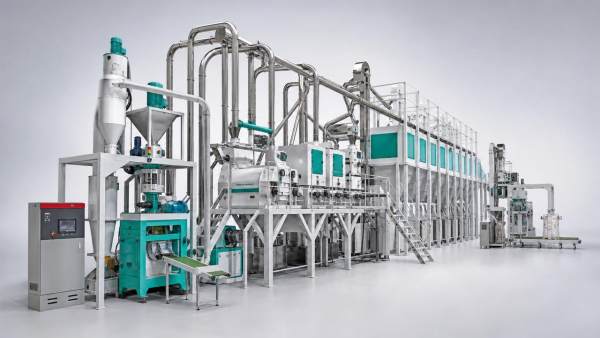
Choosing commercial flour mill machinery is a strategic decision that shapes project cost, throughput, energy use, and future scalability. For project managers evaluating a compact production line versus a full-scale plant, the right configuration depends on raw material capacity, process automation, site conditions, and long-term return on investment. This article outlines the key technical and operational factors behind a sound procurement decision.
For engineering and project leadership teams, a checklist-based approach is the fastest way to compare commercial flour mill machinery options without losing sight of hidden lifecycle costs. A small line may deliver speed, lower initial investment, and easier installation, while a full plant may support higher extraction efficiency, stronger automation, and better expansion logic. The decision becomes clearer when each option is tested against capacity targets, utilities, product specification, labor structure, regulatory demands, and supplier support.
Start with the decision frame: what must be confirmed first
Before comparing quotations, project managers should define the non-negotiable project parameters. This avoids a common procurement error: selecting commercial flour mill machinery based on nameplate capacity alone while underestimating cleaning losses, extraction targets, or packaging bottlenecks. A compact line and a full plant can both appear suitable on paper, but their practical performance differs once grain quality fluctuation, maintenance windows, and labor availability are considered.
- Daily and annual throughput target, including realistic operating hours rather than ideal continuous runtime.
- Raw wheat or grain characteristics, such as moisture, hardness, impurity level, and seasonal variation.
- Required flour types, extraction rate, ash content, granulation consistency, and bran/by-product handling.
- Utility conditions, especially electrical load, compressed air, water availability, and ventilation requirements.
- Site restrictions, including building height, floor loading, logistics access, and dust control design.
- Budget structure across CAPEX, installation, commissioning, training, and spare parts.
- Expansion horizon: whether the project is a pilot entry, a regional supply node, or a long-term processing hub.
When these points are documented early, suppliers of commercial flour mill machinery can provide proposals that are technically comparable rather than marketing-heavy. This also helps owners align equipment configuration with financing plans and implementation milestones.
Checklist for choosing a small line
A small flour milling line is often the better fit when the business model prioritizes faster market entry, constrained site footprint, or moderate local demand. However, “small” should not mean under-specified. The most successful compact projects use commercial flour mill machinery that simplifies the process without sacrificing product stability.
Use a small line when these conditions apply
- Target output is limited and demand is stable within a regional sales radius.
- The project must control upfront cost and shorten installation lead time.
- The available building cannot accommodate a large multi-floor process layout.
- The labor team prefers easier operation, reduced training complexity, and simpler maintenance routines.
- The product portfolio is narrow, such as one or two standard flour grades.
For this scenario, project teams should check whether the commercial flour mill machinery supplier can still provide robust cleaning, stable feeding, efficient roller milling, and dependable sifting. Compact systems fail most often when the front-end cleaning section is minimized too aggressively. Inconsistent raw material preparation can damage downstream performance more than nominal mill size ever will.
Checklist for choosing a full plant
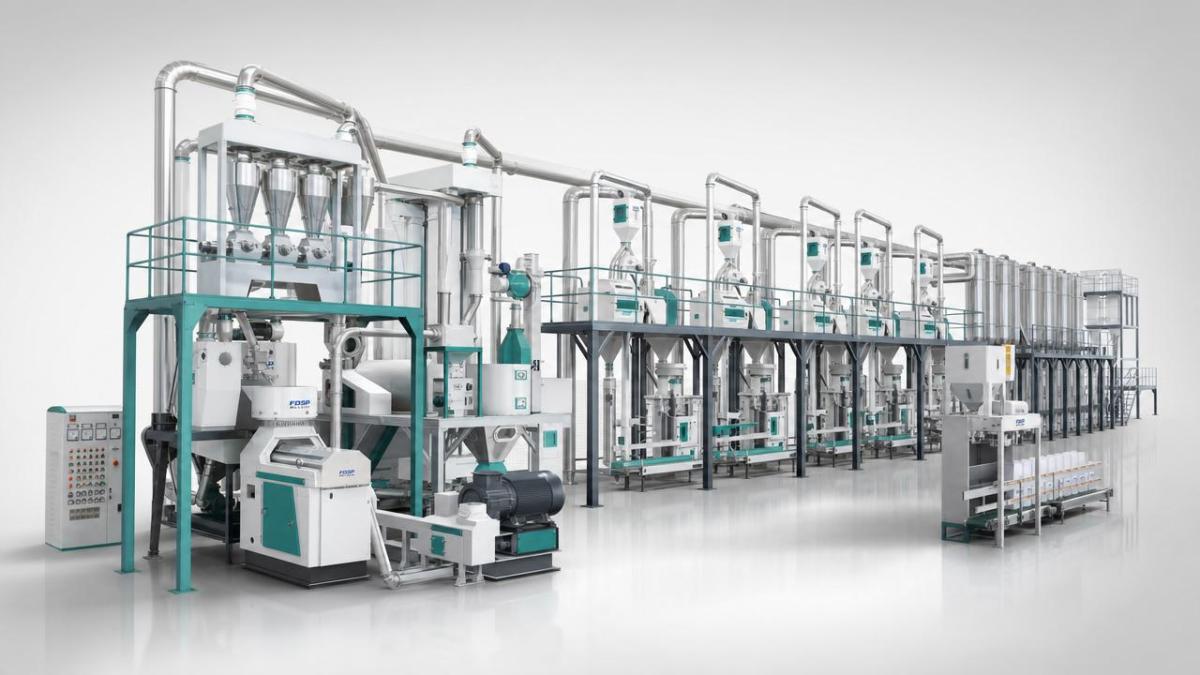
A full flour milling plant is typically justified when scale, product flexibility, and long-term cost per ton matter more than the lowest initial spend. In large industrial settings, commercial flour mill machinery is not just processing equipment; it becomes part of a wider production system that includes storage, handling, blending, packaging, quality assurance, and digital control.
A full plant is usually the stronger option when
- High throughput is required across multiple shifts with predictable utilization.
- The owner needs several flour grades, improved extraction control, and more refined separation stages.
- Automation, data logging, and centralized supervision are important for labor efficiency and traceability.
- The project includes grain silos, bulk receiving, finished product logistics, and future line additions.
- Management evaluates total cost of ownership over many years rather than first-cost alone.
In these cases, full-plant commercial flour mill machinery often supports better process balance between cleaning, conditioning, milling, plansifting, pneumatic conveying, and packing. It may also allow staged expansion, where reserve capacity is built into power distribution, control architecture, or structural layout. For project managers, this is often the deciding advantage: the plant can scale without repeated shutdowns or major rework.
Core technical checks that should guide every comparison
Whether comparing a compact line or a complete industrial plant, the same technical checks should be applied. These checks help separate commercial flour mill machinery that only looks competitive from equipment that will perform reliably under operational pressure.
This framework is especially useful when multiple vendors present different process flows for commercial flour mill machinery. The objective is not to reward the longest equipment list, but to identify which solution best matches the required quality, uptime, and profitability profile.
Key differences in project execution: small line versus full plant
From a project management standpoint, the gap between the two options is not only technical. It also affects schedule control, contractor coordination, utility design, and commissioning complexity.
Execution points that often change the final decision
Installation timeline: Small-line commercial flour mill machinery generally arrives in simpler modules and may require less civil adaptation. A full plant usually demands more detailed sequencing between mechanical installation, electrical integration, ducting, dust collection, and storage interfaces.
Commissioning scope: The larger the plant, the more important dry testing, balancing, interlock verification, and operator training become. A full plant may need phased commissioning to stabilize each process section.
Utilities and environment: Commercial flour mill machinery at plant scale requires stricter planning for explosion risk mitigation, dust aspiration, noise management, and electrical protection. These are often underestimated at budget approval stage.
Supply chain resilience: A full plant creates greater dependence on spare part logistics, controls support, and technical response time. Vendor service capability should be part of the procurement scorecard, not an afterthought.
Commonly overlooked risks when selecting commercial flour mill machinery
Several procurement mistakes repeat across flour processing projects, especially when teams focus too heavily on equipment headline capacity.
- Ignoring raw material variability: A system tuned for ideal wheat may struggle with local crop fluctuation. Ask for performance assumptions.
- Underestimating conditioning time: Moisture addition and resting requirements affect both quality and line rhythm.
- Weak packaging integration: Milling output can exceed packing speed, creating hidden bottlenecks and storage problems.
- Insufficient dust management: Dust control is an operations, safety, and housekeeping issue, not only a compliance checkbox.
- No spare parts strategy: Even good commercial flour mill machinery loses value if critical rollers, sieves, belts, or sensors are not planned in advance.
- Overbuying complexity: A full plant with advanced automation may not deliver ROI if the operating team cannot maintain or use that capability effectively.
Practical recommendation checklist for project managers
To move from comparison to decision, project managers should prepare a short but disciplined bid evaluation package. This improves quotation accuracy and reduces revision cycles with commercial flour mill machinery suppliers.
- Issue a process brief with target capacity, grain type, flour specifications, utility data, and site drawings.
- Request single-line process flow, power list, foundation requirement, and recommended staffing level.
- Ask vendors to state guaranteed performance conditions and excluded scope clearly.
- Compare proposals on energy, extraction, automation, maintenance, and expansion readiness—not price alone.
- Conduct reference checks for similar commercial flour mill machinery installations in comparable environments.
- Validate after-sales support, spare part lead times, training coverage, and commissioning responsibilities.
FAQ for selecting the right configuration
Is a small line always more economical?
Not necessarily. Small-line commercial flour mill machinery usually lowers initial CAPEX, but per-ton operating cost may be higher if automation is limited, extraction is weaker, or labor intensity is greater. Economy depends on utilization rate and product strategy.
When does a full plant become the better investment?
A full plant becomes attractive when demand is durable, output targets are high, and the owner needs better process control, multiple flour grades, or future expansion. In these conditions, commercial flour mill machinery at plant scale can deliver stronger lifecycle returns.
What specification should be prepared before contacting suppliers?
At minimum: raw grain data, target throughput, utility availability, finished product specification, packaging plan, site layout constraints, preferred automation level, and project schedule. Better input leads to better commercial flour mill machinery proposals.
Final decision guide and next-step action points
The best commercial flour mill machinery decision is rarely about choosing the biggest system or the cheapest line. It is about matching process design to demand profile, site reality, operator capability, and expansion strategy. If the project needs fast deployment, limited product complexity, and modest output, a well-configured small line may be the smarter choice. If the project requires scale, consistency, automation, and future growth, a full plant usually provides stronger long-term value.
Before moving forward, project teams should prioritize five discussions with potential suppliers: actual operating capacity, product quality guarantees, utility consumption, maintenance and spare parts plan, and scalability roadmap. These points will reveal whether the proposed commercial flour mill machinery is truly suitable for the project rather than merely attractive in a quotation. For procurement teams seeking a reliable next step, the most effective action is to convert internal assumptions into a structured technical brief and review supplier responses against a weighted checklist.
Related Intelligence
- Milling Machinery5 Milling Machinery Firms Approved for Belt and Road Smart Farm Machinery Cloud Platform5 milling machinery firms approved for Belt and Road Smart Farm Machinery Cloud Platform — enabling multilingual remote diagnostics, cross-border spare parts ordering & national API integration.
- Milling MachineryTea leaf rolling machine pressure settings and leaf appearanceTea leaf rolling machine pressure settings directly shape twist, appearance, and quality. Learn how to balance pressure for cleaner leaves, less breakage, and more consistent tea processing results.
- Milling MachineryTea processing machines wholesale and the spare parts questionTea processing machines wholesale buyers now focus on spare parts, uptime, and lifecycle support. Learn how to compare suppliers, reduce downtime risk, and protect tea quality.
The Morning Broadsheet
Daily chemical briefings, market shifts, and peer-reviewed summaries delivered to your terminal.
