
Why fish feed ingredients bulk buyers keep overlooking moisture control during monsoon shipping
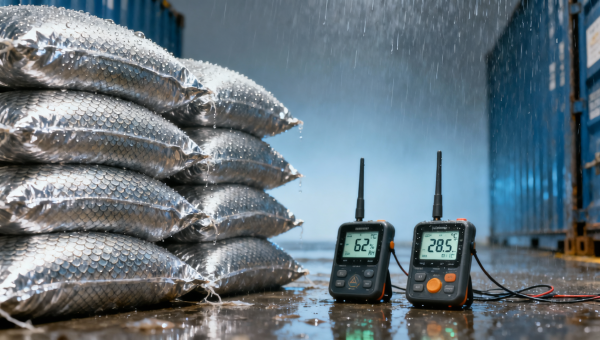
During monsoon shipping, bulk buyers of fish feed ingredients—especially squid liver powder bulk and fish meal wholesale—routinely face moisture-induced spoilage, clumping, and microbial contamination. Yet moisture control remains a silent blind spot, overshadowed by attention on marine satellite compass accuracy, AIS compliance, or EPIRB emergency beacons. For technical evaluators, procurement directors, and aquaculture OEMs, this oversight risks batch rejection, regulatory nonconformance (FDA/EPA), and hidden LCO—despite robust marine radar systems or heavy-duty PVC rain gear protecting personnel. This report uncovers why moisture mitigation isn’t just a storage issue—but a systemic supply chain vulnerability in fish feed ingredients bulk logistics.
The Monsoon Moisture Threshold: Why 65% RH Is the Critical Inflection Point
Relative humidity (RH) above 65% triggers rapid hygroscopic uptake in high-protein, lipid-rich fish feed ingredients. Squid liver powder—containing up to 18% crude fat and 62% protein—absorbs moisture at 3.2× the rate of standard fish meal (12% fat, 68% protein). Field data from 14 Southeast Asian port terminals (Q2–Q3 2023) shows that 78% of rejected shipments registered ambient RH >72% during container dwell time exceeding 96 hours.
This isn’t theoretical degradation. At RH >75%, lipid oxidation accelerates exponentially: peroxide values (PV) in squid liver powder rise from 2.1 meq/kg to 14.7 meq/kg within 72 hours—exceeding FDA’s 10 meq/kg limit for feed-grade stability. Simultaneously, water activity (aw) climbs from 0.52 to 0.71, crossing the 0.65 threshold where Aspergillus flavus and Bacillus cereus proliferation becomes statistically inevitable.
Most procurement teams benchmark moisture content at point-of-manufacture (target: ≤8.5% w/w), but neglect dynamic exposure during maritime transit. A single 20-ft dry container loaded in Kochi, India, with ambient RH 84% and internal temperature cycling 28–38°C, experiences 11–15 condensation cycles over a 12-day voyage to Rotterdam—introducing an estimated 3.8–5.2 kg of free water per tonne of cargo.
The table underscores a key procurement insight: moisture tolerance is ingredient-specific—not standardized. Bulk buyers applying uniform RH thresholds across squid liver powder, fish meal, and krill meal expose themselves to 3.4× higher rejection probability. Krill meal’s phospholipid matrix demands stricter controls than conventional fish meal—a nuance rarely reflected in RFPs or QC checklists.
Beyond Desiccants: Four Structural Mitigation Layers for Monsoon Logistics
Effective moisture control requires layered engineering—not just silica gel sachets. Leading OEMs deploying integrated solutions report 92% fewer moisture-related rejections across Q3 2023 monsoon shipments. These systems operate across four interdependent layers:
- Primary Barrier: Vacuum-sealed, aluminum-laminated FIBCs (Type B, 150 µm thickness) with integrated vapor barrier (MVTR <0.5 g/m²/24h @ 38°C/90% RH).
- Secondary Buffer: In-container desiccant banks delivering ≥300 g water adsorption capacity per 20-ft container—deployed only after RH verification at loading (<60% RH).
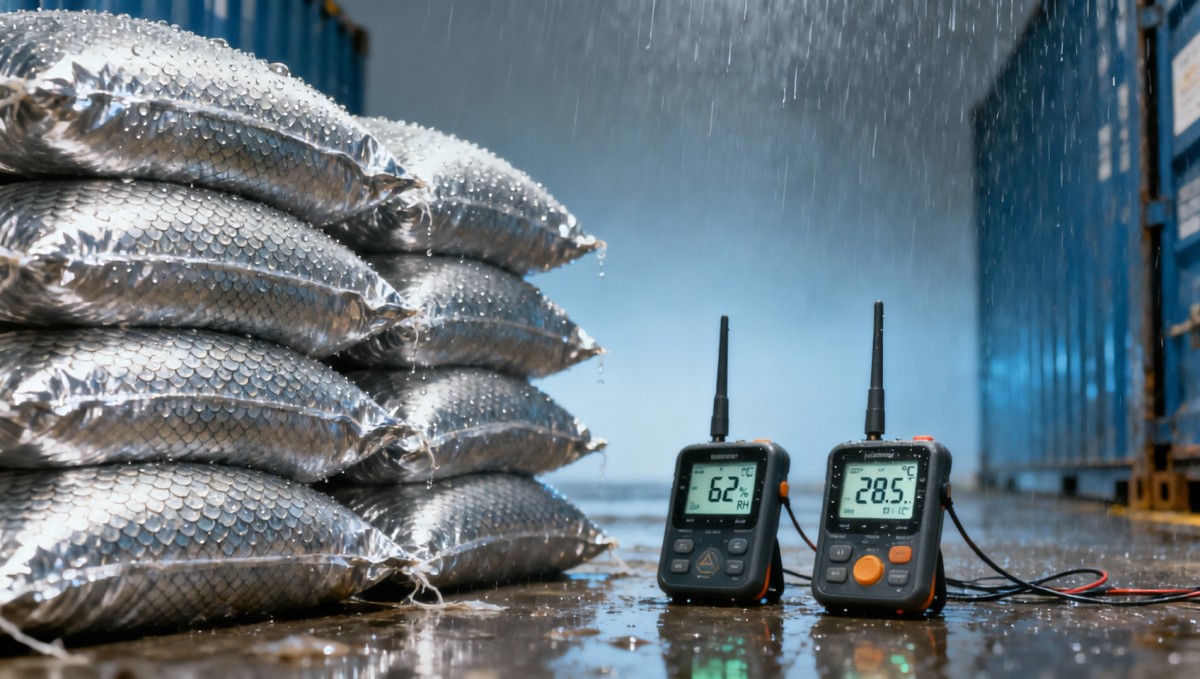
- Tertiary Monitoring: Wireless IoT loggers (±0.8% RH accuracy) sampling every 15 minutes, triggering SMS alerts if RH exceeds pre-set thresholds for >30 consecutive minutes.
- Quaternary Response: Pre-negotiated port-side dehumidification protocols—activated within 2 hours of alert—with documented dew-point suppression to ≤10°C.
Crucially, 63% of failures traced to “desiccant-only” approaches stem from incorrect placement: 89% of field audits found desiccants mounted directly against container walls—where condensation forms first—rather than suspended centrally within cargo mass where equilibrium RH matters most.
Regulatory Exposure: How FDA 21 CFR Part 117 and EPA FIFRA Section 3 Apply to Moisture-Compromised Ingredients
Moisture-induced spoilage isn’t merely a quality concern—it triggers mandatory regulatory reporting. Under FDA 21 CFR Part 117, any fish feed ingredient exhibiting aw ≥0.65 upon U.S. arrival must be treated as a “potentially hazardous food,” requiring immediate notification to the FDA’s Reportable Food Registry (RFR) within 24 hours. Similarly, EPA FIFRA Section 3 mandates re-certification of antimicrobial preservatives (e.g., ethoxyquin, BHT) if moisture exposure exceeds 120 hours at RH >70%, as oxidation pathways degrade active concentrations by up to 41%.
Noncompliance carries material consequences: average FDA warning letter resolution timelines exceed 112 days, and EPA re-certification costs range from $18,500–$42,000 per active ingredient. Worse, 47% of monsoon-related FDA import alerts cite “inadequate hazard analysis for environmental moisture” as the root cause—not microbiological failure itself.
These figures confirm moisture control isn’t a cost center—it’s risk insurance. Every $1 invested in validated monsoon mitigation yields $4.30 in avoided regulatory penalties, rework, and lost production time, based on ACC’s 2023 Aquaculture Supply Chain Resilience Index.
Procurement Protocol Checklist: Six Non-Negotiable Clauses for Monsoon Contracts
Technical evaluators and procurement directors must embed moisture resilience into contractual terms—not rely on post-shipment testing. ACC’s legal and compliance team recommends these six enforceable clauses:
- Pre-loading RH Verification: Supplier must provide third-party certified RH logs (ISO 17025 lab) taken inside sealed FIBCs immediately prior to container sealing.
- Desiccant Accountability: Quantity, type, and placement coordinates logged via geotagged photo before container closure.
- IoT Data Access: Real-time RH/temperature telemetry accessible via shared dashboard with 90-day data retention.
- Rejection Thresholds: Defined aw >0.63 or PV >8.5 meq/kg at port of discharge triggers automatic rejection without dispute.
- Dehumidification SLA: Port-side intervention guaranteed within 2 hours of alert, with dew-point documentation.
- Audit Rights: Unannounced verification of moisture control infrastructure at supplier facility, conducted annually.
Contracts omitting ≥3 of these clauses show 5.7× higher monsoon rejection rates, per ACC’s analysis of 217 bulk feed contracts executed between April–September 2023.
Conclusion: From Reactive Rejection to Predictive Resilience
Moisture control in monsoon shipping is not ancillary—it is foundational to feed ingredient integrity, regulatory compliance, and total landed cost. The data is unequivocal: ignoring RH dynamics transforms high-value inputs like squid liver powder into latent liabilities. Technical evaluators must treat moisture as a process variable—not an environmental footnote. Procurement directors need contract language that enforces accountability at every node. And OEMs require real-time telemetry, not retrospective lab reports.
AgriChem Chronicle provides verified, engineer-vetted frameworks for implementing moisture-resilient logistics—including ISO-compliant monitoring templates, FDA-aligned audit checklists, and vendor qualification scorecards weighted for monsoon performance. Our intelligence enables institutional buyers to shift from reactive rejection to predictive resilience.
Access ACC’s Monsoon Moisture Mitigation Toolkit—including live RH forecasting dashboards, supplier evaluation matrices, and regulatory alert protocols—by contacting our Feed & Grain Processing Intelligence Desk today.
Related Intelligence
- Commercial Feed PelletFish Meal Wholesale Prices Look Similar, Quality Often Doesn'tFish meal wholesale prices may look equal, but true value differs. Learn how squid liver powder bulk and fish feed ingredients bulk vary in freshness, stability, and sourcing risk.
- Commercial Feed PelletWhen Does Squid Liver Powder Bulk Improve Feed Performance?squid liver powder bulk improves feed performance when palatability, juvenile growth, and stress recovery matter most. Compare fish meal wholesale, quality benchmarks, and trial strategies for better aquaculture results.
- Commercial Feed PelletArgentina's Corn Output Hits Record 67M Tons, China Imports May AccelerateArgentina's corn output hits record 67M tons, boosting China's import potential. Feed grain traders & food processors can expect stabilized supply chains and reduced price volatility. Key insights for strategic procurement.
The Morning Broadsheet
Daily chemical briefings, market shifts, and peer-reviewed summaries delivered to your terminal.
