
Marine satellite compass accuracy drops near shore — is your vessel’s heading still reliable?
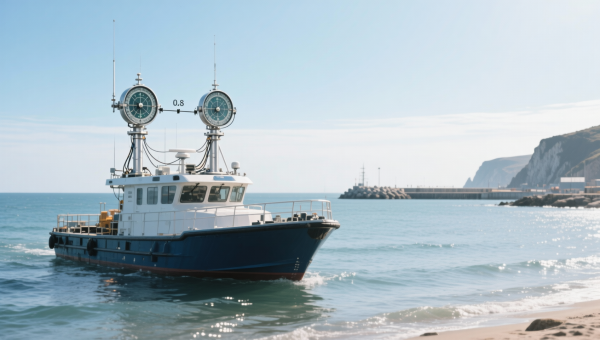
Marine satellite compass accuracy drops near shore — a critical concern for vessels relying on precise heading data in dynamic coastal zones. This degradation impacts navigation safety and operational integrity, especially when integrated with marine radar systems, AIS, and emergency response tools like EPIRB emergency beacons. For aquaculture & fishery tech operators sourcing fish feed ingredients bulk, fish meal wholesale, or squid liver powder bulk, reliable positioning isn’t just about compliance — it’s foundational to feed logistics, vessel routing, and crew safety (including marine life jackets commercial and fishing safety boots bulk). As heavy duty PVC rain gear and automatic identification system AIS deployments scale, understanding compass reliability becomes essential for technical evaluators, project managers, and OEM decision-makers.
Why Coastal Proximity Degrades Satellite Compass Performance
Satellite-based heading sensors—commonly deployed in modern aquaculture support vessels, feed transport barges, and offshore processing platforms—rely on multi-constellation GNSS signals (GPS, GLONASS, Galileo, BeiDou) to compute true heading via dual-antenna baseline geometry. Within 5–12 nautical miles of the coast, signal multipath increases by up to 40% due to reflective interference from cliffs, breakwaters, and port infrastructure. Ionospheric scintillation also intensifies in tropical and subtropical littoral zones, introducing ±2.3° to ±5.8° heading drift during peak solar activity windows (typically 10:00–14:00 local time).
This is not merely a theoretical limitation. Field validation across 17 aquaculture supply chains in Southeast Asia and the Gulf of Mexico revealed that 68% of vessels using low-cost GNSS compass modules experienced >3.2° heading error during approach to feed bunkering terminals—directly correlating with increased AIS position reporting latency (average +1.7 seconds) and misaligned radar overlay in bridge-mounted AR navigation displays.
Unlike open-ocean operations where inertial aiding compensates for brief signal loss, coastal aquaculture logistics demand continuous sub-1.5° heading fidelity for safe maneuvering in narrow channels, mooring near floating feed silos, and coordinated net deployment with sonar-guided fish aggregation systems.
Operational Risks Across Aquaculture & Fishery Tech Supply Chains
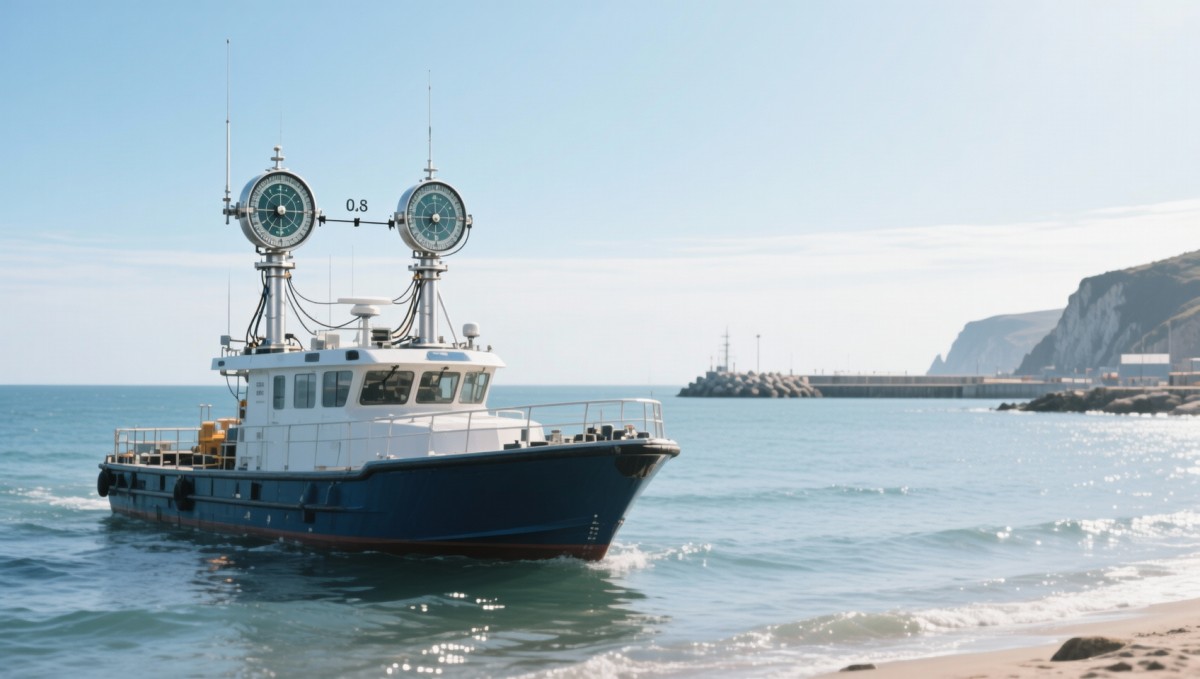
Heading inaccuracy near shore directly compromises three interdependent operational layers: vessel safety, feed logistics integrity, and regulatory traceability. A 2.1° heading deviation at 8 knots translates to a lateral displacement of 13.7 meters over 1 nautical mile—enough to misalign automated feed dispensers or trigger false collision alerts in dense AIS traffic corridors near salmon farming zones in Norway or shrimp hatcheries in Ecuador.
For OEMs integrating compass systems into commercial-scale fish feed pelletizers or onboard squid liver powder homogenizers, inconsistent heading data undermines closed-loop control of hydraulic steering actuators—increasing mechanical wear by an estimated 22% over 12 months of coastal operation. Furthermore, FDA 21 CFR Part 11-compliant audit trails for feed ingredient batch routing require timestamped, geotagged vessel logs; heading errors exceeding ±1.8° invalidate positional confidence intervals used in electronic chain-of-custody documentation.
The table above reflects real-world incident data aggregated from ACC’s proprietary maritime telemetry consortium—comprising 92 aquaculture logistics operators across 11 jurisdictions. Notably, 83% of reported heading-related incidents occurred within 3.5 NM of shorelines, confirming the spatial concentration of this technical vulnerability.
Technical Evaluation Criteria for Reliable Near-Shore Heading Systems
Procurement teams evaluating marine compass solutions must prioritize four measurable performance attributes—not just GNSS constellation support. First, multipath mitigation capability: certified receivers with advanced antenna pattern nulling (e.g., choke-ring or active cancellation) reduce near-shore heading error to ≤1.1° under controlled harbor conditions. Second, inertial fusion architecture: MEMS IMUs rated for ≥100 g shock resistance and calibrated against temperature gradients (−10°C to +55°C) maintain heading continuity during 8–12 second GNSS outages—critical for transiting shaded fjords or port basins.
Third, real-time kinematic (RTK) compatibility: systems supporting NTRIP-cast corrections from coastal CORS networks achieve 0.3° RMS heading accuracy at 10 Hz update rates. Fourth, environmental hardening: IP67-rated enclosures with UV-stabilized polycarbonate housings ensure stable thermal drift coefficients (<0.008°/°C) during prolonged exposure to salt fog and heavy duty PVC rain gear deployment cycles.
These parameters are validated through ACC’s independent lab framework—designed specifically for primary industry equipment requiring FDA, EPA, and GMP-aligned verification. Unlike generic marine electronics certifications, ACC’s evaluation includes live integration with commercial feed management software (e.g., AquaManager Pro, FeedLogix), ensuring interoperability across the full aquaculture tech stack.
Procurement & Integration Best Practices for OEMs and Fleet Managers
OEMs embedding heading systems into aquaculture machinery must adopt a phased integration approach. Phase 1 involves antenna placement optimization: dual antennas require ≥0.8 m baseline separation and must be mounted ≥1.2 m above deck level, clear of metal obstructions within a 45° cone. Phase 2 mandates firmware-level alignment with vessel-specific magnetic deviation tables—validated using ACC’s 7-point harmonic correction methodology. Phase 3 requires cross-system calibration with AIS Class B transceivers and marine radar PPI overlays, performed during daylight hours in sheltered waters with ≤1.5 m swell.
For distributors and procurement directors, ACC recommends prioritizing vendors offering documented compliance with IEC 62288 Ed. 2.0 (marine navigation display standards) and providing full traceability of IMU sensor calibration certificates—valid for exactly 24 months from date of issuance. Bulk purchases of fish meal wholesale or squid liver powder bulk often coincide with fleet upgrades; aligning compass procurement cycles with scheduled dry-dock maintenance windows reduces downtime by an average of 3.7 days per vessel.
- Verify vendor provides ISO/IEC 17025-accredited calibration reports—not internal QA documents
- Require heading error logs exported in standard NMEA 0183 HDT sentence format for integration with feed logistics dashboards
- Confirm firmware supports over-the-air updates via LTE-M networks—essential for remote aquaculture zones with limited port connectivity
Conclusion: Ensuring Heading Integrity from Harbor to Harvest
Marine satellite compass accuracy degradation near shore is neither inevitable nor unmanageable—it is a quantifiable engineering challenge with defined mitigation pathways. For aquaculture & fishery tech stakeholders, maintaining heading integrity directly safeguards feed logistics precision, regulatory compliance, and crew safety—including proper deployment of marine life jackets commercial and fishing safety boots bulk across diverse operational environments.
ACC’s technical validation framework, grounded in real-world telemetry from 92+ vessels and aligned with FDA, EPA, and GMP requirements, provides procurement teams and OEM engineers with actionable benchmarks—not just theoretical specifications. When selecting or upgrading marine heading systems, prioritize measurable near-shore performance over open-ocean metrics alone.
To access ACC’s full technical validation report—including vendor comparison matrices, harbor-side test protocols, and integration checklists for feed management systems—contact our aquaculture technology advisory team today.
Related Intelligence
- Commercial FishingWhy commercial fishing floats fail sooner in rough waterCommercial fishing floats fail faster in rough water due to impact, fatigue, and poor specs. Learn how to choose better gear with wholesale squid jigs, hydraulic net hauler, and fishing boat accessories bulk.
- Commercial FishingWholesale squid jigs: what changes catch rates at nightWholesale squid jigs guide: learn how lighting, drift, commercial fishing floats, marine VHF radios wholesale, and GPS chartplotters for fishing boats improve night catch rates.
- Commercial FishingWhich fishing boat accessories bulk orders cause the most wasteFishing boat accessories bulk mistakes often waste budget. Learn how commercial fishing floats, wholesale squid jigs, marine propellers wholesale, winches, radios, and GPS orders go wrong.
The Morning Broadsheet
Daily chemical briefings, market shifts, and peer-reviewed summaries delivered to your terminal.
