
Why Some Vertical Feed Mixer Machines Leave Dead Spots
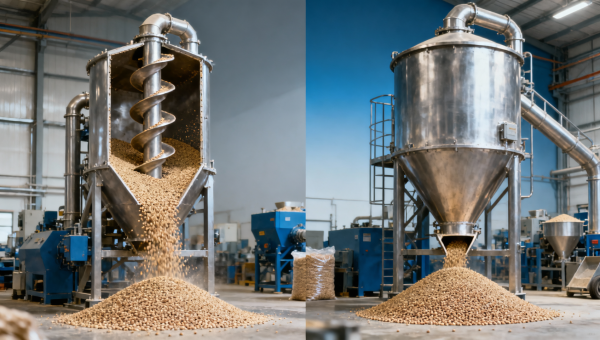
Dead spots in a vertical feed mixer machine can quietly undermine batch uniformity, throughput, and quality control across modern feed operations. For buyers comparing horizontal ribbon blender feed systems, animal feed mixers wholesale options, or equipment for a cattle feed processing plant, poultry feed pellet machine line, or floating fish feed plant, understanding why material stagnates is essential before making technical or commercial decisions.
In practical feed and grain processing environments, a dead spot is any zone inside the mixer where ingredients circulate poorly, remain unmixed for too long, or repeatedly escape the primary mixing path. Even when a machine appears to run normally, these stagnant pockets can reduce mixing consistency, lengthen cycle time by 10%–30%, and increase the risk of nutrient variation between bags, silos, or finished feed lots.
For operators, dead spots create headaches on the plant floor. For technical evaluators, they raise questions about chamber geometry, screw design, fill ratio, and discharge efficiency. For procurement teams and financial approvers, they directly affect lifecycle cost, rework rates, power usage, and return on capital. This is why mixer selection should never focus on nameplate capacity alone.
The issue is especially important in facilities handling premixes, protein meals, mineral additives, molasses-treated ingredients, or formulas with particle size variation. In those cases, a vertical feed mixer machine may still be the right choice, but only if its mixing path, internal clearances, loading method, and maintenance strategy are properly matched to the application.
What Dead Spots Mean Inside a Vertical Feed Mixer Machine
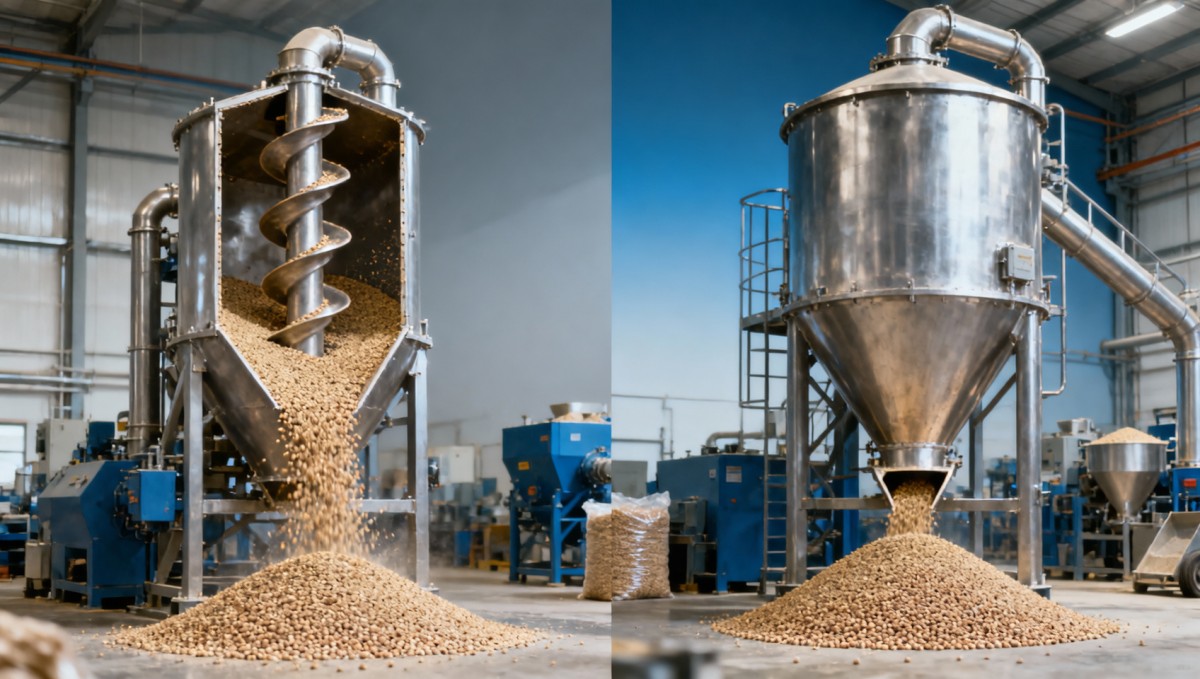
A vertical feed mixer machine generally moves material upward through a central screw or auger and allows it to fall back by gravity along the vessel wall. In theory, this creates a continuous circulation loop. In practice, however, some zones receive weaker motion than others. Corn meal may move well in the center while fine powders cling near corners, or fibrous ingredients may bridge in upper sections and re-enter the stream too slowly.
Dead spots are not always fixed in one location. They can shift depending on batch size, moisture level, ingredient density, and residence time. A machine that mixes a 1,000 kg dry mash batch evenly in 8 minutes may struggle with a 600 kg batch containing oil, bran, and micro-ingredients. This variable behavior is why static factory demonstrations do not always predict real operating performance.
In feed plants, acceptable coefficient of variation targets often depend on the formula and the inclusion rate of critical ingredients. While exact limits vary by operation, a mixer that creates persistent dead spots will usually show wider spread in trace components first, especially vitamins, minerals, enzymes, coccidiostats, or colorants. That makes the problem a quality issue, not merely a mechanical one.
Dead spots also affect cleaning and changeover. If material remains trapped after discharge, the carryover from one batch to the next can increase. In medicated or species-specific feed production, even a residual level of 0.1%–0.5% may be operationally significant. Facilities that run multiple recipes per shift should therefore view dead spots as both a mixing risk and a contamination-control risk.
Common signs that stagnation is already happening
- Batch-to-batch inconsistency despite stable ingredient weighing and dosing.
- Longer-than-expected mixing cycles, such as 12–15 minutes where 6–10 minutes should be sufficient for the formula type.
- Visible residue after discharge, especially in lower cone areas, wall seams, or around internal supports.
- Increased segregation after mixing because some material never integrated fully before transfer.
Where dead spots tend to form
Typical high-risk areas include the bottom cone transition, the outer wall near low-velocity zones, regions above the discharge gate, and spaces created by poor screw-to-wall proportion. Machines with internal braces, abrupt geometric changes, or rough weld finishing may further trap powders and fibrous matter. These details look minor on a drawing, but they strongly influence how material actually moves.
The following comparison helps buyers and engineers distinguish normal circulation challenges from structural stagnation risks before selecting equipment.
The key takeaway is that dead spots are usually a flow-path issue rather than a single “bad machine” issue. Geometry, product type, and operating practice interact. A vertical feed mixer machine that performs well for standard mash may still underperform when exposed to high-fat, high-fiber, or micro-dose formulations.
The Main Mechanical and Process Causes of Dead Spots
The most common cause is mismatch between mixer design and the material profile. Vertical machines are often chosen for compact footprint, lower initial investment, and suitability for farms or medium-output plants. But when formulas contain ingredients with different bulk densities, such as soybean meal, limestone, bran, and premix additions, the circulation pattern can become uneven unless the auger pitch, chamber height, and vessel diameter are properly balanced.
Fill ratio is another major factor. Running below roughly 40% of rated working volume often weakens the intended mixing loop, while operating above 85% can restrict free fall and reduce turnover. In both cases, some material starts moving in preferred channels rather than across the full chamber. The result is a false sense of mixing: the screw is active, but the entire batch is not participating equally.
Ingredient condition matters just as much as mechanical design. Moisture above a typical 12%–14% range in some mash systems, excessive liquid addition, or fibrous materials longer than expected can create adhesion, clumping, and arching. Once those behaviors appear, dead spots often multiply around areas where flow velocity is already marginal. This is why plants that switch recipes seasonally sometimes notice mixer problems only during certain runs.
Wear and maintenance also play a role. As the screw edge, liner surfaces, or internal clearances change over time, the original circulation efficiency declines. A machine that mixed well during the first 12–18 months may gradually require longer cycles, more power, or manual cleaning. Without a testing routine, teams may blame the formula or operator before recognizing that the mixer has drifted away from its original performance envelope.
Four recurring design-related causes
- Improper auger geometry: pitch, diameter, or lift profile does not sustain full-batch circulation.
- Poor vessel transitions: sharp cone angles or abrupt shape changes interrupt return flow.
- Inadequate discharge design: product remains in the lower chamber and recontaminates the next batch.
- Insufficient surface finish: rough internal walls increase adhesion of fine powders and oily material.
Why process settings can be just as important
Even a well-built unit can generate dead spots if loading sequence is poor. For example, adding liquids too early, charging micro-ingredients before the base bulk is circulating, or feeding lumpy materials without pre-conditioning can overload one part of the chamber. In many plants, simple changes to ingredient order and cycle timing reduce visible stagnation without changing the hardware.
This is especially relevant for buyers comparing vertical machines with a horizontal ribbon blender feed layout. Horizontal systems often deliver faster cycles and tighter uniformity for demanding premixes, but they also occupy more floor area and may involve higher capital and cleaning requirements. The right answer depends on production scale, formulation complexity, and the cost of inconsistency.
How Dead Spots Affect Throughput, Quality Control, and Plant Economics
From a production standpoint, dead spots quietly lower effective throughput. A mixer rated for 2 tons per batch does not truly deliver that value if operators must extend each cycle from 8 minutes to 14 minutes to compensate for uneven blending. Across 3 shifts or 20–30 batches per day, that time loss compounds into missed output targets, additional energy consumption, and scheduling pressure on pelletizing or bagging lines downstream.
For quality teams, the bigger concern is distribution of critical low-inclusion ingredients. Macro ingredients may appear visually blended, but trace elements can still vary significantly when a dead zone exists. This can trigger internal nonconformance, re-sampling, and batch holds. In operations supplying poultry, cattle, aquaculture, or specialty feed markets, such inconsistency can affect not only performance claims but also customer trust and audit readiness.
Commercially, dead spots raise total cost in ways that are often missed during the purchasing phase. Teams usually compare motor size, steel thickness, and ex-factory price. Yet the hidden cost drivers are rework, carryover cleaning time, test frequency, downtime, and rejected lots. Over a 3-year to 5-year ownership period, these recurring losses can exceed the initial savings of choosing a lower-cost machine.
For distributors and project managers, the issue is equally important because it affects post-installation support. A machine sold into the wrong application may generate repeat service calls, complaints about “poor mixing,” or requests for retrofits. That is why application matching should be documented before procurement approval, especially when the mixer is part of a larger cattle feed processing plant or floating fish feed plant package.
Operational consequences by business function
The matrix below summarizes how dead spots translate into business risk for different stakeholders involved in equipment approval and plant operation.
The table shows why dead spots should be treated as a plant-wide performance issue. They affect production, compliance, and capital efficiency at the same time. For this reason, technical due diligence should be part of any animal feed mixers wholesale comparison, not an afterthought after commissioning.
How to Evaluate a Mixer Before Purchase or Project Approval
The most effective way to reduce dead spot risk is to specify the mixer around the real formula, not around a generic brochure. Buyers should provide at least 3 representative recipes, including the most difficult one. That means listing bulk density range, particle size spread, fiber level, liquid addition percentage, target batch size, and required mixing time. Without those inputs, equipment comparison remains too abstract to support a reliable procurement decision.
Request a defined performance discussion around minimum and maximum working loads. Some mixers behave reasonably at 70%–80% fill but become unstable at partial loads. If the plant runs frequent small batches, this matters more than rated peak capacity. It is also wise to ask how discharge residue is managed and whether the design has features that reduce retention in the cone or around the gate.
For technical assessment teams, a practical review should cover mechanical configuration, sanitation accessibility, serviceability, and expected wear parts. A lower-cost machine that needs screw repair, seal replacement, or manual scraping every few months may not be competitive against a better-designed unit with a longer maintenance interval. In many B2B projects, the hidden maintenance labor is more expensive than the spare parts themselves.
If the project also includes a poultry feed pellet machine line or downstream extrusion for aquaculture feed, evaluate mixer consistency against the next process step. Uneven pre-mixing can lead to poor pellet durability, unstable conditioning, or inconsistent floating performance. The mixer should be treated as an upstream quality-control asset, not just a feeding hopper with a motor.
A practical 6-point evaluation checklist
- Confirm effective working volume range, not only nominal capacity.
- Review internal geometry for areas that may trap fine or sticky material.
- Ask for expected mixing time under at least 2–3 real formula conditions.
- Check discharge completeness and estimated residue after each batch.
- Assess cleaning access, inspection ports, and wear-part replacement difficulty.
- Verify how the mixer integrates with conveying, dosing, and pelletizing equipment.
Decision criteria for vertical versus horizontal systems
A vertical feed mixer machine can be a strong fit for limited floor area, moderate throughput, and standard formulations. A horizontal ribbon blender feed system often suits operations needing faster turnover, tighter uniformity, and easier handling of challenging formulas. The selection should reflect operational reality: recipe diversity, batch frequency, cleaning demand, and tolerance for carryover.
Where possible, teams should combine technical review with a commercial scoring model. This prevents the purchase decision from being dominated by one-time price alone.
This comparison does not make one format universally better. It shows that the cost of dead spots should be weighed against layout constraints and product complexity. In many projects, the correct choice emerges only after recipe-level analysis rather than general preference.
Operational Fixes, Maintenance Practices, and FAQ for Reducing Dead Spots
Not every dead spot problem requires replacing the mixer. Plants can often improve results through disciplined operation and maintenance. Start by standardizing batch loading sequence, maintaining a consistent fill ratio, and avoiding overuse of liquids in the first stage of mixing. Where formulas vary widely, create separate mixing protocols rather than one fixed cycle for every product. A 2-stage approach can be useful when micro-ingredients or oils are sensitive to early adhesion.
Inspection frequency should also match risk. For standard mash production, internal checks every 2–4 weeks may be enough. For oily, fibrous, or medicated feed, weekly inspection may be justified. The goal is to spot residue buildup, wear, and gate sealing issues before they become chronic stagnation points. Operators should document changes in mixing time, discharge behavior, and cleaning effort because these are early signals of declining performance.
When a mixer is integrated into a broader feed system, improvement efforts should include upstream and downstream equipment. Poor feeding from hoppers, inconsistent screw conveyors, or inaccurate liquid dosing can imitate the symptoms of a dead spot. A good troubleshooting process isolates whether the root cause is inside the vertical feed mixer machine or elsewhere in the line.
For B2B buyers, the most reliable suppliers are usually those willing to discuss limitations as well as strengths. Clear answers on recipe range, cleaning expectations, maintenance intervals, and discharge residue are more valuable than broad claims about “high efficiency.” In industrial procurement, realistic operating guidance reduces project risk far more effectively than promotional language.
FAQ: How can operators tell whether dead spots are caused by the machine or the formula?
Run at least 2 controlled test batches with a simple dry formula and compare them with the difficult recipe. If the simple batch mixes well at the same fill level and cycle time, the problem is likely formula-related or process-related. If both batches show residue or inconsistent discharge, the machine geometry or wear condition deserves closer inspection.
FAQ: What batch size is most risky for a vertical mixer?
Very small batches are often the highest-risk condition because the intended circulation loop is not fully established. As a rule of thumb, frequent operation below about 40% of effective working volume should be reviewed carefully during equipment selection. Plants with many small specialty batches may need either a smaller mixer or a different mixer type.
FAQ: Can dead spots be reduced without a new capital purchase?
Yes, in many cases. Operators can adjust loading sequence, reduce liquid shock, standardize ingredient preparation, clean retention zones more often, and replace worn internal components. These actions may not eliminate a fundamentally poor design, but they can often recover acceptable performance and extend service life by 6–12 months while a larger upgrade plan is evaluated.
FAQ: What should procurement teams ask suppliers before ordering?
Ask for working load range, expected mixing time for different formulas, estimated discharge residue, wear-part service interval, and application limits for fiber, moisture, and liquid addition. Also confirm whether the machine is intended for farm use, commercial premix, or continuous plant integration. These answers provide a stronger basis for approval than price alone.
Dead spots in a vertical feed mixer machine are rarely random. They usually result from a clear interaction between machine geometry, fill level, ingredient behavior, and maintenance discipline. For feed mills, farm-integrated systems, aquaculture projects, and poultry or cattle feed lines, addressing stagnation early can protect uniformity, output, sanitation, and long-term equipment value.
If your team is comparing mixer options, validating a new line design, or troubleshooting inconsistent batch performance, a structured technical review can prevent costly misalignment. Contact us to discuss your application, request a tailored equipment assessment, or explore more feed and grain processing solutions suited to your production goals.
Related Intelligence
- Commercial Feed PelletIndia Launches Mid-Term AD Review on Chinese Commercial Feed PelletsIndia's mid-term AD review on Chinese Commercial Feed Pellets impacts exporters, feed mills & importers—get actionable insights, HS code guidance, and duty-scenario planning now.
- Commercial Feed PelletIndia Launches Mid-Term AD Review on Chinese Commercial Feed PelletsIndia's mid-term AD review on Chinese commercial feed pellets could raise duties to 28.5% — critical for exporters, feed mills & agri-input suppliers. Act now.
- Commercial Feed PelletChina Launches GB 13078-2026 Draft for Commercial Feed PelletsGB 13078-2026 draft mandates mycotoxin monitoring, AMR gene screening & carbon labeling for China’s commercial feed pellets — act now to ensure 2027 compliance.
The Morning Broadsheet
Daily chemical briefings, market shifts, and peer-reviewed summaries delivered to your terminal.
