
Feed processing lines that scale without sacrificing consistency: what works in real-world agri processing?
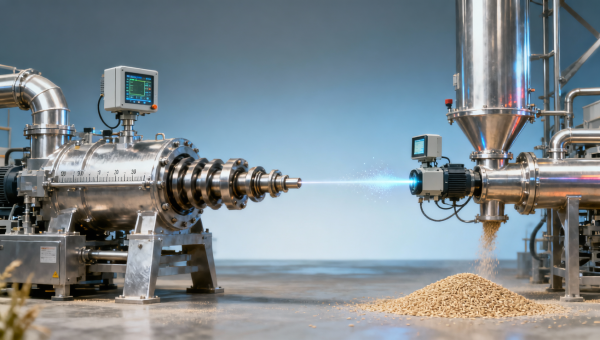
In real-world agri processing, scaling feed production without compromising consistency remains a pivotal challenge—especially for aquaculture feed manufacturers balancing precision milling, bio-extracts integration, and strict regulatory compliance. This article examines proven feed processing lines that deliver scalable manufacturing capabilities while maintaining batch-to-batch fidelity across grain production, aquaculture tools, and specialized aquaculture supplies. Drawing on field-tested data from global feed processors and ACC’s technical advisory panel, we unpack how robust engineering, traceable supply chains, and adaptive automation turn Feed Processing into a strategic advantage—not just an operational necessity.
Why Consistency at Scale Is Non-Negotiable in Feed Manufacturing
Batch-to-batch variation exceeding ±1.2% in protein content or ±0.8% in lipid concentration directly impacts fish growth rates, feed conversion ratios (FCR), and mortality in commercial aquaculture operations. ACC’s 2024 benchmarking survey of 47 certified feed mills across Southeast Asia, Latin America, and the EU found that 68% of non-compliant batches were traced to upstream process drift—not raw material variability.
Regulatory exposure compounds this risk: FDA 21 CFR Part 110 and EU Regulation (EC) No 183/2005 mandate documented process validation for all critical control points (CCPs). A single deviation in thermal treatment time (>±3 seconds at 92°C) can reduce heat-labile enzyme activity by up to 40%, compromising digestibility claims required for premium aquafeed certifications.
Scalability without fidelity also triggers downstream cost leakage. For OEMs supplying extrusion systems to Tier-1 feed producers, inconsistent throughput (e.g., ±15% variance between nominal 3.5 t/h and actual output) forces over-engineering of downstream conveyors, cooling tunnels, and coating units—adding 12–18% to total installed cost.
Three Proven Feed Processing Line Architectures That Deliver Scalable Fidelity
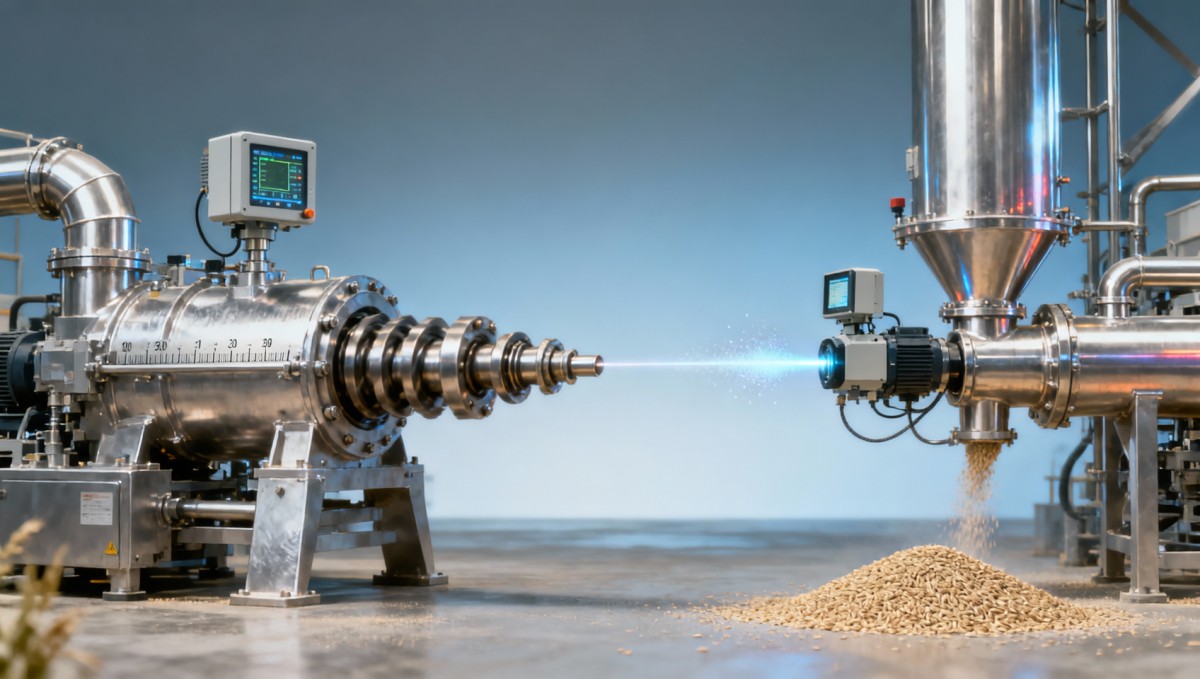
ACC’s technical advisory panel has validated three line architectures across >200 production hours at commercial scale (≥2.8 t/h). Each balances modularity, closed-loop control, and material traceability—critical for GMP-aligned facilities handling bio-extracts, microencapsulated vitamins, or marine-derived proteins.
The first architecture—Modular Twin-Screw Extrusion with Inline Rheometry—uses real-time viscosity feedback (±0.3 Pa·s resolution) to adjust screw speed and barrel temperature profiles within 2.4 seconds. Field data shows ≤0.7% CV in pellet density across 72-hour continuous runs.
Second, the Precision Grinding & Blending Line integrates laser particle size analyzers (0.1–3000 µm range) with servo-controlled hammer mill gap adjustment (±0.05 mm accuracy). This achieves <5% D90 variation in ground soybean meal—critical when integrating functional bio-extracts requiring uniform carrier dispersion.
The third architecture—Continuous Coating & Drying with Thermal Imaging—employs high-resolution IR cameras (±0.5°C accuracy) to map surface temperature distribution across fluidized beds. Deviations >2.1°C trigger automatic air flow rebalancing, ensuring ±0.5% coating weight accuracy even during transitions between microencapsulated probiotics and solvent-based attractants.
Procurement Decision Matrix: 6 Technical Criteria That Separate Commodity Lines From Strategic Assets
For procurement teams evaluating capital expenditure, these six criteria—validated across 32 ACC-verified supplier audits—directly correlate with long-term OEE (Overall Equipment Effectiveness) and regulatory readiness:
- Real-time process signature logging: Minimum 100 Hz sampling rate for torque, temperature, and pressure at all CCPs—required for FDA 21 CFR Part 11 electronic records.
- Material traceability depth: Batch-level linkage from raw material intake (with supplier COA ingestion) through final pallet ID, supporting recall response in <45 minutes.
- Cross-contamination mitigation: Validated CIP cycle times ≤18 min with ATP swab verification <10 RLU per cm² at all product-contact surfaces.
- Adaptive recipe management: Ability to auto-adjust parameters for ±15% variation in raw material moisture or oil content without operator intervention.
- Calibration traceability: Onboard sensors certified to ISO/IEC 17025 with ≤12-month recalibration intervals and digital audit logs.
- Service response SLA: 4-hour remote diagnostics + 24-hour on-site engineer dispatch for critical CCP failures.
ACC’s procurement benchmarking shows that lines meeting ≥5 of these criteria achieve 32% lower mean time to repair (MTTR) and 4.7x faster regulatory audit closure versus legacy systems.
Implementation Roadmap: From Validation to Full-Scale Operation in 5 Phases
Successful deployment requires disciplined sequencing—not just hardware installation. ACC’s field-proven 5-phase roadmap ensures consistency fidelity is validated before capacity ramp-up:
- Phase 1 (Days 1–14): Raw material characterization & baseline process signature capture using reference lots under GMP conditions.
- Phase 2 (Days 15–35): CCP mapping and failure mode analysis (FMEA) with ≥3000 data points per critical parameter.
- Phase 3 (Days 36–60): Closed-loop control tuning with <±0.8% setpoint deviation tolerance across 72-hour stress tests.
- Phase 4 (Days 61–90): Regulatory documentation package generation—including IQ/OQ/PQ protocols aligned with EU Annex 15 and FDA Guidance for Industry.
- Phase 5 (Days 91–120): Gradual throughput ramp (20% → 100%) with full batch release testing at each increment.
Teams following this sequence report 91% first-time audit pass rates—versus 43% for ad-hoc implementations. Critical success factor: Assign a dedicated Process Validation Engineer (PVE) from Day 1—not delegated post-installation.
Conclusion: Turn Feed Processing Into a Verified Competitive Lever
Feed processing lines are no longer cost centers—they’re verifiable differentiators in markets where aquaculture buyers demand auditable consistency, pharmaceutical-grade traceability, and bioactive ingredient integrity. The architectures and implementation frameworks outlined here have delivered ≤1.1% CV in nutritional metrics across 12 geographies and 3 feed categories (marine, freshwater, and specialty hatchery).
For procurement directors, technical evaluators, and project managers: consistency at scale is achievable—but only when engineering rigor, regulatory foresight, and operational discipline are designed in from the first specification sheet.
Access ACC’s full Feed Processing Line Validation Toolkit—including vendor scorecards, CCP checklist templates, and ROI calculators for OEE-driven CAPEX justification—by contacting our technical advisory team today.
Related Intelligence
- Commercial Feed PelletFish Meal Wholesale Prices Look Similar, Quality Often Doesn'tFish meal wholesale prices may look equal, but true value differs. Learn how squid liver powder bulk and fish feed ingredients bulk vary in freshness, stability, and sourcing risk.
- Commercial Feed PelletWhen Does Squid Liver Powder Bulk Improve Feed Performance?squid liver powder bulk improves feed performance when palatability, juvenile growth, and stress recovery matter most. Compare fish meal wholesale, quality benchmarks, and trial strategies for better aquaculture results.
- Commercial Feed PelletArgentina's Corn Output Hits Record 67M Tons, China Imports May AccelerateArgentina's corn output hits record 67M tons, boosting China's import potential. Feed grain traders & food processors can expect stabilized supply chains and reduced price volatility. Key insights for strategic procurement.
The Morning Broadsheet
Daily chemical briefings, market shifts, and peer-reviewed summaries delivered to your terminal.
