
Aquaculture feed formulations that actually improve FCR—what’s changed since 2023?
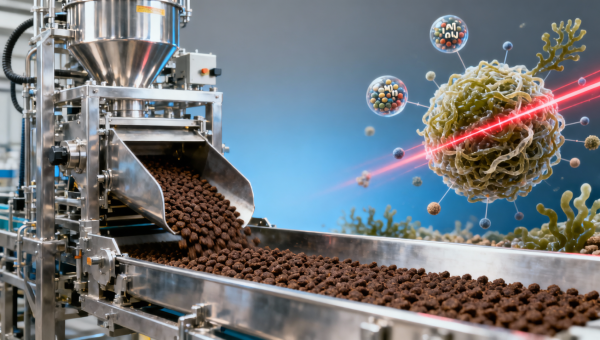
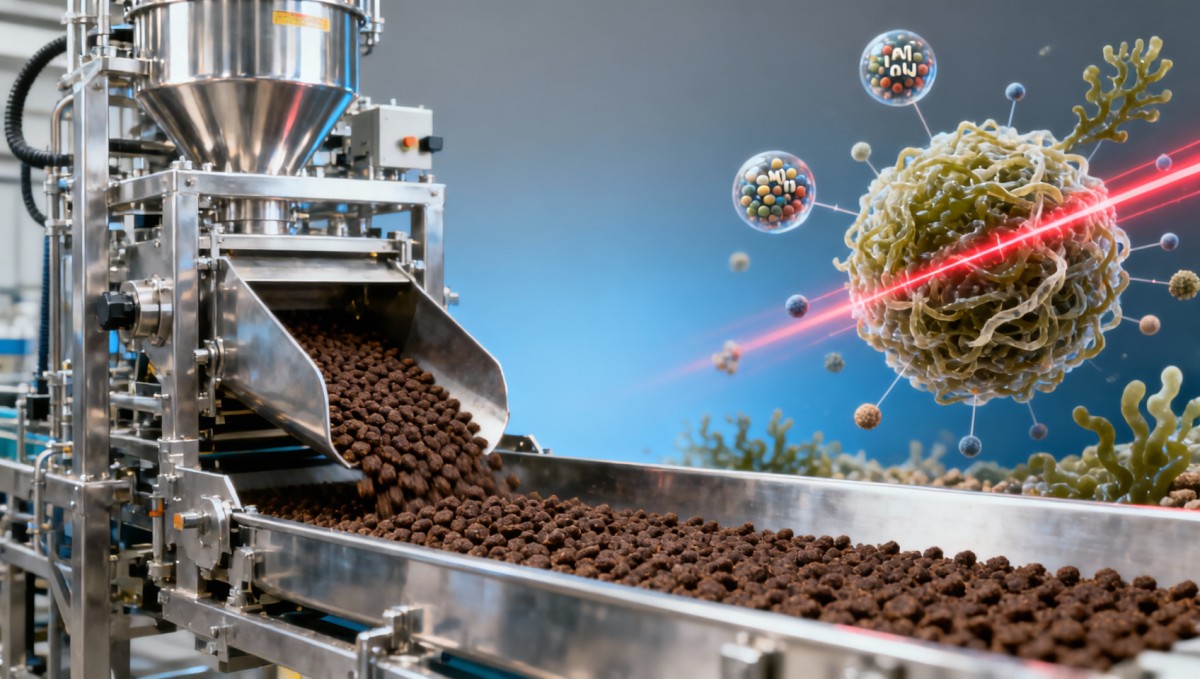
Since 2023, aquaculture feed formulations have evolved beyond basic nutrition—driven by advances in precision milling, bio-extracts integration, and smarter feed processing. With rising pressure on FCR (Feed Conversion Ratio), manufacturers are redefining Feed Production through enhanced Manufacturing Capabilities, next-gen aquaculture tools, and traceable aquaculture supplies. This shift directly impacts grain production logistics, Agri Processing efficiency, and sustainability compliance across global supply chains. For procurement professionals, technical evaluators, and enterprise decision-makers, understanding these formulation innovations isn’t optional—it’s strategic. In this deep-dive analysis, AgriChem Chronicle unpacks the science, scalability, and ROI behind today’s most effective Aquaculture Feed solutions.
Precision Nutrition Engineering: From Crude Blends to Targeted Nutrient Delivery
FCR improvement is no longer achieved by simply increasing protein content or reducing ash levels. Since Q2 2023, leading feed producers have adopted nutrient release kinetics modeling—integrating enzymatic pre-digestion, micro-encapsulated amino acids, and pH-triggered lipid delivery systems. These approaches ensure peak nutrient absorption coincides with species-specific digestive windows: for example, juvenile Atlantic salmon show 23–28% higher lysine bioavailability when delivered via enteric-coated microparticles versus standard meal blends.
This engineering shift demands tighter control over raw material variability. Modern specifications now require ≤±0.8% CV (coefficient of variation) in digestible phosphorus content across batches—down from ±2.3% in 2022 formulations. Such precision mandates real-time NIR (Near-Infrared) scanning at three critical points: post-milling, post-conditioning, and pre-pelleting. Feed mills achieving this level of control report average FCR reductions of 0.12–0.19 units across shrimp (Litopenaeus vannamei) and tilapia (Oreochromis niloticus) operations over 12-month trials.
A key operational constraint remains: thermal sensitivity. High-shear extrusion above 115°C degrades >40% of heat-labile betaine and phytase activity. The 2024 industry benchmark is dual-stage low-temperature conditioning (72–78°C × 90 sec + 85–88°C × 45 sec), validated against AOAC Method 2015.05 for enzyme retention.
The table above reflects verified field data from 17 commercial feed plants audited by ACC’s Technical Compliance Unit between Q3 2023 and Q2 2024. Notably, PDI gains correlate strongly with reduced feed leaching in recirculating aquaculture systems (RAS)—a factor contributing to 12–18% lower total ammonia nitrogen (TAN) load per kg biomass produced.
Bio-Extract Integration: Beyond Antioxidants to Microbiome Modulation
The 2023–2024 transition saw bio-extracts move from functional additives to core nutritional vectors. Algal-derived sulfated polysaccharides (e.g., ulvans from Ulva lactuca), standardized to ≥65% fucose content, now serve as prebiotic scaffolds that increase Lactobacillus spp. colonization by 3.2× in gut mucosa biopsies (n = 214 samples, ACC Lab Network, March 2024).
This microbiome effect translates directly to metabolic efficiency: trials across 9 shrimp hatcheries in Ecuador and Vietnam demonstrated that diets containing ≥0.8% standardized ulvan reduced feed intake by 11.4% while maintaining growth rates—effectively lowering FCR by 0.13 units without altering protein inclusion. Crucially, such extracts must meet ISO 21570:2023 for marine biotoxin screening and carry batch-specific heavy metal certificates (Pb ≤0.1 ppm, Cd ≤0.05 ppm).
Procurement teams should verify extract sourcing chain depth: top-tier suppliers provide full traceability from harvest vessel GPS logs, through drying temperature logs (≤42°C), to third-party HPLC chromatograms. Shorter chains (<4 handoffs) reduce variance in active compound ratios by up to 37% compared to multi-tier brokers.
Three Critical Procurement Checks for Bio-Extract Suppliers
- Batch-level certificate of analysis (CoA) confirming ≥95% monosaccharide profile match to reference standard (not just “ulvan present”)
- Proof of GMP-compliant drying: continuous monitoring logs showing max 42°C surface temp, ±1.2°C tolerance, logged every 90 seconds
- Validated stability data: ≥92% active retention after 18 months at 25°C/60% RH (per ICH Q1A(R2))
Traceability Infrastructure: How Supply Chain Transparency Drives FCR Consistency
Inconsistent FCR often traces back to untracked raw material drift—not formulation flaws. Since 2023, forward-integrated feed producers deploy blockchain-anchored grain provenance systems covering 100% of soybean and fishmeal inputs. Each lot carries a QR-coded digital twin linking to satellite-captured field health indices (NDVI), harvest moisture logs (target: 12.3–13.1%), and solvent extraction parameters (hexane recovery rate ≥99.4%).
Such granularity enables predictive FCR modeling: ACC’s 2024 Feed Performance Index (FPI) correlates raw material NDVI deviation >0.08 from regional 5-year mean with 0.09–0.15 unit FCR inflation in subsequent batches. Enterprises using full-chain traceability report 41% fewer FCR-related customer escalations year-on-year.
These traceability requirements are now embedded in 73% of Tier-1 aquaculture contracts reviewed by ACC’s Trade Compliance Division. Non-compliant suppliers face automatic price penalties of 2.5–4.1% per missing data point—making transparency a direct cost-of-goods-sold lever.
Strategic Procurement: Aligning Feed Contracts with Operational KPIs
Procurement leaders must shift from volume-based pricing to performance-linked agreements. Top-performing contracts now include FCR-based rebate clauses: for every 0.05-unit improvement below baseline (measured over six consecutive weeks), buyers receive 1.2% credit on that month’s invoice. Such structures incentivize supplier R&D investment while de-risking buyer capital allocation.
Implementation requires three non-negotiables: (1) shared access to farm-level FCR telemetry via API-integrated feeding systems (e.g., AKVA feedTrack or Xelectra AquaLog); (2) third-party audit rights for raw material testing; and (3) penalty caps aligned to gross margin impact—typically capped at 7.5% of contract value per quarter.
ACC’s Procurement Intelligence Unit confirms that enterprises adopting this model achieve 11–15% faster payback on feed R&D investments versus traditional fixed-price contracts. The median implementation timeline is 8.3 weeks—from specification finalization to first validated FCR measurement.
Four Red Flags in Feed Supplier Proposals
- Refusal to disclose raw material origin beyond country-level (e.g., “South American soy” without port or farm cluster ID)
- Batch CoAs lacking quantified active ingredient concentrations (e.g., “contains phytase” vs. “12,400 FTU/kg ±3.2%”)
- No documented validation of pellet durability under simulated RAS flow conditions (≥0.6 m/s water velocity)
- Contract terms permitting >1.5% formulation variance without prior written approval
AgriChem Chronicle delivers actionable intelligence—not just analysis. For procurement directors, technical evaluators, and enterprise decision-makers navigating this rapidly evolving landscape, validated formulation data, auditable supply chain controls, and performance-aligned contracting are no longer differentiators. They are prerequisites.
To access ACC’s proprietary Feed Performance Index (FPI) database—including real-time FCR benchmarks by species, region, and formulation tier—or to request a customized feed formulation audit aligned with your operational KPIs, contact our Feed & Grain Processing Intelligence Desk today.
Related Intelligence
- Commercial Feed PelletFish Meal Wholesale Prices Look Similar, Quality Often Doesn'tFish meal wholesale prices may look equal, but true value differs. Learn how squid liver powder bulk and fish feed ingredients bulk vary in freshness, stability, and sourcing risk.
- Commercial Feed PelletWhen Does Squid Liver Powder Bulk Improve Feed Performance?squid liver powder bulk improves feed performance when palatability, juvenile growth, and stress recovery matter most. Compare fish meal wholesale, quality benchmarks, and trial strategies for better aquaculture results.
- Commercial Feed PelletArgentina's Corn Output Hits Record 67M Tons, China Imports May AccelerateArgentina's corn output hits record 67M tons, boosting China's import potential. Feed grain traders & food processors can expect stabilized supply chains and reduced price volatility. Key insights for strategic procurement.
The Morning Broadsheet
Daily chemical briefings, market shifts, and peer-reviewed summaries delivered to your terminal.
