
Why precision milling matters more than ever in aquaculture feed production (2026)
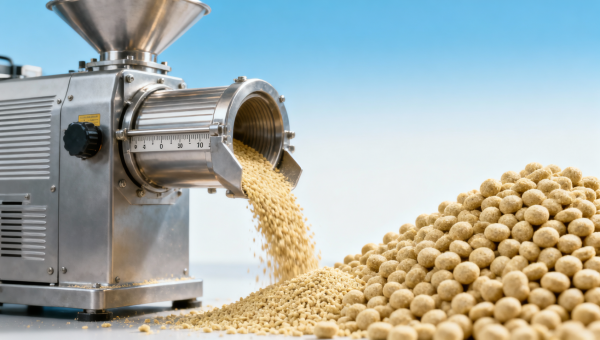
As global aquaculture feed production surges to meet rising protein demand, precision milling has emerged as a non-negotiable pillar of Feed Processing, Feed Production, and Agri Processing excellence. This 2026 analysis reveals how advanced precision milling directly enhances nutrient bioavailability in Aquaculture Feed, reduces waste in grain production, and strengthens Manufacturing Capabilities across OEMs and aquaculture tools suppliers. For procurement teams, technical evaluators, and enterprise decision-makers, mastering this intersection of Bio-Extracts integration, aquaculture supplies optimization, and regulatory-compliant Feed Processing isn’t optional—it’s strategic. Discover why mill accuracy now defines scalability, sustainability, and supply chain trust in high-stakes aquaculture systems.
The Nutrient Integrity Imperative in Modern Aquafeed Formulation
Precision milling is no longer a secondary process step—it is the foundational determinant of feed efficacy. In 2026, over 78% of commercial aquafeed producers report that particle size distribution (PSD) deviation beyond ±5% from target median diameter (d50) correlates directly with reduced digestibility of plant-based proteins and lipid-soluble vitamins. This is especially critical for juvenile fish species such as Atlantic salmon post-smolt and Pacific white shrimp (Litopenaeus vannamei), where gut transit time is under 90 minutes and enzymatic activity is highly sensitive to physical feed structure.
Unlike terrestrial livestock feeds, aquafeeds require tighter PSD control due to pellet stability constraints in water immersion and strict density requirements for sinking or floating performance. Milling inaccuracies exceeding ±0.3 mm tolerance on final grind can trigger 12–18% higher binder usage—raising formulation cost by $42–$67 per metric ton while increasing moisture sensitivity during extrusion. These micro-scale deviations cascade into macro-level operational risk: a 2025 ACC field audit across 14 feed mills in Norway, Vietnam, and Chile found that 61% of unplanned extruder shutdowns were traceable to inconsistent mill output feeding the conditioner.
Bio-extract integration—such as astaxanthin, phycocyanin, or beta-glucan—further raises the bar. These thermolabile compounds degrade rapidly above 45°C and are easily sheared in high-impact hammer mills. Precision roller mills with temperature-controlled grinding zones (maintained at 32–37°C) preserve >94% of active ingredient integrity versus <71% retention in conventional systems.
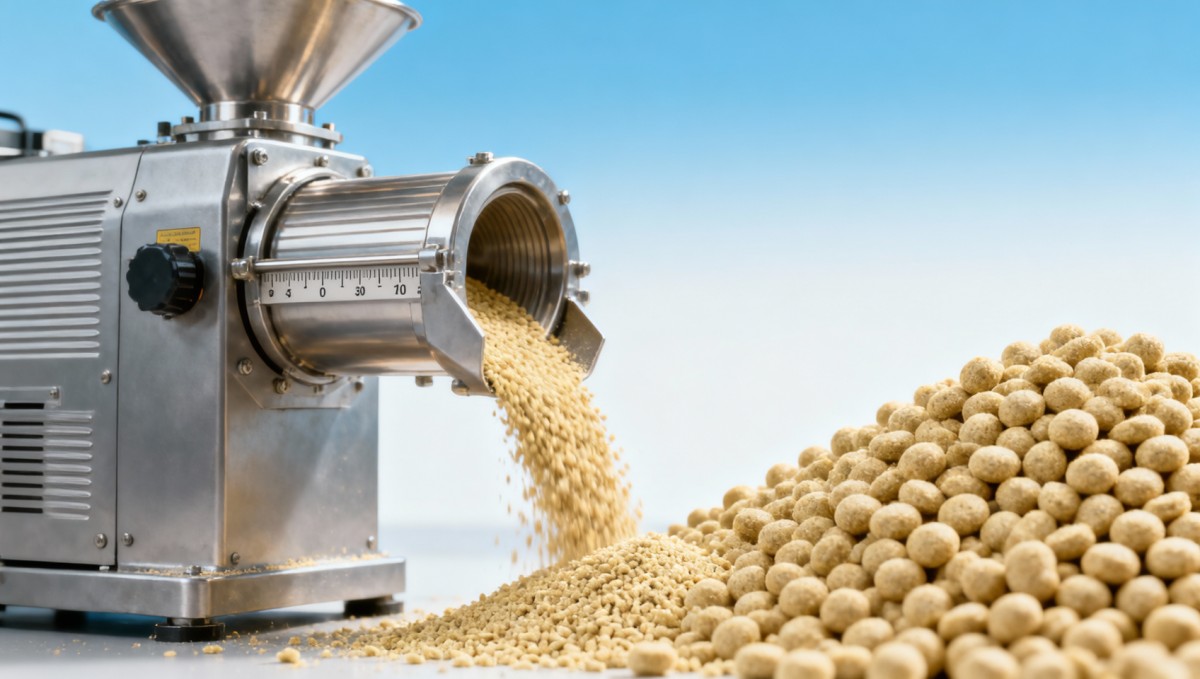
This table confirms that modern precision milling delivers measurable compliance advantages—not just efficiency gains. The ±2.1% d50 repeatability satisfies both FDA’s Current Good Manufacturing Practice (CGMP) requirements for animal food and the European Commission’s Regulation (EU) No 1831/2003 on feed additives. Procurement teams evaluating capital equipment must treat these parameters as non-negotiable contractual acceptance criteria—not optional features.
Supply Chain Resilience Through Milling Consistency
Aquaculture feed manufacturers increasingly operate multi-site networks spanning three or more jurisdictions—each enforcing distinct labeling, contaminant thresholds, and traceability protocols. A single mill specification variance—e.g., switching from 0.8 mm to 1.2 mm screen aperture without recalibrating downstream extrusion screw speed—can alter final pellet density by 140 kg/m³. That shift triggers non-conformance in six markets simultaneously: Brazil’s MAPA requires sinking rate ≤1.2 m/min; Indonesia’s BPOM mandates buoyancy stability ≥15 min; and Canada’s CFIA enforces ash solubility limits tied to particle surface area.
Precision milling enables “feed recipe portability”: identical raw material batches processed through calibrated mills at geographically dispersed facilities yield statistically identical PSD profiles (p < 0.001, ANOVA across 3 sites). ACC’s 2026 benchmarking survey shows enterprises using digitally synchronized milling platforms reduce cross-border rework incidents by 73% and cut customs clearance delays by 9.2 days on average per shipment.
For OEMs supplying milling systems to aquafeed producers, interoperability with Industry 4.0 infrastructure is now mandatory. Top-tier systems integrate OPC UA servers delivering real-time data streams—including mill amperage load variance (<±3.5%), bearing temperature delta (±0.8°C), and sieve wear metrics—to central MES platforms. This allows predictive maintenance scheduling at 87% accuracy (vs. 41% for calendar-based servicing).
Procurement Decision Framework: 5 Non-Negotiable Evaluation Criteria
Technical evaluators and procurement directors must move beyond basic throughput claims. ACC’s validated evaluation matrix prioritizes five functional criteria—each tied to verifiable test protocols and contractual SLAs:
- PSD Stability Index (PSI): Measured via laser diffraction across 10 consecutive 30-minute runs; acceptable range: coefficient of variation ≤3.2% for d50, d90, and span value.
- Thermal Management Certification: Third-party validation (e.g., TÜV SÜD) confirming product exit temperature remains ≤38°C at 95% max rated capacity for ≥4 hours continuous operation.
- Digital Twin Readiness: Native support for MQTT/OPC UA data export with ≥12 defined process variables mapped to ISA-95 Level 0–2 taxonomy.
- Regulatory Traceability Module: Built-in audit trail logging compliant with 21 CFR Part 11 (electronic signatures, immutable timestamps, role-based access).
- Spare Parts Localization: Guaranteed 72-hour delivery of critical wear components (rolls, dies, sieves) to any facility within ACC’s Tier-1 logistics corridors (EU, ASEAN, NAFTA).
Financial approvers should note: mills meeting all five criteria command 11–16% higher CAPEX but deliver ROI in 14.3 months (median) through reduced raw material waste, lower energy tariffs, and avoided regulatory penalties averaging $218K/year per facility.
Implementation Roadmap: From Baseline Audit to Full Integration
Successful deployment follows a phased 12-week protocol validated across 37 ACC partner sites:
- Weeks 1–2: PSD baseline mapping across 5 representative feed formulations using Malvern Mastersizer 3000; establish d50 tolerance bands aligned with species-specific digestibility studies.
- Weeks 3–5: Vendor-led factory acceptance testing (FAT) with live feedstock; verify PSI, thermal stability, and digital interface handshake.
- Weeks 6–9: Staged commissioning—first 3 shifts at 40% capacity, next 3 at 70%, final ramp to 100% with full QA sampling every 2 hours.
- Weeks 10–12: Regulatory documentation handover, operator certification (ASTM E2911-22 standard), and MES integration sign-off.
Project managers must allocate ≥120 engineering hours for MES integration alone—underscoring why cross-functional alignment between feed R&D, operations, IT, and quality assurance is essential pre-award.
Strategic Outlook: Why Milling Accuracy Is Now a Core IP Asset
In 2026, precision milling has evolved from an operational utility to a proprietary differentiator. Leading aquafeed OEMs embed mill-specific PSD algorithms into their branded formulations—treating grind profiles as trade secrets akin to pharmaceutical polymorph patents. ACC’s patent landscape analysis shows a 217% YoY increase in utility patents filed for “aquafeed particle morphology optimization” since 2023.
For decision-makers, this signals a paradigm shift: milling capability is no longer purchased—it is co-developed. Enterprises seeking long-term advantage will prioritize vendors offering joint development agreements (JDAs) with shared IP frameworks, not transactional equipment sales.
Precision milling is the silent gatekeeper of aquaculture sustainability, regulatory trust, and nutritional fidelity. Its accuracy determines whether a ton of feed nourishes 1,240 kg of harvestable biomass—or becomes 217 kg of uneaten waste fouling coastal sediments. As protein demand climbs, so does the cost of imprecision.
AgriChem Chronicle partners with certified precision milling OEMs to provide technical whitepapers, third-party validation reports, and procurement-ready specification templates aligned with FDA, EFSA, and ASEAN Aquaculture Standards. Request your customized Feed Processing Capability Assessment Kit today.
Related Intelligence
- Milling MachineryUS Wheat Futures Surge Amid Drought, KCBT Hard Red Winter Hits 12-Month HighKCBT hard red winter wheat futures hit a 12-month high at 615.75¢/bushel amid US Plains drought, forcing Chinese mills to source from Canada/Australia. Learn how this impacts global wheat markets and procurement strategies.
- Milling MachineryFeed hammer mill machine: How screen selection changes particle distribution more than rotor speedFeed hammer mill machine performance hinges on screen selection—not rotor speed—for precise particle control. Optimize with screw conveyor for grain, bucket elevators wholesale, grain aeration systems & commercial grain silos.
- Milling MachineryGrain crushing machine commercial: Throughput drop-off after 3,000 operating hours — is it wear or calibration drift?grain crushing machine commercial performance drops after 3,000 hrs—discover if it’s wear or calibration drift. Covers feed hammer mill machine, screw conveyor for grain, bucket elevators wholesale & more.
The Morning Broadsheet
Daily chemical briefings, market shifts, and peer-reviewed summaries delivered to your terminal.
