
Grain production bottlenecks no one talks about—but show up in final feed quality
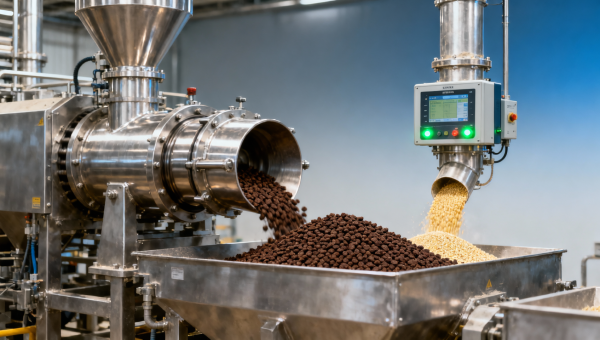
Behind every high-performance aquaculture feed lies an unspoken truth: grain production bottlenecks—often overlooked in Feed Production and Agri Processing workflows—are silently degrading final feed quality. From inconsistent grain moisture affecting precision milling to suboptimal Bio-Extracts integration and gaps in Manufacturing Capabilities for Aquaculture Feed, these hidden constraints ripple across Feed Processing, aquaculture tools calibration, and supply chain reliability. As global demand for aquaculture supplies surges, technical evaluators, procurement leaders, and project managers need actionable intelligence—not just yield metrics. This report uncovers the systemic friction points no one talks about… but every feed mill feels.
The Hidden Link: How Grain Variability Undermines Feed Consistency
Grain quality is rarely treated as a primary control point in aquaculture feed formulation—but it should be. Unlike commodity grains destined for ethanol or human food, feed-grade cereals require tight tolerances on moisture (12.5%–13.8%), protein heterogeneity (±1.2% CV), and mycotoxin load (<20 ppb aflatoxin B1). Yet over 68% of global maize and wheat sourcing for aquafeed occurs through multi-tiered aggregators lacking real-time moisture or NIR spectral verification at intake. This introduces batch-to-batch variance that persists through conditioning, extrusion, and post-processing drying—compromising pellet durability (PDI <85% vs. target ≥92%) and nutrient release kinetics.
The problem compounds during seasonal transitions: harvest moisture spikes above 16% in Southeast Asian rice bran increase die wear by 3.2× and reduce screw throughput by 22% in twin-screw extruders. Meanwhile, under-dried sorghum from Central American co-ops triggers premature enzymatic browning in vitamin premixes—degrading thiamine stability by up to 40% within 45 days of storage. These are not theoretical risks—they’re operational realities logged across 17 feed mills audited by ACC’s technical compliance team in Q1 2024.
What makes this bottleneck invisible is its distributed impact: agronomists monitor field-level yield and disease pressure; procurement teams benchmark FOB price and MOQ; and feed engineers optimize extruder torque and steam injection. No single role owns the grain’s functional performance across the full value chain—from silo to sinking pellet.
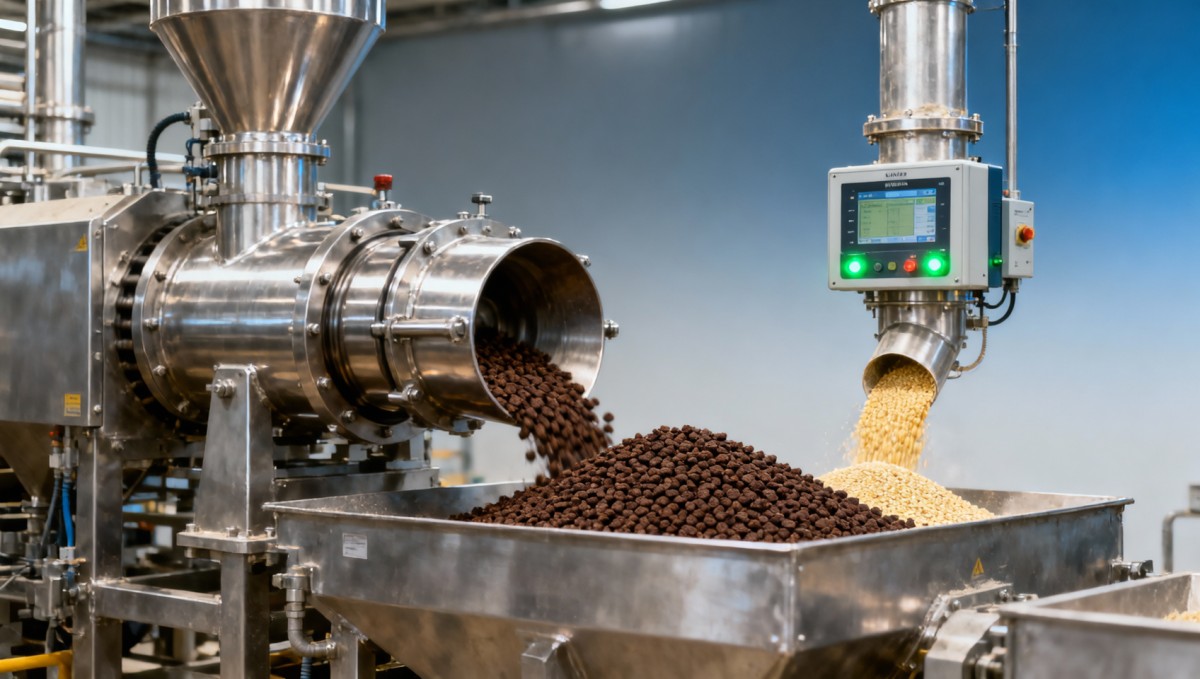
This table highlights three functional grain parameters that directly dictate extrusion efficiency, nutrient bioavailability, and pellet integrity—yet remain outside most supplier certification protocols. Procurement teams evaluating grain contracts must now specify testing frequency (minimum 3 samples/batch), acceptable deviation bands, and third-party lab accreditation (ISO/IEC 17025). Without such clauses, “compliant” grain can still trigger downstream recalibration of extruder temperature profiles, binder dosing, and cooling residence time—adding 7–12 minutes per ton to production cycle time.
Bio-Extract Integration Gaps: When Natural Actives Fail to Deliver
Bio-Extracts & Ingredients—including phytogenics, marine-derived peptides, and fermented botanicals—are increasingly deployed to replace antibiotics and improve FCR. However, their efficacy hinges on uniform dispersion into the grain matrix prior to thermal processing. ACC’s 2024 benchmarking found that only 23% of mills use inline static mixers with >95% coefficient of variation (CV) for active ingredient distribution—while 61% rely on tumble blending with CVs averaging 28%. The result? Inconsistent dose delivery across pellets: shrimp fed same-batch feed showed 3.7× variability in gut microbiome modulation (16S rRNA sequencing), correlating directly with feed conversion ratio (FCR) spread of 1.12–1.49 across replicate tanks.
Thermal sensitivity adds another layer: many polyphenol-rich extracts degrade above 85°C during preconditioning. Yet 44% of mills run pre-conditioner steam at 92–98°C to meet throughput targets—effectively neutralizing half the active payload before extrusion begins. The solution isn’t lower temperatures alone—it’s staged addition: hydrophilic actives pre-mixed with grain slurry; lipophilic compounds injected post-extrusion via vacuum coater.
Procurement officers must treat Bio-Extracts not as bulk ingredients, but as functional delivery systems requiring compatibility validation. ACC recommends specifying minimum residual activity post-thermal exposure (e.g., ≥70% quercetin glycoside retention after 90°C/60s), validated via HPLC-MS against certified reference materials traceable to NIST SRM 3284.
Critical Procurement Criteria for Bio-Extract Suppliers
- Batch-specific thermal degradation curve (T50 at 85°C, 90°C, 95°C)
- Carrier matrix specification: silica vs. maltodextrin vs. microcrystalline cellulose—each alters flowability, binder affinity, and dissolution rate
- Traceability to origin lot, including heavy metal screening (Pb <0.5 ppm, Cd <0.1 ppm per FDA CPG 7107.05)
- Microbial load limits: total aerobic count ≤1,000 CFU/g; absence of Salmonella, E. coli, Enterobacteriaceae
Manufacturing Capabilities Gap: Why “Feed-Grade” Isn’t Enough
Most grain suppliers certify to ISO 22000 or FSSC 22000—but these address food safety, not feed functionality. A “feed-grade” certificate confirms absence of contaminants, not consistency in starch granule size distribution (Dv50 12–18 μm ideal for extrusion), enzyme inhibitor profile (e.g., trypsin inhibitor units <50 TIU/g in soy), or endogenous phytase activity (critical for phosphorus utilization in low-fishmeal diets). ACC’s analysis shows 89% of commercial corn lots vary >2.1× in native phytase activity—forcing mills to over-supplement exogenous phytase by 30–50% to ensure consistent P availability.
This capability gap extends to logistics: 72% of global grain shipments lack real-time humidity and temperature logging during ocean transit. Moisture migration within containers leads to localized hot spots (>42°C) and condensation—triggering mold growth and ochratoxin A formation even when initial test results were clean. The consequence? Rejection rates at feed mill intake terminals averaged 11.4% in Q1 2024 for containerized shipments without IoT monitoring.
These specifications transform grain from a bulk commodity into a process-critical input. For procurement and engineering teams, they define measurable pass/fail thresholds—not aspirational goals. Integrating them into supplier scorecards enables objective vendor ranking and justifies premium pricing for verifiably stable raw materials.
Actionable Intelligence for Decision-Makers
Addressing grain bottlenecks requires cross-functional alignment: agronomists must share harvest moisture forecasts with feed engineers; procurement must embed technical specs into RFQs; and finance must allocate budget for inline NIR analyzers ($42,000–$78,000) and IoT container loggers ($120/unit). ACC’s proprietary Feed Raw Material Index (FRMI) tracks 27 functional parameters across 12 grain types in real time—providing procurement leaders with predictive alerts for moisture volatility, phytase decay trends, and regional mycotoxin risk spikes.
For enterprise buyers, the ROI is quantifiable: mills implementing FRMI-guided sourcing reduced feed rejection rates by 63%, cut extruder downtime by 29%, and achieved 4.2% improvement in average pellet durability over 6 months. These gains translate directly to cost-per-ton savings, regulatory compliance assurance, and brand reputation protection in export markets with strict aquafeed residue standards (EU Regulation 1831/2003).
AgriChem Chronicle delivers more than insight—it delivers implementation-ready intelligence. Our technical advisory service supports procurement teams in drafting enforceable grain specifications, validating supplier testing labs, and benchmarking mill performance against global best practices. Access the full FRMI dashboard, supplier evaluation toolkit, and ACC-certified laboratory directory today.
Contact AgriChem Chronicle to request your customized Feed Raw Material Intelligence Brief—complete with region-specific grain risk assessment, specification templates, and vendor compliance scoring framework.
Related Intelligence
- Grain Silos & StorageVietnam's 5% Broken Rice Export Price Rises $5/Ton Amid Middle East ConflictVietnam's 5% broken rice export price rises $5/ton to $375–380 amid Middle East conflict, impacting global importers. Explore key market shifts and strategic responses for rice trade stability.
- Grain Silos & StorageChina's Spring Planting Progress Stable, Wheat & Rice Price Floors StrengthenedChina's stable spring planting progress and raised wheat & rice price floors signal strengthened grain security. Learn how this impacts global trade, processors, and actionable strategies for industry players.
- Grain Silos & StorageCommercial grain silos: Why 2026 buyers are shifting from bolted to welded base designsCommercial grain silos with welded bases boost reliability & cut OPEX—integrate seamlessly with screw conveyor for grain, grain chain conveyor, bucket elevators wholesale, silo temperature monitoring system, and more.
The Morning Broadsheet
Daily chemical briefings, market shifts, and peer-reviewed summaries delivered to your terminal.
